Unleash Creativity: The Ultimate Guide to AI Video Generation & Future of Content
Introduction
In an age dominated by visual storytelling, video reigns supreme. From captivating TikTok shorts to cinematic masterpieces, the demand for engaging video content is insatiable. Yet, the traditional processes of video creation – scripting, shooting, editing, and post-production – are often time-consuming, expensive, and require specialized skills. This is where the burgeoning field of AI video generation steps in, poised to revolutionize how we conceive, produce, and consume visual media.
Imagine transforming a simple text prompt into a high-quality video in minutes, or breathing life into static images with dynamic animations, all without touching a camera or complex editing software. This isn’t science fiction; it’s the reality of generative AI video. This guide will take a deep dive into the world of AI video creation, exploring its underlying technologies, the best AI video tools available today, its transformative applications across industries, and the profound implications for the future of AI video and content at large. Whether you’re a seasoned content creator, a marketer, a filmmaker, or simply curious about the next frontier in digital media, prepare to unlock the immense potential of AI in video production and unleash a new era of creative possibilities.
Understanding the Core: What is AI Video Generation?
At its heart, AI video generation refers to the use of artificial intelligence algorithms and machine learning models to automatically create, modify, or enhance video content. Unlike traditional video editing, which relies on human input to manipulate existing footage, AI video generation can create entirely new scenes, characters, and narratives from scratch, often guided by simple text descriptions or other inputs.
The Rise of Generative AI Video
The recent explosion in AI capabilities, particularly in generative models like GANs (Generative Adversarial Networks) and diffusion models, has propelled generative AI video to the forefront. These sophisticated models are trained on vast datasets of existing videos, images, and text, allowing them to learn patterns, styles, and movements. With this knowledge, they can then generate novel content that adheres to specific prompts or parameters. This process fundamentally changes the barrier to entry for video creation, making it accessible to a much broader audience.
Text-to-Video AI: Turning Words into Worlds
One of the most exciting advancements in this space is text to video AI. This technology allows users to describe a desired video scene, action, or narrative using natural language, and the AI then translates that text into moving images. For example, a prompt like “a serene forest with a gentle stream flowing, sunlight dappling through the leaves” could instantly conjure a beautiful, animated landscape. This capability dramatically streamlines the conceptualization phase of video production, empowering creators to rapidly prototype ideas and bring their visions to life with unprecedented speed. It’s not just about creating simple clips; it’s about crafting complex narratives and visual experiences based solely on linguistic input.
Beyond Text: Other Forms of AI Video Creation
While text-to-video is powerful, AI video creation extends further. AI can also:
- Image-to-Video: Animate static images, bringing photographs or illustrations to life with subtle movements, facial expressions, or environmental effects.
- Video-to-Video: Transform existing video footage by changing styles, environments, or even character appearances, effectively “re-shooting” a scene without a camera.
- Audio-to-Video: Generate visuals that synchronize with an audio track, creating music videos or explainer animations based on spoken words.
- Data-driven Video: Create videos from structured data, such as product catalogs or sports statistics, for automated reporting or promotional content.
These diverse applications underscore the versatility and transformative potential of AI in video production, making it a crucial tool for anyone looking to innovate in the content space.
The Mechanics Behind the Magic: How AI Generates Video
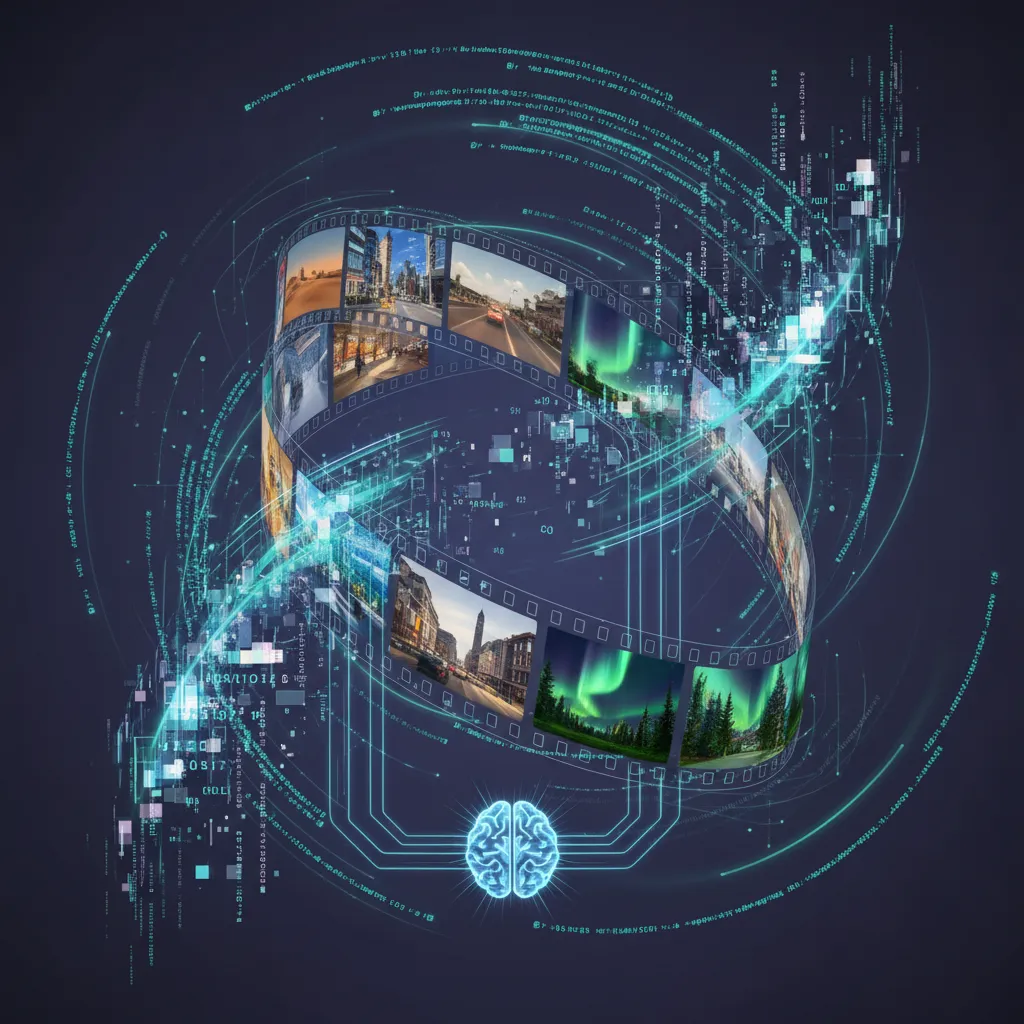
Understanding how AI generates video requires a glimpse into the complex algorithms and architectures that power these systems. At its core, video AI technology leverages deep learning, a subset of machine learning, to process and learn from enormous quantities of visual and textual data.
Neural Networks and Training Data
The foundation of most generative AI video systems lies in advanced neural networks, particularly:
- Generative Adversarial Networks (GANs): These consist of two competing neural networks – a generator that creates new content (e.g., video frames) and a discriminator that tries to distinguish between real and generated content. Through this adversarial process, the generator learns to produce increasingly realistic videos.
- Diffusion Models: More recently, diffusion models have gained prominence for their ability to generate highly realistic and diverse content. These models work by gradually adding noise to data (like an image or video frame) and then learning to reverse that process, effectively “denoising” random data into coherent and realistic output.
These models are trained on massive datasets comprising millions of video clips, images, and associated text descriptions. This training allows the AI to develop a deep understanding of visual coherence, motion dynamics, object recognition, and the relationship between text and visual concepts. The quality and diversity of the training data are paramount for the AI’s ability to generate realistic AI video.
The Text-to-Video AI Process Explained
Let’s break down the typical workflow for a text to video AI system:
- Prompt Interpretation: The user inputs a text description. The AI first uses Natural Language Processing (NLP) to understand the nuances, entities, actions, and desired styles within the prompt.
- Concept Generation: Based on the interpreted prompt, the AI begins to formulate the visual elements. This might involve recalling learned concepts of characters, objects, backgrounds, and actions from its training data.
- Frame Synthesis: The AI then generates individual video frames. This is often an iterative process where initial, rough frames are refined multiple times to improve detail, consistency, and adherence to the prompt.
- Temporal Coherence and Motion: A crucial step is ensuring that consecutive frames flow naturally, creating realistic motion. The AI employs techniques to predict movements, transitions, and object interactions across the timeline, preventing jarring cuts or illogical movements.
- Post-Processing & Enhancement: Finally, the generated video may undergo further processing for color grading, lighting adjustments, and sometimes even the addition of sound effects or music, to produce a polished output.
This sophisticated choreography of algorithms enables powerful AI video automation, significantly reducing the manual effort traditionally required in video production.
A Landscape of Innovation: Top AI Video Tools & Platforms
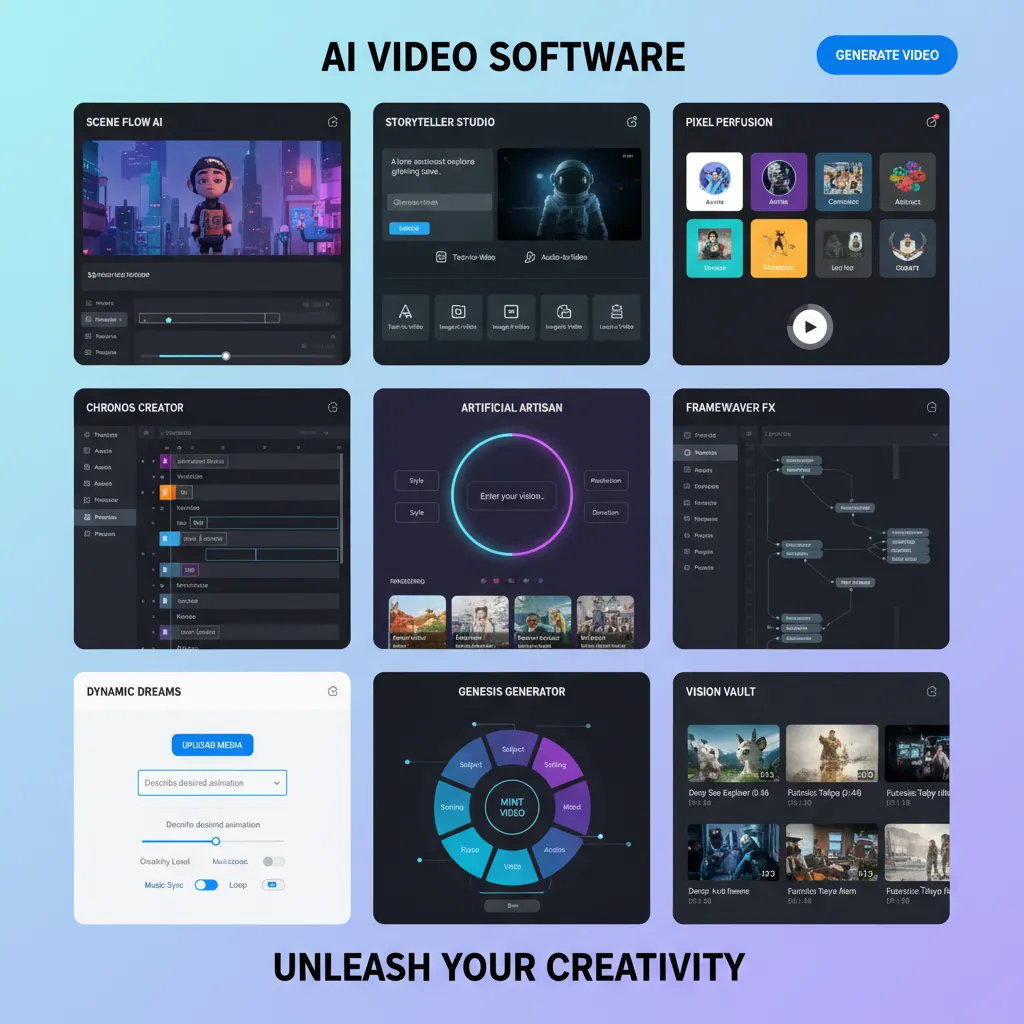
The market for AI video tools is rapidly expanding, with new software and platforms emerging constantly. These tools offer a spectrum of capabilities, from simplifying basic AI video creation to empowering advanced AI film making.
Categories of AI Video Software
The diverse range of tools can generally be categorized by their primary function and target user:
- AI Short Video Makers: These platforms focus on rapid generation of short, engaging video clips, often for social media or marketing. They typically offer templates, stock media integration, and simple text-to-video functionalities. These are excellent for quick content iteration and keeping up with social media trends.
- Text-to-Video & Image-to-Video Generators: These are specialized in transforming textual prompts or static images into dynamic video content. They might offer more control over visual style, motion, and character animation, catering to creators looking for truly novel content.
- AI Video Editing Suites: These tools integrate AI features into traditional video editing workflows. They can automate tasks like scene detection, object removal, color correction, and even suggest edits. This enhances the efficiency of AI video editing, freeing up human editors for more creative tasks.
- Virtual Human & Synthesized Media Platforms: These advanced AI video platforms specialize in creating realistic
virtual human AI videoandsynthetic media AI. They can generate lifelike avatars that speak, express emotions, and interact, often used for corporate training, customer service, or personalized content. - AI Animation Tools: Focused on animation, these tools can automatically rig characters, generate motion from text descriptions, or convert 2D art into 3D animations, significantly reducing the labor involved in traditional animation.
Features to Look For in the Best AI Video Software
When considering the best AI video software, look for features that align with your specific needs:
- Ease of Use: A user-friendly interface is crucial, especially for beginners.
- Output Quality: The realism, resolution, and aesthetic appeal of the generated video.
- Customization Options: Control over styles, characters, backgrounds, and motion.
- Integration Capabilities: How well it integrates with other tools or platforms in your workflow.
- Speed of Generation: How quickly the AI can produce usable video content.
- Cost-Effectiveness: Pricing models and value for money.
- Support for Diverse Inputs: Whether it handles text, images, audio, or existing video.
Some prominent examples (without naming specific constantly changing commercial products, which can quickly become outdated) include platforms known for generating talking avatars, converting blogs into videos, or creating marketing videos from bullet points. These tools are democratizing video production, allowing individuals and businesses without extensive resources to produce high-quality content. For those looking to master a broader range of AI tools, consider exploring guides on general productivity and creative AI solutions, like the “Unlock Your Potential: Top AI Tools for Everyday Productivity” or “Mastering Generative AI Art: Tools, Trends, & Creative Futures” blogs on HyperDaily for complementary skills.
Transforming Industries: Applications of AI Video
The impact of AI video generation extends far beyond mere novelty; it’s actively reshaping numerous industries by offering unprecedented efficiency, personalization, and creative freedom. From the bustling world of marketing to the intricate art of filmmaking, AI in video production is becoming an indispensable asset.
Revolutionizing Content Creation and Marketing
For AI for content creators and marketers, AI video offers a game-changing advantage.
- Rapid Content Iteration: Marketers can quickly generate multiple video variations for A/B testing, optimizing campaigns with speed. AI video marketing allows for hyper-personalized ads, dynamically altering content based on viewer demographics or preferences.
- Social Media Dominance: With AI short video maker tools, creating engaging content for platforms like TikTok, Instagram Reels, and YouTube Shorts becomes effortless, enabling brands and influencers to maintain a consistent, high-volume presence. AI video for social media ensures that creators can keep up with fast-paced trends.
- Personalized Customer Engagement: Businesses can generate unique explainer videos or product demonstrations for individual customers, enhancing conversion rates and customer satisfaction. This directly ties into the concept of AI generated content for tailored experiences.
The New Frontier of AI Film Making and Production
The cinematic landscape is also undergoing a quiet revolution thanks to AI film making.
- Pre-visualization and Storyboarding: Filmmakers can quickly visualize complex scenes or special effects, generating animatics or storyboards from text descriptions, significantly speeding up pre-production.
- Virtual Sets and VFX: AI can generate realistic backgrounds, expand sets, or create complex visual effects (VFX) that would traditionally require extensive resources and time. This pushes the boundaries of what’s possible with special effects, making high-quality visuals more accessible.
- Automated Editing and Post-Production: AI video editing can identify optimal cuts, synchronize audio, and even suggest improvements to narrative flow, while AI video effects can be applied with automated precision, saving countless hours in post-production.
- Lip-Sync and Dubbing: AI can accurately lip-sync translated audio to existing footage, making global distribution of films and series far more efficient and natural-looking.
Empowering Businesses and Education
AI video for business is transforming corporate communications, training, and customer service.
- Training & Onboarding: Companies can create engaging, personalized training videos for employees at scale, reducing the need for costly in-person sessions.
- Product Demos & Explainer Videos: AI can quickly generate professional-grade videos explaining complex products or services, vital for sales and marketing.
- Customer Service:
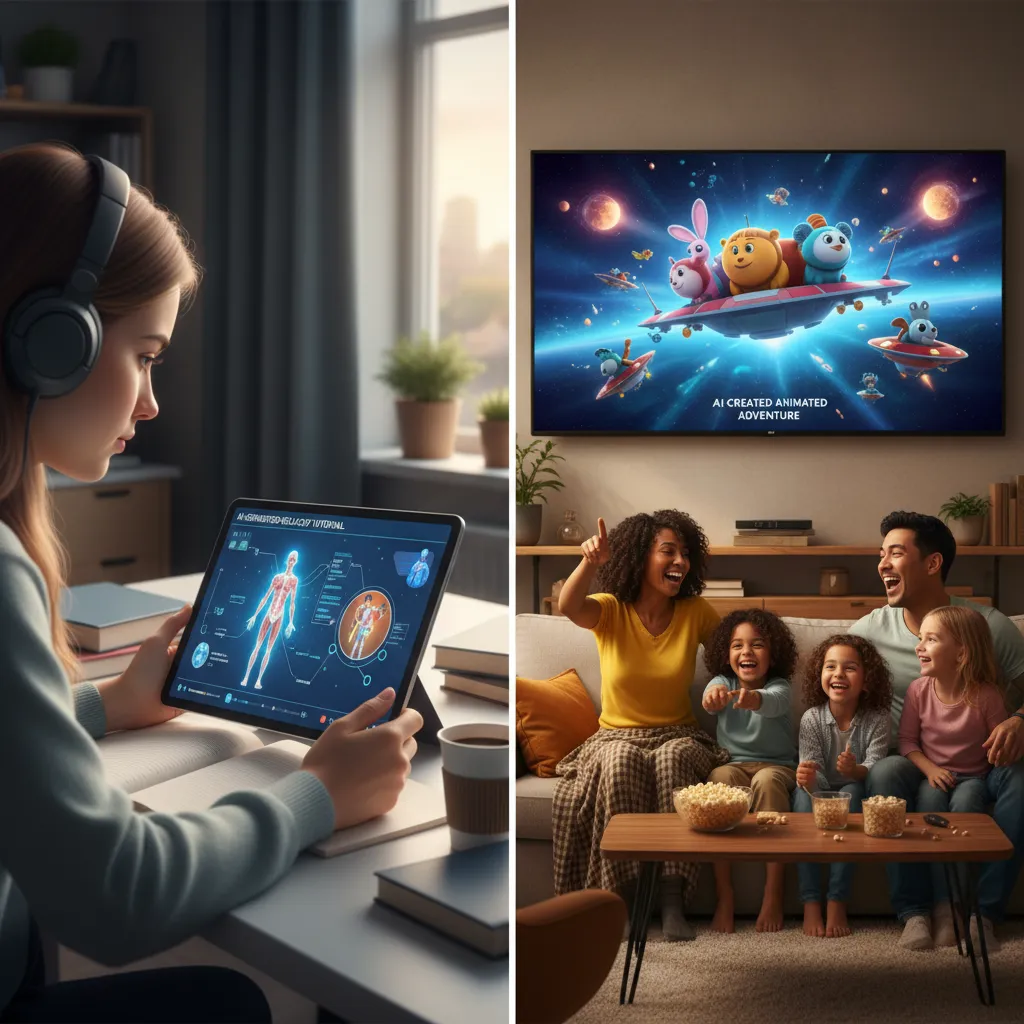
Virtual human AI videocan power intelligent chatbots with lifelike avatars, providing dynamic and interactive customer support. - Educational Content: In education, AI can simplify complex topics through animated explanations, interactive lessons, and personalized learning paths, making learning more accessible and engaging.
Enhancing Entertainment and Storytelling
AI video storytelling is opening new avenues for creativity:
- Personalized Narratives: Imagine interactive stories where elements of the plot or character appearances adapt to viewer preferences.
- Gaming: AI can generate dynamic game environments, non-player character (NPC) dialogues, and cutscenes, enriching the gaming experience.
- Animation:
AI animation toolsare speeding up character rigging, motion capture, and scene generation, allowing independent animators to compete with larger studios.
The integration of AI into these sectors is not about replacing human creativity but augmenting it, allowing creators and businesses to achieve more with less, pushing the boundaries of what’s creatively and economically feasible. For businesses looking to integrate AI for wider success, reading “Unlock Growth: Top AI Tools for Small Business Success” on HyperDaily can provide additional context.
Pushing Boundaries: Advanced Features & Emerging Trends in AI Video
The realm of AI video generation is not static; it’s an ever-evolving landscape marked by rapid innovation and groundbreaking advancements. New capabilities and AI video trends are constantly emerging, promising even more sophisticated and integrated content creation experiences.
Towards Hyper-Realism: Realistic AI Video and Synthetic Media
One of the most significant strides is the pursuit of realistic AI video. As models become more refined and data sets grow, the distinction between AI-generated and real-world footage is blurring. This includes:
- Photorealistic Environments and Characters: AI can now generate highly convincing landscapes, architectural scenes, and even digital humans that are difficult to differentiate from actual footage. This has huge implications for virtual production and simulation.
- Deepfake Video AI: While often associated with ethical concerns (which we will discuss later), the underlying technology behind
deepfake video AIdemonstrates AI’s ability to convincingly alter facial expressions, voices, and entire performances in existing videos. When used responsibly, this can be invaluable for dubbing, historical reenactments, or accessibility features. The precision and realism of these manipulations highlight the advanced capabilities of current AI models.
These advancements are driving the broader field of synthetic media AI, which refers to any media (audio, image, video, text) generated or significantly altered by AI.
Dynamic Control and Creative Expression
Modern AI video tools are moving beyond simple generation to offer more granular control:
- AI Video Design: Creators are gaining more direct influence over visual style, color palettes, and overall aesthetic. This allows for specific artistic visions to be realized with AI assistance, moving beyond generic outputs.
- AI Video Effects: Applying complex visual effects, stylizations, and filters is becoming increasingly automated. Imagine applying a specific cinematic look or transforming a scene into an animated painting with a single command.
- AI Video Automation: Beyond just generating initial clips, AI is beginning to automate entire post-production workflows, including intelligent scene sequencing, optimal camera angle selection, and dynamic pacing, significantly cutting down production time.
The Rise of Virtual Humans and Interactive Storytelling
The development of virtual human AI video is opening up exciting avenues for interaction and personalized experiences. These AI-powered avatars can:
- Deliver Presentations and News: Acting as digital anchors or presenters, these virtual humans can deliver content with lifelike expressions and voices.
- Customer Service and Support: Provide empathetic and informative responses in real-time, often indistinguishable from human agents.
- Personalized Content: Create bespoke videos for individual users, adapting dialogue, visuals, and messaging based on personal data.
Furthermore, AI video storytelling is evolving to become more interactive. Future videos might adapt narratives based on viewer choices, creating truly personalized and immersive experiences, bridging the gap between passive consumption and active participation. This signifies a profound shift in how stories are conceived and delivered.
Integrating with the Metaverse and Beyond
Looking ahead, AI video trends point towards seamless integration with emerging technologies:
- Metaverse Content: AI will be crucial for populating virtual worlds with dynamic, realistic, and contextually aware video elements, from NPC interactions to advertising.
- Hyper-Personalized Content Streams: Imagine a future where your content feed is not just curated but dynamically generated to match your mood, interests, and even real-time activities.
- Predictive Video Generation: AI might learn user preferences so well that it can predict and generate engaging video content before a specific request is even made.
These AI video advancements are not just about making video creation faster or cheaper; they’re about expanding the very definition of what video can be, unlocking new forms of expression, interaction, and personalized media experiences. The synergy between human creativity and AI capability is paving the way for a future where content is not just consumed, but truly experienced in a dynamic and adaptive manner.
The Future is Now: AI Video and the Evolution of Content
The rapid evolution of AI video generation isn’t just a technological marvel; it’s a pivotal moment in the history of content creation. The future of AI video is intrinsically linked to the future of content itself, promising a landscape where creativity is amplified, access is democratized, and personalized experiences become the norm. This shift is profound, moving beyond mere tools to fundamentally alter how we conceive, produce, and interact with digital media. To understand the broader context of generative AI’s impact on content, it’s worth reviewing how it affects content creation overall, as discussed in the “Ultimate Guide to Generative AI Content Creation” on HyperDaily.
The Age of Abundant and Accessible Content
One of the most immediate impacts of AI video is the sheer abundance and accessibility of AI generated content.
- Democratization of Production: High-quality video production, once the exclusive domain of large studios and well-funded teams, is now within reach of independent creators, small businesses, and even individuals. This levels the playing field, allowing diverse voices to emerge and share their stories.
- Cost and Time Efficiency: The traditional bottlenecks of budget and time are significantly reduced. What once took weeks and thousands of dollars can now be achieved in hours for a fraction of the cost, making video a viable option for virtually every communication need.
- Volume and Velocity: Businesses and content creators can churn out content at an unprecedented pace, vital for maintaining relevance in fast-moving digital ecosystems. This applies to everything from social media updates to corporate communications.
Amplifying Human Creativity
Far from replacing human creators, AI video generation acts as a powerful co-pilot and accelerator.
- Ideation and Prototyping: AI allows creators to rapidly visualize concepts, test different narrative approaches, and iterate on ideas without significant resource investment. This frees up human creativity to focus on overarching vision and nuanced storytelling.
- Routine Task Automation: Mundane and repetitive tasks, such as initial editing passes, background generation, or object tracking, can be automated by AI, allowing human artists to dedicate their time to high-value creative decisions and artistic refinement.
- Breaking Creative Blocks: When faced with creative stagnation, an AI video generator can offer fresh perspectives, generate diverse visual interpretations of a prompt, or even suggest novel stylistic approaches.
The Shift Towards Hyper-Personalization
The future of AI video is deeply intertwined with personalization. AI’s ability to rapidly generate variations means content can be tailored to individual preferences, viewing habits, and demographics at scale.
- Adaptive Learning: Educational videos can dynamically adjust their pace and examples based on a learner’s progress.
- Dynamic Advertising: Ads can morph in real-time to feature products or messages most relevant to the individual viewer, leading to higher engagement and conversion rates.
- Interactive Narratives: Imagine films or series where the storyline, character choices, or even visual style adapts based on viewer input or biometric data, creating truly unique experiences for everyone.
New Forms of Storytelling and Interaction
AI video is paving the way for entirely new forms of media and interaction:
- Synthetic Influencers and Characters: Lifelike virtual humans can become spokespeople, brand ambassadors, or even fictional characters with dynamic personalities, blurring the lines between the real and the digital.
- Immersive Experiences: Integration with VR, AR, and metaverse platforms will allow for AI-generated video to create highly immersive and interactive virtual environments and narratives.
- AI-Driven Live Content: Real-time AI video generation could enable dynamic live streams that respond to audience interaction or external data feeds, creating ever-changing, unique broadcast experiences.
The convergence of AI video advancements with human ingenuity promises a future where content is not merely consumed but actively created, personalized, and experienced in ways we are only just beginning to imagine. It marks a significant leap, inviting creators to explore uncharted territories of visual expression and engagement.
Navigating the Ethical Landscape: Challenges and Responsibilities
While the capabilities of AI video generation are breathtaking, the rapid advancement of this technology also brings forth a complex array of ethical considerations and challenges. Addressing AI video ethics is paramount to ensuring that these powerful tools are used responsibly and for the benefit of society, rather than becoming instruments of harm or deception.
The Threat of Deepfakes and Misinformation
One of the most prominent concerns is the potential for deepfake video AI to create highly convincing but entirely fabricated videos. These can be used to:
- Spread Disinformation: Generate false narratives, manipulate public opinion, or discredit individuals by fabricating actions or statements.
- Identity Theft and Fraud: Create convincing fake videos of individuals for malicious purposes, such as extorting money or impersonating public figures.
- Erosion of Trust: If distinguishing real from fake video becomes increasingly difficult, it could lead to a pervasive distrust in visual evidence and media generally.
The ease with which synthetic media AI can produce realistic content makes verification a significant challenge, necessitating robust detection methods and media literacy initiatives.
Copyright, Ownership, and Attribution
As AI generated content becomes more sophisticated, questions surrounding copyright and ownership grow complex:
- Training Data Bias and IP: If AI models are trained on copyrighted material without proper licensing, who owns the output? What are the implications if the AI inadvertently reproduces copyrighted styles or elements?
- Attribution of Creativity: When an AI generates a video from a text prompt, who is the “creator”? The person who wrote the prompt, the developer of the AI, or the AI itself? Clear guidelines are needed to define ownership and attribution in this new paradigm.
- Fair Use: How do traditional fair use doctrines apply to AI models that learn from existing works?
Bias and Discrimination
AI models are only as unbiased as the data they are trained on. If training datasets contain biases (e.g., disproportionate representation of certain demographics, cultural stereotypes), the AI can perpetuate and even amplify these biases in its generated video content.
- Reinforcing Stereotypes: AI might generate characters or scenarios that reflect societal prejudices, leading to content that is discriminatory or exclusionary.
- Lack of Diversity: Biased datasets can result in a lack of diversity in generated visuals, failing to represent the richness of human experience. Addressing these biases requires careful curation of training data and the development of ethical AI frameworks.
Data Privacy and Consent
The creation of virtual human AI video or deepfake video AI using real individuals’ likenesses raises significant privacy concerns.
- Consent for Likeness Use: Is explicit consent required to use someone’s image or voice to train an AI or to generate synthetic media of them?
- Data Security: How is the personal data used for training or generation protected from misuse or breaches?
The Path Forward: Responsible AI Development
Addressing these ethical challenges requires a multi-faceted approach:
- Transparency and Watermarking: Developing technologies to clearly label AI-generated content (e.g., digital watermarks) to prevent deception.
- Robust Detection Tools: Investing in AI that can detect AI-generated fakes, creating a continuous arms race between generation and detection.
- Ethical Guidelines and Regulations: Establishing clear legal and ethical frameworks for the development and deployment of AI video technologies.
- Media Literacy: Educating the public on how to identify and critically evaluate AI-generated content.
- Informed Consent: Ensuring individuals have control over how their likeness and data are used by AI systems.
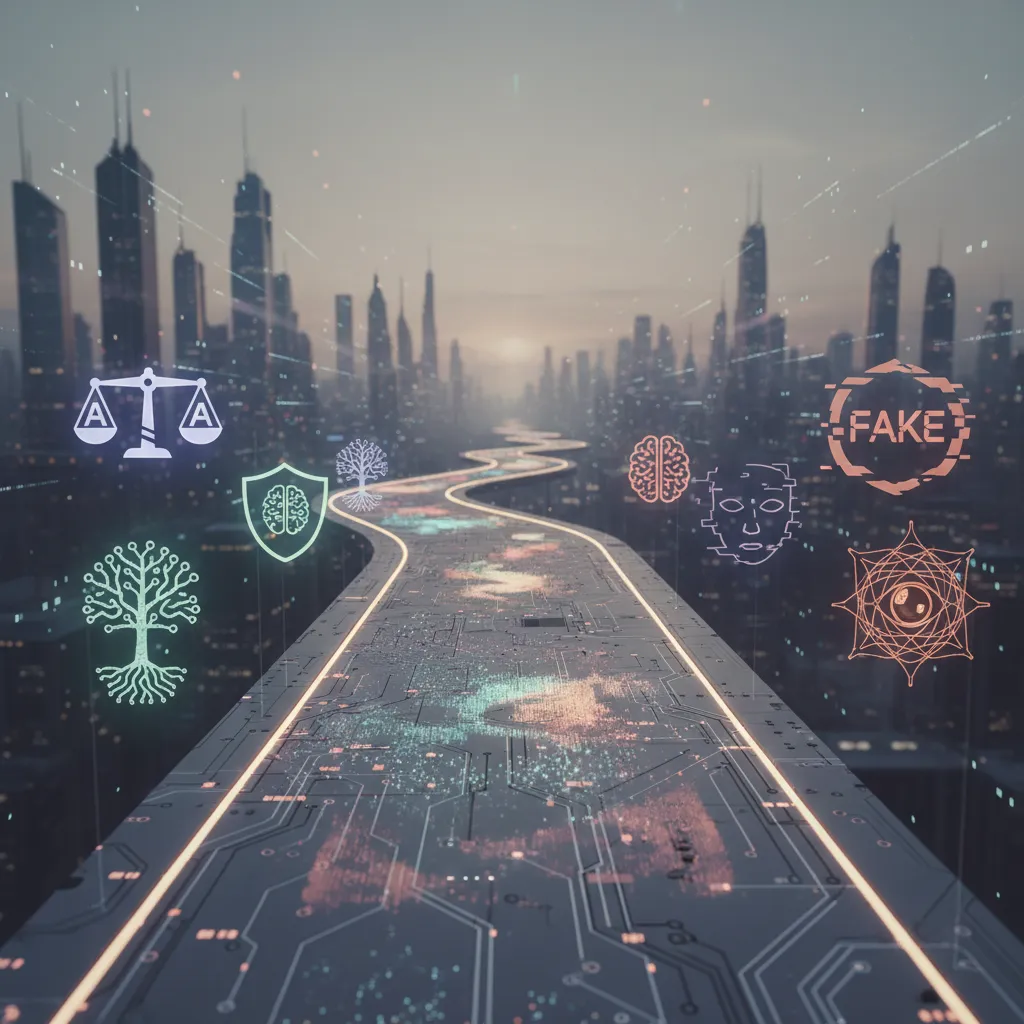
The power of AI video advancements is undeniable, but so is the responsibility that comes with it. By proactively tackling these ethical considerations, we can harness the transformative potential of AI video to unleash creativity and enhance communication, while safeguarding against its potential misuses.
Conclusion
The journey through the landscape of AI video generation reveals a technology not merely on the horizon, but firmly planted in the present, rapidly reshaping the contours of content creation. From sophisticated text to video AI that transforms prompts into compelling narratives, to advanced AI video editing suites that automate complex post-production, artificial intelligence is democratizing access, amplifying creativity, and revolutionizing how we produce and consume visual media. We’ve explored the intricate mechanics of generative AI video, delved into the myriad applications across industries from AI film making to AI video marketing, and charted the exciting AI video trends that promise an even more dynamic and personalized future for content.
Yet, with immense power comes significant responsibility. The discussion around AI video ethics is crucial, reminding us of the need for transparency, accountability, and careful consideration of issues like deepfakes, copyright, and bias. The future of AI video is not just about technological advancement; it’s about our collective ability to harness these innovations responsibly and ethically.
For content creators, businesses, and anyone engaged with digital media, embracing AI video tools is no longer an option but a strategic imperative. These tools are poised to unlock unprecedented levels of efficiency and creative expression, transforming bottlenecks into opportunities. The ultimate guide to AI video generation is not a static document, but an ongoing conversation, one that invites you to experiment, learn, and contribute to this vibrant new era of content creation.
Unleash your creativity. Explore the best AI video software available, experiment with AI video effects, and discover how AI for content creators can elevate your storytelling. The future of content is here, and it’s powered by AI. Are you ready to create it?
FAQs
Q1. What is an AI video generator?
An AI video generator is a software or platform that uses artificial intelligence algorithms to automatically create, modify, or enhance video content. This can range from transforming text prompts into full videos to animating images or assisting with complex video editing tasks.
Q2. How does generative AI video work?
Generative AI video works by employing deep learning models, such as GANs or diffusion models, trained on vast datasets of existing videos, images, and text. These models learn patterns and relationships, enabling them to generate entirely new, coherent video content based on user inputs like text descriptions or source images.
Q3. Can AI generate realistic videos?
Yes, advancements in AI video technology are enabling the creation of increasingly realistic AI video. With sophisticated models and extensive training data, AI can now generate highly convincing scenes, characters, and movements that can be difficult to distinguish from real footage, pushing the boundaries of synthetic media AI.
Q4. What are the main benefits of using AI for video creation?
The main benefits of AI video creation include significantly reduced production time and costs, increased efficiency, the ability to rapidly prototype ideas, and the democratization of video production for individuals and small businesses. It also enables hyper-personalization and new forms of interactive storytelling.
Q5. What are some common applications of AI video tools?
AI video tools are used across various sectors for AI video marketing, AI film making, corporate training, AI video for social media, personalized advertising, and generating explainer videos. They also power virtual human presenters and enhance traditional AI video editing workflows.
Q6. Are there ethical concerns with AI video generation?
Yes, significant AI video ethics concerns exist. These include the potential for deepfake video AI to spread misinformation, challenges related to copyright and intellectual property for AI generated content, inherent biases in AI models leading to discriminatory content, and issues surrounding data privacy and consent for using individuals’ likenesses.
Q7. How long does it take to create a video with AI?
The time it takes to create a video with AI can vary widely depending on the complexity of the request and the specific AI video software used. Simple AI short video maker tools can generate clips in minutes, while more intricate or longer videos with extensive customization might take hours, still significantly faster than traditional methods.
Q8. What is text to video AI?
Text to video AI is a specific type of AI video generator that takes a written description or prompt as input and automatically creates a corresponding video. This technology interprets the text and synthesizes visual elements, actions, and scenes to match the narrative described, turning words directly into moving images.