AI Unleashed: Smart Tech for Epic Outdoor Adventures & Nature Exploration
Introduction
Imagine standing on a ridgeline, the trail vanishing into a thick fog. Your paper map is damp, and your sense of direction is wavering. Or perhaps you’re deep in a forest, captivated by a bird’s intricate song or a wildflower’s delicate petals, wishing you could know its name. For generations, these moments of uncertainty and curiosity have been core to the outdoor experience. But what if technology could provide answers without diminishing the magic?
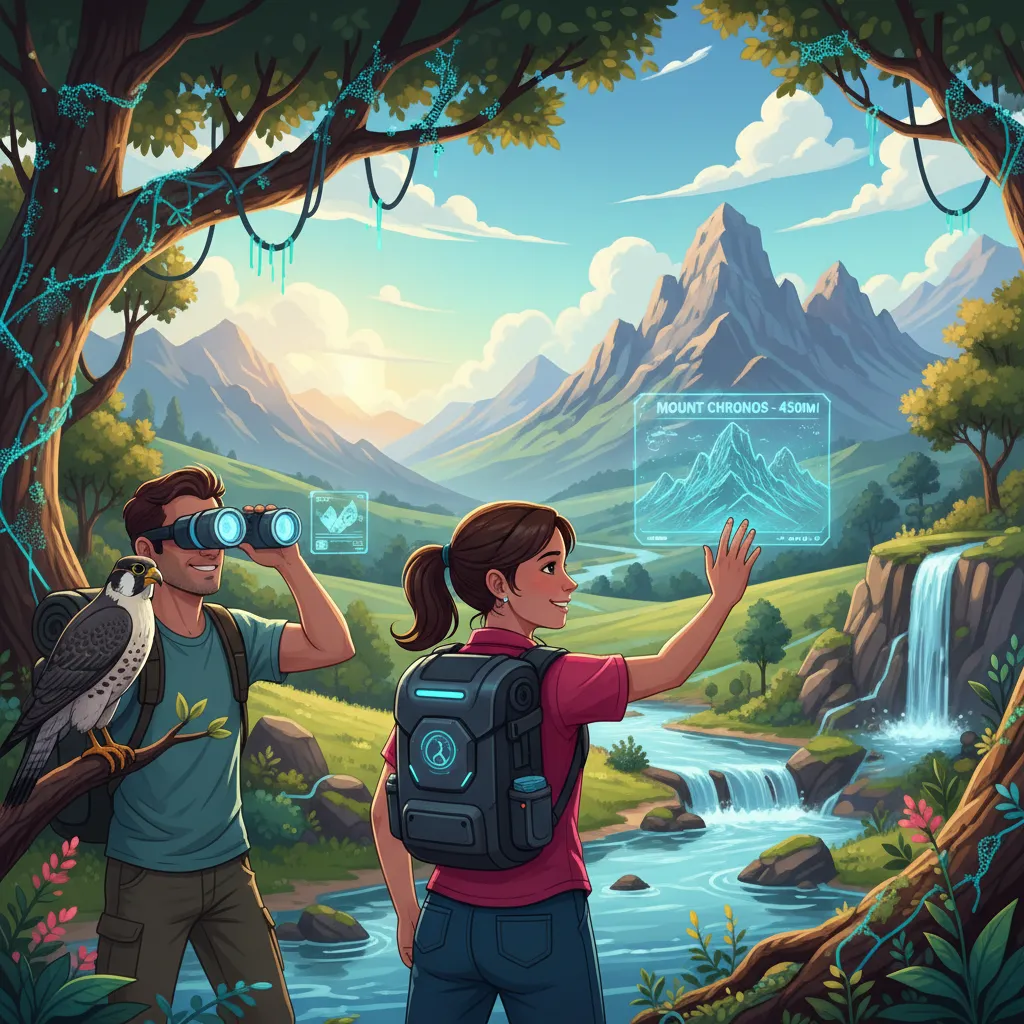
This is where the next great expedition begins—one powered by artificial intelligence. The world of AI outdoor adventure is no longer a futuristic concept; it’s a rapidly growing reality. From smart tech hiking gear that anticipates your needs to apps that turn your smartphone into a pocket naturalist, AI is fundamentally reshaping our relationship with the wild. It’s making nature exploration safer, more accessible, and infinitely more insightful.
In this deep dive, we’ll explore the groundbreaking ways AI is enhancing every aspect of our time outdoors. You’ll learn how personalized outdoor routes are being charted by intelligent algorithms, how AI wildlife identification is connecting us more deeply with ecosystems, and how outdoor safety AI is providing a digital guardian angel when we’re off the grid. Get ready to gear up for the future of adventure.
The New Compass: AI-Powered Navigation and Wilderness Exploration
The days of relying solely on a magnetic compass and a worn-out map are evolving. While those essential skills remain vital, AI is introducing a new layer of precision, personalization, and reliability to how we find our way. This isn’t just about a blue dot on a screen; it’s about predictive, adaptive, and intelligent guidance.
Personalized Outdoor Routes & Dynamic Trail Mapping
Generic, one-size-fits-all trails are becoming a thing of the past. Modern trail mapping AI platforms like AllTrails and Strava are now using sophisticated algorithms to suggest routes tailored to your specific needs. This AI considers dozens of variables:
- Your Fitness Level: By analyzing your past hikes, heart rate data, and pace, the AI can recommend trails that match your endurance.
- Current Conditions: It pulls real-time data on weather, trail closures, and even user-submitted reports on obstacles like fallen trees or washouts.
- Your Preferences: Looking for a dog-friendly trail with a waterfall view and minimal elevation gain? AI can filter through thousands of options in seconds to find your perfect match.
- Predictive Effort: Advanced systems can even show you an “effort score” based on terrain, elevation, and your personal metrics, helping you gauge if you have enough daylight and energy to complete the loop.
This level of AI navigation wilderness technology empowers both novice hikers to start safely and seasoned mountaineers to discover hidden gems tailored to their skills.
Beyond GPS: The Rise of the AI Digital Compass and Off-Grid Solutions
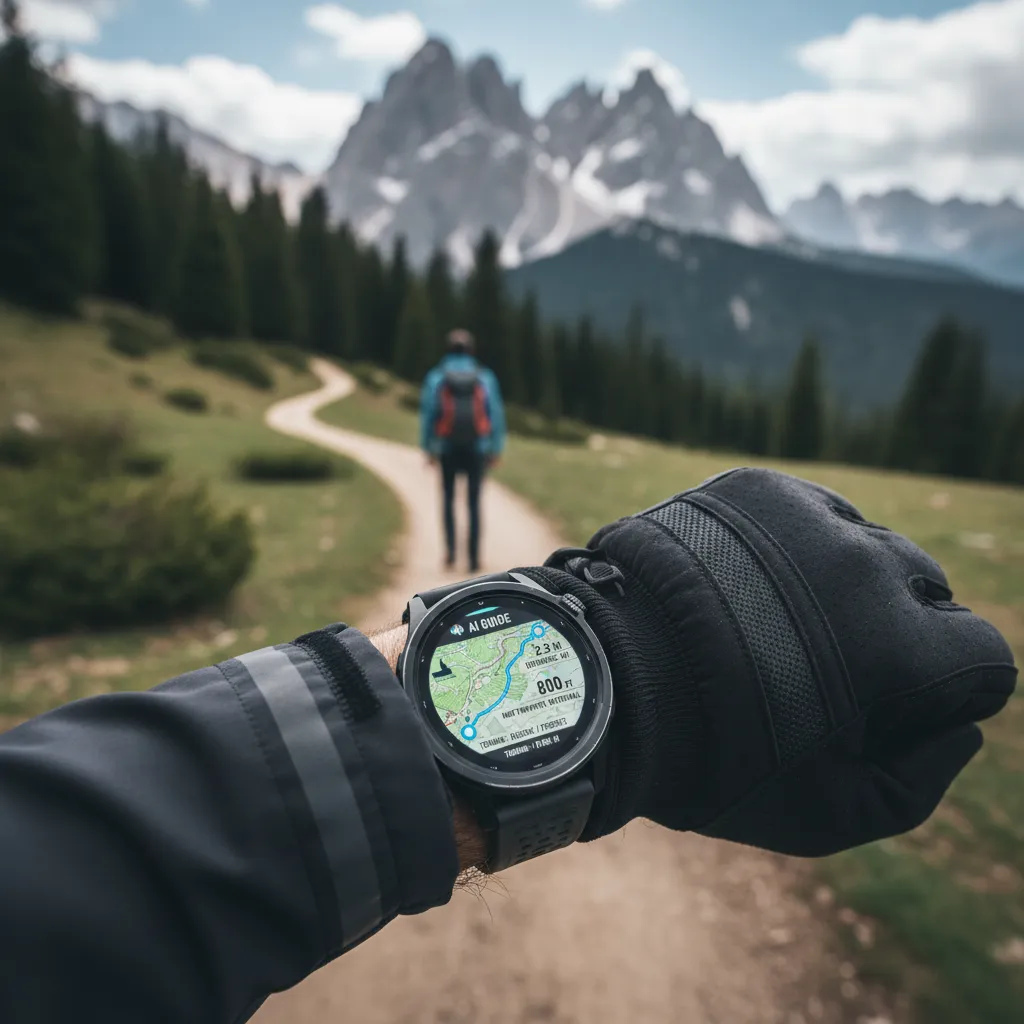
What happens when you lose a GPS signal in a deep canyon or dense forest? This is where off-grid AI solutions truly shine. New devices and apps are using sensor fusion—combining data from your phone’s accelerometer, gyroscope, and barometer—with AI algorithms to maintain an accurate heading even without a satellite lock.
This digital compass AI can predict your location based on your last known coordinates and your subsequent movements. Furthermore, wearable AI outdoor devices, like the latest smartwatches from Garmin and Suunto, use these same principles. They can detect if you’ve gone off-course from a pre-loaded route and send you haptic alerts, ensuring you stay on track even when you can’t be looking at a screen. Related: The AI Health Revolution: Smart Tracking for Proactive Wellness Insights
Your Digital Ranger: Identifying Flora and Fauna with AI
One of the greatest joys of nature is the sense of discovery. AI is transforming our smartphones into powerful educational tools, acting as a digital field guide that can identify almost any living thing you encounter, deepening your connection to the ecosystem around you.
Smart Binoculars and AI Wildlife Identification
Imagine looking at a distant falcon and seeing its species name, wingspan, and habitat information appear in your field of view. This is the promise of smart binoculars AI. Products like the Swarovski Optik AX Visio use a built-in camera and neural processing unit to perform real-time AI wildlife identification. You simply spot an animal, press a button, and the AI analyzes the image against a vast database to tell you what you’re seeing.
This technology is a game-changer for birders (AI for bird watching), wildlife enthusiasts, and citizen scientists. It lowers the barrier to entry for beginners and provides a powerful verification tool for experts.
The Forest at Your Fingertips: AI for Plant and Nature Sound Recognition
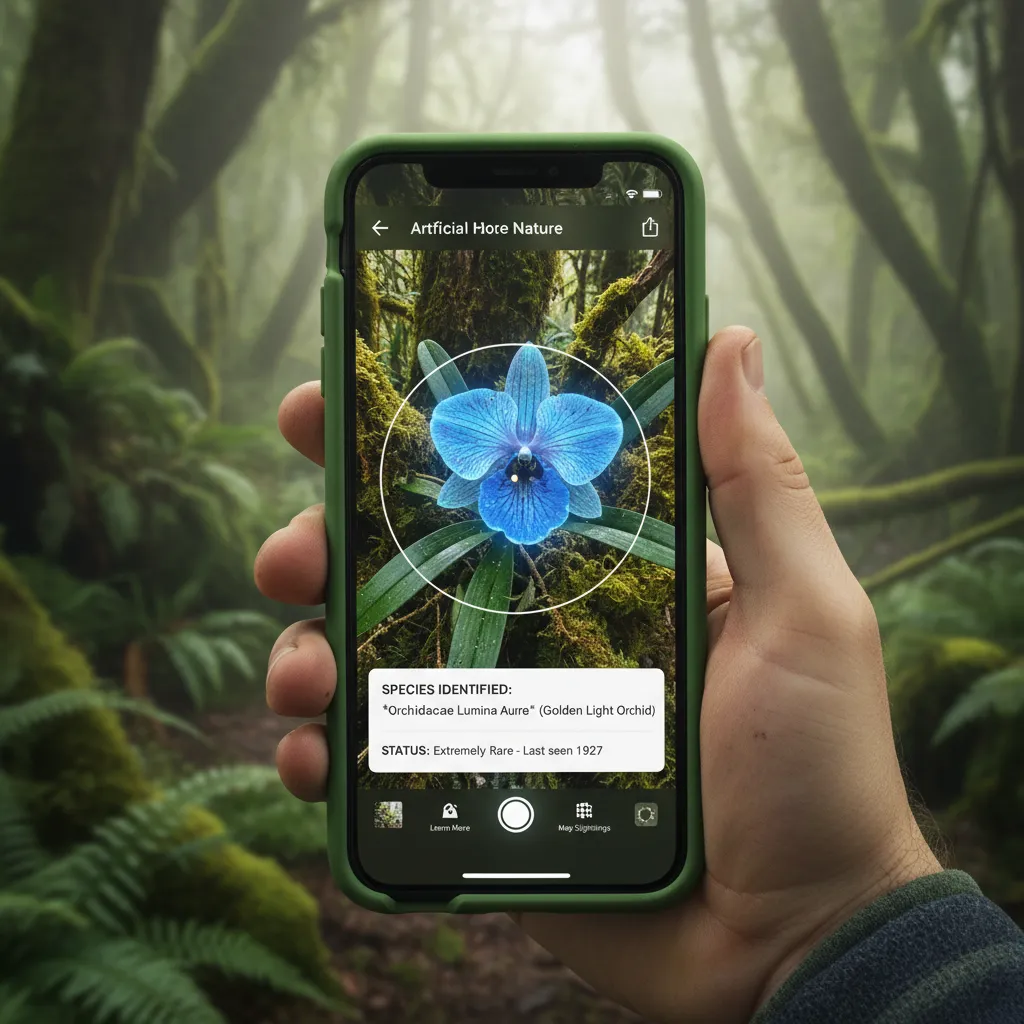
For things closer at hand, apps like Seek by iNaturalist and PictureThis use your phone’s camera for instant AI for plant identification. Just snap a photo of a leaf, flower, or mushroom, and the app’s computer vision model identifies it in seconds, often providing fascinating details about its medicinal uses, toxicity, and ecological role.
The auditory world is also getting an AI upgrade. Nature sound recognition AI can listen to the ambient sounds of the forest and identify different bird calls, frog croaks, and even insect buzzes. This opens up a new dimension of nature exploration AI, allowing you to appreciate the complex soundscape of the wild.
The Guardian Angel: Enhancing Outdoor Safety with AI
While adventure inherently involves risk, AI is providing powerful new tools to mitigate danger and respond to emergencies more effectively than ever before. It’s a silent partner that’s always watching your back.
Proactive Alerts: AI Weather Forecasting for Hiking
Weather in the mountains can change in an instant. Standard forecasts might give you a general outlook for the region, but AI weather forecasting hiking apps provide hyper-local, minute-by-minute predictions for your exact location on the trail. By analyzing complex atmospheric models and real-time data, these AI systems can predict pop-up thunderstorms, wind gusts on exposed ridges, and sudden temperature drops with incredible accuracy. This proactive outdoor safety AI can be the critical difference between a pleasant hike and a dangerous situation.
Smart Wearables and AI Survival Tools
Modern connected outdoor devices and wearables are packed with sensors that AI uses to keep you safe.
- Fall Detection: Apple Watch and other smartwatches use accelerometers to detect a hard fall. If you don’t respond, the AI can automatically alert emergency services with your GPS coordinates.
- Biometric Monitoring: Devices can track your heart rate, blood oxygen levels, and exertion. The AI can alert you if your vitals indicate signs of heat exhaustion, dehydration, or altitude sickness.
- Automated SOS: Devices like the Garmin inReach pair with satellite networks. In an emergency, AI-assisted messaging can help you communicate crucial details to rescuers, even without cell service. These AI survival tools are becoming an essential piece of kit for anyone venturing into the backcountry.
The Modern Explorer’s Toolkit: Cutting-Edge AI Camping Gadgets and Gear
The innovation doesn’t stop at safety and navigation. AI is being integrated into the very fabric of our equipment, making it smarter, more efficient, and more enjoyable to use.
The Intelligent Campsite: From AI-Powered Backpacks to Smart Apparel
The next wave of AI outdoor gear is focused on comfort and convenience. We’re seeing the emergence of:
- AI Camping Gadgets: Think smart lanterns that adjust brightness based on ambient light and proximity, or portable power stations that use AI to optimize charging and energy output for all your devices.
- The AI Powered Backpack: Prototypes are being developed for backpacks that use AI to monitor your posture and automatically adjust internal weight distribution to reduce strain and prevent injury on long treks.
- Smart Outdoor Apparel: Clothing with integrated sensors can monitor your body temperature and perspiration, using AI to actively open or close ventilation ports or adjust heating elements to keep you in the optimal comfort zone.
Capturing the Wild: AI Drone Nature Photography and Videography
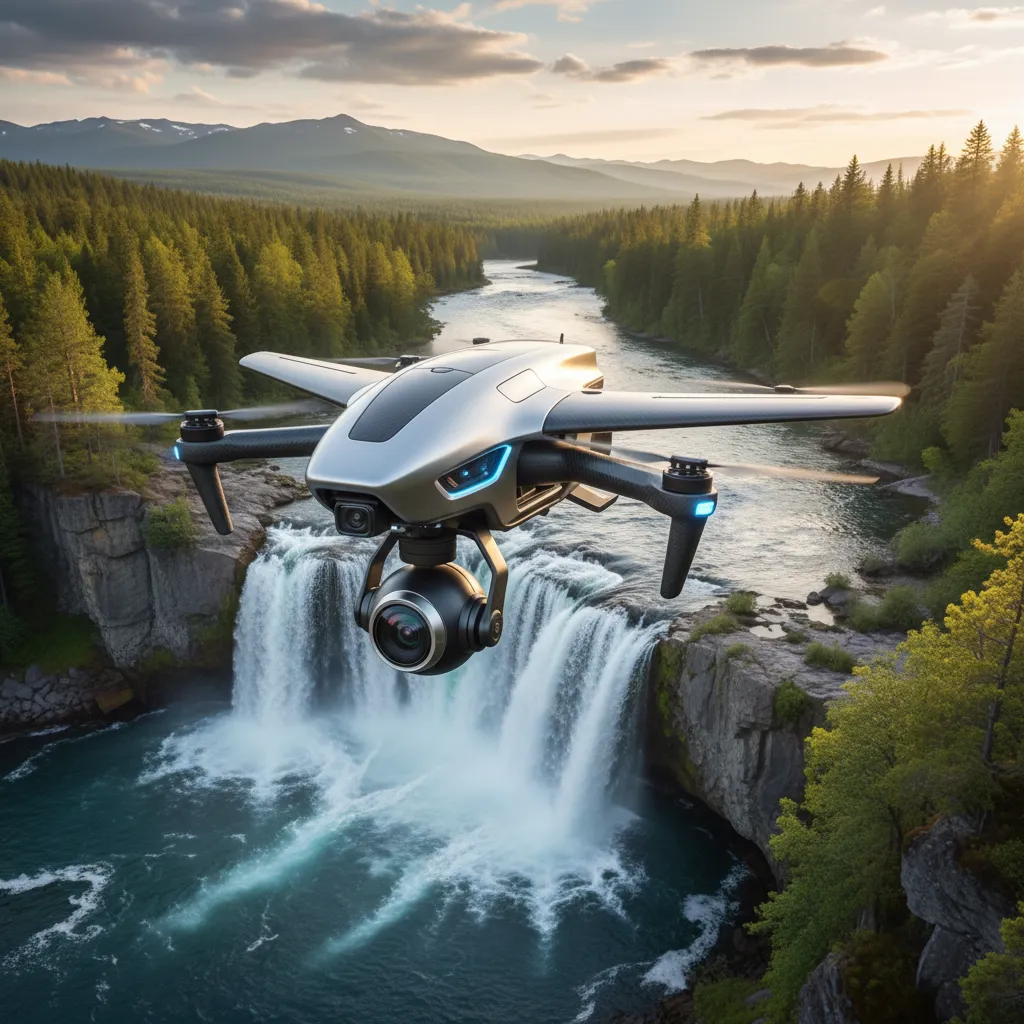
AI drone nature photography has revolutionized how we document our adventures. Modern drones from brands like DJI are packed with AI features:
- Intelligent Tracking: “Follow me” modes are now incredibly sophisticated. The AI can lock onto a subject (like a hiker, kayaker, or climber) and autonomously pilot the drone, navigating complex obstacles like trees and rock faces to get the perfect cinematic shot.
- Automated Shot Paths: You can select pre-programmed flight paths like “orbit,” “rocket,” or “dronie,” and the AI will execute them flawlessly, delivering professional-quality video that was once impossible for a solo operator. Related: The Future of Content is Here: A Deep Dive into AI Video Generation
The Rise of the Voice AI Outdoor Assistant
When your hands are busy gripping trekking poles or a paddle, a voice AI outdoor assistant becomes invaluable. Integrated into smart glasses or earpieces, these systems allow you to get directions, ask about your current altitude, identify a landmark, or check the weather forecast, all without stopping or fumbling with a device. This hands-free interaction, sometimes paired with augmented reality nature overlays, lets you stay present in the moment while still accessing powerful information.
The Conscientious Adventurer: AI for Sustainable and Responsible Tourism
Perhaps the most important role AI can play is in helping us protect the wild places we love. By providing data and tools for conservation, AI is fostering a new era of responsible outdoor recreation.
Leave No Trace, Aided by AI
The “Leave No Trace” principles are the ethical backbone of outdoor activity. Leave no trace AI is a burgeoning field aimed at using technology to support these principles.
- Predicting Crowds: AI can analyze historical visitor data, social media check-ins, and parking lot capacity to predict when certain trails will be overcrowded. Park managers can use this to suggest alternative routes, reducing environmental strain.
- Monitoring Impact: AI-powered analysis of satellite and drone imagery can detect signs of trail erosion, illegal campsites, or vegetation damage, allowing for quicker intervention.
- Education: Apps can use AI to deliver location-based reminders about local regulations, such as “You’re entering sensitive wildlife habitat, please stay on the trail.”
This technology promotes AI for responsible tourism, helping to preserve natural beauty for future generations.
Eco-Friendly Adventure Tech and Sustainable Choices
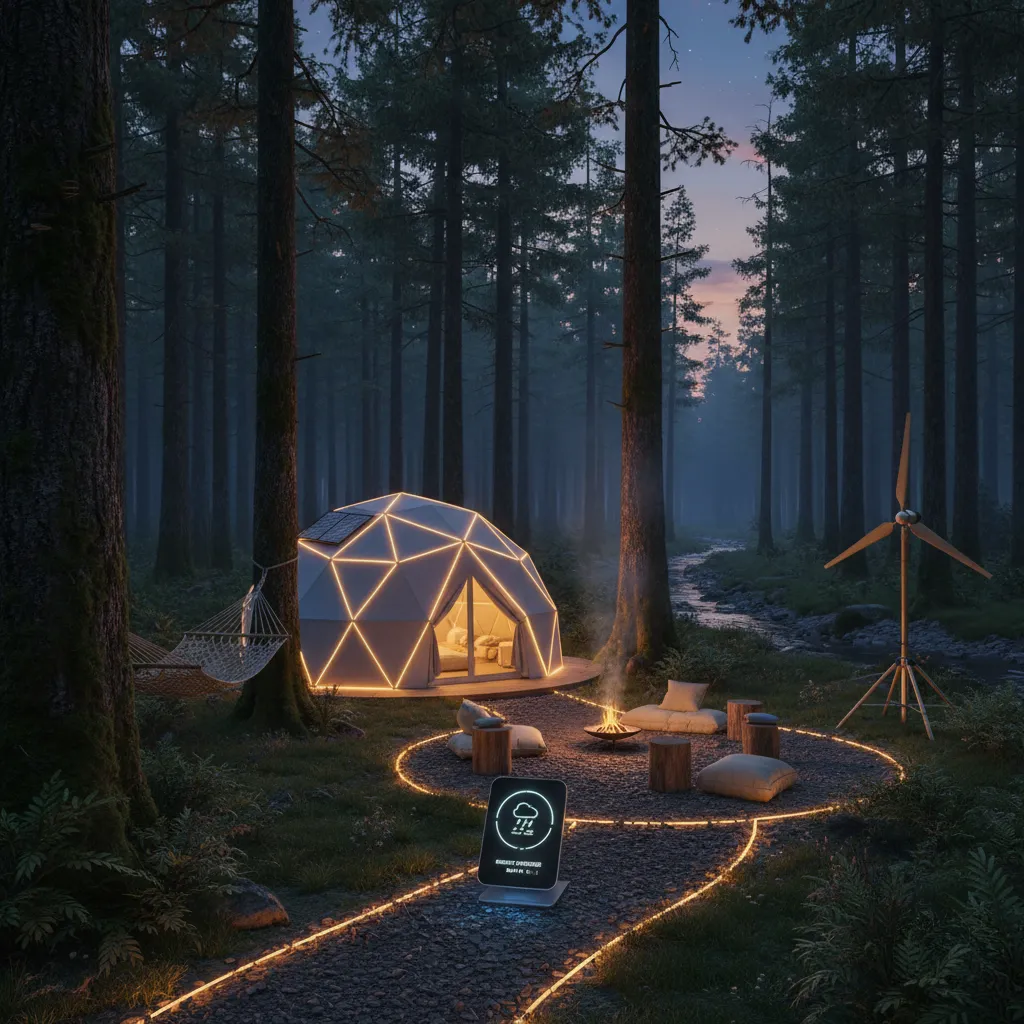
The gear we carry can have its own environmental footprint. AI is contributing to more sustainable outdoor tech by optimizing energy efficiency in our gadgets. Eco-friendly adventure tech uses smart charging algorithms to prolong battery life and reduce energy waste, a critical feature for off-grid power banks and solar chargers. This ensures our off-grid AI solutions are as light on the planet as they are on our backs.
Monitoring the Wild with AI Trail Cams
For conservationists and researchers, sifting through thousands of hours of trail camera footage has been a monumental task. The modern AI trail cam changes everything. These devices use on-board AI to automatically identify and tag species, count individuals, and even recognize specific animals. This frees up countless hours for scientists, accelerating research into wildlife populations, migration patterns, and the overall health of an ecosystem.
The Trail Ahead: Future and Ethical Considerations
The integration of AI into the wilderness is undeniably exciting, but it also raises important questions we must consider as we move forward.
- Over-Reliance and Skill Atrophy: Does relying on a digital compass AI mean we’ll forget how to use a real one? It’s crucial to view these technologies as supplements to, not replacements for, traditional outdoor skills and knowledge.
- Data Privacy: Connected outdoor devices track vast amounts of personal data, from our location to our biometrics. Ensuring this data is secure and used ethically is paramount. Related: AI Privacy On Your Device: Securing Your Data in the Age of On-Device Intelligence
- The Digital Divide: Will the best and safest outdoor experiences become exclusive to those who can afford expensive AI outdoor gear? We must strive to make these safety and educational tools accessible to all.
Conclusion
From the mountain peak to the forest floor, artificial intelligence is weaving itself into the fabric of the outdoor experience. It’s the silent navigator on your watch, the knowledgeable botanist in your phone, and the vigilant guardian watching the weather. This wave of smart tech hiking and exploration tools is not about removing challenge or disconnecting us from nature. On the contrary, it’s about deepening our understanding, enhancing our safety, and empowering us to be better stewards of the environment.
By handling the complex data—the route calculations, the species databases, the weather models—AI frees up our most valuable asset: our attention. It allows us to lift our heads from the map and truly see the world around us, confident and curious. The AI outdoor adventure is here, and the wild has never been more welcoming.
What AI-powered tech are you most excited to take on your next trip? Share your thoughts in the comments below!
Frequently Asked Questions About AI in the Outdoors
Q1. How is AI used in hiking?
AI is used in hiking for a wide range of applications, including personalized route planning based on fitness and conditions, real-time navigation even without GPS, hyper-local weather forecasting, and personal safety through fall detection and biometric monitoring on wearable devices.
Q2. What is the best AI app for identifying plants and animals?
Apps like Seek by iNaturalist and PictureThis are highly regarded for AI for plant identification. For wildlife, especially birds, tools integrated into smart binoculars AI or apps like Merlin Bird ID (which uses nature sound recognition AI) are excellent choices for real-time identification.
Q3. Can AI help with outdoor safety?
Absolutely. Outdoor safety AI is a major benefit. It powers predictive weather alerts, automates SOS calls with precise GPS data, detects falls and accidents via smartwatches, and can help hikers stay on their intended trail with off-course alerts, significantly reducing risks in the wilderness.
Q4. What are AI-powered binoculars?
AI-powered binoculars, or smart binoculars, are optical devices with an integrated camera and a small computer. They use artificial intelligence to instantly identify birds or other wildlife in your field of view, displaying information directly to you. This combines high-quality optics with the power of a digital field guide.
Q5. How does AI help create personalized hiking routes?
AI algorithms analyze multiple data points to create personalized outdoor routes. This includes your past hiking activity and fitness level, your stated preferences (e.g., elevation, scenery), real-time trail conditions, weather forecasts, and even how crowded a trail is likely to be, suggesting the perfect hike for you at that moment.
Q6. What is augmented reality nature?
Augmented reality (AR) in nature overlays digital information onto your real-world view, usually through your smartphone camera or smart glasses. For example, you could point your phone at a mountain range and see an AR overlay that labels each peak’s name and elevation, creating an interactive and informative nature exploration AI experience.