AI Travel: Plan Your Dream Trip Faster

Introduction: The End of Travel Planning Headaches
Remember the days spent buried under browser tabs, cross-referencing flight prices, hotel reviews, and local transport timetables? For decades, planning a truly perfect trip felt less like anticipation and more like a second job. This manual effort, fraught with decision fatigue, often stood between us and the actual joy of travel.
That era is rapidly dissolving, thanks to travel planning with artificial intelligence.
The arrival of sophisticated AI travel planner tools is transforming vacation logistics from a chore into a highly personalized and efficient process. Whether you’re a meticulous researcher or someone who just wants a perfect itinerary handed to you, the sheer speed and detail offered by an automated trip planner is rewriting the rules. We’re moving beyond simple price comparisons; we’re entering the age of the AI vacation planner that understands context, budget, and personal preferences on a molecular level.
In this comprehensive guide, we will explore exactly how to use AI for travel—from generating highly customized itineraries and optimizing your budget to discovering hidden local gems. We will deep-dive into the best AI travel tools available today, including specific strategies for using large language models like ChatGPT and Gemini. Prepare to learn how to minimize planning stress and maximize adventure using cutting-edge technology.
The Foundation: How AI Revolutionizes Travel Planning
Artificial intelligence doesn’t just speed up research; it fundamentally changes the quality of the plan. AI systems can sift through billions of data points—historical pricing, real-time demand, geo-specific reviews, and climate data—in seconds, offering AI-driven travel insights that no human could match.
The core mechanisms where AI delivers unparalleled value include:
1. Generating Hyper-Personalized Itineraries
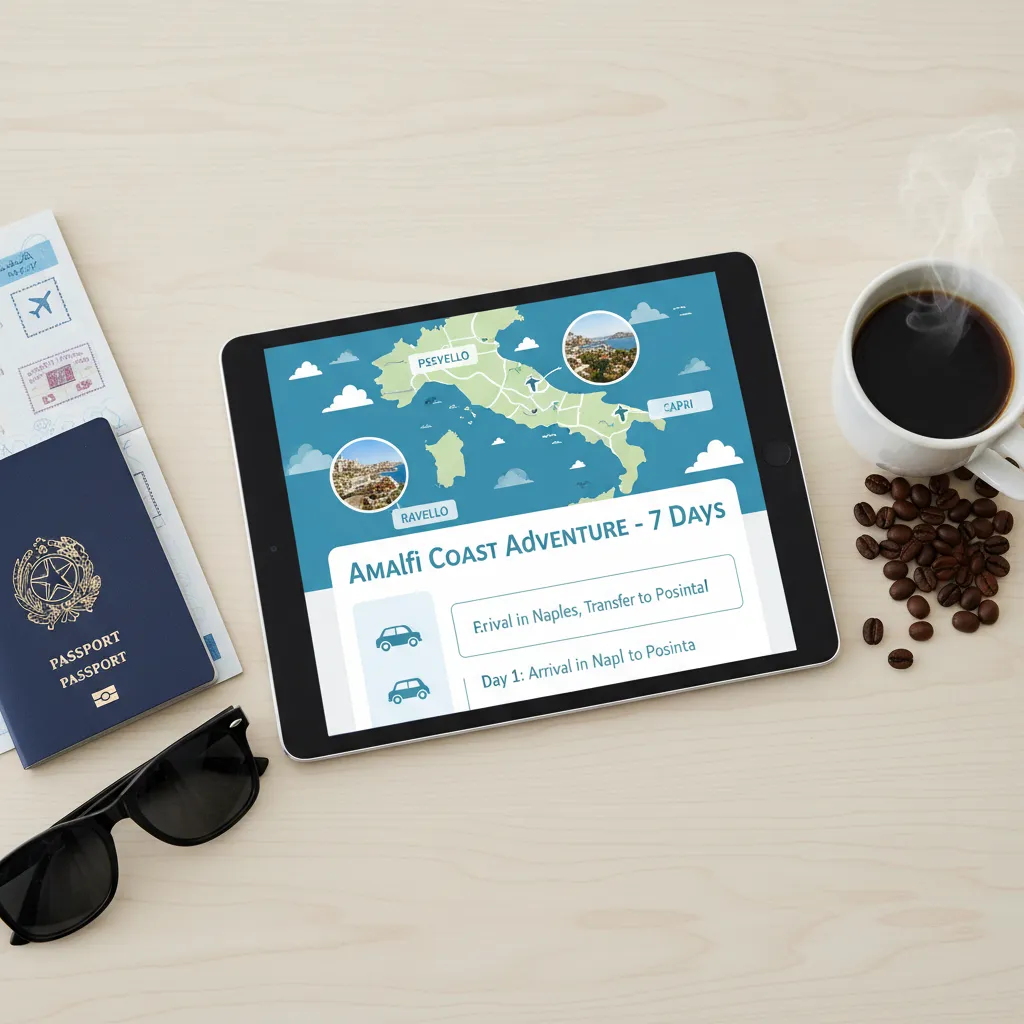
Traditional travel guides are one-size-fits-all. AI itinerary generator tools, however, treat every traveler as unique. By inputting criteria like your energy level, favorite cuisine, budget range, and interest in historical sites versus nightlife, AI crafts a day-by-day plan that is optimized for flow and satisfaction.
This isn’t just a list of places; it’s AI travel itinerary optimization. It accounts for:
- Time Management: Calculating realistic travel times between stops based on mode of transport and time of day.
- Crowd Avoidance: Suggesting less busy times to visit major attractions, often using historical data on foot traffic.
- Sequential Logic: Grouping geographically related activities to minimize backtracking and wasted time.
This hyper-personalization extends deeply into niche needs. Planning a multi-generational trip? Family vacation planning with AI can balance toddler-friendly activities with adult relaxation spots. Are you heading out solo? AI for solo travelers can prioritize safety, offer social meetup suggestions, and recommend highly-rated accommodations near central transport hubs.
2. Mastering the Travel Budget and Finding Deals
One of the most valuable aspects of using AI is its power to maximize savings, positioning it as the ultimate AI budget travel consultant. These systems continuously monitor vast quantities of pricing data, looking for the sweet spot between timing and cost.
Using AI to Find Cheap Flights and Accommodation
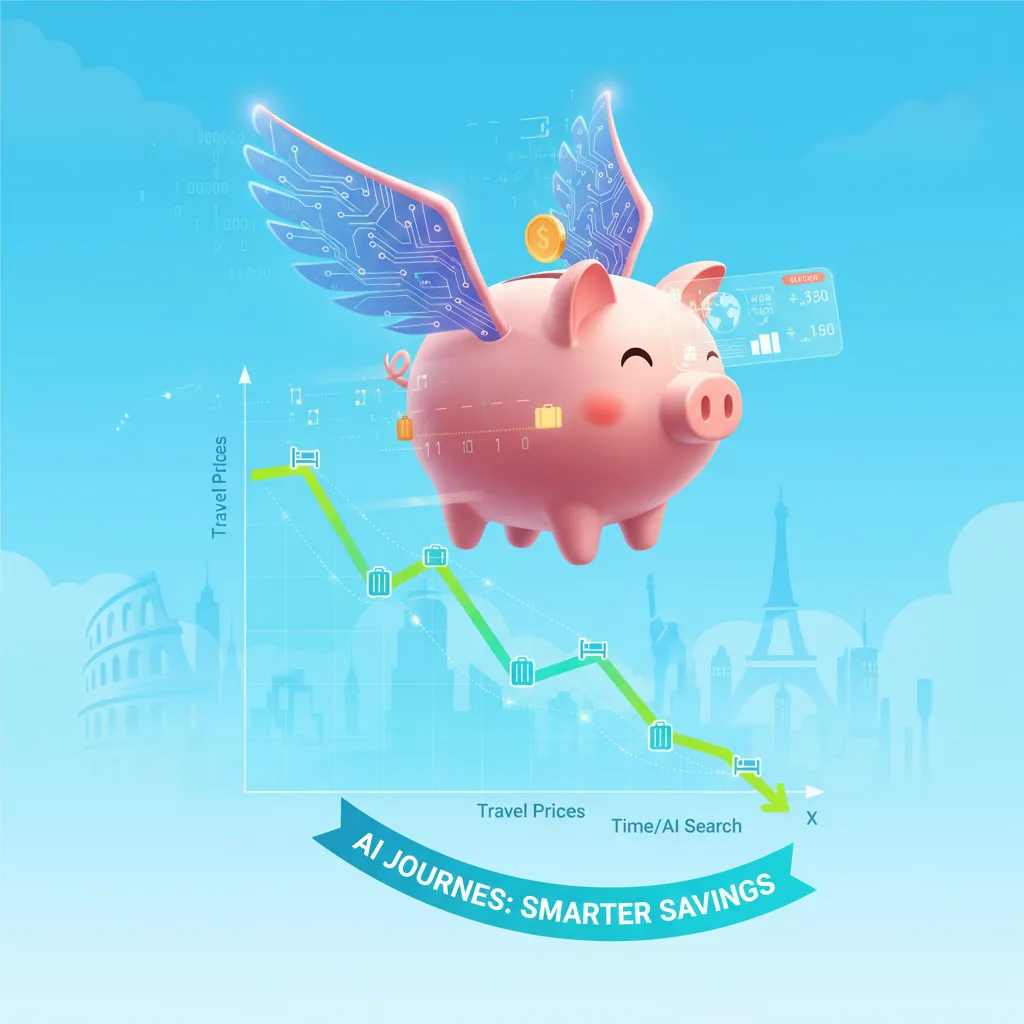
The complexity of airline pricing is designed to confuse manual searchers. But an AI doesn’t get confused. Using AI to find cheap flights involves predictive analytics that forecast whether a price is likely to rise or fall in the coming weeks.
Similarly, in AI hotel booking, the system considers far more than just the lowest price; it assesses the value proposition—combining price, star rating, proximity to your planned activities, and recent user sentiment to recommend the best possible deal that aligns with your specific needs. This capability makes specific AI travel tools essential for securing the best value without compromising on quality.
Leveraging Generative AI: From Prompts to Plans
Generative AI, in the form of chatbots like ChatGPT and Google Gemini, has introduced an entirely new, conversational way to approach travel preparation. These are not dedicated booking engines but powerful brainstorming partners and virtual travel assistants.
ChatGPT Travel Planning and Google Gemini Travel Planning
The key to successful ChatGPT travel planning is providing detailed, structured prompts. Instead of asking, “Plan a trip to London,” you should ask, “I have four days in London in October. I love classical art, craft beer, and street food. My budget is $200 per day (excluding accommodation). Generate a detailed, day-by-day itinerary focusing on efficient public transport use. Include two backup indoor activities per day due to potential rain.”
Similarly, Google Gemini travel planning excels by leveraging its real-time grounding capabilities. If you ask Gemini to plan a three-day weekend in Seville, Spain, it can pull current local events, restaurant opening hours, and even visa requirements, ensuring your plan is accurate and up-to-date. This integration of up-to-the-minute data highlights the potential of generative AI in travel.
Actionable AI Trip Planning Tips
To get the most out of these language models:
- Define Constraints: Always specify budget, duration, interests, travel style (fast-paced, relaxing), and who you are traveling with (solo, family, couple).
- Iterate and Refine: Treat the AI’s first output as a draft. Ask it to “Swap Day 2’s activities with Day 4’s” or “Increase the budget by 10% and suggest a higher-end dining experience.”
- Ask for Comparisons: Use the AI to compare two destinations based on your criteria, such as “Compare costs and activities for a ski trip in the Swiss Alps versus Colorado in February.”
/image-topic.webp
Image Placement 1:
Essential AI Travel Tools and Best AI Travel Apps
The market is saturated with specialized applications designed to assist travelers at every stage of the journey. These smart travel tools fall into distinct categories:
A. Dedicated AI Itinerary and Planning Platforms
These are the primary AI travel planners designed specifically for creating and managing trips.
| AI Tool Type | Primary Function | Key Benefit |
|---|---|---|
| Itinerary Generator | Creates and optimizes multi-day travel schedules based on user input. | Time-saving, logistical efficiency, ensures logical flow. |
| AI Booking Engines | Searches flights/hotels across multiple platforms, predicting price changes. | AI for booking flights and AI hotel booking optimization, maximizes savings. |
| Virtual Assistants | Chatbot interface for real-time recommendations, advice, and booking management. | Conversational, always-on AI travel assistant support. |
The best AI travel apps often integrate several of these functions, moving beyond simple search engines to become comprehensive organizational hubs.
B. AI for Booking and Price Prediction
The most immediate financial benefit of AI comes from its ability to predict market shifts. When AI for booking flights is employed, algorithms analyze historical volatility for specific routes and alert users at the optimal moment to purchase tickets. This is a crucial element in AI budget travel.
Consider the complex routing challenges of a multi-city tour. An AI itinerary generator can not only suggest the order of cities but also dynamically adjust the dates and transport methods (train, flight, rental car) to achieve maximum efficiency and cost-effectiveness.
/image-topic.webp
Image Placement 2:
C. On-the-Ground AI Assistance and Personalization
Once you’re traveling, the job of the AI travel assistant shifts from planning to real-time support, focusing heavily on AI travel personalization.
AI for Discovering Local Attractions
Getting off the beaten path is often the goal, but finding reliable, non-touristy spots can be challenging. AI leverages geotagged social media data, local review analysis, and sentiment analysis to identify genuine, high-quality, local experiences.
This means asking your AI travel assistant for “a non-touristy, family-run restaurant within walking distance of my hotel that serves traditional Tuscan food,” and getting a highly relevant, up-to-the-minute suggestion, rather than just the top-rated results on a generic platform. This capability delivers truly personalized travel recommendations AI.
Language and Navigation Support
For international travelers, the stress of communication is significantly reduced by technology. Language translation AI for travel is no longer bulky or slow. Real-time translation apps using AI can translate complex conversations or street signs instantly via a phone camera or microphone. This ability to break down language barriers instantly is a massive step forward in empowering travelers globally.
[Related: AI Content Powerup: Speed and Quality Today]
Deep Dive: Optimizing Specialized Trips with AI
The power of travel planning with artificial intelligence is best illustrated when tackling trips that require complex coordination or highly specific needs.
Leveraging AI for Group and Family Trips
Family vacation planning with AI addresses the unique scheduling conflicts of groups. For example, if you have children of varying ages, the AI can structure the day so that high-energy activities are followed by restful periods or activities split between age groups.
The AI can manage shared documents, dynamically update group schedules based on live inputs (like a flight delay), and even handle polling for consensus on activities and dining choices, which can be invaluable when managing multiple preferences.
AI for Solo and Niche Travelers
AI for solo travelers offers solutions focused on safety and social integration. The AI might suggest verified, secure accommodations, flag areas with high crime rates based on external data, and provide local contact information.
For niche travel—say, planning a comprehensive list of all Frank Lloyd Wright sites in the Midwest, or mapping out the best stargazing spots in Chile—AI can quickly compile data from specialized sources (historical archives, astronomy journals) that traditional search methods would miss, turning a week of manual research into a few minutes of interaction.
Beyond the Horizon: The Future of Travel Technology
The current generation of AI travel tools is impressive, but we are only at the starting line of the future of travel technology. The ongoing integration of AI into every layer of the travel industry suggests a monumental shift toward hyper-automation.
1. The Rise of the AI-Powered Travel Agency
The traditional role of a human travel agent is evolving. The next generation of companies will function as an AI-powered travel agency, where AI handles the logistics, predictive pricing, and initial itinerary creation, while human experts step in to add emotional intelligence, handle complex changes, and manage high-end, bespoke experiences. This synergy combines the efficiency of the machine with the empathy of a human.
2. Predictive and Proactive Assistance
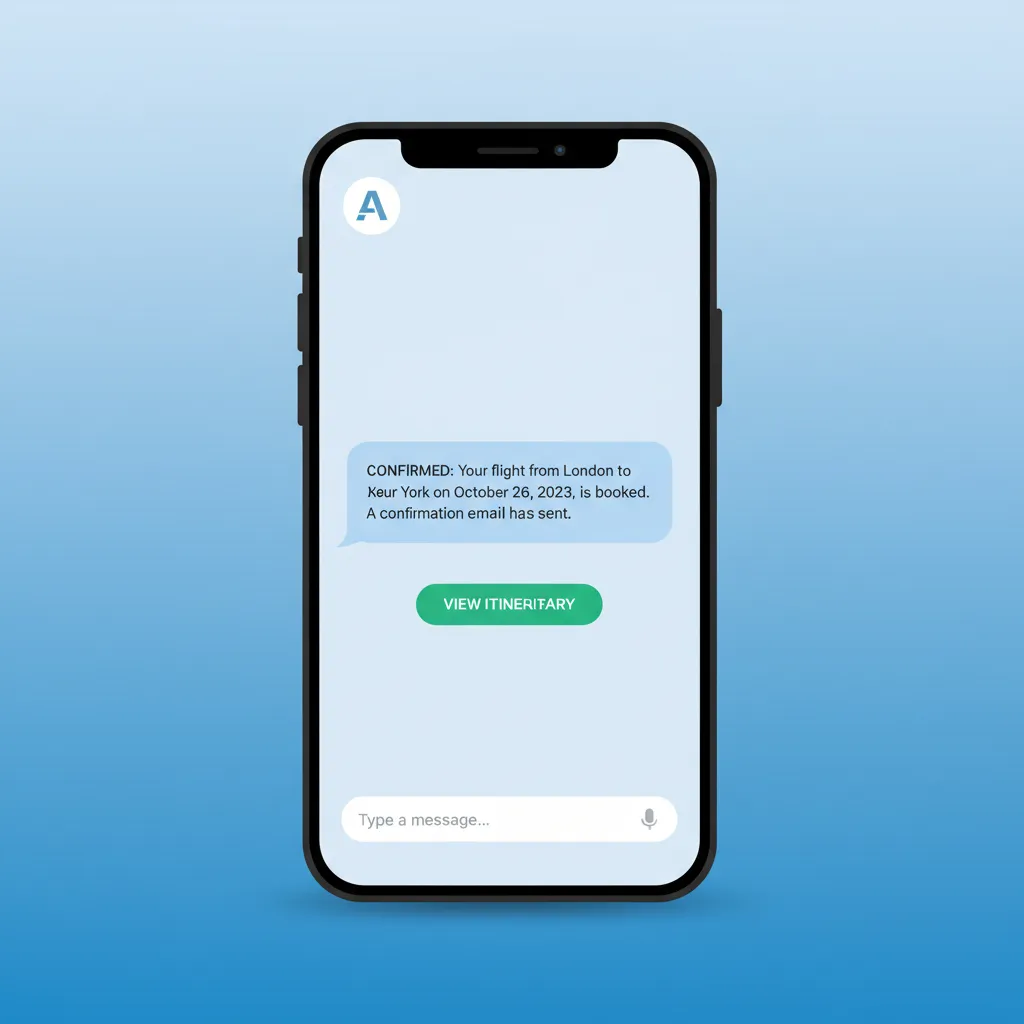
Future AI travel assistants won’t just react to your questions; they will anticipate your needs. Imagine an AI noticing a weather delay affecting your connecting flight, automatically rebooking your next leg, notifying your hotel, and sending you a text with the updated gate number—all before the airline officially announces the change. This proactive planning is driven by sophisticated AI-driven travel insights drawn from real-time global data feeds.
[Related: Smart Cities: AI and IoT Urban Futures]
3. Hyper-Personalized Experiences and Virtual Reality
AI travel personalization will integrate with wearable technology and virtual reality. Before booking, you might use a VR headset powered by AI to virtually walk through your potential hotel room or check the view from a specific table at a recommended restaurant. The AI learns from your virtual interactions, further refining its personalized travel recommendations AI.
Practical Implementation: From Idea to Launch
Ready to use an AI travel planner for your next trip? Here is a structured approach to utilizing these powerful tools effectively.
Step 1: Define Your Macro-Parameters (The Why)
Start with the basics. Where are you going, how long, and what is the absolute ceiling of your budget?
- Example: 10 days in Japan, $5,000 maximum budget (excluding flights), focus on food and temples.
Step 2: Use Generative AI for Ideation and Structuring
Engage a large language model like Google Gemini or ChatGPT to create a foundational draft.
Prompt Example: “I am planning 10 days in Japan. Allocate 4 days for Tokyo, 4 days for Kyoto, and 2 days for Osaka. I need a balanced itinerary focusing on high-quality traditional food experiences and historical temples. For Kyoto, group activities geographically. Use high-speed rail for intercity transport. Provide an estimated daily expenditure breakdown for activities and food.”
This initial output provides a skeleton plan and crucial AI trip planning tips.
Step 3: Transition to Specialized AI Travel Apps for Optimization and Booking
Use the draft from your generative AI to feed dedicated AI itinerary generator tools.
- Flights: Use an AI for booking flights tool to monitor prices for your date range.
- Accommodation: Search for specific hotel types or short-term rentals, utilizing AI-driven review analysis to spot genuine feedback versus synthetic positivity.
- Daily Logistics: Use the app to plug in your chosen sights. The AI travel itinerary optimization feature will calculate the most efficient route, suggesting local transport methods and ensuring activities fit within opening hours.
/image-topic.webp
Image Placement 3:
Step 4: Real-Time Management and Assistance
During your trip, your smartphone becomes the ultimate smart travel tool.
- Navigation: Use AI-enhanced maps that incorporate real-time traffic data, local transport schedules, and even recommend the best exit from a complex subway station.
- Communication: Rely on language translation AI for travel when interacting with locals or reading menus.
The entire process, from that first abstract idea to real-time navigation in a foreign city, is now supported by sophisticated artificial intelligence, making travel accessible, safer, and far more enjoyable. This is the new reality of travel tech trends.
[Related: Master Your Money: Top Personal Finance Apps 2024]
Conclusion: Travel Smarter, Not Harder
The convergence of predictive modeling, advanced language processing, and vast real-time data has positioned the AI travel planner not as a niche novelty, but as an indispensable part of the modern travel experience. By embracing travel planning with artificial intelligence, we unlock unparalleled speed, efficiency, and personalization.
We have moved past the days of generic packages and endless manual searches. Today, your AI vacation planner can craft a journey tailored to your exact tastes, help you navigate complex booking environments using AI for booking flights and AI hotel booking, and serve as a reliable AI travel assistant while you are on the ground.
The future of travel technology is here, and it promises deeper, richer, and more effortless exploration. Stop spending your time planning the trip, and start spending your time dreaming about it. The world is vast, and with AI, your perfect trip is ready to be booked faster than ever before.
/image-topic.webp
Image Placement 4:

Frequently Asked Questions (FAQs)
Q1. What is an AI travel planner and how does it differ from a standard travel search engine?
An AI travel planner is a sophisticated digital tool that uses machine learning and generative AI to not just search for prices, but to understand user intent, synthesize vast amounts of travel data (pricing, logistics, reviews), and automatically generate coherent, personalized itineraries. Unlike standard search engines that require manual input for comparisons, AI proactively optimizes routes, schedules, and budgets.
Q2. How accurate is AI budget travel in estimating trip costs?
AI budget travel is highly accurate because it analyzes historical pricing trends and real-time market fluctuations across flights, accommodation, and ground transportation. While discretionary spending (souvenirs, high-end dining) still requires manual input, AI is excellent at predicting and optimizing fixed costs, often achieving savings of 10% to 30% on major expenses by suggesting optimal booking times and providers.
Q3. Can ChatGPT travel planning create a detailed itinerary, or is it better for brainstorming?
ChatGPT travel planning (and similar large language models like Google Gemini) is primarily best for the initial brainstorming and drafting of a structured plan. It excels at synthesizing creative ideas based on complex constraints and producing text-based itineraries. For true logistical optimization, live price monitoring, and map integration, the output should be transferred to a dedicated AI itinerary generator app that can handle real-time data and booking functionalities.
Q4. Which are the best AI travel apps for real-time assistance during a trip?
The best AI travel apps for on-the-go assistance generally focus on two key areas: real-time logistics and communication. Navigation apps use AI to predict traffic and suggest alternative routes. Crucially, language translation AI for travel is essential, offering instant, camera-based translation of signs and verbal communication, making it an indispensable AI travel assistant for navigating non-native speaking countries.
Q5. What is the role of AI in personalized travel recommendations?
AI enhances personalized travel recommendations AI by analyzing a traveler’s past behavior, stated preferences (input from questionnaires or generative AI prompts), and implied interests (time spent researching certain activities). It moves beyond basic demographic data to suggest highly relevant, specific experiences, such as connecting a traveler interested in sustainability with hyper-local, eco-certified farms or tours, or finding the perfect coffee shop based on their favorite brewing method.
Q6. Is it safe to use AI for booking flights and hotels directly?
Yes, many reputable platforms now integrate AI for booking flights and AI hotel booking features. The safety lies in the platform itself (e.g., major online travel agencies and metasearch engines). The AI layer simply provides the optimization and prediction algorithms to recommend when and where to book, often directing you back to the official airline or hotel site, or a trusted third-party aggregator for final purchase.
Q7. How does AI help with family vacation planning?
Family vacation planning with AI addresses the logistical complexity of diverse age groups. AI can balance the interests of young children and adults, ensuring travel times are manageable, and suggesting accommodations that are family-friendly (e.g., proximity to parks, available amenities). It uses AI travel itinerary optimization to minimize conflict by structuring days with realistic downtime and clear activity transitions.