AI & Sustainable Finance: Grow Wealth Ethically in 2024

For decades, the world of finance seemed to operate on a simple principle: maximize returns, no matter the cost. But a powerful shift is underway. Today’s investors are asking a more profound question: “How can my money grow and do good?” This is the heart of sustainable finance, an approach that marries financial ambition with a commitment to our planet and its people.
The challenge? Navigating this complex landscape is daunting. Evaluating a company’s true environmental and social impact requires sifting through mountains of data, reports, and marketing noise. This is where Artificial Intelligence steps in, transforming ethical investing from a niche ideal into a powerful, data-driven strategy for everyone.
This guide will demystify the powerful partnership between AI and sustainable investing. You’ll learn how AI is revolutionizing ethical investment strategies, how you can leverage it for your own ethical personal finance goals, and why this technological leap is defining the future of finance. Get ready to discover how to build a sustainable portfolio that reflects your values and drives your ai wealth growth in 2024 and beyond.
The New Financial Frontier: Where Profit Meets Purpose
Before we dive into the AI revolution, let’s clarify what we mean by “investing with a conscience.” The world of sustainable investing isn’t monolithic; it’s a spectrum of strategies, each with a slightly different focus. Understanding these terms is the first step in aligning your money with your values.
- Sustainable Investing: This is the broad umbrella term for any investment strategy that considers environmental, social, and governance (ESG) factors alongside traditional financial analysis.
- Socially Responsible Investing (SRI): Often considered the original form of ethical investing, SRI typically uses “negative screening” to exclude companies or entire industries involved in activities like tobacco, firearms, or fossil fuels.
- ESG Investing: This is a more data-driven approach. Instead of just excluding “bad” actors, ESG investing actively seeks out companies that excel in Environmental (carbon emissions, waste management), Social (labor practices, data privacy), and Governance (board diversity, executive pay) criteria. The theory is that strong ESG performance is a marker of a well-run, resilient company poised for long term sustainable investing success.
- Impact Investing: This is the most proactive strategy. Impact investing specifically targets companies and funds whose core mission is to generate a measurable, positive social or environmental impact. Think investments in renewable energy investments, affordable housing, or microfinance.
The core challenge for all these strategies has always been data. How can you be sure a company’s sustainability report isn’t just clever marketing—a practice known as “greenwashing”? How do you compare the ESG performance of two completely different companies in different industries? This data-deluge problem is precisely what makes AI not just a helpful tool, but an essential one.
How AI is Supercharging Sustainable Finance
Artificial intelligence is the engine that can process, analyze, and make sense of the vast, chaotic universe of sustainability data. It moves beyond glossy corporate brochures to uncover the ground truth, enabling investors to make smarter, more informed decisions. Here’s how ai driven investment is changing the game.
Taming the Data Deluge: AI for Advanced ESG Analysis
The single biggest contribution of ai finance is its ability to analyze unstructured data at a scale no human team could ever manage. An AI algorithm can scan and interpret millions of data points in seconds, including:
- Corporate sustainability reports
- Regulatory filings
- Global news articles in multiple languages
- NGO and watchdog reports
- Social media sentiment
- Even satellite imagery to monitor deforestation or industrial emissions
This allows AI to build a dynamic, real-time picture of a company’s ESG performance that is far more nuanced and accurate than a static, self-reported score. This is the new frontier of ai wealth management.
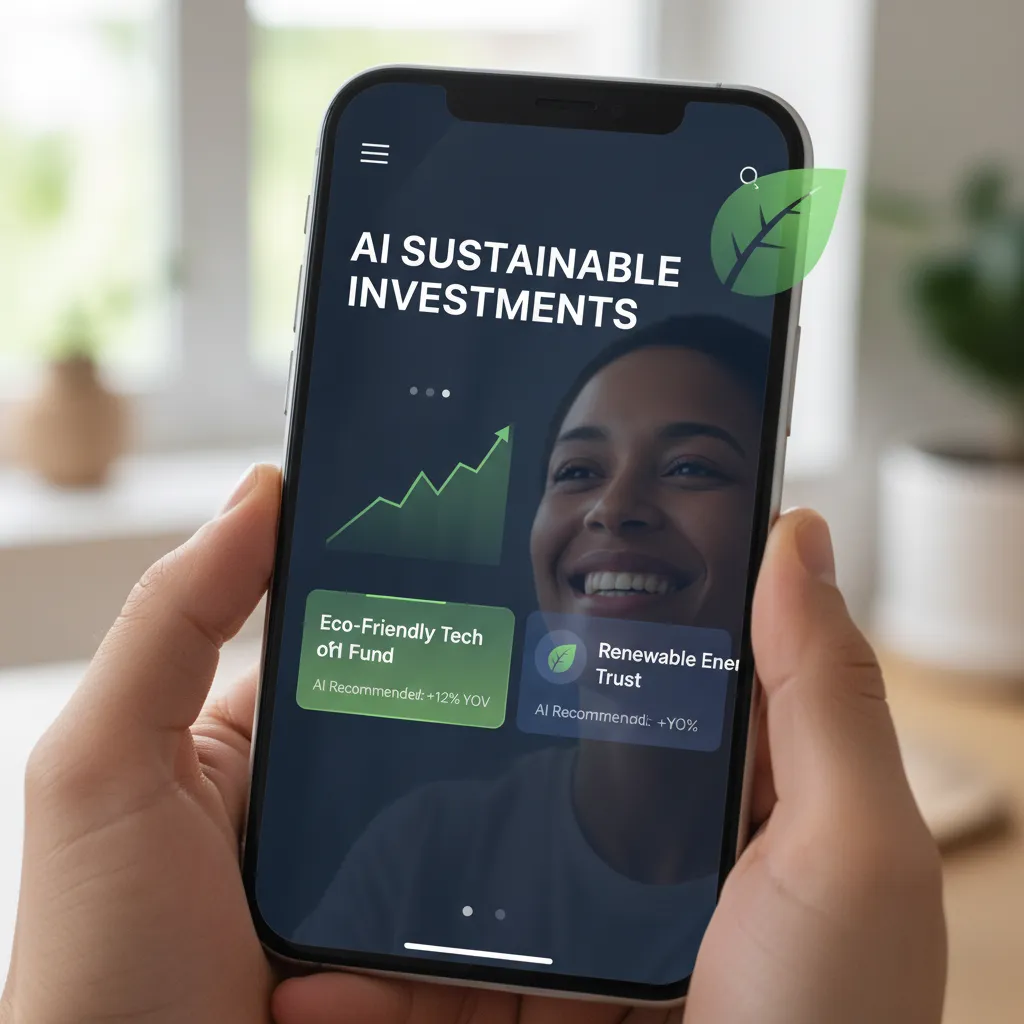
For example, an AI might detect a spike in negative news reports about a factory’s labor practices in Southeast Asia, flagging a potential “Social” risk long before it hits the official quarterly report. This is the kind of insight that creates a truly intelligent and sustainable stock market strategy.
From Greenwashing to Greenlighting: AI as a Lie Detector
“Greenwashing”—the act of making misleading claims about a company’s environmental credentials—is one of the biggest risks in green finance. AI is our most powerful weapon against it.
By cross-referencing a company’s marketing claims with real-world data, AI can spot inconsistencies. For instance, a company might publicly pledge to reduce its carbon footprint. An AI can analyze its actual energy consumption data, supply chain logistics, and even satellite data of its facilities to verify if its actions align with its words. This empowers investors to funnel capital towards companies that are genuinely committed to sustainability, not just those with the best PR departments. This is a critical component of building trust in eco friendly investments.
Predictive Power: Forecasting Risk and Opportunity
The best investment strategies are forward-looking. AI excels at identifying patterns and making predictions. In climate investing, machine learning models can simulate the potential impact of climate change—like rising sea levels or increased droughts—on a company’s physical assets and supply chain.
This predictive capability helps investors:
- De-risk portfolios: By identifying companies that are vulnerable to future ESG-related disruptions.
- Identify opportunities: By highlighting emerging leaders in sustainable innovation, such as new battery technology or water purification systems. Related: DIY Eco Smart Home: Sustainable Tech on a Budget
This elevates ai for financial planning from a simple allocation tool to a strategic foresight engine, helping build a resilient and sustainable portfolio for the long haul.
Hyper-Personalization: Your Values, Your Portfolio
Perhaps the most exciting development for individual investors is AI’s ability to create truly personalized portfolios. Older models of SRI were blunt instruments—you were either “in” or “out” of an entire industry.
Today, personal finance ai platforms can understand your unique values. You can specify what matters most to you, whether it’s gender equality in the boardroom, water conservation, a commitment to data privacy, or a focus on conscious consumer investing. The AI can then screen thousands of stocks and bonds to build a portfolio that is a true reflection of your principles, without sacrificing diversification or return potential. This is what a true ai financial advisor can deliver.

Putting AI to Work: Practical Ethical Investment Strategies for 2024
Understanding the theory is great, but how do you actually use these tools to grow your wealth? The good news is that the rise of sustainable fintech has made these strategies more accessible than ever.
The Rise of the Sustainable Robo-Advisor
For most people, the easiest entry point into AI-driven ethical investing is through a robo advisors sustainable platform. These automated, algorithm-driven services do the heavy lifting for you.
Here’s how they typically work:
- Onboarding: You answer a questionnaire about your financial goals, risk tolerance, and, crucially, your ethical and sustainable priorities.
- AI-Powered Allocation: The platform’s AI uses your answers to construct a diversified portfolio of ETFs (Exchange-Traded Funds) and mutual funds that are pre-screened for strong ESG performance.
- Automated Management: The robo-advisor automatically rebalances your portfolio over time and can even perform tasks like tax-loss harvesting, all while staying aligned with your values.
These platforms make long term sustainable investing simple and accessible, even for beginners with a small amount of capital to invest.
AI-Powered ETFs and Mutual Funds
If you prefer a more hands-on approach or are working with a human financial advisor, you can still leverage the power of AI. A growing number of ETFs and mutual funds are now actively managed by AI algorithms designed specifically to identify ESG leaders.

These funds use AI to analyze data and select holdings, from high-performing tech companies with excellent governance to industrial firms leading the way in energy efficiency. They often include a mix of assets, including stocks, corporate bonds, and green bonds—debt instruments specifically used to finance climate and environmental projects. This is a core part of modern ethical investment strategies.
Beyond Stocks: AI in Ethical Banking and Fintech
The ai finance revolution extends beyond the stock market. Ethical banking and the broader sustainable fintech ecosystem are also using AI to drive change.
- Smarter Lending: AI algorithms can help banks assess the environmental risk of their loan portfolios, steering capital away from projects that harm the environment and towards those that support it.
- Conscious Spending: Innovative fintech apps can now connect to your bank accounts, using AI to analyze your spending and calculate its carbon footprint. They can offer insights and recommend more sustainable alternatives, empowering conscious consumer investing at a daily level. Related: Eco-Friendly Gadgets: Tech for a Sustainable Lifestyle
- Improving Financial Literacy: AI-powered tools can also boost ai financial literacy by providing personalized education and guidance on sustainable finance topics, helping more people understand how to make a positive impact investing choice.
The Future of Finance is Green, Smart, and Automated
The convergence of AI and sustainable finance isn’t a fleeting trend; it’s a fundamental reshaping of how capital will be allocated in the 21st century. As technology improves, we can expect to see even more profound changes.
The Democratization of Impact Investing
Historically, direct impact investing—funding specific, high-impact projects—was the domain of institutional investors and the ultra-wealthy. AI and blockchain technology are changing that. They are making it possible to fractionalize ownership and create platforms where retail investors can directly fund a specific solar farm, a clean water project, or a sustainable agriculture startup. This is the ultimate expression of smart money ai, where every dollar can be traced to a measurable positive outcome.

The Critical Role of Explainable AI (XAI)
One of the valid criticisms of AI is its “black box” problem—sometimes, even its creators don’t know exactly why it made a particular decision. In finance, trust is paramount. This is why Explainable AI (XAI) is a critical component of the future of finance. XAI is a set of AI techniques that can provide clear, human-understandable reasons for their recommendations. An XAI-powered platform won’t just tell you to buy a stock; it will tell you it’s because the company scored in the 95th percentile for water efficiency and has 40% female representation on its board. Related: Practical XAI: A Guide to Implementing Explainable AI in Your Business
Challenges and the Human Element
Of course, AI is not a silver bullet. We must be mindful of challenges like inherent biases in the data used to train algorithms and the risk of over-relying on technology. The most effective ai wealth management approach will always be a synthesis of machine intelligence and human wisdom. AI provides the data and insights; humans provide the context, ethical oversight, and long-term strategic thinking.
Conclusion: Invest in the Future, Literally
The worlds of finance and sustainability are no longer at odds. The rise of powerful AI has built a bridge between them, creating a new paradigm where you can pursue robust financial returns while actively contributing to a better, more equitable, and more sustainable world.
By leveraging AI to cut through the noise, identify true leaders, and personalize portfolios to our deepest values, we are moving beyond simply avoiding harm to actively financing positive change. The integration of ai and sustainable finance gives us the tools to not only grow our wealth but to become conscious stewards of capital.
Ready to align your portfolio with your principles? The time to start exploring AI-powered sustainable investment platforms is now. Be a part of the movement that is defining the future of finance and investing in the world you want to live in.
Frequently Asked Questions (FAQs)
Q1. What is the main goal of sustainable finance?
The main goal of sustainable finance is to incorporate Environmental, Social, and Governance (ESG) considerations into investment decisions. It aims to generate long-term financial returns while simultaneously contributing to positive societal outcomes, such as environmental protection and social well-being.
Q2. How does AI help in ESG investing?
AI helps in ESG investing by processing vast amounts of unstructured data from news, reports, and other sources to generate more accurate and timely ESG scores. It can identify risks, detect “greenwashing” by cross-referencing claims with real-world data, and personalize portfolios to an investor’s specific ethical values.
Q3. Is sustainable investing actually profitable?
Yes, numerous studies have shown that sustainable investing can be just as profitable, if not more so, than traditional investing. Companies with strong ESG practices are often more resilient, innovative, and well-managed, which can lead to better long-term financial performance and lower risk.
Q4. What is an example of an ethical investment?
An example of an ethical investment could be buying shares in a company that manufactures solar panels and has a strong record of employee satisfaction and board diversity. Another example is investing in a “green bond” that directly funds a new wind farm project.
Q5. Can a robo-advisor build a socially responsible portfolio?
Absolutely. Many modern robo-advisors now offer socially responsible or ESG-focused portfolio options. They use algorithms to select ETFs and funds that meet specific sustainability criteria, allowing you to automate your ethical investment strategy based on your personal values and risk tolerance.
Q6. What is the difference between ESG and SRI?
While related, they differ in approach. Socially Responsible Investing (SRI) traditionally uses negative screening to exclude companies in controversial sectors (e.g., tobacco, weapons). ESG investing is a broader approach that proactively analyzes companies based on their Environmental, Social, and Governance performance, seeking to invest in the leaders within each sector.
Q7. What are the risks of AI in sustainable finance?
The primary risks include potential bias in the data used to train AI models, which could lead to skewed outcomes. There is also a risk of over-reliance on the technology without human oversight, and the “black box” nature of some complex AI can make it difficult to understand investment reasoning, though Explainable AI (XAI) is working to solve this.