AI Stock Trading: The Ultimate 2024 Beginner’s Guide

Introduction: The AI Revolution in Financial Markets
The modern stock market no longer resembles the chaotic trading floor of the 1980s. Today, it’s a high-speed digital ecosystem where milliseconds matter and data flows in petabytes. At the heart of this transformation lies Artificial Intelligence (AI) and Machine Learning (ML).
For the newcomer, the world of AI stock trading might sound like science fiction—complex systems making lightning-fast decisions based on secret formulas. However, the reality is far more accessible and, increasingly, necessary for anyone serious about investing in 2024.
This comprehensive guide is designed to serve as your roadmap to understanding, implementing, and succeeding with AI investing. Whether you are looking for a fully automated trading solution or simply want to leverage sophisticated AI financial analysis to inform your existing strategy, we will break down the fundamental concepts, explore the best tools, and address the critical risks involved.
By the end of this article, you will know exactly:
- How to differentiate between basic algorithmic trading and sophisticated machine learning stocks systems.
- The immense benefits of AI trading (speed, efficiency, risk management).
- The most effective platforms, including essential tools like Trade Ideas, Trality, and StockHero.
- Practical steps for AI stock trading for beginners to get started safely.
Welcome to the future of finance. Let’s explore how to make AI your most powerful co-pilot in the market.
Decoding AI in Finance: Algorithmic vs. Machine Learning Trading
Before diving into tools and strategies, it’s essential to clarify the terminology often used interchangeably in the realm of AI for finance. While all AI trading is technically automated, not all automated trading uses true Artificial Intelligence.
The Foundation: What is Algorithmic Trading?
Algorithmic trading, often shortened to “algo-trading,” is the practice of executing orders using automated, pre-programmed instructions that account for variables like time, price, and volume.
- Rule-Based: Algo-trading relies on explicit, pre-defined rules. Example: “If the stock price of Company X crosses its 50-day moving average, buy 100 shares.”
- Speed: It’s primarily designed for speed and minimizing human error, especially in quantitative trading environments where high-frequency trading (HFT) is common.
- Static: The rules remain the same unless a human explicitly changes them. It cannot adapt to novel market conditions it wasn’t programmed to handle.
The Evolution: Machine Learning for Investing
Machine learning stocks systems represent the true application of AI in trading. Unlike simple algorithmic systems, ML models are designed to learn from historical data, identify non-linear patterns, and adapt their strategies autonomously.
- Adaptive: ML models use deep learning or neural networks to process massive, diverse datasets—including satellite imagery, news sentiment, social media, and traditional financial metrics.
- Predictive: They excel at developing a sophisticated AI stock predictor by finding correlations that no human or simple algorithm could uncover. This forms the basis of predictive stock market AI.
- Complexity: These systems can adjust their risk parameters, exit strategies, and even the type of assets they trade in response to real-time volatility, making them highly effective for advanced AI trading strategies.
In short: Algorithmic trading executes what you tell it to do. Machine learning tells you what to do (or does it automatically) by learning from patterns.
The Core Benefits of AI-Powered Trading Systems
The shift toward using AI trading bots and sophisticated ML models is driven by powerful, measurable advantages over human-only trading. The benefits of AI trading are compelling, especially for active traders and institutions.
1. Superior Speed and Execution
AI systems operate without latency. They can analyze data, generate an AI trading signal, and execute a trade within milliseconds.
- No Hesitation: Humans pause, think, and manually click. Bots don’t. This is crucial in fast-moving markets where price fluctuations occur rapidly.
- Optimal Pricing: AI ensures trades are executed at the absolute best possible price according to the strategy parameters, a concept known as slippage reduction.
2. Uncovering Hidden Opportunities Through Massive Data Analysis
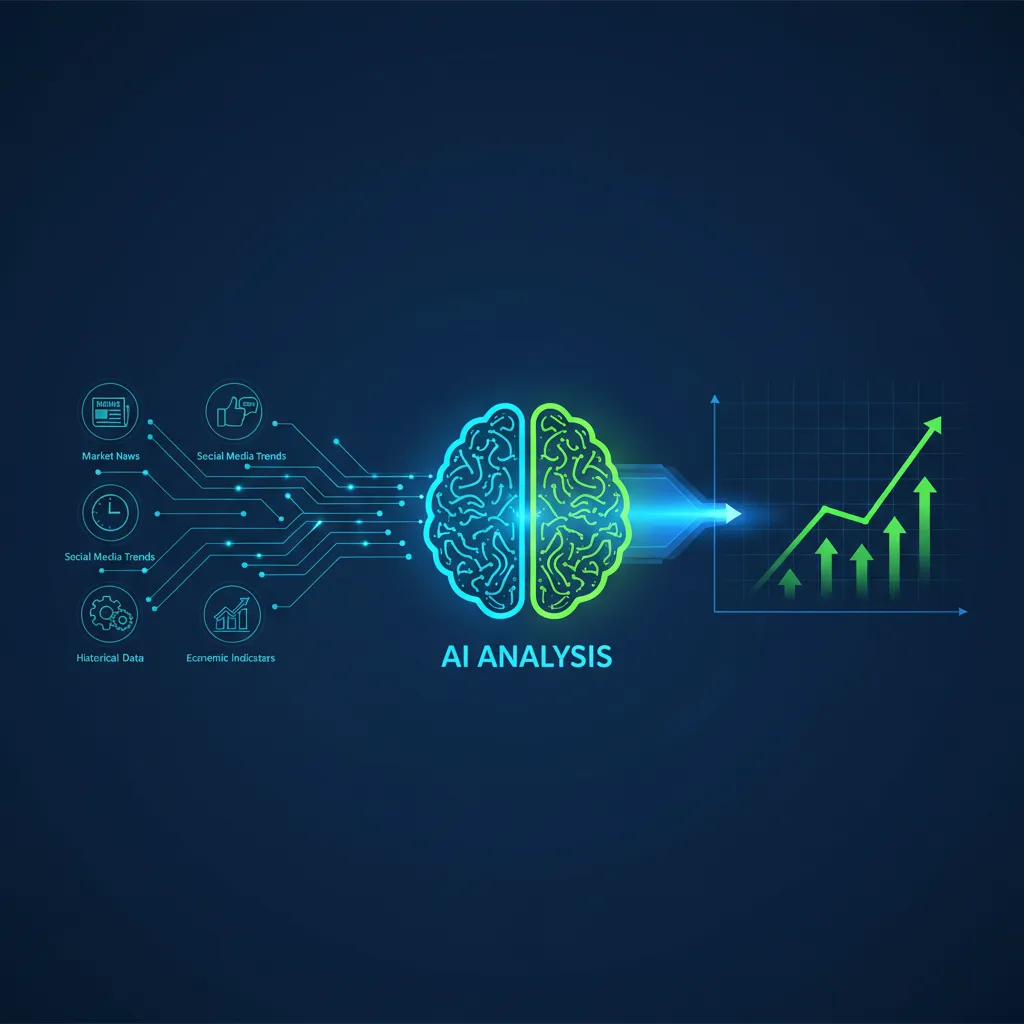
A human trader can only process so much information. A sophisticated stock market AI system, however, can simultaneously track thousands of tickers and hundreds of external variables.
“AI can process earnings reports, macroeconomic indicators, currency fluctuations, and even social sentiment analysis across millions of data points simultaneously, offering profound insights for AI stock market analysis.”
This capability is essential for identifying nascent trends and correlations that drive market movement, allowing the system to act on opportunities long before they become visible to the average investor.
3. Emotionless, Consistent Decision Making
The biggest enemy of the individual investor is often themselves. Fear, greed, and panic lead to irrational decisions—buying high out of FOMO or selling low out of anxiety.
- Discipline: Automated trading systems eliminate emotional biases entirely. They strictly adhere to their programmed parameters, ensuring unparalleled trading discipline, even during market crashes.
- Consistency: An AI system will execute the exact same strategy every day, ensuring that performance metrics are clean and comparable, a huge plus for strategy refinement.
4. Backtesting and Optimization Power
One of the most powerful tools AI trading software provides is robust backtesting. Before risking a single dollar of capital, traders can test an AI trading strategy against decades of historical market data.
This process allows the user to fine-tune variables and confirm a strategy’s profitability under various market conditions (bull, bear, and sideways). Machine learning models take this a step further, often optimizing their own parameters based on backtest results.
Getting Started: AI Stock Trading for Beginners
If you are new to this field, jumping straight into complex Python coding for deep learning models is unrealistic and risky. AI stock trading for beginners should focus on utilizing existing, user-friendly platforms that leverage AI and automation under the hood.
Step 1: Define Your Investment Goals and Strategy
Do you need passive long-term growth, or are you looking for higher-risk, high-reward opportunities like best AI for day trading?
- Passive Investor (Long-Term): Focus on robo-advisors and automated investing platforms. These systems handle asset allocation, diversification, and rebalancing automatically, requiring minimal input.
- Active Trader (Short-Term/Day Trading): Focus on specialized AI trading bots and signal generators that execute trades based on technical indicators and rapid market fluctuations.
Step 2: Choosing the Right Level of Automation
Your starting point should match your comfort level and technical skills.
Option A: Passive AI Portfolio Management (Robo-Advisors)
Robo-advisors are the simplest entry point. Platforms like Betterment or Wealthfront use algorithms and AI to build and manage diversified portfolios based on your stated risk tolerance and time horizon. They handle AI portfolio management seamlessly.
Option B: Semi-Automated AI Signals and Analysis
If you prefer to maintain execution control but want AI-driven guidance, look for tools that provide AI trading signals or sophisticated scans. These platforms analyze thousands of stocks and alert you when specific, AI-detected conditions are met, leaving the final “buy” or “sell” decision up to you.
Option C: Full AI Trading Bots
These are platforms (which we review below) that allow you to deploy a fully automated trading strategy, often connecting directly to your broker. This requires more oversight and risk management but offers the highest potential for consistent execution.
Step 3: Mastering Risk Management with Automation
It is a misconception that using a bot eliminates risk. In fact, it can sometimes magnify it if the bot is left unchecked. This is a critical step in how to use AI for trading.
- Strict Stop-Losses: Always configure clear stop-loss parameters. A stop-loss is the essential safety net that tells the bot to exit a position if the loss hits a pre-defined level, protecting you from catastrophic drawdowns.
- Backtesting Validation: Never deploy a strategy without rigorous backtesting. A strategy that performs flawlessly in a bull market may fail instantly in a sideways or bear market. Ensure your strategy has been stress-tested across different regimes.
- Position Sizing: Start small. Dedicate only a small percentage of your total capital (e.g., 1–5%) to any new automated trading strategy until it proves its real-world efficacy.

Essential AI Trading Software and Platforms
The market is flooded with best AI trading software, but only a few stand out for reliability, performance, and user experience. Beginners should focus on reputable platforms that offer transparency and strong community support.
The Scanning and Signaling Specialists: Trade Ideas
Trade Ideas review: Trade Ideas is arguably the market leader in real-time, AI-driven stock scanning and strategy creation. While it’s not a full execution bot by itself (it interfaces with brokers for execution), its core strength is its proprietary AI, “Holly.”
- What it does: Holly runs millions of backtests nightly to identify strategies with the highest probability of success the next day. It monitors virtually every tick and trade across the US and Canadian exchanges.
- Best for: Semi-automated traders and day traders looking for high-quality, actionable AI trading signals derived from deep AI financial analysis. It significantly speeds up stock selection.
- Key Feature: The ‘Oddsmaker’ allows users to test their own strategy concepts against historical data within seconds.
The Bot Builders and Marketplace: Trality
Trality review: Trality focuses on making AI trading bots accessible to everyone, from novice investors using pre-built strategies to advanced coders.
- What it does: It provides a cloud-based platform where users can either rent proven bots from a marketplace or use their Python Code Editor (the ‘Code Bot’) or a simple drag-and-drop interface (the ‘Rule Bot’) to create complex algorithmic trading strategies without needing local hardware.
- Best for: Beginners who want an easy, hosted solution, and intermediate traders who want to deploy custom, complex logic using Python without worrying about infrastructure.
- Key Feature: The Bot Marketplace allows risk-averse users to deploy audited, profitable strategies created by expert traders.
Deployment and Management Focus: StockHero
StockHero review: This platform is favored by users looking for simplicity in deploying and managing multiple AI trading bots across various brokers.
- What it does: StockHero offers various customizable bots (DCA, Trend-Following, Arbitrage) and integrates them directly with major exchanges and brokers. It focuses heavily on ease of use and monitoring performance through a streamlined dashboard.
- Best for: Traders who want a simple, robust mobile-first experience for deploying and monitoring a suite of different automated strategies simultaneously.
- Key Feature: The ability to run paper trading simulations indefinitely without cost, allowing beginners to test strategies risk-free.
Robo-Advisors and Automated Investing Platforms
For hands-off, long-term investors, systems like Betterment and Wealthfront represent the simplest form of automated investing platforms. These utilize AI/ML to manage asset allocation, tax-loss harvesting, and optimize your portfolio based on prevailing market conditions. This is the starting line for true passive AI investing.
[Related: AI Unleashed: Revolutionizing Money-Smart Personal Finance]
The AI Trading Toolkit: Strategies and Mechanics
Once you have the software, you need a strategy. AI trading strategies leverage the computer’s unique advantages.
1. Arbitrage and Statistical Trading
This is where true quantitative trading shines. AI systems exploit tiny pricing discrepancies between identical assets on different exchanges. Since these opportunities exist for only a fraction of a second, only automated systems can reliably capitalize on them.
2. Sentiment Analysis and News Trading
Modern stock market AI is exceptional at Natural Language Processing (NLP). An AI system can ingest and analyze millions of news articles, social media posts, regulatory filings, and corporate communications almost instantly.
- How it works: If a company releases positive news, the AI determines the sentiment score, predicts the market reaction based on historical data, and initiates a trade before human traders can manually digest the news. This is a powerful form of predictive stock market AI.
3. Pattern Recognition and Deep Learning
Machine learning stocks models use deep learning neural networks to analyze price and volume data far beyond simple technical indicators like Moving Averages or RSI.
- They look for non-linear, multi-variable patterns that might indicate a large institutional order being filled or a hidden trend reversal forming. This is often the realm of the AI stock predictor which provides high-probability, short-term forecasts.
Can I use a free AI stock trading bot?
While platforms like Trality and StockHero offer free paper trading accounts or limited, low-volume free tiers, serious, live-money execution with advanced features almost always requires a paid subscription. Be wary of any product claiming to be a truly free AI stock trading bot for live trading, as high-quality execution and hosting are expensive to maintain.
The Critical Risks and Challenges of Automated Trading
While the benefits of AI trading are clear, a responsible beginner must understand the risks of automated trading. AI is a powerful tool, but it is not infallible.
1. The ‘Black Box’ Problem
Advanced machine learning models are often referred to as “black boxes.” They arrive at a prediction or an action (e.g., “buy this stock”) based on thousands of complex, layered calculations that are nearly impossible for a human programmer to fully trace or understand.
- The Risk: If the market enters an unforeseen state, the black box might react illogically, and because you don’t know why it’s making a mistake, you cannot quickly troubleshoot and fix the strategy.
2. Over-Optimization (Curve Fitting)
Over-optimization occurs when an algorithmic trading strategy is tuned too perfectly to historical data. It performs flawlessly in backtests but fails immediately when deployed live because it has memorized the noise of the past rather than learning the underlying principles.
- Mitigation: Always test strategies on “out-of-sample” data—market periods the AI did not see during its training phase—to ensure the strategy is robust and adaptive.
3. Technical and Infrastructure Risk
Automated trading depends entirely on reliable infrastructure. Technical failures can be costly.
- Connectivity Issues: A lost internet connection or API failure means the bot cannot execute its planned trades or, critically, its stop-loss orders.
- Latency: In HFT or day trading, slow execution speed (latency) can mean the difference between profit and loss, though this is less of a concern for swing trading or passive robo-advisors.
4. Market Manipulation and Ethical Concerns
The sheer speed of AI trading bots means they can sometimes contribute to flash crashes or market volatility. Regulators are constantly working to define the rules for quantitative trading to prevent market manipulation, especially concerning practices like ‘spoofing’ or other high-frequency tactics designed to trick other algorithms.
The Future of Trading AI
The integration of AI into financial markets is not slowing down; it’s accelerating. The future of trading AI involves increasingly sophisticated models that integrate even more data and predictive capabilities.
Hyper-Personalized AI Portfolio Management
Expect future AI portfolio management systems to move beyond simple risk questionnaires. They will dynamically adjust asset allocation not just based on market conditions, but on the investor’s real-time financial life data, such as job stability, spending habits, and unexpected major expenses.
Predictive Stock Market AI: Beyond Technical Analysis
The next generation of AI stock predictor tools will heavily leverage generative AI (similar to LLMs like Gemini or GPT) to synthesize complex, unstructured data into actionable predictions.
- Multimodal Analysis: Imagine an AI analyzing satellite images of factory production lines, cross-referencing that with supply chain chatter on global forums, and then comparing it to historical commodity price movements to generate a highly accurate forecast for a manufacturing stock. This multimodal data fusion is the next frontier.
[Related: Quantum AI Unleashed: Reshaping Intelligence and Innovation]
Comparison: AI Trading Bot vs. Human Trader
| Feature | AI Trading Bot/System | Human Trader |
|---|---|---|
| Speed & Execution | Milliseconds. Perfect execution guaranteed by rules. | Seconds to minutes. Prone to slippage and manual error. |
| Data Processing | Millions of data points simultaneously (fundamentals, sentiment, technicals). | Limited to a few hundred data points; suffers from cognitive overload. |
| Emotional Control | Zero emotion. Strictly follows the programmed logic. | Highly susceptible to fear, greed, FOMO, and overconfidence. |
| Learning & Adaptation | Requires constant model retraining; can adapt quickly to novel patterns if programmed to. | Learns slowly through experience; often relies on intuition/gut feelings. |
| Risk Management | Flawless adherence to programmed stop-losses and limits. | Prone to ‘moving the stop-loss’ or revenge trading. |

Conclusion: Navigating the AI Stock Trading Landscape
The power shift in investing has happened. Today, understanding AI stock trading is not just an advantage; it’s rapidly becoming a necessity. For the beginner, the path to integrating AI is clear: start simple, focus on risk management, and utilize reputable software.
Begin your journey by exploring automated investing platforms like robo-advisors, then progress to semi-automated trading with sophisticated signal generators like Trade Ideas. Only when you have a deep understanding of market mechanics and risk should you consider deploying fully autonomous AI trading bots reviewed above.
The stock market AI revolution offers the potential for faster execution, unbiased decision-making, and access to deep AI stock market analysis previously reserved for institutional investors. By adhering to the principles outlined in this guide—discipline, diligence, and continuous learning—you can successfully leverage AI to reach your financial goals in 2024 and beyond.
[Related: Master Your Money: Top Personal Finance Apps 2024]
FAQs: Frequently Asked Questions About AI Stock Trading
Q1. What is the difference between automated trading and AI stock trading?
Automated trading is a broad term for any system that executes trades without manual intervention, often using simple, pre-set rules (algorithmic trading). AI stock trading specifically refers to systems that use machine learning or deep learning to learn patterns from data, adapt strategies, and make predictive decisions autonomously. True AI trading is a subset of automated trading.
Q2. How much does the best AI trading software cost?
The cost varies significantly based on complexity. Simple robo-advisors usually charge a small annual management fee (e.g., 0.25% to 0.50% of assets). Advanced AI trading bots and signal services like Trade Ideas or Trality typically charge monthly subscriptions ranging from $50 to $300, depending on the tier and features, reflecting the high cost of data processing and cloud hosting.
Q3. Can AI stock predictors accurately predict market crashes?
Predictive stock market AI excels at identifying high-probability short-to-medium-term patterns and reversals. While no system can guarantee a perfect forecast of a crash, advanced machine learning stocks models can incorporate macroeconomic data, yield curve inversions, and massive sentiment shifts far faster than humans, potentially providing earlier warning signals than traditional analysis.
Q4. Is it safe for beginners to use AI trading bots right away?
It is safest for beginners to start with robo-advisors or to use the paper trading features offered by advanced AI trading bots like Trality or StockHero. Deploying real capital into a complex algorithmic trading strategy without prior testing and understanding of its underlying logic is highly risky and generally discouraged.
Q5. What skills do I need to start using AI for investing?
You do not need to be a programmer or a data scientist. For simple AI investing (robo-advisors), zero technical skill is needed. For deploying existing AI trading strategies via platforms like StockHero, you need good risk management skills and an understanding of market basics. If you want to build your own complex machine learning models, knowledge of Python and financial statistics is required.
Q6. How does AI improve AI portfolio management?
AI improves AI portfolio management by continuously analyzing massive datasets to rebalance holdings optimally, implementing sophisticated tax-loss harvesting strategies, and dynamically adjusting the portfolio’s risk profile in real-time based on shifts in global economic data and asset correlations. This leads to higher net returns over time compared to manually managed or static portfolios.
Q7. How fast can AI trading bots execute trades?
Depending on the broker API and the strategy (e.g., high-frequency vs. swing), AI trading bots can execute trades in the range of 1 to 100 milliseconds, or even faster in dedicated high-frequency setups. This superior speed is a core reason for the vast benefits of AI trading in volatile markets.