AI Smart Rings: Revolutionizing Health, Fitness & Productivity in 2024
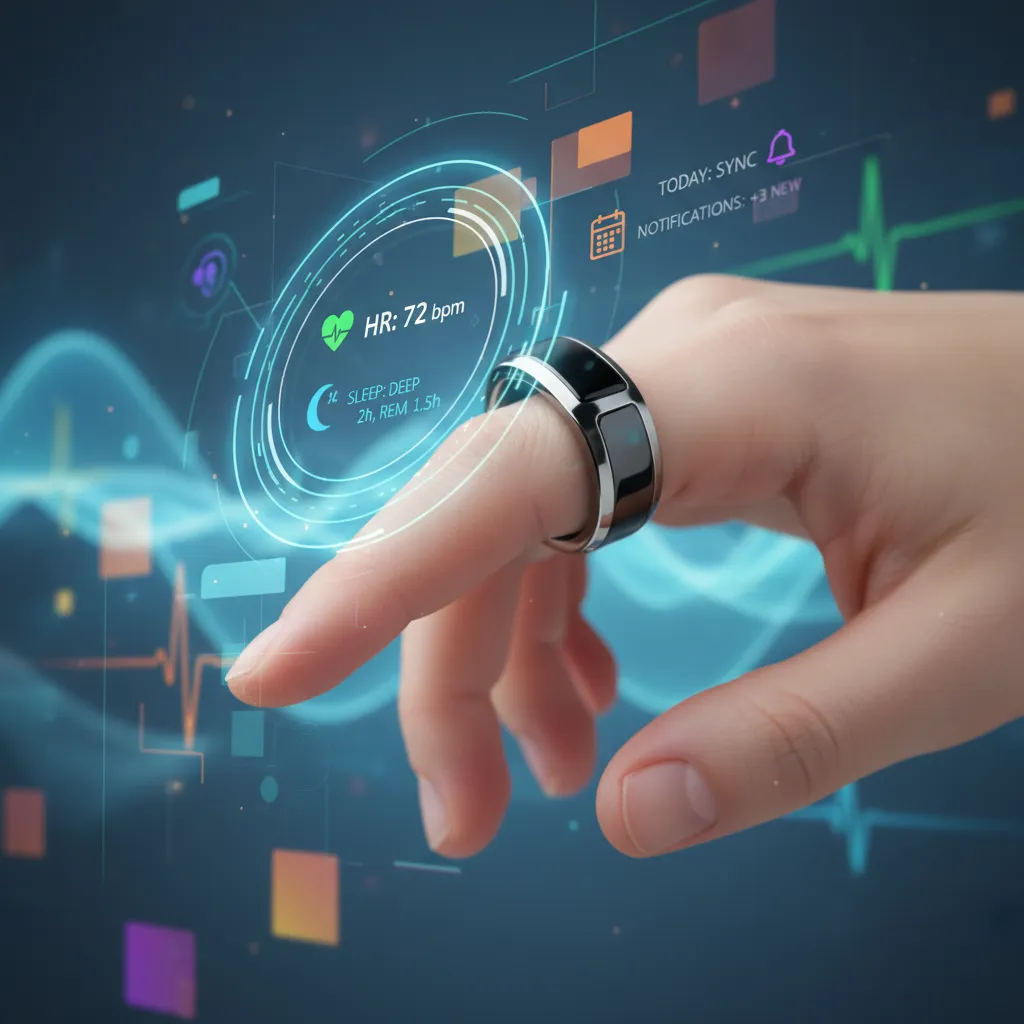
For years, the conversation around wearable technology has been dominated by the smartwatch. But in 2024, a new contender has subtly slipped onto the scene—and onto our fingers. Enter the AI smart ring, a marvel of miniaturization that promises to be more than just a discreet alternative to its wrist-worn counterpart. It’s a powerful, AI-driven wellness coach, a productivity tool, and a 24/7 health monitor, all packed into a device you’ll barely notice you’re wearing.
The buzz is palpable. With giants like Samsung entering the fray with the much-anticipated Samsung Galaxy Ring, and established players like Oura and Ultrahuman pushing the boundaries of what’s possible, the era of intelligent, discreet wearable tech is truly upon us. This isn’t just about counting steps anymore. We’re talking about a fundamental shift towards personalized health tech, where advanced sensors and sophisticated AI algorithms work in tandem to translate your body’s subtle signals into actionable, life-changing insights.
This guide will dive deep into the world of AI smart rings. We’ll explore the groundbreaking smart ring technology that powers them, how they’re redefining AI fitness tracking and AI sleep tracking, and even how they’re emerging as unlikely tools for wearable AI productivity. Get ready to discover the best devices on the market, understand the incredible smart ring benefits, and find out if this is the year you trade your bulky watch for the elegant power of an AI ring.
What Exactly Is an AI Smart Ring? Beyond the Hype
At its core, a smart ring is a compact electronic device worn on the finger, equipped with a suite of advanced sensors. But what elevates it to an AI smart ring is the intelligent software layer that processes the torrent of data these sensors collect.
From Step Counter to Personal Health Oracle
Early wearables were glorified pedometers. They gave us raw data—steps taken, hours slept, calories burned. While interesting, this data lacked context. It was up to us to connect the dots.
AI smart rings represent the next evolutionary leap. They don’t just present data; they interpret it. The AI acts as a translator, converting complex biometric signals into simple, understandable narratives about your health. It moves beyond what is happening in your body to why it’s happening and what you can do about it. This is the core of AI driven wellness—transforming passive data collection into proactive, personalized guidance.
The Core Technology: Miniaturized Sensors and AI Brains
The magic of smart ring technology lies in its incredible density. Engineers have packed a surprising amount of hardware into these tiny devices:
- Photoplethysmography (PPG) Sensors: These use infrared LEDs to measure heart rate, heart rate variability (HRV), blood oxygen levels (SpO2), and respiratory rate directly from the arteries in your finger. The finger provides a clearer signal than the wrist, which can lead to more accurate readings.
- NTC Body Temperature Sensors: By tracking minute changes in your skin temperature, these sensors provide insights into sleep cycles, illness prediction, and menstrual cycle tracking.
- 3D Accelerometers: These detect motion, enabling automatic activity recognition, step counting, and analysis of sleep movement.
This constant stream of data is fed into a sophisticated AI engine, typically within a companion smartphone app. This is where the raw numbers become powerful AI health insights. The AI learns your personal baseline and can then flag deviations, identify trends, and provide tailored recommendations for everything from your workout intensity to your bedtime.
The New Trinity of Wellness: How AI Elevates Health, Fitness, and Sleep
AI smart rings are creating a more holistic picture of our well-being by focusing on three interconnected pillars: general health, physical fitness, and restorative sleep.
Continuous Health Monitoring: Your 24/7 Bodyguard
Unlike a doctor’s visit, which provides a single snapshot in time, smart rings offer continuous health monitoring. This allows the AI to spot subtle trends that might otherwise go unnoticed.
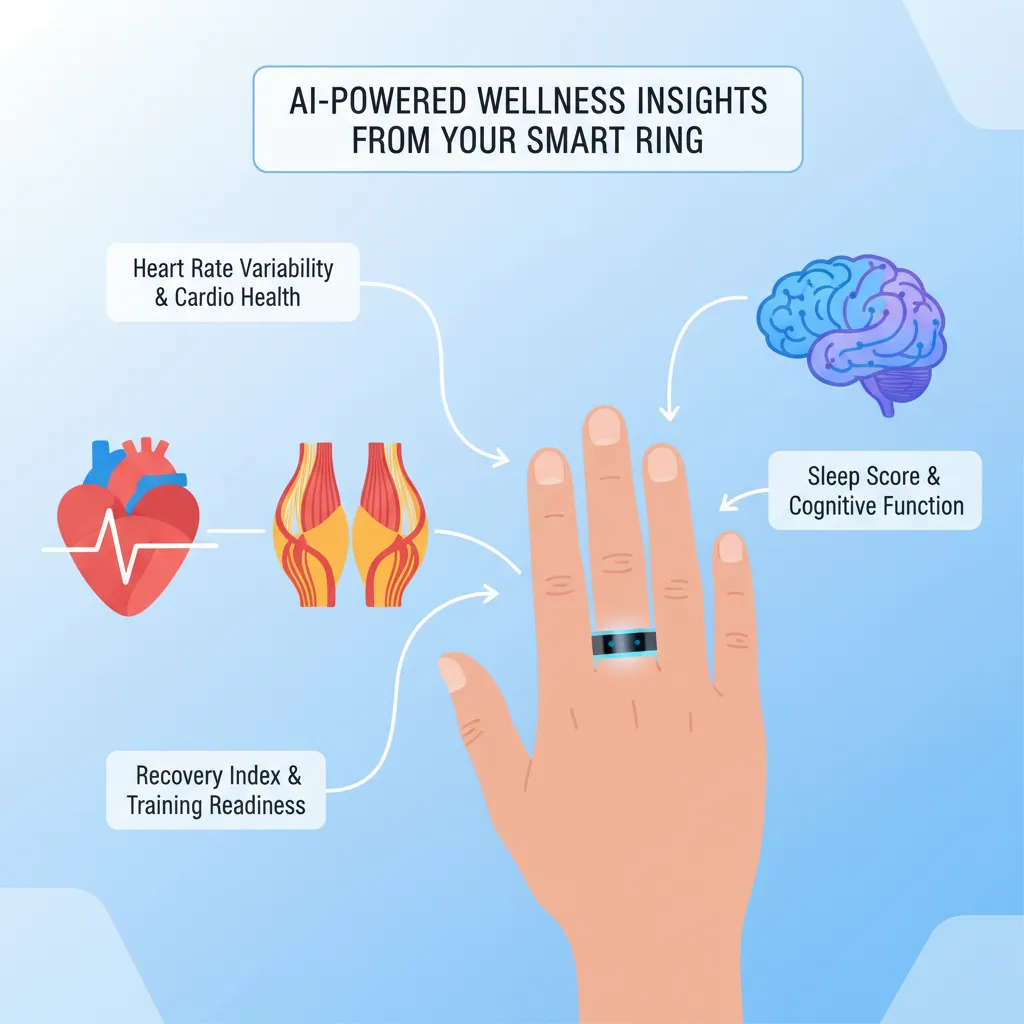
For instance, a consistently lowered Heart Rate Variability (HRV) can be an early indicator of stress, overtraining, or an impending illness. The AI can alert you to this trend, suggesting a rest day or mindfulness exercises. This proactive approach is a cornerstone of AI for stress management. By cross-referencing your temperature, heart rate, and HRV, the AI builds a comprehensive “Readiness” or “Recovery” score each morning, advising you on how prepared your body is to handle the day’s challenges.
AI Fitness Tracking: Smarter Workouts, Faster Results
For fitness enthusiasts, AI fitness tracking offers a level of personalization that was once reserved for elite athletes. The ring can automatically detect activities like walking, running, and cycling, tracking duration, intensity, and calories burned.
But the real advantage is in recovery management. After a strenuous workout, the AI analyzes your sleep quality and recovery metrics to advise on the optimal recovery time. It might suggest a light activity day if your body is still under strain, helping to prevent injury and maximize gains. This intelligent feedback loop ensures you’re training smarter, not just harder. Related: How AI Can Boost Your Cognitive Abilities and Decision-Making Potential

Unlocking Your Best Rest: The Power of AI Sleep Tracking
Sleep is arguably the area where smart rings shine brightest. Worn comfortably through the night, these bio-tracking rings provide a detailed analysis of your sleep architecture.
The AI breaks down your night into Light, Deep, and REM sleep stages, tracking duration, efficiency, and interruptions. It then presents this complex data in an easy-to-understand sleep score. More importantly, the AI sleep tracking features provide actionable advice. It might notice that your deep sleep is shorter on days you have caffeine after 3 PM or that your resting heart rate is higher after a late-night meal, and then gently nudge you towards better habits.
The Productivity Revolution on Your Finger
While health and wellness are the primary focus, the application of AI in wearables is expanding into new territories, including personal productivity. The idea of productivity smart rings is gaining traction as users seek less distracting ways to manage their digital lives.
Discreet Notifications and Gesture Controls
A key benefit of a ring is its subtlety. Instead of a screen lighting up and demanding your attention, a smart ring can deliver a gentle vibration to alert you to an important call or message. This allows you to stay connected without being pulled out of your workflow. Some next gen smart rings are even experimenting with gesture controls, allowing you to dismiss notifications, control music, or trigger actions with a simple tap or twist of your finger.
AI-Powered Focus and Productivity Insights
This is where the concept of wearable AI productivity gets exciting. By analyzing your biometric data, the AI can start to understand your personal energy cycles. It can identify your peak focus hours based on your readiness score and sleep performance.
Imagine an AI assistant that gently suggests you tackle your most demanding task in the late morning because your data shows that’s when you’re most alert. Or an app that recommends taking a 15-minute walk because your HRV indicates rising stress levels. This creates a symbiotic relationship between your well-being and your work output. Related: How AI Agents Can Automate Your Digital Life and Boost Productivity

Contactless Payments and Digital Keys
Beyond data, one of the most practical smart ring use cases is functionality. Many rings now include NFC technology, turning your finger into a wallet for contactless payments. This is incredibly convenient for a quick coffee run or paying for public transit without fumbling for a phone or card. The same technology can be used for secure access, acting as a digital key for your office or smart lock at home.
The 2024 Smart Ring Showdown: Oura vs. Samsung vs. Ultrahuman
The smart ring market is heating up. While several brands exist, three major players are defining the landscape in 2024. This smart ring comparison highlights what makes each unique.
Oura Ring Gen3: The Established Leader
The Oura Ring has long been the gold standard in the smart ring space, known for its research-backed accuracy and best-in-class sleep tracking. Its “Readiness Score” is a flagship feature, combining multiple data points into a single, intuitive metric. The Oura ring AI excels at providing deep, personalized insights through its sleek app, though accessing the full suite of features requires a monthly subscription.
Samsung Galaxy Ring: The Highly Anticipated Challenger
Announced to much fanfare, the Samsung Galaxy Ring is poised to be a major disruptor. Leveraging Samsung’s massive ecosystem, it promises seamless integration with Samsung Health and Galaxy devices. While full details are still emerging, it’s expected to offer a comprehensive suite of health-tracking features, potentially without a mandatory subscription, which could be a major selling point. Its entry validates the entire smart ring category and will likely accelerate wearable tech innovations.
Ultrahuman Ring Air: The Bio-Hacker’s Choice
The Ultrahuman Ring Air has carved out a niche by focusing on metabolic health and recovery. It introduces a “Metabolic Score” and a “Stimulant Permissibility” feature, which advises users on the best times to consume caffeine for optimal performance. A key differentiator for the Ultrahuman Ring Air is its one-time purchase model with no required monthly subscription, making it an attractive option for those averse to recurring fees.
Feature Comparison Table
| Feature | Oura Ring Gen3 | Samsung Galaxy Ring (Expected) | Ultrahuman Ring Air |
|---|---|---|---|
| Key Focus | Sleep & Readiness | Overall Wellness & Ecosystem | Metabolism & Recovery |
| Subscription | Yes (for full features) | Likely No/Optional | No |
| Standout AI Feature | Daily Readiness Score | Deep Samsung Health Integration | Stimulant Window Tracker |
| NFC Payments | Yes (in beta) | Expected | No |
| Design | Classic, Minimalist | TBD, likely multiple finishes | Ultra-lightweight, Sleek |
| Battery Life | 4-7 days | TBD, expected to be competitive | 4-6 days |
Navigating the Nuances: What to Consider Before You Buy
Before jumping in, it’s important to consider a few practical aspects of owning an AI smart ring.
- Accuracy and Data Privacy: While generally accurate for trend analysis, smart rings are not medical devices. For data privacy smart rings, manufacturers like Oura and Ultrahuman emphasize data encryption and user control, but it’s always wise to review the privacy policy of any connected device.
- The Subscription Question: The subscription model is a major consideration. Oura’s monthly fee unlocks its deepest AI insights, while Ultrahuman offers them for a one-time cost. The model for the Samsung Galaxy Ring will be a key factor in its market success.
- Battery Life and Durability: Most rings offer an impressive smart ring battery life of 4 to 7 days, easily beating most smartwatches. They are also built to be durable and water-resistant, designed for 24/7 wear.
- Sizing and Comfort: Unlike a watch, a ring’s fit is crucial for sensor accuracy. All major brands send you a sizing kit before you order to ensure you find the perfect, comfortable fit for continuous wear.
The Future of Wearables is a Circle
The rapid advancements in AI smart rings signal a broader trend in technology: a move towards more integrated, less obtrusive devices. The future of wearables is not just about shrinking computers down but about creating technology that feels like a natural extension of ourselves.
We can expect next gen smart rings to incorporate even more advanced sensors, with non-invasive glucose monitoring and blood pressure tracking being the holy grail of wearable tech 2024 and beyond. As the AI becomes more powerful, these devices will evolve from reactive advisors to proactive health partners, potentially warning us of health issues days in advance. Related: The AI Revolution in Code: How AI is Reshaping Software Development
Conclusion: Are You Ready to Wear the Future?
AI smart rings are no longer a niche gadget; they are a powerful statement about the future of personal health and technology. By combining cutting-edge sensors with intelligent AI, they offer a level of personalized health tech that is both profound and profoundly simple to use. They provide the insights we need to sleep better, train smarter, manage stress, and even boost our productivity, all from a device that seamlessly blends into our lives.
Whether you’re a bio-hacker looking to optimize every aspect of your performance, a fitness enthusiast seeking a smarter way to train, or simply someone who wants to be more in tune with their body, the AI smart ring offers a compelling proposition. With the market expanding and the technology advancing at a breakneck pace, the revolution is here, and it fits perfectly on your finger.
What are your thoughts on AI smart rings? Is this the year you’ll make the switch? Let us know in the comments below!
Frequently Asked Questions (FAQs)
Q1. What do AI smart rings actually do?
AI smart rings are wearable devices that use advanced sensors to track a wide range of biometric data, including heart rate, HRV, body temperature, sleep stages, and activity levels. An integrated AI then analyzes this data to provide personalized insights and actionable recommendations for improving your health, fitness, and overall well-being.
Q2. Are smart rings more accurate than smartwatches?
For certain metrics like heart rate and HRV, smart rings can be more accurate. This is because the arteries in the finger provide a stronger and clearer signal for the PPG sensors compared to the wrist, where bone and tissue can interfere. However, both are considered consumer wellness devices, not medical-grade instruments.
Q3. Do you need a subscription for a smart ring?
It depends on the brand. The Oura Ring requires a monthly subscription to access its full suite of AI-driven analytics and content. In contrast, the Ultrahuman Ring Air includes all features with the one-time purchase of the ring. The upcoming Samsung Galaxy Ring is not expected to require a subscription.
Q4. Can smart rings detect illness?
While smart rings cannot diagnose diseases, they can detect early signs that may indicate your body is fighting off an illness. The AI can flag significant changes from your baseline in metrics like body temperature, respiratory rate, and HRV, prompting you to rest or monitor your symptoms more closely.
Q5. What is the main benefit of a smart ring?
The main benefit is gaining deep, personalized insights into your health from a comfortable and discreet device you can wear 24/7. They excel at providing a holistic view of your body’s recovery, sleep quality, and readiness for the day, empowering you to make healthier, more informed decisions.
Q6. Who are the main competitors in the smart ring market?
The leading players in 2024 are Oura (the established market leader), Ultrahuman (known for its focus on metabolism and no subscription), and Samsung (a major new entrant with its Galaxy Ring). Other brands like RingConn and Movano also compete in this growing space.
Q7. Can you make payments with a smart ring?
Yes, some smart rings are equipped with NFC (Near Field Communication) technology for contactless payments. For example, Oura is rolling out Oura Pay. This feature adds a layer of convenience, allowing you to pay for goods and services with a simple tap of your finger.