AI Smart Homes: Revolutionizing Efficiency & Security in 2024

Introduction
Imagine a home that doesn’t just respond to your commands but anticipates your needs. A home that learns your routine, optimizes its own energy consumption, and proactively identifies security threats before they escalate. This isn’t a scene from a sci-fi movie; it’s the reality of the AI smart home in 2024. For years, we’ve had “smart” devices—lights we can turn off from our phones, thermostats we can schedule. But now, the integration of artificial intelligence is transforming these fragmented gadgets into a cohesive, intelligent ecosystem.
The leap from a connected home to an AI-powered one is monumental. It’s the difference between a device that follows a rule and a system that learns, adapts, and makes autonomous decisions. This revolution in AI home automation is touching every corner of our lives, promising unprecedented levels of efficiency, security, and convenience.
In this comprehensive guide, we’ll explore how the connected home technology of today is leveraging AI to create truly intelligent living spaces. We’ll dive deep into how AI is slashing energy bills, building impenetrable digital fortresses around our properties, and what the future of smart homes holds as these innovations become more accessible than ever.
From “Smart” to “Intelligent”: The AI Difference
For the better part of a decade, “smart home” meant automation. You could set a schedule for your lights or tell a voice assistant to play music. While convenient, this was a system based on pre-programmed commands. The AI smart home operates on a completely different level.
The Core of AI Home Automation: Learning and Adapting
The true power of an AI smart home lies in its ability to process vast amounts of data from various sensors and devices, recognize patterns, and make predictive decisions. It’s not just about automation; it’s about cognition.
- Pattern Recognition: Your AI hub learns that you wake up at 6:30 AM on weekdays. It sees you turn on the coffee maker, adjust the thermostat, and open the blinds. After a few days, it starts doing these things for you before you even get out of bed.
- Predictive Analysis: The system analyzes weather forecasts and your home’s thermal properties. It knows a heatwave is coming and pre-cools the house during off-peak energy hours to save you money.
- Contextual Awareness: It knows the difference between your family arriving home and an unrecognized person approaching the door. The system’s response—unlocking the door versus triggering an alarm—is based on this context, not just a simple motion trigger.
This level of intelligence requires a central nervous system. The best smart home hubs today act as this brain, using powerful processors to run AI models locally, ensuring faster response times and better privacy. They create integrated smart home systems where every device—from your security camera to your smart plug—communicates and collaborates.
The Energy Efficiency Revolution: Your Home as a Power Plant Manager
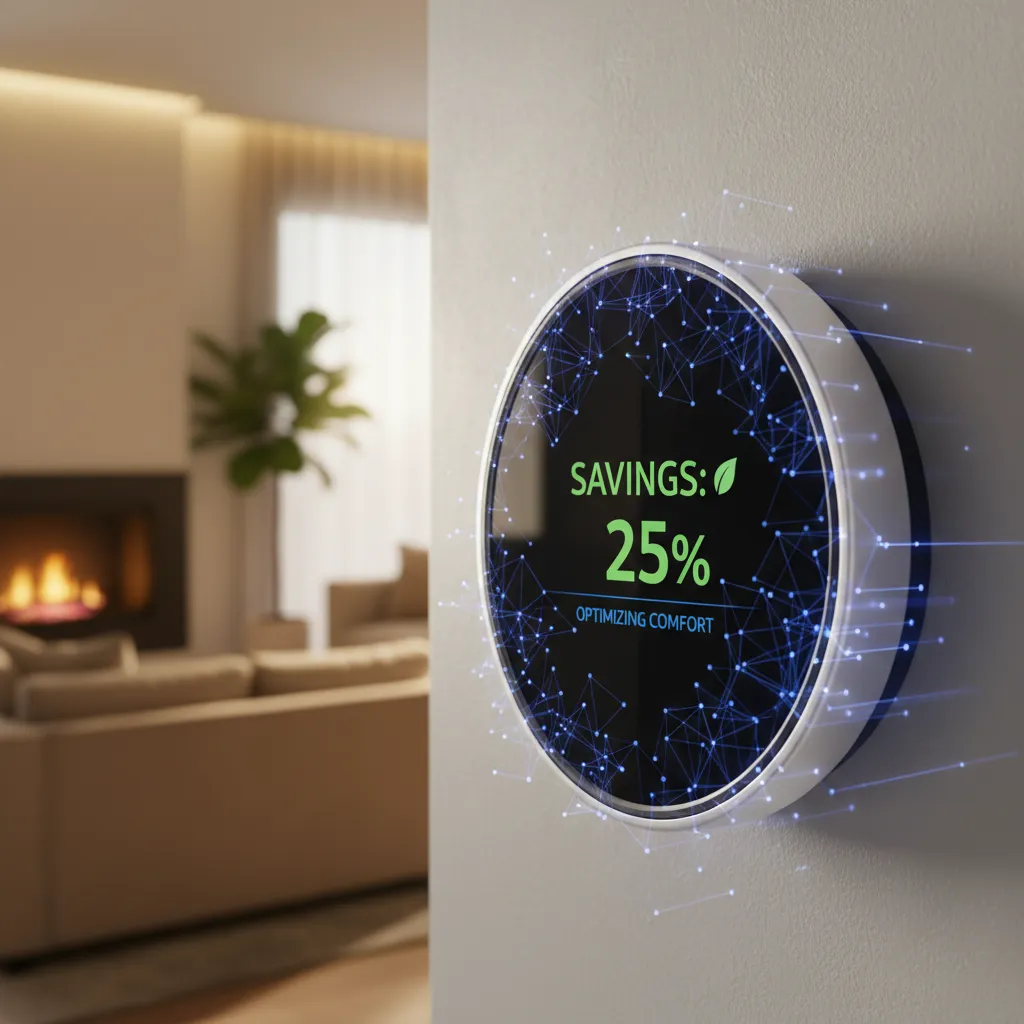
One of the most significant and immediate benefits of AI in home living is its impact on sustainability and your wallet. An energy-efficient smart home powered by AI goes far beyond simple scheduling, actively managing resources to cut waste and lower costs. This is the new era of intelligent home energy management.
Smart Thermostats AI: Predictive Climate Control
Old smart thermostats allowed you to set schedules. New smart thermostats AI models learn them. They use AI algorithms to understand your home’s unique heating and cooling profile, factoring in insulation, window efficiency, and daily weather patterns. They can detect when you’re on your way home via your phone’s location and adjust the temperature to be perfect the moment you walk in, without wasting energy all day. This constant micro-adjustment ensures optimal comfort with minimal energy expenditure.
Smart Lighting Energy Saving: Illumination That Thinks
Smart lighting energy saving is more than just LED bulbs. AI-powered systems learn the occupancy patterns of your home. They know which rooms are used at what times and can automatically dim or turn off lights in empty spaces. They can also adjust the color temperature and brightness of lights throughout the day to match natural circadian rhythms, which not only saves energy but can also improve your well-being. Coupled with motion and ambient light sensors, the system ensures you never use more light than necessary. Related: AI’s Green Blueprint: Revolutionizing Sustainable Urban Planning
The Smart Home Energy Monitor: Your Personal Energy Analyst
A smart home energy monitor is a critical component of this ecosystem. These devices attach to your home’s electrical panel and use AI to identify the unique energy signatures of individual appliances. Your smart home dashboard can then show you precisely how much energy your refrigerator, washing machine, or entertainment center is using in real-time. This data powers the AI to:
- Identify energy-hungry or malfunctioning appliances.
- Suggest more efficient times to run high-consumption devices (like during off-peak hours).
- Provide a detailed breakdown of your energy bill, empowering you to make smarter choices.
This vision of a sustainable smart home tech ecosystem is a cornerstone of modern environmental smart home design, making green living both effortless and economically savvy.
Fortifying Your Castle: The New Age of Smart Home Security
While efficiency is a major draw, security is where AI’s capabilities truly shine, transforming reactive alarms into proactive defense networks. Modern smart home security systems are no longer just about sounding a siren; they’re about preventing incidents from ever happening.
Proactive Protection with AI Security Cameras
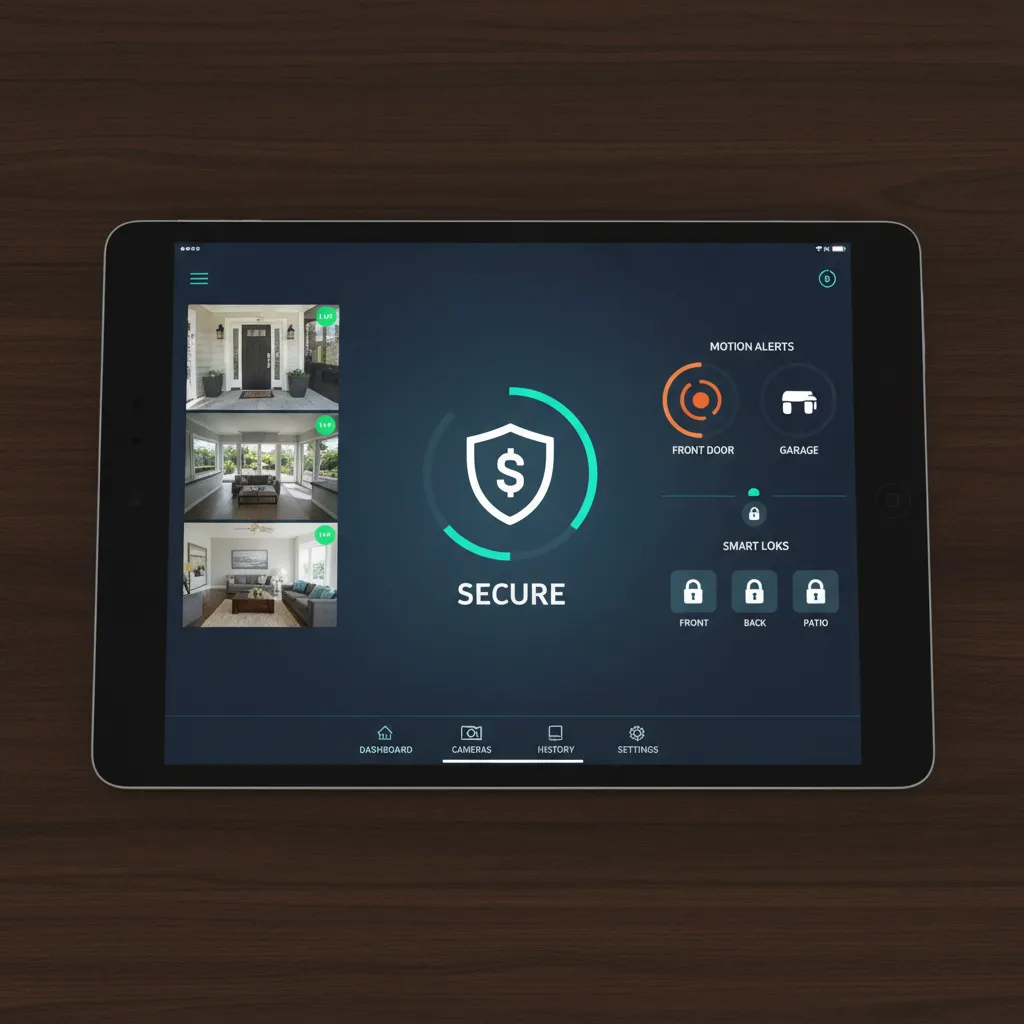
Forget endless notifications from a branch swaying in the wind. AI security cameras use sophisticated object recognition to differentiate between people, animals, vehicles, and packages. This dramatically reduces false alarms and allows for more intelligent alerts. Advanced features powered by AI include:
- Person Detection: Get an alert only when a human enters a specific zone.
- Facial Recognition: The system can learn familiar faces and notify you when a stranger is detected.
- Loitering Detection: The AI can flag an individual lingering near your property for an unusual amount of time.
- Package Detection: Get an instant notification the moment a delivery is made.
This granular control makes AI for home safety a powerful and precise tool.
Smart Door Locks AI and Wireless Protection
Smart door locks AI technology adds another layer of intelligence. These locks can automatically secure themselves when you leave (geofencing), grant temporary access to a dog walker via a digital key, or even lock down all entry points if the security system detects a threat.
The rise of wireless home security AI systems has made this technology more accessible. With no complex wiring, homeowners can easily set up a network of AI-powered cameras, door/window sensors, and motion detectors. This makes DIY smart home security a viable and powerful option for everyone. Related: Apple Intelligence: The Ultimate Guide to iOS 18’s New AI Features
The Fabric of Future Living: AI in Everyday Life
Beyond saving money and securing your property, AI is weaving itself into the very fabric of daily routines, making life more convenient, healthier, and predictable.
AI Home Assistant Benefits: Your Personal Command Center
The AI home assistant benefits extend far beyond playing music or answering trivia. Hubs integrating powerful AI like those seen in GPT-4o or Apple Intelligence are becoming true home managers. Through voice control smart home interfaces, you can initiate complex routines:
- “Good Morning”: The system can simultaneously raise the blinds, start the coffee maker, adjust the thermostat, and give you a summary of your calendar and the morning traffic.
- “Movie Night”: The lights dim, the TV turns on to your preferred streaming service, and the smart blinds close.
- “I’m Leaving”: All lights turn off, doors lock, the security system arms, and the thermostat enters “away” mode.
This seamless orchestration is a hallmark of the 2024 home automation trends.

Predictive Home Maintenance: Fixing Problems Before They Happen
One of the most exciting smart home innovations is predictive home maintenance. By analyzing data from AI-powered home sensors, the system can detect subtle anomalies that signal an impending failure.
- Your smart HVAC system might notice the air conditioner’s compressor is running harder than usual to achieve the same cooling, indicating a potential refrigerant leak or dirty filter.
- Smart water sensors can detect microscopic changes in pipe pressure or humidity, warning you of a potential leak long before water damage occurs.
- An AI-connected appliance can diagnose its own issues and even schedule a service appointment automatically.
This shifts home maintenance from a reactive, costly chore to a proactive, managed process.
Enhancing Health with Environmental Smart Home Tech
AI is also turning our homes into guardians of our well-being. Environmental smart home sensors can now monitor factors far beyond temperature.
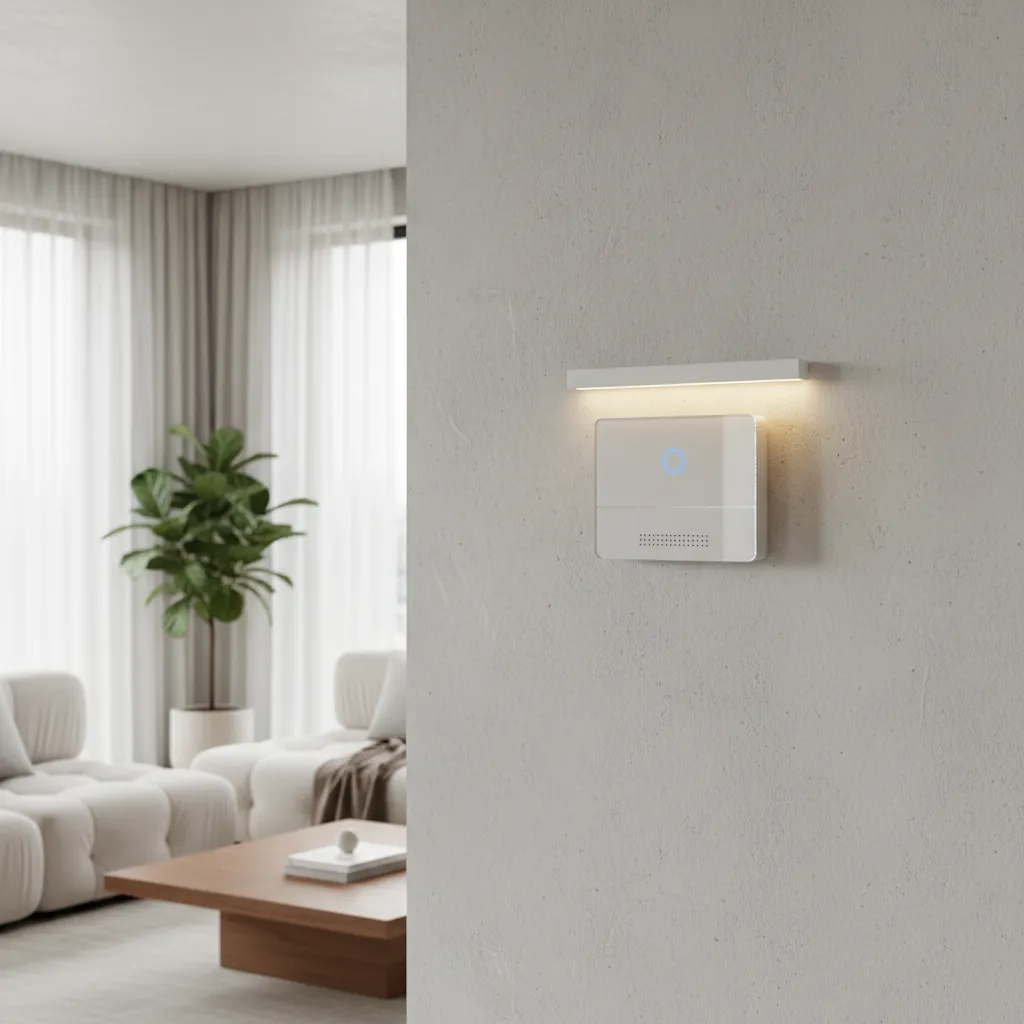
Modern AI-powered home sensors can track:
- Air Quality (VOCs): Detects harmful volatile organic compounds from cleaning supplies or new furniture and automatically activates air purifiers.
- Humidity: Manages humidifiers or dehumidifiers to prevent mold growth and create a more comfortable environment.
- CO2 Levels: Monitors carbon dioxide, indicating when a room needs fresh air to improve alertness and sleep quality.
Navigating the Challenges: Smart Home Privacy and Cybersecurity
With great power comes great responsibility. An interconnected home full of sensors inevitably raises smart home privacy concerns. As we invite this technology into our most personal spaces, understanding and mitigating the risks is paramount.
Understanding the Risks: Where Does Your Data Go?
Every piece of data—from your voice commands to your security camera footage—is a potential vulnerability. The key concerns are:
- Data Breaches: A poorly secured cloud server could expose sensitive information to hackers.
- Eavesdropping: Malicious actors could potentially gain access to microphones or cameras.
- Data Usage: How do manufacturers use the data they collect? Is it being sold to third-party marketers?
Best Practices for Smart Home Cybersecurity
Securing your intelligent home is a critical step. Smart home cybersecurity isn’t just about protecting your data; it’s about protecting your physical safety. Here are essential best practices:
- Choose Reputable Brands: Opt for manufacturers with a strong track record on privacy and security. Read their privacy policies carefully.
- Strong, Unique Passwords: Use a complex password for your Wi-Fi network and for every smart device account. Enable two-factor authentication (2FA) wherever possible.
- Create a Guest Network: Isolate your smart home devices on a separate Wi-Fi network from your computers and phones. This contains any potential breach.
- Keep Firmware Updated: Manufacturers regularly release updates to patch security vulnerabilities. Enable automatic updates on all your smart home devices.
- Review Permissions: Be mindful of the permissions you grant to smart home apps on your phone.
Conclusion: The Dawn of the Truly Intelligent Home
The AI smart home of 2024 is no longer a futuristic concept; it’s a tangible, rapidly evolving reality. We’ve moved beyond the novelty of remote-controlled gadgets into an era of proactive, predictive, and personalized living spaces. By seamlessly integrating AI home automation, these systems are delivering real-world value, making our homes more energy-efficient, fundamentally more secure, and remarkably more intuitive.
The journey has just begun. As home automation trends 2024 continue to push the boundaries with more powerful on-device AI and better interoperability standards like Matter, the future of smart homes promises even deeper integration and intelligence. Whether you start with a single AI-powered thermostat or design a fully integrated smart home system, you are stepping into a future where your home truly takes care of you.
Ready to explore the world of AI-powered living? Start by researching the best smart home hubs and consider how a single device, like an AI security camera or smart thermostat, could begin transforming your home today.
Frequently Asked Questions (FAQs)
Q1. What is the main difference between a smart home and an AI smart home?
A standard smart home operates on pre-programmed rules and schedules (e.g., “turn on lights at 7 PM”). An AI smart home uses machine learning to learn your habits, analyze data from sensors, and make autonomous, predictive decisions to improve efficiency, security, and convenience without direct commands.
Q2. What are the main benefits of AI in a smart home?
The primary benefits include enhanced energy efficiency through predictive climate and lighting control, proactive security with intelligent threat detection from AI cameras, and superior convenience via automation that adapts to your lifestyle. Other key AI home assistant benefits are predictive maintenance and health monitoring.
Q3. Are AI smart homes secure?
They can be, but it requires user diligence. Smart home cybersecurity relies on choosing reputable brands, using strong, unique passwords with two-factor authentication, keeping device firmware updated, and isolating smart devices on a separate Wi-Fi network to mitigate risks.
Q4. How does AI help with energy efficiency in a home?
AI optimizes energy usage by learning your household’s patterns. Smart thermostats AI models adjust heating and cooling based on occupancy and weather forecasts. Smart lighting energy saving systems dim or turn off lights in unused rooms, and a smart home energy monitor can identify inefficient appliances, all contributing to lower bills and a smaller carbon footprint.
Q5. What are some examples of AI smart home devices?
Key smart home devices powered by AI include smart thermostats (Google Nest, Ecobee), AI security cameras (Arlo, Ring), smart speakers and hubs (Amazon Echo, Google Home), smart door locks AI (August, Schlage), and intelligent lighting systems (Philips Hue).
Q6. Can I build a DIY smart home with AI?
Absolutely. Many of the most powerful smart home innovations are available as consumer-friendly products. You can start small with a central hub and a few devices, like cameras or smart plugs, and gradually build a comprehensive DIY smart home security and automation system as you go.
Q7. What are the biggest smart home privacy concerns?
The main smart home privacy concerns involve the potential for unauthorized access to cameras and microphones, data breaches of cloud servers storing personal information, and the way manufacturers collect and use your data for marketing or other purposes. It is crucial to read privacy policies and invest in secure devices.