Slash Your Bills: AI for Smart Home Energy Savings & Green Living

That creeping dread you feel when the monthly utility bill arrives? You’re not alone. Energy costs are climbing, and the familiar advice to “unplug chargers and turn off lights” feels like bringing a bucket of water to a house fire. While these tips help, they’re passive. They rely on our flawless memory and discipline. But what if your home itself could actively, intelligently, and automatically work to save you money and reduce your carbon footprint?
This isn’t science fiction; it’s the reality of the AI-powered smart home. We’re moving beyond homes that are simply “connected” to homes that are truly “intelligent.” Artificial intelligence is the game-changing ingredient, transforming everyday devices into a cohesive ecosystem that learns, predicts, and optimizes your energy use 24/7.
This guide is your deep dive into the world of AI home energy savings. We’ll explore how intelligent energy management works, spotlight the key energy saving AI devices that deliver the biggest impact, and show you how this technology is a cornerstone of modern green living and smart home sustainability. Get ready to transform your house into an efficient, eco-friendly haven and finally take control of your energy bills.
Beyond “Smart”: What is Intelligent Energy Management?
For years, the term “smart home” meant you could turn on your lights with a voice command or check your thermostat from your phone. That’s convenient, but it’s not truly smart. It’s remote control. True intelligence—the kind that delivers significant savings—comes from AI.
An eco-friendly smart home powered by AI operates on three core principles:
- Learning: It observes your patterns. It knows when you wake up, when you leave for work, when you watch movies, and when you go to bed. It learns the thermal properties of your home—how quickly it heats up in the sun or cools down at night.
- Predicting: Using this data, it anticipates your needs. It can predict that you’ll be home at 6 PM and start adjusting the temperature beforehand. It can check the weather forecast and predict it won’t need to run the AC as hard tomorrow.
- Automating: Based on its learnings and predictions, it takes action automatically. It makes countless micro-adjustments throughout the day to use the absolute minimum amount of energy required to keep you comfortable, without you ever lifting a finger.
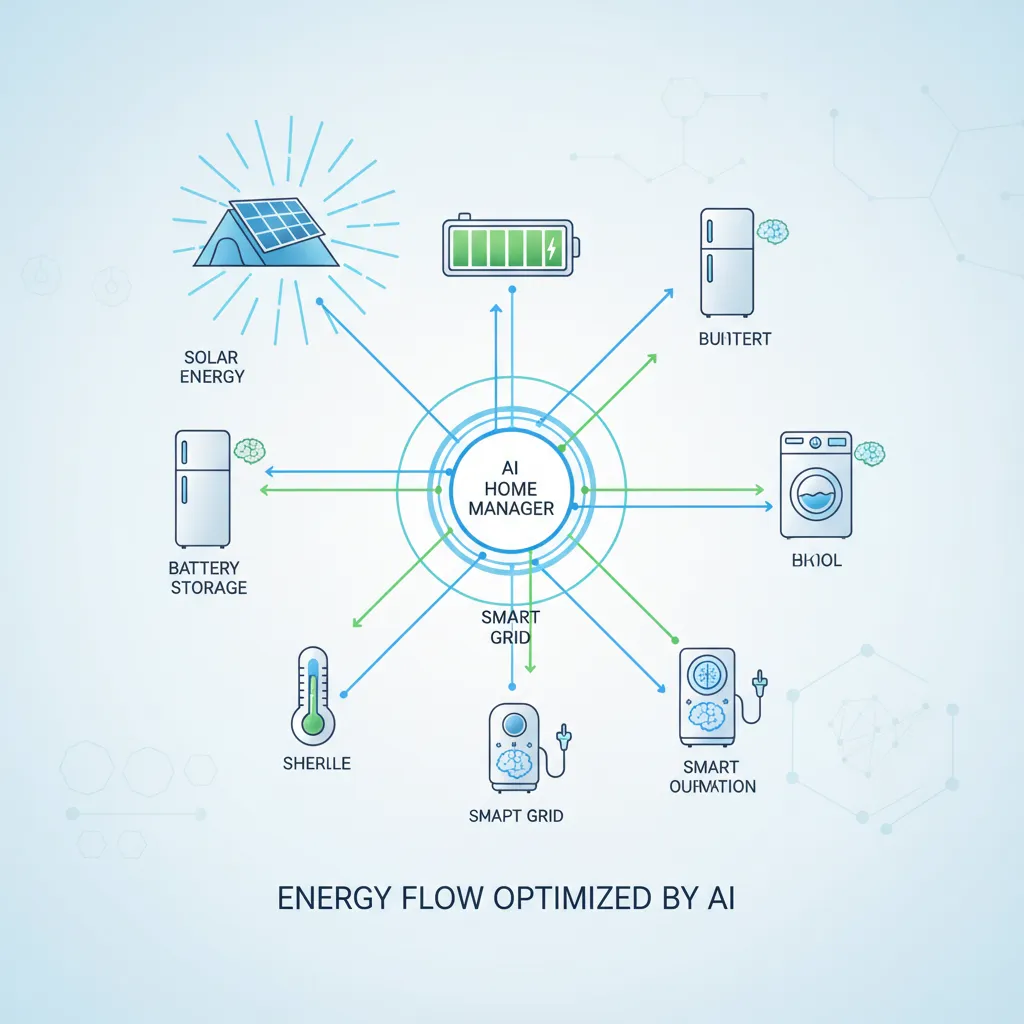
This is the essence of smart home energy management. It’s not just about a few connected gadgets; it’s about a holistic home automation energy system where an AI acts as a tireless, hyper-efficient home energy manager. The result is a home that doesn’t just respond to your commands but actively works for you, optimizing everything from your HVAC to your dishwasher.
The Brains of the Operation: How AI Slashes Your Energy Bills
So, how does this digital brain actually translate into lower numbers on your utility statement? AI employs several sophisticated strategies simultaneously to become the ultimate AI energy optimizer.
Predictive Learning & Pattern Recognition
The most significant energy hog in most homes is the HVAC (heating, ventilation, and air conditioning) system. Predictive energy AI systems tackle this head-on. An AI thermostat doesn’t just follow a rigid schedule; it creates a dynamic one based on your actual life.
It learns, for example, that on weekdays the house is empty between 8:30 AM and 5:45 PM. So, it automatically sets back the temperature during that period. But it also learns that you sometimes work from home on Fridays, and on those days, it maintains a comfortable temperature. It does this without you ever having to program a “work from home” exception. This granular, adaptive approach is what makes AI for electricity bills so effective.
Real-Time Optimization & Demand Response
The cost of electricity isn’t static. It fluctuates based on demand. Many utility companies are rolling out “Time-of-Use” (TOU) or “Demand Response” programs that offer cheaper electricity during off-peak hours (like late at night) and charge more during peak hours (like late afternoon on a hot day).
Keeping track of this manually is a nightmare. But for an AI, it’s simple. A true smart home utilities management system can:
- Connect to the grid: It knows the real-time price of electricity.
- Shift loads: It can automatically run high-consumption appliances like your dishwasher, washing machine, or even charge your EV when electricity is cheapest.
- Participate in demand response: During a peak energy event, your utility might offer you a credit to reduce your usage. Your AI can automatically adjust your thermostat by a degree or two for a short period, saving you money and helping to stabilize the grid. This is a key feature of the emerging smart grid for homes.
Anomaly Detection and Efficiency Audits
Sometimes, high energy bills aren’t caused by waste, but by faulty equipment. An advanced energy monitoring AI system can perform a constant health check-up on your home.
By analyzing the unique electrical signature of every appliance, it can detect anomalies. For example, if your refrigerator’s compressor starts running constantly instead of cycling, the AI will notice the change in its energy pattern and alert you to a potential problem before it fails completely. It can even suggest that the declining efficiency of your old air conditioner means an upgrade would pay for itself in a few years. This layer of home energy analytics AI provides invaluable, actionable insights.
Related: AI Privacy On-Device: Securing Your Data in an Intelligent World
Your Arsenal of Energy-Saving AI Devices
Building an intelligent, energy-efficient home is about choosing the right tools for the job. While you can go all-in at once, most people build their ecosystem piece by piece. Here are the most impactful smart energy devices to consider.
The AI Thermostat: The Undisputed MVP
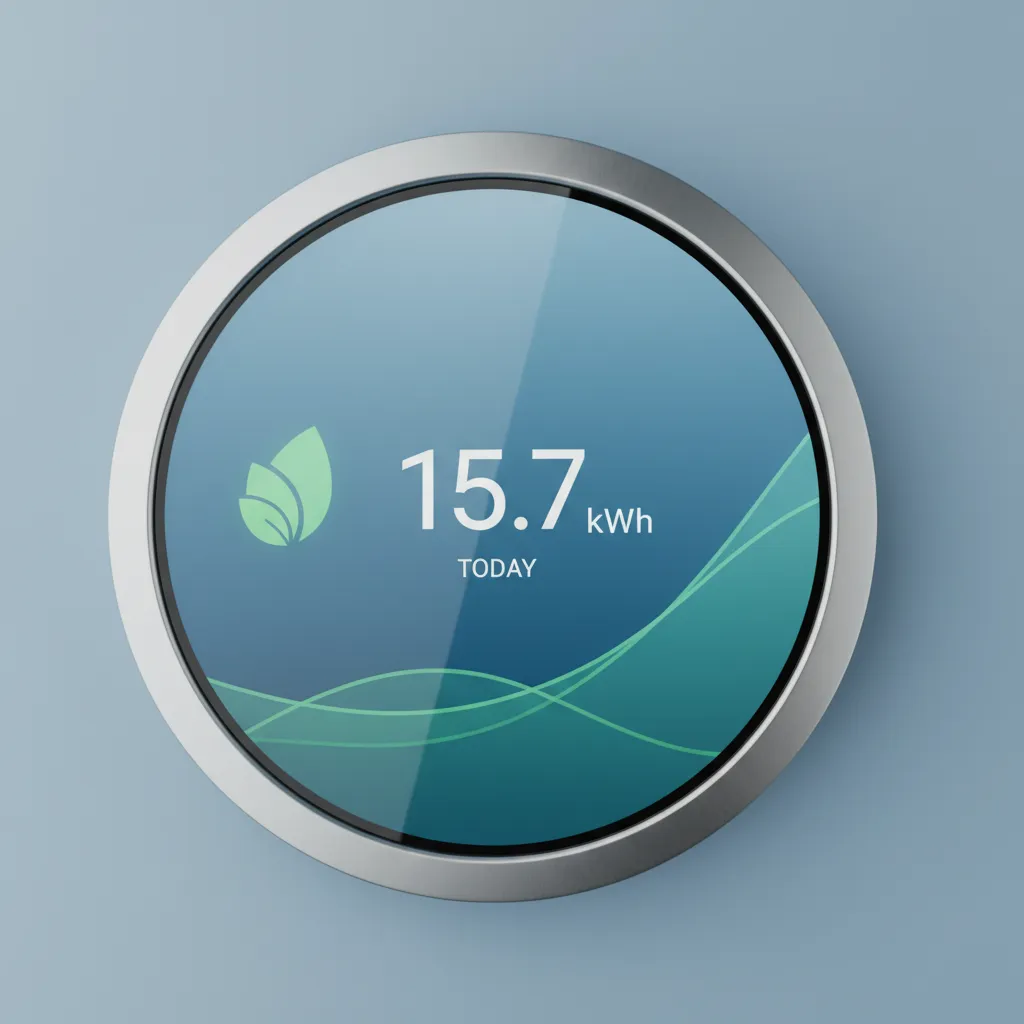
If you are going to start with just one device, make it an AI thermostat. Brands like Google Nest and Ecobee have become synonymous with this category for a good reason. Studies have shown they can reduce heating and cooling costs by 10-23% annually, which can translate into hundreds of dollars.
Here’s what sets them apart:
- Learning Algorithms: As mentioned, they learn your schedule automatically. The Nest Learning Thermostat literally builds its own schedule after about a week of observation.
- Geofencing: They use your phone’s location to know when you’ve left the house and when you’re on your way back, entering an energy-saving “Away” mode automatically.
- Remote Sensors: Devices like the Ecobee Smart Thermostat use sensors placed in different rooms to manage temperature based on occupancy, eliminating hot or cold spots and ensuring you’re only conditioning the rooms you’re actually using.
- Data Reports: They provide detailed energy reports that show you exactly when you’re using the most energy and offer personalized smart home efficiency tips to improve.
Intelligent Lighting and Smart Plugs
Lighting is another significant energy user. AI-powered lighting systems (like Philips Hue) and smart plugs offer smart ways to cut down on this waste.
- Adaptive Lighting: Smart bulbs can be paired with motion sensors so lights turn on when you enter a room and off when you leave. More advanced systems can even use ambient light sensors to automatically dim the artificial lights when there’s plenty of natural sunlight, providing the perfect amount of light while using minimal power.
- Tackling “Vampire Power”: Many modern electronics draw power even when they’re turned “off.” This standby power, often called vampire power, can account for up to 10% of your electricity bill. Smart plugs are one of the most effective AI power saving solutions for this problem. You can program them to completely cut power to your entertainment center overnight or to your home office setup when you leave for the day.
Related: AI for Inclusive Design: Paving the Way for Accessibility and Innovation
AI-Powered Appliances: The Next Frontier
The latest generation of home appliances is coming with AI baked in. An energy efficient smart home of the future will be filled with them:
- Smart Refrigerators: Can run defrost cycles during off-peak energy hours and alert you if a door is left ajar.
- Smart Laundry Machines: AI-powered washers can use sensors to determine the size of the load and the soil level, using the precise amount of water and energy needed. Smart dryers can use moisture sensors to stop the cycle the moment clothes are dry, preventing wasteful over-drying.
- Smart Dishwashers: Can be scheduled to run in the middle of the night when energy is cheapest and water pressure is highest.
While the individual savings from one appliance might seem small, when an entire suite of appliances is working in concert to be more efficient, the cumulative effect is substantial.
Whole-Home Energy Monitoring Systems
For the data-driven homeowner, a whole-home energy monitor like Sense or Span is the ultimate tool. These devices install in your home’s electrical panel and act as a comprehensive energy monitoring AI. Using machine learning, they can identify the unique electrical signature of nearly every device in your home.
You can open an app and see, in real-time, exactly how much energy your TV, your coffee maker, and your “always-on” guest room cable box are using. This level of granular home energy analytics AI is revolutionary. It helps you hunt down energy vampires, understand the impact of your habits, and see the immediate effect of turning off a device. It’s the ultimate tool to optimize home energy AI.
Integrating AI into Your Green Living Philosophy
The benefits of an AI-powered home go far beyond your bank account. This technology is a powerful force for building a more sustainable future, making it a cornerstone of eco home technology.
Reducing Your Carbon Footprint, One Algorithm at a Time
The link is simple: the less energy you consume from the grid, the smaller your carbon footprint. Every kilowatt-hour saved is a reduction in emissions. When you reduce energy bill AI, you are also contributing to AI carbon footprint reduction.
This becomes even more powerful for homes with solar panels and battery storage. AI systems can manage this ecosystem with incredible precision.
- Weather Prediction: The AI checks the forecast. If it’s going to be sunny, it might pre-cool the house using solar power, knowing it can rely on the sun.
- Battery Optimization: It decides the most opportune time to charge the battery from solar or the grid (when rates are low) and when to discharge it to power the home (when rates are high).
- Grid Support: It can even sell excess stored energy back to the grid during peak events, turning your home into a mini power plant. This is a crucial element of AI for climate change home solutions.

Making Sustainability a Family Habit
One of the most underrated aspects of smart home green tech is its ability to make energy consumption visible and tangible. Abstract concepts like “kilowatt-hours” become easy-to-read charts and fun notifications.
You can use the data to:
- Educate: Show your kids the real-time energy spike when they leave their gaming console on.
- Gamify: Set up family challenges to see who can lower their energy usage the most in a week.
- Reinforce: The immediate feedback from the app reinforces positive behaviors, creating lasting, sustainable home tech habits.
This technology transforms energy conservation from a chore into an engaging, collaborative family activity.
Related: AI for Sustainable Living: Building Smart Habits for a Better Future
The Financial Payoff: Is It Worth the Investment?
Let’s address the elephant in the room: cost. Smart home devices have an upfront investment. The key is to view it not as an expense, but as an investment with a tangible return.
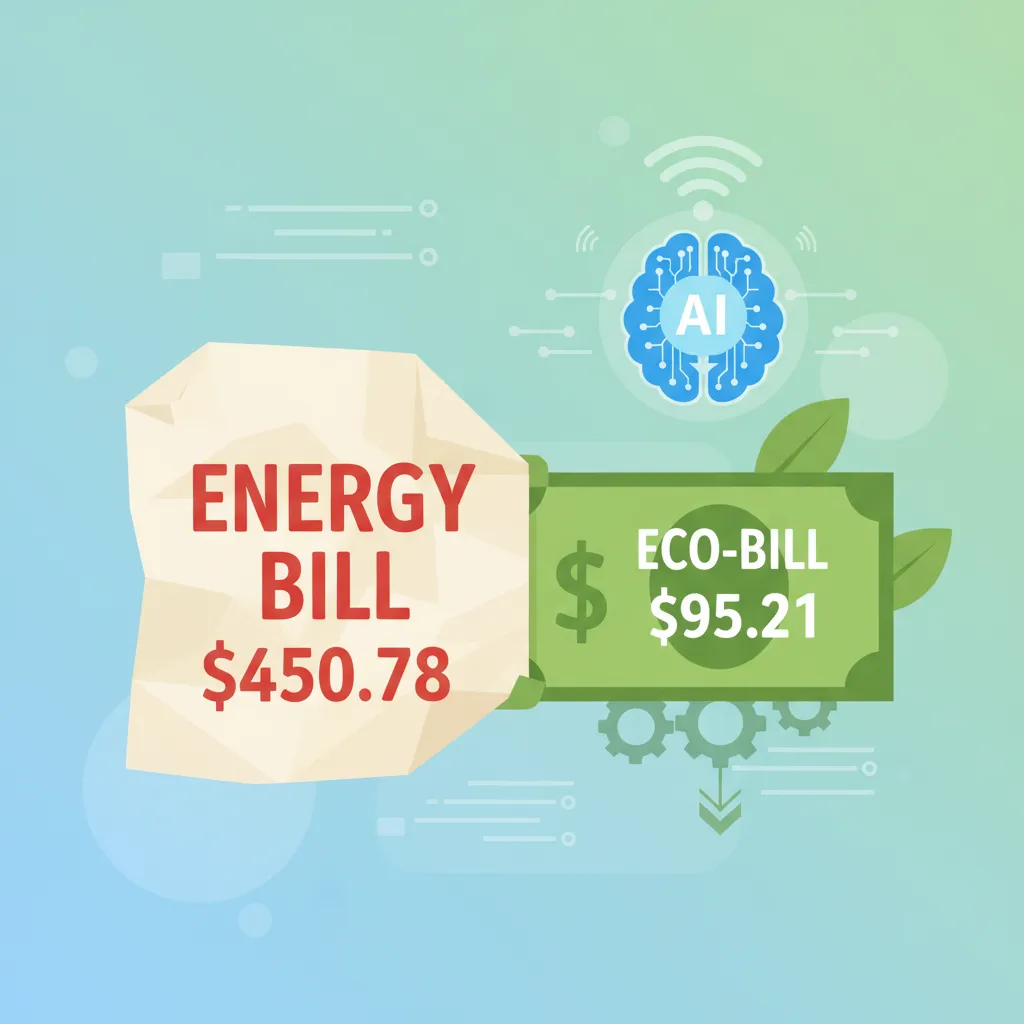
An AI thermostat, which might cost $200-$250, can save an average household $150-$200 per year, paying for itself in just over a year. A set of smart plugs can cost as little as $30 and save you that much on vampire power in the same timeframe.
Furthermore, many utility companies offer significant rebates for purchasing smart energy devices like thermostats and EV chargers, as it helps them manage the grid more effectively. Before you buy, always check your local utility’s website for available incentives. Over a few years, the combination of direct energy savings and rebates means this technology doesn’t just pay for itself—it starts paying you.
Conclusion: Your Smarter, Greener Home Awaits
The fight against high energy bills and for a more sustainable lifestyle no longer has to be a manual, uphill battle. Artificial intelligence has given us the tools to create homes that are not just automated, but are active partners in our quest for efficiency and green living.
From the simple, powerful impact of an AI thermostat to the comprehensive oversight of a whole-home monitoring system, AI home energy savings technology offers a concrete path to lower costs and a smaller environmental footprint. It’s about letting intelligent algorithms handle the thousands of daily micro-decisions, freeing you up to enjoy a comfortable home while knowing you’re doing your part for your wallet and the planet.
Don’t feel like you need to overhaul your entire home overnight. Start with one key device. See the data, watch the savings add up, and experience the convenience. Your journey to a smarter, more sustainable home can begin today.
Related: AI-Powered Investing: Using Predictive Analytics for Smarter Financial Decisions
Frequently Asked Questions (FAQs)
How much can AI really save on energy bills?
On average, homeowners can save between 10% and 25% on their total energy bills by implementing a comprehensive AI-powered smart home system. An AI thermostat alone, often the starting point, can save 10-12% on heating and 15% on cooling costs, according to data from manufacturers like Google Nest.
What is the best AI device for saving energy?
For the biggest and quickest return on investment, the undisputed best device is an AI thermostat. Since heating and cooling account for nearly half of a typical home’s energy consumption, optimizing your HVAC system with a learning thermostat provides the most significant savings.
Do smart homes use more electricity?
This is a common misconception. While individual smart devices do consume a small amount of electricity to stay connected, the energy they save through intelligent automation and optimization far outweighs their own consumption. The net effect of a well-configured smart home is a significant reduction in overall electricity use.
How does AI help in energy management?
AI helps in energy management by learning user behavior, predicting future energy needs based on patterns and external data (like weather), and automating devices to run in the most efficient way possible. It eliminates human error and forgetfulness, making micro-adjustments 24/7 to prevent waste.
Can AI predict energy consumption?
Yes, absolutely. Predictive energy AI systems are a core component of smart home technology. By analyzing historical usage data, your daily routines, and upcoming weather forecasts, AI can create highly accurate predictions of your home’s energy consumption, helping you budget and identify opportunities for further savings.
Is smart home technology good for the environment?
Yes, eco-friendly smart home technology is inherently beneficial for the environment. By drastically reducing a home’s energy consumption, it lowers the demand on the power grid, which in turn reduces the carbon emissions from power plants. It is a key tool for promoting residential smart home sustainability.