Next-Gen AI Smart Glasses: Revolutionizing Productivity & Daily Life
Introduction
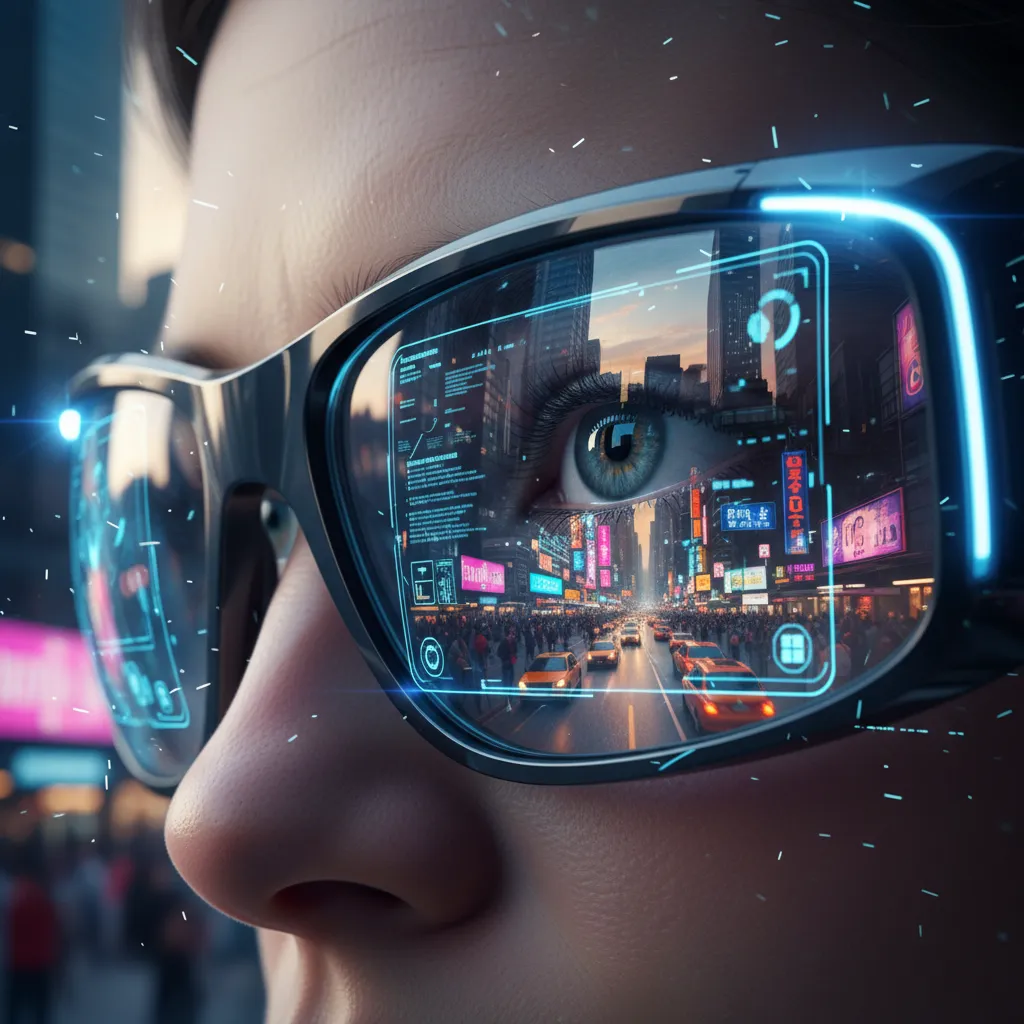
Imagine walking down a busy street, not with your head buried in a phone, but looking straight ahead as subtle directions appear in your field of view. Picture yourself in a business meeting, instantly seeing key data points about the topic being discussed, or having a foreign language translated for you in real-time. This isn’t a scene from a sci-fi blockbuster; it’s the rapidly approaching reality powered by AI smart glasses.
For years, the idea of smart eyewear has flickered at the edges of consumer tech, often remembered for ambitious but flawed early attempts. Today, a new wave of next generation eyewear is emerging, and it’s fundamentally different. By integrating advanced artificial intelligence, these devices are evolving from simple notification displays into true contextual-aware companions. They represent the pinnacle of wearable AI tech, promising to reshape how we work, learn, and interact with the world.
This article delves into the exciting world of AI smart glasses. We’ll explore how this technology works, its transformative applications in both professional and personal spheres, and what the smart eyewear future holds. Get ready to understand how hands-free computing is finally becoming a practical reality, set to enhance daily tasks and unlock unprecedented levels of productivity.
The Evolution of Smart Eyewear: From Google Glass to Intelligent Companions
To appreciate the current revolution, it’s essential to look back. The most famous predecessor, Google Glass, introduced the world to the concept of a heads-up display but stumbled due to major hurdles: privacy concerns (the infamous “glasshole” moniker), limited functionality, poor battery life, and a design that screamed “tech prototype.”
So, what’s changed? The key catalyst is the exponential growth of AI. Early smart glasses were essentially smartphone screens strapped to your face. Today’s AI personal assistant glasses are equipped with sophisticated AI vision technology. They don’t just display information; they see, hear, and understand your environment, providing proactive and contextually relevant assistance.
This shift marks the transition from simple augmented reality to a more profound AI powered visual assistance. Instead of just overlaying static information, the new generation of smart eyewear processes the visual world to offer dynamic, intelligent insights. This is the core of their power and the reason they represent one of the most significant wearable tech innovations of our time.
How AI Smart Glasses Work: A Look Under the Hood
While they may look like regular spectacles, modern AI smart glasses are packed with an incredible amount of technology. Understanding their core components helps demystify how they deliver such powerful experiences.
Core Components of Modern Smart Eyewear
- Miniature Displays: Using technologies like MicroLED or Waveguide projectors, these glasses cast a crisp, transparent real-time information display onto the lens, making it appear as if it’s floating in your vision.
- Powerful Processors: Specialized Systems-on-a-Chip (SoCs) are designed for the intense demands of spatial computing eyewear, constantly processing data from sensors to understand where you are and what you’re looking at.
- Cameras and Environmental Sensors: High-resolution cameras are the “eyes” of the device, feeding visual data to the AI. Additional sensors like accelerometers and gyroscopes track head movements with precision.
- Microphones and Audio: Advanced microphone arrays are crucial for voice controlled glasses, enabling seamless commands and clear communication. Bone conduction or micro-speakers provide audio without blocking your ears.
- Connectivity: Bluetooth and Wi-Fi ensure a constant link to your smartphone, the cloud, and other devices, facilitating deep AI device integration.
The “AI Brain”: On-Device vs. Cloud-Powered Intelligence
The real magic happens in the processing. Some smart glasses perform AI tasks directly on the device for speed and privacy (on-device AI). Others offload more complex queries to powerful AI models in the cloud, like GPT-4o or Gemini. The most effective smart glass applications often use a hybrid approach, handling simple tasks locally while leveraging the cloud for heavy lifting, ensuring you get the information you need, instantly.
Redefining the Workplace: AI Smart Glasses for Unprecedented Productivity
While consumer applications are exciting, the most immediate and impactful revolution is happening in the professional world. Enterprise smart glasses are no longer a novelty; they are becoming essential AR productivity tools across various industries.

Hands-Free Information for Frontline Workers
For professionals who work with their hands, stopping to check a tablet or manual is a major workflow disruption. Productivity smart glasses solve this by providing critical information directly in their line of sight.
- Logistics: A warehouse worker can see pick-lists and optimal routes overlaid on their vision, scanning barcodes with a simple glance.
- Manufacturing: An assembly line technician can follow complex, interactive 3D instructions, reducing errors and training time.
- Healthcare: A surgeon can view a patient’s vital signs or MRI scans during a procedure without looking away from the operating table.
- Field Service: An engineer repairing complex machinery can pull up schematics and even receive remote expert assistance, all while keeping their hands on the job.
These applications of smart glasses for work lead to measurable improvements in efficiency, accuracy, and safety. [Related: AI PCs Unveiled: How They’ll Boost Your Productivity and Creativity]
Enhancing Collaboration with Spatial Computing
The future of teamwork is immersive and location-independent. Spatial computing eyewear allows teams to interact with 3D digital models in a shared physical space, even if they are continents apart. Imagine architects walking through a virtual building together on a real construction site or designers collaborating on a digital prototype as if it were a physical object. This level of interaction is a game-changer for creative and technical fields.

Transforming Daily Life: Beyond the 9-to-5
As the technology becomes more refined and affordable, consumer AI glasses are set to seamlessly weave into the fabric of our everyday lives, offering a new layer of convenience and intelligence.
Seamless Navigation and Exploration
Getting lost will soon be a thing of the past. AI navigation glasses will provide intuitive, turn-by-turn directions that appear as glowing arrows on the pavement in front of you. When exploring a new city, you can look at a landmark and instantly see its history and significance, or point your gaze at a restaurant to see its menu and reviews.

AI-Powered Visual Assistance and Learning
These devices offer powerful AI assisted living capabilities.
- Shopping: Look at a product on a shelf to instantly compare prices online or check for allergens in food items.
- DIY Projects: Follow step-by-step visual instructions projected onto your workpiece, whether you’re building furniture or fixing a leaky faucet.
- Education: Students can visualize complex scientific models or historical events in 3D, making learning more engaging and intuitive. [Related: AI for Student Success: Smart Tools and Adaptive Learning Strategies]
Next-Level Communication and Social Interaction
AI communication eyewear can break down language barriers by providing real-time, in-vision subtitles during conversations. They could also help you remember names and key details about people you’ve met before by subtly displaying context when you see them again, acting as a true social superpower. [Related: What is GPT-4o? OpenAI’s New Flagship AI Model Explained]
Health, Fitness, and Wellness Monitoring
The future of wearables is proactive health management. Health tracking smart glasses could monitor your activity, track your posture to prevent strain, and even potentially detect subtle health indicators through vision analysis. They can guide you through workouts with perfect form or lead you in a calming meditation session by monitoring your breathing. [Related: The AI Health Revolution: Smart Tracking and Proactive Wellness Insights]
Intuitive Smart Home and IoT Control
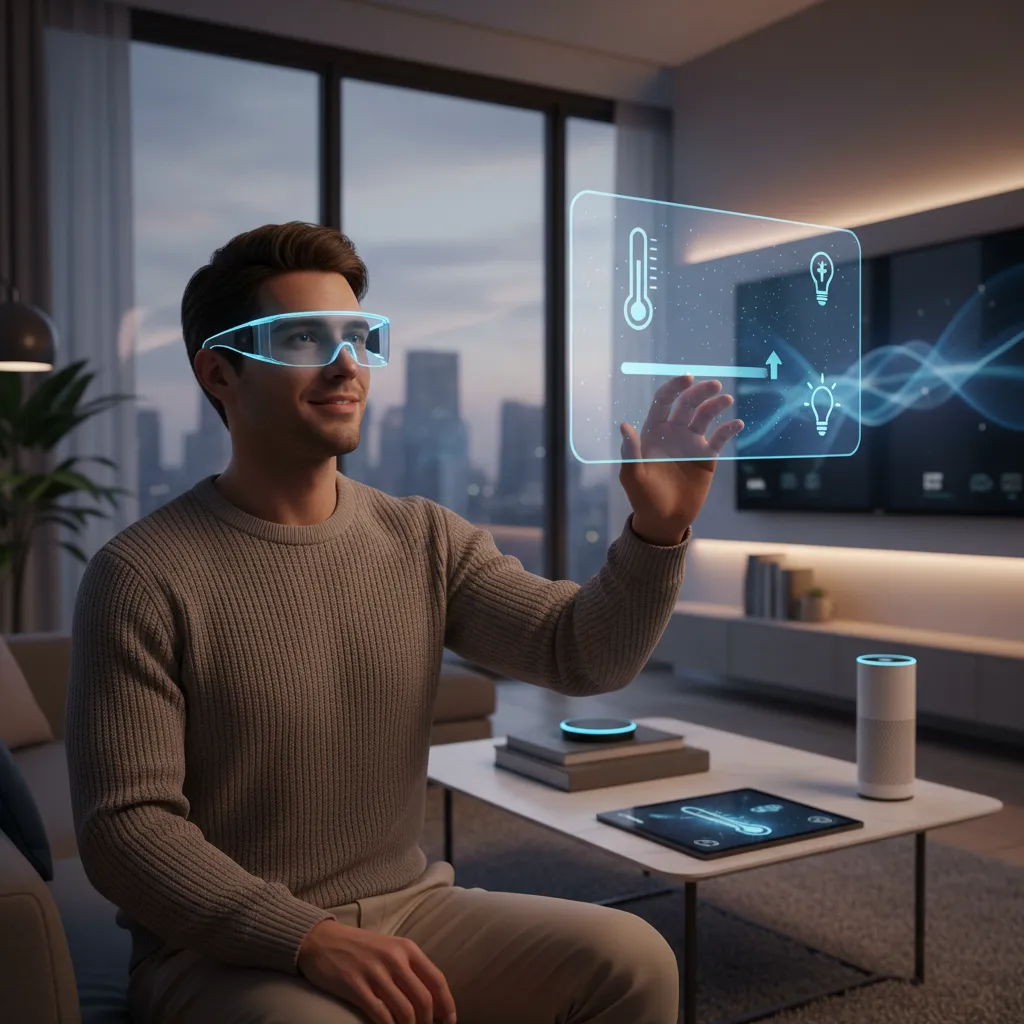
Forget fumbling for your phone to adjust the thermostat or turn on the lights. With gesture controlled smart glasses, a simple flick of the finger or a specific hand movement could be all it takes to manage your connected home, offering an incredibly intuitive and seamless experience.
The Current Landscape and Market Trends
The race to define the smart eyewear future is heating up. We’re seeing two main approaches emerge in the market:
- AI Assistant Glasses: These are designed to look and feel like normal glasses. They prioritize a lightweight design, all-day battery life, and AI-powered audio and camera features. The Ray-Ban Meta Smart Glasses are a prime example, integrating Meta’s AI to see and interpret the world for you. Amazon’s Echo Frames focus on an audio-first Alexa experience.
- Immersive Smart Glasses (AR/Spatial Computing): These are more powerful, visually immersive devices aimed at creating a true future of augmented vision. While bulkier and more expensive, they offer full spatial computing experiences. Apple’s Vision Pro, though a headset, has given the world a glimpse of what high-end spatial computing can do, and it’s paving the way for future, more compact immersive smart glasses.
The prevailing smart glasses market trends point towards a convergence. The goal is to fit the power of an immersive AR device into the stylish, lightweight form factor of an assistant-style frame. As technology miniaturizes, this convergence is inevitable. [Related: The Humane AI Pin Review: The Truth Behind the Hype]
Navigating the Hurdles: Challenges on the Road to Mass Adoption
Despite the immense potential, several significant challenges must be overcome for AI smart glasses to become as ubiquitous as smartphones.
- The Privacy Predicament: The ability to record video discreetly raises profound privacy questions. Tech companies must implement robust safeguards, clear indicators (like a recording light), and transparent data policies to build public trust and avoid the social backlash that plagued Google Glass.
- Social Acceptance and Design: For mass adoption, these devices must be fashionable and indistinguishable from regular eyewear. Collaborations between tech companies and fashion brands, like Ray-Ban and Meta, are a crucial step in this direction.
- Technical Limitations: The eternal struggle between performance and battery life is more acute than ever in such a small form factor. Engineers are working to improve processing efficiency, battery density, and display brightness for outdoor use without generating excess heat.
- The Cost Factor: High-end AR glasses remain prohibitively expensive for the average consumer. Prices will need to come down significantly for the market to truly take off.
The Inevitable Future: What’s Next for AI Smart Eyewear?
The trajectory is clear. AI smart glasses are on a path to becoming one of the most transformative computing platforms since the smartphone. In the next 5-10 years, we can expect to see dramatic advancements.
The ultimate vision for the future of augmented vision is a device that is lightweight, stylish, and powerful enough to run all day, serving as our primary interface to the digital world. It will seamlessly integrate with all our other devices, providing a persistent, intelligent, and context-aware layer of information over our reality. This is the holy grail of hands-free computing, a future where technology doesn’t pull us out of the world but helps us engage with it more deeply. [Related: AI on Mars: Colonization and Humanity’s Next Home]
Conclusion
We are standing at the dawn of a new era in personal computing. AI smart glasses are rapidly moving from the realm of science fiction to practical, powerful tools that will redefine productivity and enrich our daily lives. By combining augmented reality with advanced artificial intelligence, this next generation eyewear offers a more natural and intuitive way to interact with information and the world around us.
While challenges around privacy, social acceptance, and technology remain, the momentum is undeniable. From the factory floor to the city street, the impact of wearable AI tech will be profound. The journey is just beginning, but one thing is certain: the future will be seen, quite literally, through a new lens.
Frequently Asked Questions (FAQs)
Q1. What are AI smart glasses?
AI smart glasses are advanced spectacles that integrate artificial intelligence to provide real-time information and assistance. Unlike simple display glasses, they use cameras and sensors to see and understand the user’s environment, offering contextually relevant data, live translation, object identification, and hands-free control over other devices.
Q2. How are AI smart glasses different from AR glasses?
While the terms are often used interchangeably, there’s a key distinction. Augmented Reality (AR) glasses focus on overlaying digital visuals onto the real world (e.g., a 3D model in a room). AI smart glasses are a broader category that may include AR features but their primary function is to use AI to interpret the world and act as an intelligent assistant, often through both audio and visual feedback.
Q3. What can you actually do with smart glasses today?
Current models like the Ray-Ban Meta Smart Glasses allow you to take hands-free photos and videos, listen to music, make calls, and interact with an AI assistant (Meta AI). Enterprise models used in professional settings enable workers to view instructions, checklists, and remote video assistance directly in their line of sight.
Q4. Are smart glasses a replacement for my phone?
Not yet, but that is the long-term vision for many companies. Currently, most smart glasses are considered smartphone accessories, relying on a connection to your phone for data and processing power. As technology advances, they could evolve into standalone devices that handle all the functions of a modern smartphone.
Q5. Are smart glasses safe and what about privacy?
Safety is a top priority, with manufacturers ensuring the devices meet all standard eyewear regulations. Privacy remains the biggest concern. Leading companies are implementing features like a visible LED light to indicate when the camera is recording to make it clear to people nearby. Users also have control over their data and what they choose to share with the AI.
Q6. Can anyone wear smart glasses?
Yes, many smart glasses are designed to be compatible with prescription lenses. Companies either offer the service directly or partner with lens manufacturers, allowing users to get custom lenses fitted to the smart frames so they can be worn just like regular glasses.
Q7. What are the biggest challenges for smart glasses adoption?
The main hurdles include ensuring user privacy and data security, achieving broad social acceptance through stylish and discreet designs, overcoming technical limitations like battery life and heat, and making the devices affordable for the average consumer.