AI’s Wild Impact: Revolutionizing Biodiversity Conservation
Introduction
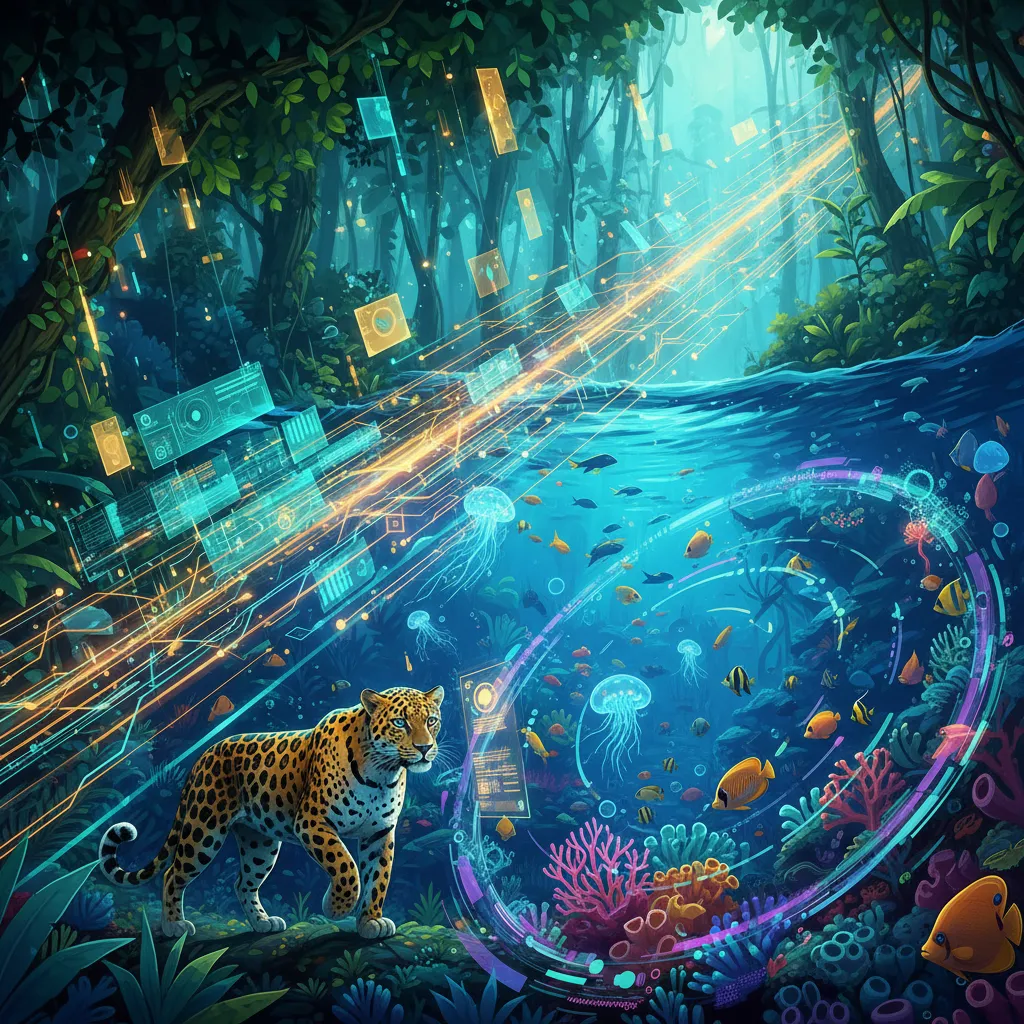
The planet’s rich tapestry of life, its biodiversity, is facing unprecedented threats. From rampant habitat destruction and climate change to illegal wildlife trade and pollution, species are vanishing at an alarming rate. Scientists warn we are in the midst of a sixth mass extinction, a crisis that demands innovative solutions and urgent action. But what if our most advanced technological creations could offer a lifeline to the natural world? Enter Artificial Intelligence (AI).
AI, once relegated to the realms of science fiction, is rapidly emerging as a powerful ally in the fight for biodiversity conservation. Its ability to process vast amounts of data, identify complex patterns, and make predictions is revolutionizing how we monitor, protect, and restore ecosystems. This isn’t just about fancy algorithms; it’s about equipping conservationists with tools that amplify their efforts, allowing them to work smarter, faster, and with greater precision than ever before.
In this comprehensive guide, we’ll dive deep into the multifaceted ways AI biodiversity conservation is transforming the field. We’ll explore how wildlife monitoring AI and machine learning conservation are enabling breakthroughs in understanding species behavior and distributions. We’ll uncover how AI environmental protection strategies are combating poaching and deforestation, and examine the ethical considerations that come with deploying such powerful conservation technology. Join us as we explore the wild impact of AI, and how it’s becoming an indispensable tool in safeguarding our planet’s invaluable natural heritage.
The Global Biodiversity Crisis: Why AI is Our New Ally
Before delving into AI’s solutions, it’s crucial to understand the magnitude of the problem. Biodiversity — the variety of life on Earth at all its levels, from genes to ecosystems — underpins every aspect of human well-being. It provides clean air and water, fertile soils, food security, medicines, and resilience to natural disasters. Yet, human activities are eroding this foundation at an alarming pace. The Intergovernmental Science-Policy Platform on Biodiversity and Ecosystem Services (IPBES) warns that around one million animal and plant species are now threatened with extinction, many within decades.
Traditional conservation methods, while vital, often struggle with the sheer scale and complexity of these challenges. Manual data collection can be slow, expensive, and geographically limited. Human eyes and ears simply cannot cover vast, remote landscapes or analyze the intricate data required to understand rapidly changing ecological dynamics. This is where AI steps in as a game-changer, offering capabilities that transcend human limitations. By automating tasks, enhancing analytical power, and providing predictive insights, ecological AI is accelerating the pace of discovery and intervention, offering a beacon of hope in a critical time.
AI’s Eyes and Ears: Advanced Wildlife Monitoring and Species Identification
One of the most immediate and impactful applications of AI in conservation is its ability to monitor wildlife and ecosystems. Traditional methods of tracking animal populations often involve labor-intensive fieldwork, which can be costly, time-consuming, and intrusive. AI-powered biodiversity monitoring technology is transforming this, offering non-invasive, efficient, and highly accurate ways to observe the natural world.
The Rise of AI-Powered Drones and Camera Traps
Imagine drones soaring silently over vast forests or inaccessible mountain ranges, equipped with high-resolution cameras and AI algorithms. These AI drone wildlife systems can identify individual animals, map their movements, and even detect signs of poaching or habitat encroachment. The data collected by these drones is immense, far too much for human analysts to process efficiently. Here, AI shines, automatically sifting through hours of footage to pinpoint relevant events or identify species.
Similarly, camera traps, strategically placed in remote areas, have long been a staple of wildlife research. Now, with machine learning conservation algorithms, these cameras are smarter than ever. They can differentiate between species, recognize individual animals based on unique markings (like stripes on a tiger or spots on a leopard), and even estimate population sizes. This real-time data allows conservationists to understand animal behavior, migration patterns, and the health of populations without direct human interference.
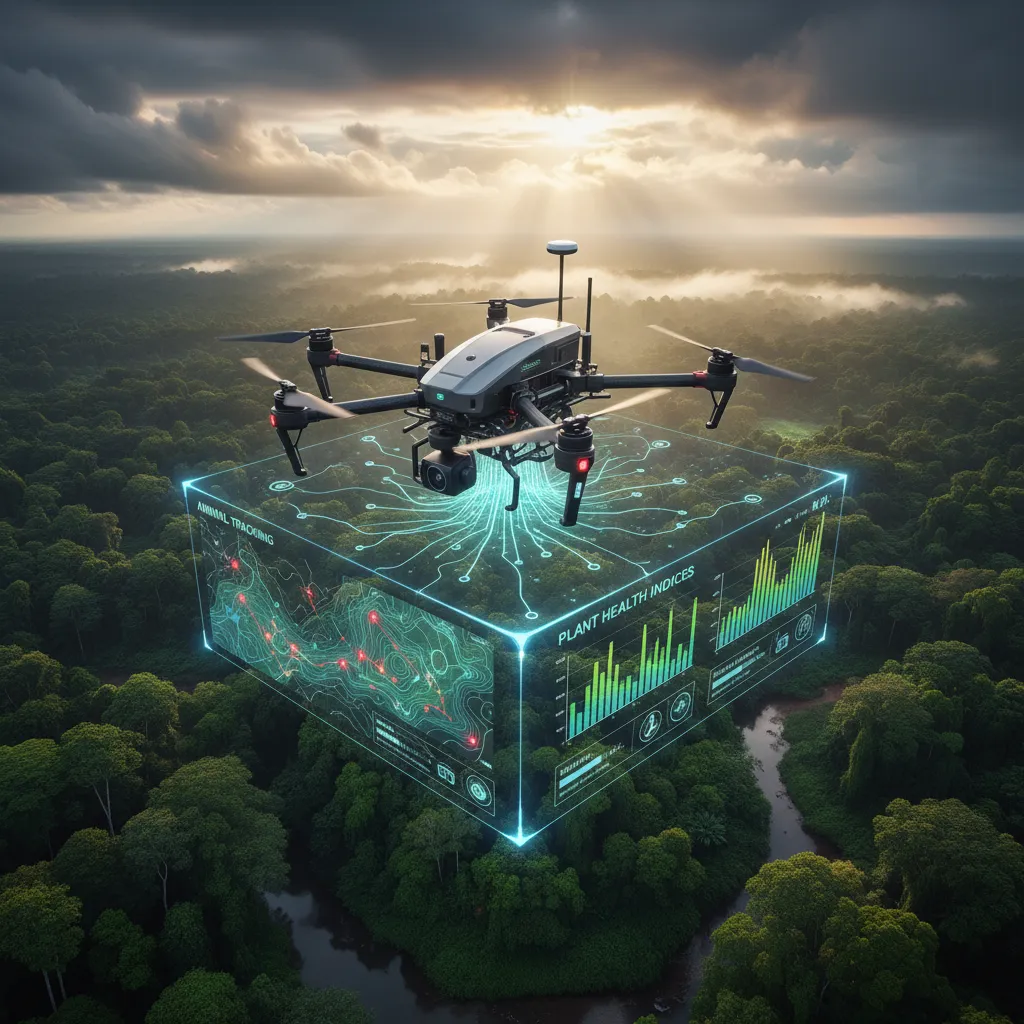 AI-powered drones are transforming wildlife monitoring, providing unprecedented insights into animal behavior and population dynamics across vast landscapes.
Consider Project SNAPP, which uses AI to analyze millions of camera trap images, saving countless hours of manual review. Or the use of facial recognition technology for identifying individual chimpanzees, aiding long-term research on social structures. This AI for wildlife approach significantly boosts our ability to protect endangered species.
[Related: AI-Powered Personalized Travel Planning]
Acoustic Monitoring and AI Species Identification
Beyond visual data, AI is also adept at analyzing soundscapes. Acoustic sensors deployed in forests or oceans can record a cacophony of sounds – bird calls, insect chirps, even the low frequencies of whale songs. AI algorithms can then distinguish specific species from this background noise, monitor their presence, and even assess ecosystem health. For example, patterns of frog calls can indicate the presence of certain pollutants, while the absence of specific bird songs might signal habitat degradation.
This capacity for AI species identification extends to identifying individual animals by their unique vocalizations, much like human voice recognition. This non-invasive method is particularly valuable for nocturnal or elusive species, providing critical data on their distribution and activity patterns that would otherwise be impossible to obtain.
Satellite Imagery and Remote Sensing AI Conservation
For a truly global perspective, satellite imagery conservation combined with AI offers unparalleled insights. Satellites continuously orbit Earth, capturing images of every corner of the planet. AI algorithms can analyze these vast datasets to detect subtle changes over time, identifying deforestation, illegal mining, urban expansion, and shifts in vegetation health. This remote sensing AI conservation capability allows conservationists to monitor vast areas that would be impossible to survey on foot or by drone, providing early warnings of environmental threats and helping to prioritize conservation efforts.
For example, AI can analyze satellite images to detect new road construction in protected areas, indicating potential illegal logging or mining activities. It can also map habitat fragmentation, track the health of coral reefs, or monitor glacial melt, all critical indicators of the planet’s ecological well-being.
Protecting the Vulnerable: AI in Anti-Poaching and Threat Detection
The illegal wildlife trade is a multi-billion dollar industry that pushes countless species to the brink of extinction. Confronting this threat requires intelligence, speed, and proactive strategies. AI is proving to be an invaluable weapon in the arsenal of AI anti-poaching efforts.
Predictive Analytics for Anti-Poaching
Instead of reacting to poaching incidents, AI allows conservationists to anticipate and prevent them. By analyzing historical poaching data, environmental factors (like moon cycles, proximity to human settlements, and patrol routes), and even social media trends, predictive analytics conservation models can identify high-risk areas and times. This allows rangers to deploy their limited resources more effectively, focusing patrols where they are most needed.
Systems like PAWS (Protection Assistant for Wildlife Security) use game theory and machine learning to optimize patrol routes, making them unpredictable for poachers while maximizing coverage of vulnerable areas. This shift from reactive to proactive intervention is saving lives, both human and animal.
 AI analytics empower anti-poaching efforts by predicting high-risk areas, allowing rangers to intercept illegal activities before they occur.
Real-time Alerts and Smart Conservation
Beyond prediction, AI systems can provide real-time alerts when threats are detected. Imagine a network of sensors equipped with AI that can detect human movement or the sound of vehicles in a protected area. These “smart fences” or integrated sensor networks can instantly alert park rangers, allowing for rapid response.
Furthermore, AI-powered image recognition can be used at border crossings or ports to detect illegal wildlife products hidden in cargo, a major challenge in combating the global trade. This kind of smart conservation leverages technology to create an intelligent defense system for our planet’s most vulnerable inhabitants.
[Related: Guardians of the Digital Frontier: AI Revolutionizing Cybersecurity]
Understanding Ecosystems: AI for Habitat Monitoring and Restoration
Biodiversity conservation isn’t just about protecting individual species; it’s about safeguarding the habitats and ecosystems they depend on. AI is providing unprecedented tools for monitoring the health of these vital systems and guiding AI for ecosystem restoration efforts.
AI Forest Monitoring and Combating Deforestation
Forests are the lungs of our planet, critical for biodiversity, climate regulation, and human livelihoods. Yet, deforestation continues at an alarming rate. AI forest monitoring uses satellite imagery and drone data to detect illegal logging, track forest cover changes, and identify areas at risk of wildfire. Algorithms can differentiate between natural forest loss and human-induced deforestation, providing actionable intelligence to authorities.
For instance, the use of AI with platforms like Global Forest Watch helps identify deforestation hotspots in near real-time, enabling rapid intervention. This ability to monitor vast, often inaccessible forest regions from afar is a major leap forward in AI environmental protection.
Ocean Conservation AI and Protecting Marine Life
Our oceans, covering over 70% of the Earth’s surface, are vast and largely unexplored, yet they face immense pressures from overfishing, pollution, and climate change. Ocean conservation AI is emerging as a critical tool for understanding and protecting marine ecosystems.
Underwater drones and autonomous vehicles, equipped with AI, can monitor coral reefs, assess fish populations, and detect marine plastic pollution. AI algorithms can analyze underwater acoustic data to track marine mammals, identify illegal fishing vessels, and even predict the movement of ocean currents that disperse pollutants.
 Underwater AI robots are revolutionizing ocean conservation by monitoring marine life and ecosystems, providing vital data for protecting coral reefs and beyond.
Projects using AI to analyze sonar data can map the seabed in unprecedented detail, identifying critical habitats. Others leverage machine learning to process imagery from remotely operated vehicles (ROVs) to automatically identify and count marine species, accelerating biodiversity assessments in deep-sea environments. This AI for marine life technology is opening up new frontiers in understanding and safeguarding our blue planet.
[Related: AI Saves Lives: Predicts & Responds to Global Crises]
Guiding Ecosystem Restoration with AI
Beyond monitoring, AI is also instrumental in guiding restoration efforts. By analyzing soil conditions, climate data, and historical ecological information, AI can recommend the most suitable species for reforestation or habitat regeneration projects. It can optimize planting strategies, predict the success rates of restoration interventions, and monitor the recovery of ecosystems over time. This targeted approach ensures that scarce resources for restoration are used most effectively, maximizing their impact.
Beyond Monitoring: Predictive Analytics and Climate Change Adaptation
The climate crisis is inextricably linked to biodiversity loss. As global temperatures rise, habitats shift, and extreme weather events become more frequent, species struggle to adapt. AI offers powerful tools for understanding these complex interactions and developing strategies for climate change AI conservation.
Modeling Species Distribution and Predicting Threats
AI-powered predictive analytics conservation can model how species distributions are likely to shift under different climate change scenarios. By analyzing environmental variables like temperature, rainfall, and vegetation cover, alongside species occurrence data, AI can forecast which areas will become unsuitable for certain species and which might become new refugia. This information is crucial for establishing protected areas, designing wildlife corridors, and prioritizing conservation actions.
Furthermore, AI can help predict outbreaks of diseases that threaten wildlife, such as avian flu in bird populations or chytrid fungus in amphibians. By analyzing environmental conditions, host proximity, and historical disease patterns, AI can provide early warnings, allowing for rapid intervention to contain outbreaks and protect vulnerable populations.
AI for Resilient Ecosystems
AI is also being explored to develop more resilient ecosystems. For example, in agriculture, AI can help farmers adopt sustainable practices that reduce their environmental footprint, thus indirectly benefiting biodiversity. In urban planning, AI can optimize green infrastructure to mitigate heat island effects and promote urban biodiversity. The integration of environmental AI solutions across various sectors is key to fostering a holistic approach to conservation.
The Data Revolution: Big Data and Machine Learning in Conservation
At its core, AI’s power in conservation stems from its ability to manage and make sense of big data conservation. The sheer volume of information collected from satellites, drones, camera traps, acoustic sensors, and citizen science initiatives would overwhelm human capacity. This is where AI data analytics conservation becomes indispensable.
Machine learning algorithms can sift through petabytes of data, identifying subtle patterns and correlations that would be invisible to human observers. This includes:
- Detecting anomalies: Flagging unusual activities that might indicate illegal operations.
- Classifying images and sounds: Automatically identifying species or behaviors from raw sensor data.
- Forecasting trends: Predicting population dynamics, disease spread, or climate impacts.
- Optimizing resource allocation: Guiding patrols, restoration efforts, or research expeditions to maximize impact.
The ability to process and interpret this influx of data allows conservationists to move from reactive decision-making to data-driven, strategic planning. It democratizes access to powerful insights, enabling smaller organizations and local communities to leverage advanced tools for their conservation efforts.
Challenges and Ethical Considerations in AI Conservation
While the potential of AI in conservation is immense, its deployment is not without challenges and ethical considerations. Adopting sustainable AI conservation practices is crucial for long-term success.
Data Bias and Representation
AI models are only as good as the data they’re trained on. If historical conservation data is biased towards certain regions, species, or types of threats, the AI might perpetuate those biases, leading to inequitable or ineffective interventions. Ensuring diverse and representative datasets is vital.
Accessibility, Cost, and Infrastructure
Advanced AI technologies often require significant computational power, technical expertise, and robust infrastructure. This can create a divide, limiting access for conservation efforts in developing countries or remote regions that might need these tools the most. Efforts are needed to make conservation technology more accessible and affordable.
Privacy and Surveillance Concerns
The deployment of drones, camera traps, and satellite imagery raises legitimate concerns about privacy, particularly for indigenous communities living within or near protected areas. It’s essential to engage with local communities, obtain informed consent, and ensure that AI monitoring systems are used responsibly and ethically, respecting human rights and local customs. The goal is AI nature preservation, not surveillance of people.
Energy Consumption of AI
Training and running complex AI models can be energy-intensive, contributing to carbon emissions. As AI’s role in conservation grows, it’s important to develop and utilize energy-efficient algorithms and hardware, aligning AI’s benefits with broader sustainability goals. This directly relates to the concept of sustainable AI conservation.
The Human Element
While AI can automate many tasks, it cannot replace human judgment, local knowledge, or the passion of conservationists on the ground. AI is a tool to augment human efforts, not supersede them. Effective conservation will always require a blend of cutting-edge technology and dedicated human involvement. Understanding AI conservation ethics is paramount to ensure technology serves humanity and nature, rather than the other way around.
The Future is Now: Emerging Trends in Conservation Technology
The field of conservation tech trends is evolving at a breathtaking pace, with new innovations constantly emerging.
- Robotics and Autonomous Systems: Beyond drones, we’re seeing the development of autonomous underwater vehicles (AUVs) for deep-sea exploration, robotic forest rangers for fire detection, and even insect-inspired micro-drones for precision pollination. These advancements extend our reach into the most challenging environments.
- Citizen Science Integration: AI can process and validate data collected by citizen scientists, amplifying the impact of public participation in biodiversity monitoring. Apps that allow users to identify species through photos or sound recordings contribute valuable data to larger AI models.
- Synthetic Biology and Genomics: While controversial, advancements in synthetic biology and genomics, combined with AI, hold potential for de-extinction projects or enhancing the resilience of endangered species to diseases. However, these applications raise significant ethical debates that require careful consideration.
- Digital Twins for Ecosystems: Creating “digital twins” of entire ecosystems, using AI to simulate complex interactions and predict the outcomes of different conservation interventions, could revolutionize strategic planning.
The synergy between these environmental AI solutions and dedicated human efforts offers a powerful vision for the future of our planet’s biodiversity.
[Related: Sustainable Smart Homes: Eco-Friendly Tech]
Conclusion
The biodiversity crisis demands innovative solutions, and Artificial Intelligence has emerged as a formidable ally in this critical fight. From the precise identification of endangered species AI to the proactive prevention of poaching through AI anti-poaching strategies, AI is fundamentally reshaping how we approach conservation. Its capacity for big data conservation and AI data analytics conservation allows us to unlock insights from vast and complex ecological datasets, enabling more informed and effective decisions.
We’ve seen how wildlife monitoring AI with drones and camera traps provides unparalleled views into animal behavior, while AI forest monitoring and ocean conservation AI safeguard entire ecosystems. The advancements in conservation technology, fueled by machine learning conservation, offer hope for AI for ecosystem restoration and resilience against climate change.
Yet, as we embrace these powerful tools, it’s crucial to navigate the AI conservation ethics and ensure sustainable AI conservation practices. AI is not a magic bullet, but a force multiplier. It empowers conservationists, researchers, and policymakers with the intelligence needed to protect our planet’s precious natural heritage. By combining human ingenuity with AI’s analytical prowess, we can forge a future where both humanity and the natural world thrive. The wild impact of AI is just beginning, and its role in safeguarding Earth’s biodiversity is set to grow exponentially.
FAQs
Q1. What is AI biodiversity conservation?
AI biodiversity conservation refers to the application of Artificial Intelligence technologies, such as machine learning and data analytics, to protect, monitor, and restore the variety of life on Earth. It helps conservationists make data-driven decisions and enhance their efforts to safeguard species and ecosystems.
Q2. How does AI help in wildlife monitoring?
AI assists in wildlife monitoring by analyzing data from various sources like drones, camera traps, and acoustic sensors. It can automatically identify species, track individual animals, count populations, detect abnormal behaviors, and monitor movement patterns across vast landscapes or underwater.
Q3. Can AI really stop poaching?
AI significantly enhances anti-poaching efforts by using predictive analytics to identify high-risk areas and times, allowing rangers to optimize patrol routes and intervene proactively. AI-powered sensors can also provide real-time alerts for intrusions, and image recognition can detect illegal wildlife products at checkpoints.
Q4. What are some ethical concerns with using AI in conservation?
Ethical concerns include potential data biases, the high cost and accessibility of technology, privacy issues for local communities and indigenous populations, the energy consumption of AI, and the need to ensure AI augments rather than replaces human involvement. Responsible deployment and community engagement are crucial.
Q5. How does AI contribute to habitat monitoring and restoration?
AI contributes by analyzing satellite imagery and drone data to detect habitat changes like deforestation, illegal mining, and pollution. It helps assess ecosystem health, map critical habitats, and guide restoration efforts by identifying suitable species for planting and optimizing rehabilitation strategies.
Q6. Is AI used for ocean conservation?
Yes, AI is increasingly vital for ocean conservation. It powers autonomous underwater vehicles (AUVs) to monitor marine life and coral reefs, analyzes acoustic data to track marine mammals and detect illegal fishing, and processes satellite imagery to map plastic pollution and track ocean health.
Q7. How does AI help with climate change impacts on biodiversity?
AI helps by creating predictive models that forecast how species distributions will shift due to climate change, identifying areas at risk or potential refugia. It also assists in predicting disease outbreaks in wildlife and informs strategies for developing more resilient ecosystems against climate stressors.