AI Revolutionizes Science: Material Discovery & Personalized Medicine

Introduction
For centuries, scientific progress has been a meticulous, often agonizingly slow process of hypothesis, experimentation, and serendipitous discovery. From Newton’s apple to Fleming’s penicillin, breakthroughs were the product of human intellect, patience, and sometimes, sheer luck. But what if we could systematically accelerate that process? What if we could sift through possibilities on a scale unimaginable to the human mind? We are standing at the precipice of such an era, and the driving force is Artificial Intelligence.
AI is rapidly evolving from a niche computer science concept into one of the most powerful AI research tools ever created. It’s a paradigm shift, transforming the very fabric of scientific inquiry. Instead of just analyzing data, AI is becoming a creative partner, capable of predicting outcomes, generating novel ideas, and revealing hidden patterns in cosmic-scale datasets. This AI driven innovation science is not a distant future; it’s happening now.
This article delves into the heart of this revolution, exploring two of the most dynamic frontiers where AI is making an unprecedented impact: the lightning-fast world of material discovery and the deeply human realm of personalized medicine. We’ll explore how algorithms are designing everything from next-generation batteries to life-saving drugs, marking a new chapter in AI scientific discovery.
The New Scientific Method: How AI is Changing the Game
The traditional scientific method is a linear path: form a hypothesis, design an experiment, gather data, and analyze the results. It’s powerful but inherently limited by human cognitive capacity and the physical constraints of experimentation. AI shatters these limitations by introducing a new, data-driven approach that complements and enhances traditional methods.
At its core, AI in science leverages a suite of technologies, primarily machine learning (ML) and deep learning, to perform tasks that are impossible for humans. These algorithms can:
- Analyze Massive Datasets: Modern science generates petabytes of data, from genomic sequences and molecular libraries to astronomical surveys. AI can ingest and find meaningful correlations in this data deluge, identifying signals that would be lost in the noise for a human researcher.
- Run In-Silico Experiments: AI can simulate incredibly complex systems—be it a chemical reaction or a clinical trial—thousands of times in a virtual environment. This drastically reduces the time and cost of physical experiments, allowing scientists to focus only on the most promising candidates.
- Generate Novel Hypotheses: Instead of just testing human-generated ideas, advanced AI models can generate their own novel hypotheses based on the patterns they discover. This opens up entirely new avenues of research that we may not have thought to explore.
This represents a fundamental upgrade to the scientific toolkit. Researchers are no longer just scientists; they are conductors of a powerful analytical orchestra. Related: The Rise of AI Copilots: Revolutionizing Work, Boosting Creativity & Driving Innovation This collaborative approach is accelerating progress across every field imaginable.
Forging the Future: AI in Material Science and Discovery
For millennia, the discovery of new materials has defined human progress—from the Bronze Age to the Silicon Age. Yet, this process has largely been one of laborious trial and error. To create a new alloy with specific properties, chemists would have to physically mix elements, heat them, cool them, and test them, an expensive and time-consuming endeavor. Material science AI is changing this paradigm completely.
Accelerating the Discovery of New Materials
AI computational materials science allows researchers to explore the vast, uncharted universe of possible chemical compounds without ever stepping into a lab. By training models on known material properties, AI can predict the characteristics of millions of hypothetical structures.
A groundbreaking example is Google DeepMind’s GNoME (Graph Networks for Materials Exploration). By leveraging AI, the project discovered 2.2 million new crystal structures, including 380,000 stable materials that could power future technologies like superconductors and advanced batteries. To put that in perspective, this discovery is equivalent to nearly 800 years of human knowledge generated in a fraction of the time.
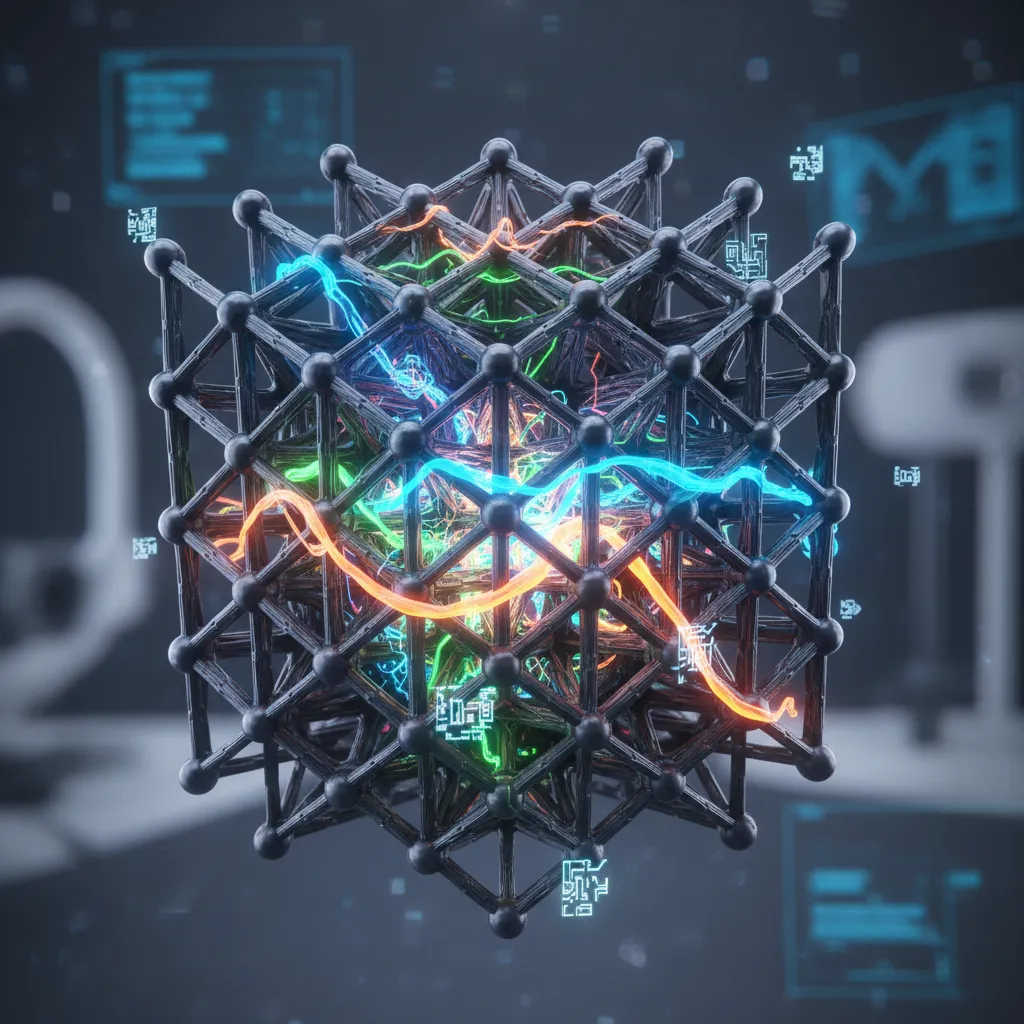
This is the power of AI for new materials. Instead of stumbling through the dark, scientists can now ask the AI to design a material with a specific set of desired properties—for example, “Find me a material that is lightweight, stronger than steel, and a good electrical conductor.” The AI then sifts through countless combinations to present the most viable candidates for synthesis. This approach to AI materials design is not just faster; it’s smarter, more efficient, and is set to unlock a new generation of advanced materials AI.
Designing Smart and Sustainable Materials
The impact of AI extends beyond just speed; it’s enabling the creation of materials with functionalities we’ve only dreamed of.
- Smart Materials:
Smart materials AIis at the forefront of designing substances that can sense and react to their environment. This could lead to self-healing plastics that repair their own cracks, windows that tint automatically based on sunlight, or biomedical implants that release drugs on a programmed schedule. - Sustainable Materials: One of the most critical applications is in the development of
AI for sustainable materials. Researchers are using AI to design next-generation solar cells with higher efficiency, create better catalysts for capturing carbon from the atmosphere, and invent new biodegradable polymers to combat plastic pollution. By simulating molecular interactions, AI can pinpoint greener chemical pathways and more eco-friendly materials. Related: Smart Home Energy Savings: Top Gadgets for Eco-Friendly & Affordable Living - Nanotechnology: At the atomic scale,
AI in nanotechnologyis helping to construct materials with unprecedented precision. The complex quantum mechanics at this level are perfectly suited for AI analysis, accelerating the development of everything from ultra-efficient computer chips to targeted cancer therapies. This deep dive intoAI in chemistryis foundational to these advancements.
The Next Frontier of Health: AI in Personalized and Precision Medicine
While material science shapes our external world, AI’s impact on medicine is profoundly personal. For decades, medicine has operated on a “one-size-fits-all” model. Treatments and drug dosages were developed for the “average” patient, which meant they could be ineffective or cause adverse side effects for many.
Personalized medicine AI is flipping that script. By analyzing an individual’s unique genetic code, lifestyle, and environmental factors, AI is enabling a new era of precision medicine AI where treatments are tailored specifically to the patient. This is one of the most significant AI healthcare breakthroughs of our time, promising a future of medicine AI that is more proactive, predictive, and effective.
Revolutionizing Drug Discovery and Development
The journey of a new drug from lab to pharmacy is notoriously long and expensive, often taking over a decade and costing billions of dollars. AI drug discovery is compressing this timeline dramatically.
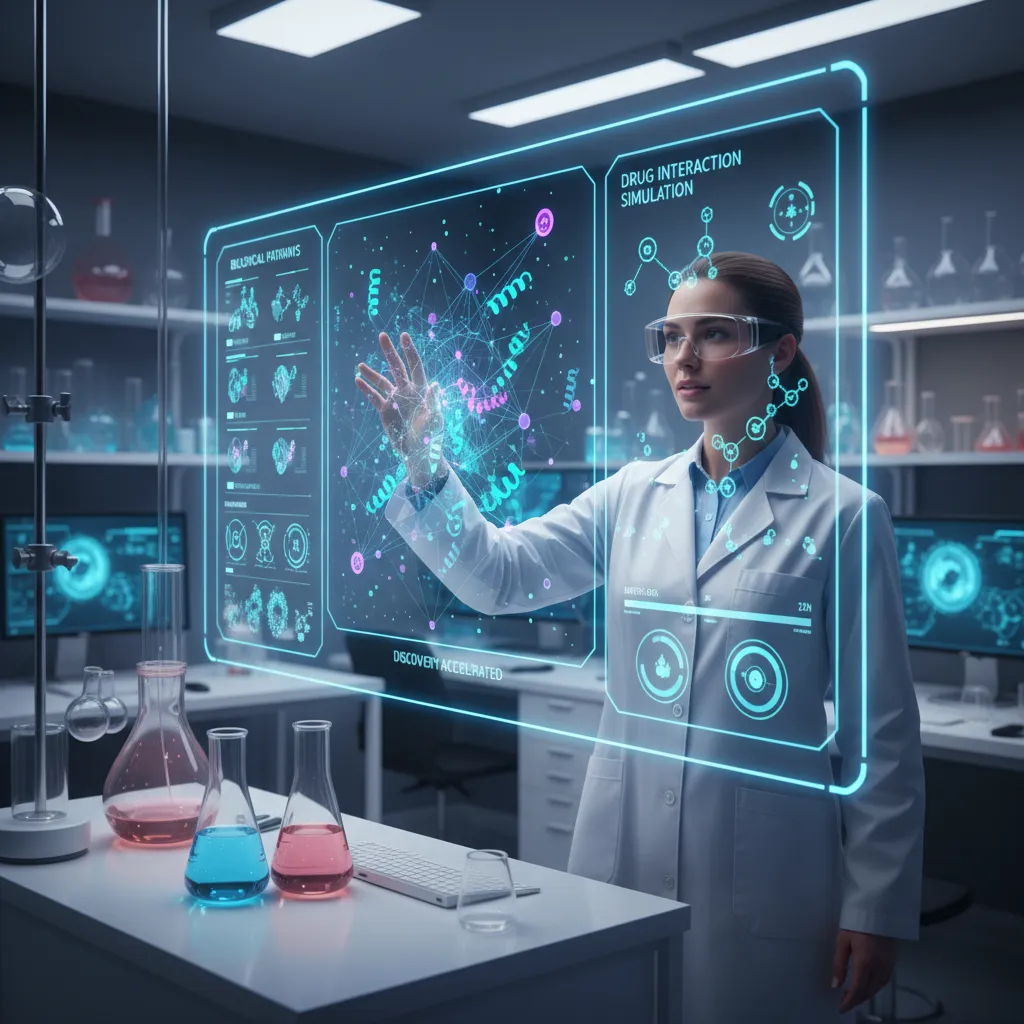
Traditionally, scientists would have to screen thousands of chemical compounds to find one that might work against a specific disease target. Now, AI can analyze biological data to identify the most promising targets and then design novel molecules specifically to interact with them. Companies in the AI in biotech space are using generative AI to create entirely new drug candidates from scratch.
This AI drug development pipeline continues into preclinical and clinical stages. AI can predict a drug’s potential toxicity, optimize its chemical structure for better efficacy, and even improve AI clinical trials by identifying the perfect patient candidates from vast healthcare records, ensuring trials are faster and more likely to succeed. This revolution in AI in pharmaceutical research is already bringing new hope for complex diseases.
AI-Powered Diagnostics and Medical Imaging
One of the earliest and most impactful applications of AI in healthcare has been in diagnostics. AI medical imaging algorithms can now analyze X-rays, CT scans, and MRIs to detect signs of disease—like cancerous tumors or diabetic retinopathy—with a level of accuracy that often meets or exceeds human experts.
This isn’t about replacing radiologists but augmenting them, allowing them to spot subtle signs earlier and focus their attention on the most critical cases. Beyond images, AI powered diagnostics are being used to analyze a wide range of patient data—from blood tests to electronic health records—to predict the risk of conditions like sepsis or heart failure long before symptoms appear.
This predictive power is a cornerstone of AI for disease prevention. Furthermore, genomic medicine AI is taking this a step further, analyzing a patient’s entire DNA sequence to identify predispositions to certain diseases and recommend proactive lifestyle changes or treatments. Related: Google I/O 2024: Project Astra, AI Overviews & The Gemini Era
Tailoring Treatments and Enhancing Patient Care
Once a diagnosis is made, AI for healthcare innovation plays a crucial role in creating the optimal treatment plan. For cancer patients, AI can analyze the genetic makeup of a tumor and compare it against vast databases of treatment outcomes to recommend the most effective chemotherapy regimen. This level of personalization drastically improves the chances of success.

The impact on AI patient care is continuous. AI-powered systems can monitor patients remotely, predict potential complications, and help manage chronic conditions. This AI biomedical research is not just about finding cures but also about improving the quality of life for millions. It’s a shift from reactive to proactive healthcare, driven by data and intelligent algorithms.
The Engine Room: Data, Algorithms, and the Future of AI Research
The incredible advancements in both material science and medicine are fueled by two things: massive amounts of high-quality data and increasingly sophisticated algorithms. The synergy between big data and AI is the engine driving this scientific revolution. Genomics projects, electronic health records, chemical libraries, and material property databases provide the raw material that AI models learn from.
However, this new paradigm comes with its own set of challenges that researchers are actively working to solve:
- Data Privacy and Security: Especially in medicine, protecting sensitive patient data is paramount.
- Algorithmic Bias: If the training data is not diverse, AI models can perpetuate and even amplify existing biases, leading to inequities in healthcare or flawed material designs.
- Explainability (XAI): In high-stakes fields like medicine, it’s not enough for an AI to be right; we need to understand why it made a particular decision. Developing “explainable AI” is a critical area of research.
As consumer-facing AI like Apple Intelligence becomes more commonplace, the public’s understanding and acceptance of these more complex scientific AI systems will grow, further accelerating adoption and innovation.
Conclusion
We are witnessing a monumental shift in how science is conducted. Artificial intelligence is no longer a peripheral tool but a central, indispensable partner in the quest for knowledge. From the atomic structure of a new superconductor to the genetic code of a single patient, AI is providing a lens to see the world with unprecedented clarity and speed.
In material science, the slow, serendipitous process of discovery is being replaced by intelligent, accelerated design, promising a future of more sustainable, efficient, and powerful materials. In medicine, the one-size-fits-all approach is giving way to a deeply personalized model of care, where treatments are as unique as our own DNA. The future of medicine AI is here, and it’s transforming AI healthcare breakthroughs from possibilities into realities.
This is more than just an technological evolution; it’s a revolution in human potential. By augmenting our own intellect with the computational power of AI, we are poised to solve some of the most pressing challenges of our time, from climate change to chronic disease, faster than ever before. The age of AI driven innovation science has truly begun.
Frequently Asked Questions
Q1. How is AI being used in scientific research?
AI is used in scientific research to analyze massive datasets, simulate complex experiments virtually, predict outcomes, and generate new hypotheses. It acts as a powerful AI research tool, accelerating the pace of discovery in fields like chemistry, biology, physics, and medicine by identifying patterns and insights that are beyond human capability.
Q2. What is an example of AI in material science?
A key example of material science AI is using machine learning models to predict the properties of undiscovered materials. Google DeepMind’s GNoME project used AI to identify 2.2 million new crystal structures, including hundreds of thousands of stable materials that could be used for future technologies like better batteries and superconductors, compressing centuries of research into a short period.
Q3. How does AI contribute to personalized medicine?
Personalized medicine AI analyzes a patient’s unique data—including their genetics, lifestyle, and medical history—to tailor treatments and preventive care. It helps doctors select the most effective drugs, predict disease risk, and create customized health plans, moving away from a one-size-fits-all approach to healthcare.
Q4. Can AI speed up drug discovery?
Yes, AI drug discovery significantly speeds up the process. AI can identify potential disease targets, design novel drug molecules from scratch, and predict their effectiveness and safety before costly lab experiments are even conducted. This can reduce the time and cost of bringing a new drug to market from over a decade to just a few years.
Q5. What are the main challenges of using AI in science?
The main challenges include ensuring data privacy and security (especially in medicine), mitigating algorithmic bias that may arise from unrepresentative training data, and developing “explainable AI” (XAI) so that scientists can understand and trust the reasoning behind an AI’s conclusions.
Q6. Is AI going to replace scientists?
No, AI is not expected to replace scientists. Instead, it is seen as a powerful collaborator that augments human intelligence. AI handles the heavy computational and data analysis tasks, freeing up scientists to focus on creative problem-solving, strategic thinking, and designing the next wave of experiments, ultimately accelerating AI scientific discovery.
Q7. What is the role of AI in chemistry?
In chemistry, AI is used to predict the outcomes of chemical reactions, design new molecules and catalysts, and discover materials with specific properties. AI in chemistry helps researchers navigate the vast space of possible compounds, making the process of innovation much faster and more efficient, especially in fields like pharmaceutical research and sustainable materials.