AI & Your Health: Revolutionizing Preventative Care & Longevity

For decades, our approach to health has been fundamentally reactive. We wait for symptoms to appear, a diagnosis to be made, and then we treat the problem. This “sick-care” model, while heroic in its own right, is like trying to fix a ship after it’s already started taking on water. But what if we could predict the leaks before they even form? What if we could build a stronger ship from the start?
This is the promise of a monumental shift happening at the intersection of technology and biology, and its engine is Artificial Intelligence. We are moving from a one-size-fits-all system to an era of proactive health management, where the goal is not just to treat illness, but to prevent it entirely and extend our healthy years. This is the revolution of AI preventative health.
This deep dive explores how AI is becoming our most powerful ally in achieving a longer, healthier life. We’ll unpack how predictive health analytics are forecasting disease, how AI precision medicine is creating treatments tailored to our unique genetic makeup, and how the future of preventative care is being shaped by intelligent algorithms, right now.
From Reactive to Proactive: The Great Health Paradigm Shift
The traditional healthcare journey is familiar: you feel unwell, you see a doctor, you get a diagnosis, and you receive treatment. While effective for acute problems, this model falls short when dealing with chronic diseases like diabetes, heart disease, and cancer, which develop silently over years. They are often detected late, making treatment more difficult and less effective.
Enter AI.
Artificial intelligence, specifically machine learning health algorithms, can process colossal datasets far beyond human capability. This includes electronic health records, medical imaging, genetic information, and real-time data from wearables. By identifying subtle patterns and correlations within this data, AI enables a fundamental shift:
- From Treating Symptoms to Identifying Root Causes: AI helps us understand the complex interplay of genetics, lifestyle, and environment that leads to disease.
- From Generic Treatments to Personalized Interventions: It moves beyond therapies designed for the “average” person to strategies tailored to your specific biology.
- From Episodic Care to Continuous Monitoring: AI-powered tools provide a constant stream of insights, enabling ongoing adjustments to your health strategy.
This is more than just an upgrade; it’s a complete reimagining of our relationship with our own well-being, powered by sophisticated health data AI analysis.
The Engine of Prevention: How AI is Decoding Our Health
At the core of this revolution are powerful AI technologies that act as early warning systems and personalized guides. They don’t just see a snapshot of your health; they see the entire movie, including a preview of coming attractions.
Predictive Health Analytics: Seeing the Future of Your Well-being
Imagine your doctor telling you that you have an 85% chance of developing Type 2 diabetes in the next five years, but also handing you a precise, actionable plan to reduce that risk to almost zero. This is the power of predictive health analytics.
AI models are trained on millions of patient records to learn the subtle signatures of impending disease. They analyze your lab results, family history, lifestyle habits, and even clinical notes to calculate your future risk. This health risk prediction AI is a game-changer for AI for chronic disease prevention. Instead of waiting for high blood sugar to become a full-blown crisis, AI can flag the risk years in advance, prompting early interventions through lifestyle medicine AI that are simpler and far more effective.

These systems aren’t just making educated guesses. They are building complex, multi-faceted models of your health trajectory, offering a glimpse into a future we can actively change. For this to be truly effective, understanding how these AI models arrive at their conclusions is crucial. Related: The XAI Revolution: Demystifying AI Decisions for Trust & Transparency is a key part of building trust in these powerful systems.
AI-Powered Diagnostics: Catching Disease Before It Starts
One of the most significant impacts of AI in healthcare today is in the field of diagnostics. Human experts are brilliant, but they are also subject to fatigue and limitations in pattern recognition. AI is not.
AI health diagnostics algorithms, particularly deep learning models, are being trained to analyze medical images—like X-rays, MRIs, and retinal scans—with superhuman accuracy. They can achieve AI early disease detection by spotting cancerous nodules, signs of diabetic retinopathy, or markers for neurological disorders long before they would be visible to the human eye.
This is already happening:
- Oncology: AI tools are helping radiologists detect breast and lung cancer at earlier, more treatable stages.
- Cardiology: AI analyzes EKGs to predict impending heart failure or irregular heartbeats with remarkable precision.
- Neurology: Algorithms are being developed to detect early signs of Alzheimer’s disease from brain scans years before cognitive symptoms emerge.
Furthermore, with telemedicine AI advancements, this diagnostic power is no longer confined to major hospitals. A patient in a rural clinic can have their scans analyzed by a world-class AI, democratizing access to elite-level expertise.
The Personalization Revolution: Healthcare Tailored to You
The concept of “average” is a statistical convenience, but in medicine, it can be a liability. A drug or lifestyle change that works for one person may be ineffective or even harmful for another. AI is dismantling this one-size-fits-all approach, ushering in an era of hyper-personalization.
AI Precision Medicine: Treatments Designed for One
AI precision medicine is a groundbreaking approach that tailors medical decisions, practices, interventions, and products to the individual patient. It considers your unique genetic profile, environment, and lifestyle to create personalized treatment plans AI can optimize.
For example, in cancer treatment, instead of using standard chemotherapy, AI can analyze a tumor’s genetic mutations and predict which specific targeted therapy will be most effective. This maximizes the chances of success while minimizing devastating side effects. The ability to automate and refine these complex analyses is a perfect application of AI workflows. Related: Mastering AI Workflow for Ultimate Productivity & Automation is key to scaling this personalized approach.
Cracking the Code: The Role of Genomic Sequencing AI
Your genome is a three-billion-letter instruction manual for your body. Analyzing it is a monumental task, but one that is essential for true personalization. Genomic sequencing AI is the key that unlocks this manual.

AI algorithms can sift through your genetic data to:
- Identify predispositions to hereditary diseases.
- Predict how you will respond to certain medications (pharmacogenomics).
- Uncover the genetic drivers of complex conditions.
This knowledge is not just for treating disease; it’s a cornerstone of regenerative medicine AI, where therapies aim to repair or replace damaged cells and tissues based on a deep understanding of our biological source code. The sheer computational power needed for these tasks hints at the future potential of advanced computing in this field. Related: Quantum AI Unleashed: Reshaping the Frontiers of Intelligence and Innovation showcases where this path may lead.
Personalized Nutrition and Lifestyle AI
What you eat and how you live are arguably the most significant levers for long-term health. AI is transforming this area from generic advice (“eat your vegetables”) to micro-level recommendations. Personalized nutrition AI platforms can analyze your gut microbiome, blood biomarkers, and genetic makeup to recommend the optimal foods for your body.
Similarly, AI-driven wellness apps don’t just tell you to exercise more. They analyze your activity patterns, sleep quality, and stress levels to suggest the right type of workout at the right time, fostering sustainable habits.
Your 24/7 Health Guardian: The Rise of Smart Monitoring
The future of preventative care is continuous, not episodic. Health doesn’t just happen in the doctor’s office. It happens every minute of every day. AI-powered smart devices are making it possible to monitor it in real-time.
Wearable Health Tech and AI: Beyond Step Counting
Modern wearables have evolved far beyond simple pedometers. Devices like smartwatches, rings, and patches provide a continuous stream of physiological data: heart rate variability, blood oxygen saturation, skin temperature, and detailed sleep cycles.
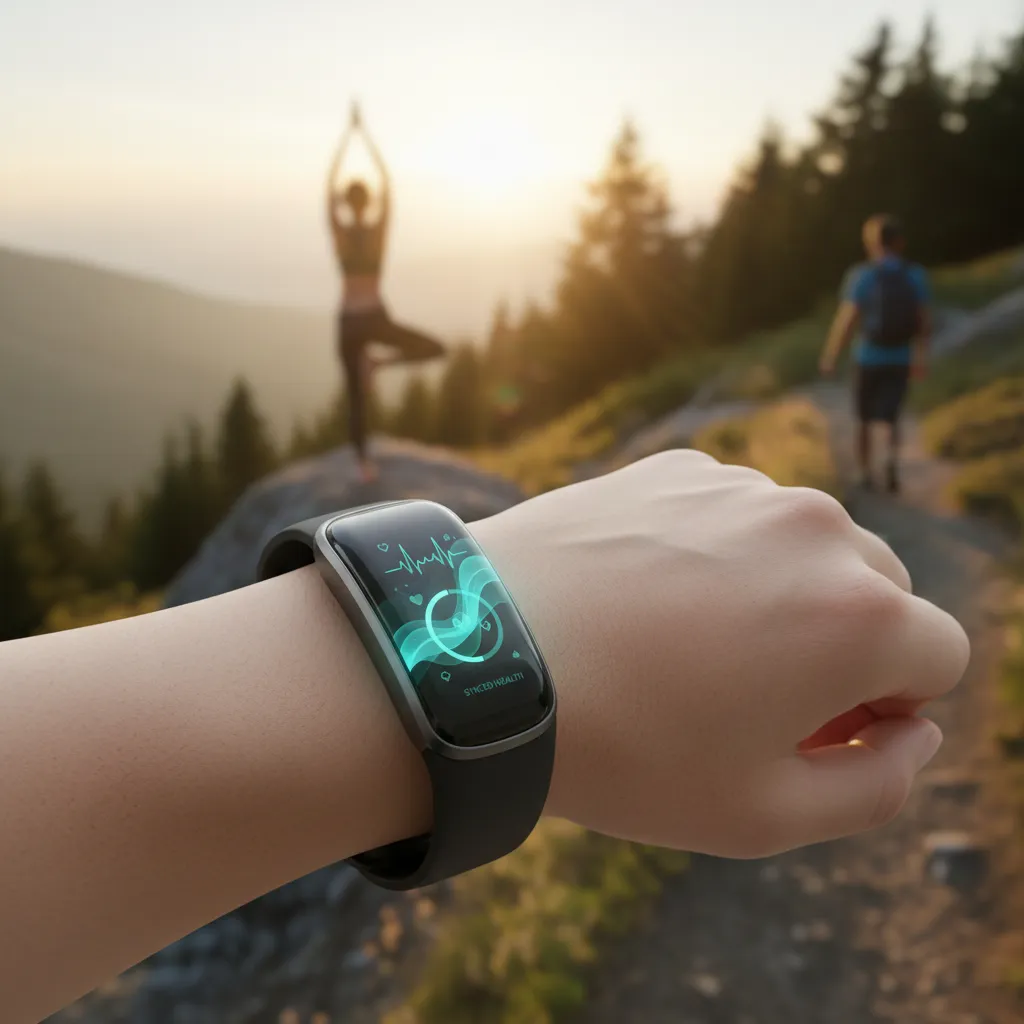
The real magic happens when wearable health tech AI analyzes this data. The algorithms learn your personal baseline and can detect subtle deviations that may signal an impending illness, a decline in fitness, or high stress levels. This smart health monitoring can provide early warnings for conditions like atrial fibrillation, sleep apnea, or even infections like COVID-19 before you even feel sick.
AI Health Coaching: Your Personalized Wellness Partner
Data is useless without action. AI health coaching platforms bridge this gap. They act as a 24/7 wellness partner, translating your health data into practical advice, personalized challenges, and motivational support.
These AI coaches can help you manage a chronic condition, improve your fitness, or enhance your mental resilience. They are becoming increasingly sophisticated in providing support for AI mental well-being, using conversational AI to offer mindfulness exercises, cognitive behavioral therapy techniques, and a non-judgmental space to track moods and identify triggers.
Extending Healthspan: AI’s Role in Longevity and Healthy Aging
The ultimate goal of preventative health isn’t just to live longer (lifespan) but to live healthier for longer (healthspan). The field of longevity technology is exploding with biotech AI innovations aimed at slowing or even reversing the biological processes of aging.
AI is accelerating this research by:
- Analyzing Aging Biomarkers: Identifying key molecular signals that track biological age.
- Accelerating Drug Discovery: Simulating molecular interactions to find compounds that target aging pathways.
- Powering Biohacking with AI: Allowing individuals to use their personal data to optimize their own aging process through targeted interventions.
For our aging population, AI for healthy aging offers practical solutions to maintain independence and quality of life. This includes smart home systems that monitor for falls, AI companions that combat loneliness, and tools that help manage complex medication schedules.

The Road Ahead: Challenges and the Ethical Landscape
This AI-driven future is incredibly promising, but it’s not without significant challenges. The responsible implementation of these technologies is paramount.
The Double-Edged Sword of Health Data
The entire system runs on vast amounts of sensitive personal health information. Ensuring the ethical use of this data is the most critical challenge we face. Questions surrounding AI ethical health data are at the forefront:
- Privacy & Security: How do we protect this data from breaches and misuse?
- Bias: AI models are trained on existing data. If that data reflects historical biases in healthcare, the AI can perpetuate or even amplify health disparities.
- Ownership & Consent: Who owns your health data, and how can you control its use?
Navigating these issues requires a robust framework of regulations and a commitment to transparency. Related: Navigating the Future: The Imperative of Ethical AI in a Smart World is no longer an academic exercise but a practical necessity.
Accessibility and Equity in Digital Health
Will these powerful digital health solutions AI become a luxury for the wealthy, or will they help close the healthcare gap? Ensuring equitable access to these tools is crucial to prevent the creation of a two-tiered health system. The potential for AI to bring expert-level analysis to underserved communities is immense, but it requires intentional design and policy.
Conclusion: You are the CEO of Your Own Health
The fusion of artificial intelligence and healthcare is moving us into an era of unprecedented empowerment. We are transitioning from being passive recipients of care to active architects of our own well-being. AI is the tool that makes this possible, providing the insights of a thousand doctors, the vigilance of a 24/7 guardian, and the personalization of a dedicated coach.
The journey towards a future of AI preventative health and enhanced longevity is just beginning. From genomic sequencing AI that reads our biological blueprint to wearables that track our every heartbeat, these technologies are giving us the power to not just treat disease, but to create a new standard of human health. The future isn’t just about living to 100; it’s about feeling vibrant, strong, and full of life when we get there. By embracing these tools wisely and ethically, we can all become the CEOs of our own health journey.
Frequently Asked Questions (FAQs)
Q1. How is AI used in preventative medicine?
AI is used in preventative medicine primarily through predictive analytics and early detection. Machine learning algorithms analyze vast datasets—including electronic health records, genetics, and lifestyle data—to identify individuals at high risk for chronic diseases like diabetes or heart disease. This allows for early, personalized interventions long before symptoms appear.
Q2. Can AI predict future health problems?
Yes, to a significant extent. AI health risk prediction models can forecast the likelihood of developing certain conditions by identifying complex patterns in data that are often invisible to humans. While not a crystal ball, this predictive health analytics provides powerful probabilities that guide proactive lifestyle changes and medical monitoring.
Q3. What is an example of AI in healthcare?
A prominent example is in medical imaging. AI-powered software now assists radiologists by analyzing MRIs, CT scans, and X-rays to detect signs of cancer, stroke, or other abnormalities with incredible accuracy. In many cases, the AI can spot potential issues at a much earlier stage than the human eye alone, leading to better patient outcomes.
Q4. What are the benefits of using AI in healthcare?
The primary benefits include:
- Early Disease Detection: Catching illnesses sooner when they are more treatable.
- Personalization: Creating personalized treatment plans AI optimizes for an individual’s unique biology.
- Efficiency: Automating repetitive tasks and analysis, freeing up clinicians to focus on patient care.
- Accessibility: Making expert-level diagnostics and health advice more widely available through telemedicine AI advancements.
Q5. What are the main challenges of AI in healthcare?
The main challenges involve data and ethics. These include ensuring patient data privacy and security, overcoming algorithmic bias that could worsen health disparities, establishing clear regulatory guidelines, and ensuring that digital health solutions AI are accessible and affordable for everyone, not just a select few.
Q6. How does AI help in chronic disease prevention?
AI helps in AI for chronic disease prevention by creating a continuous feedback loop. It uses data from wearable health tech AI to monitor daily habits, provides personalized recommendations through AI health coaching, and predicts long-term risk. This empowers individuals to make sustainable lifestyle changes that significantly reduce their chances of developing chronic conditions.
Q7. What is personalized AI health?
Personalized health AI is an approach that moves away from one-size-fits-all medicine. It uses AI to analyze an individual’s unique data—including their genetics, microbiome, lifestyle, and environment—to deliver tailored recommendations for diet, exercise, treatments, and preventative strategies. The goal is to provide the right intervention, for the right person, at the right time.