AI-Powered Proactive Cybersecurity: Predicting & Preventing Tomorrow’s Threats

Introduction
For decades, the world of cybersecurity has been a high-stakes game of cat and mouse, largely played on the defense. We build digital walls, and attackers find ways to climb them. We create antivirus signatures for known threats, and they unleash brand new, unseen malware. This traditional, reactive “castle-and-moat” model is crumbling under the sheer volume, speed, and sophistication of modern cyber attacks. Human analysts, brilliant as they are, are simply overwhelmed.
Enter the paradigm shift: proactive cyber defense, supercharged by Artificial Intelligence. Instead of just waiting for alarms to sound, what if we could predict where attackers will strike next? What if we could identify and neutralize a threat before it ever breaches the perimeter? This isn’t science fiction; it’s the new reality of AI cybersecurity.
This article dives deep into the world of AI-powered proactive security. We’ll explore how machine learning algorithms are becoming digital sentinels, moving beyond simple detection to active prediction and prevention. You will learn how AI is revolutionizing threat intelligence, automating responses, and creating a more resilient digital ecosystem. We’ll cover the core benefits, the real-world applications changing the game today, and the critical challenges we must navigate. This is your guide to understanding the future of cybersecurity and the technologies that are making it possible.
The Reactive Rut: Why Traditional Cybersecurity Is Falling Behind
Traditional cybersecurity tools, like firewalls and signature-based antivirus software, have been the bedrock of digital defense for years. They operate on a simple principle: identify and block known threats. If a piece of malware has been seen before, its unique signature is added to a database, and the antivirus will block it. This worked reasonably well when the threat landscape was simpler.
However, the game has changed. Today’s cyber adversaries are well-funded, organized, and relentlessly innovative. They deploy next-gen cyber threats that render old methods obsolete:
- Zero-Day Exploits: These are attacks that exploit a previously unknown vulnerability in software. Since the vulnerability is unknown, there is no signature and no patch, making traditional defenses blind.
- Polymorphic and Metamorphic Malware: This is malicious code that constantly changes its underlying structure to evade signature-based detection. Each new version looks like a brand-new piece of software.
- Advanced Persistent Threats (APTs): These are sophisticated, long-term campaigns where attackers gain a foothold in a network and remain undetected for months or even years, quietly exfiltrating data.
- Sheer Volume: Security Operations Centers (SOCs) are inundated with thousands of alerts every day. It’s impossible for human teams to investigate every single one, leading to “alert fatigue” where critical threats can be missed in the noise.
This reactive posture puts organizations in a constant state of catch-up. By the time a threat is detected, the damage—data breach, ransomware encryption, financial loss—is often already done. Building true AI for cyber resilience requires a fundamental move away from this outdated model.
The Proactive Revolution: How AI Is Changing the Game
AI and, more specifically, Machine Learning (ML), flips the traditional security model on its head. Instead of relying on a list of “known bads,” machine learning in security works by developing a deep understanding of what’s “normal” within a digital environment.
It ingests and analyzes colossal datasets in real-time—network traffic, user login patterns, file access requests, application behavior, and endpoint activity. By establishing a dynamic baseline of normal operations, it can instantly spot anomalies and deviations that signal a potential threat, even one that has never been seen before.
This is the essence of proactive cyber defense. It’s about moving from detection to prediction.

Think of it like this: A traditional security guard checks IDs against a list of banned individuals. An AI-powered security system observes the behavior of everyone in the building. It might not know a specific person is a threat, but it knows that someone trying to access a secure server room at 3 AM after jimmying a window is a high-risk anomaly that requires immediate intervention. This is how AI improves cybersecurity—by understanding context and behavior at a scale no human can match.
Core Pillars of AI-Powered Cyber Defense
AI isn’t a single magic bullet; it’s a collection of powerful technologies that enhance security across multiple fronts. These AI security solutions form the new pillars of a modern, proactive defense strategy.
AI-Driven Threat Intelligence (TI)
Traditional threat intelligence involves analysts manually sifting through data from security feeds, forums, and the dark web. It’s slow and often provides outdated information. AI-driven threat intelligence automates and accelerates this process exponentially. AI algorithms can:
- Scan millions of global data points in real-time.
- Analyze hacker forums and dark web marketplaces for chatter about new exploits or stolen data.
- Correlate seemingly unrelated events to identify emerging attack campaigns.
- Provide security teams with context-rich, actionable intelligence on who might be targeting them and how.
This allows organizations to proactively patch vulnerabilities and strengthen defenses against threats before they even launch.
Predictive Analytics and Threat Prediction
This is where AI truly shines. Predictive analytics cybersecurity models use historical data and current trends to forecast future events. By analyzing patterns from past attacks and mapping them against an organization’s specific vulnerabilities, AI can:
- Predict which assets are most likely to be targeted.
- Identify potential attack paths an adversary might take.
- Score risks dynamically, allowing teams to prioritize their defensive efforts.
- Model the potential impact of a successful attack.
AI threat prediction transforms security from a defensive crouch into a forward-leaning posture, enabling teams to preemptively reinforce their most critical and vulnerable points. Related: AI Predictive Wellness: The Future of Proactive Health
AI in Network Security and Real-Time Detection
The network is the circulatory system of any organization, and it’s a prime target for attackers. AI in network security acts as a vigilant overseer, monitoring every packet of data that flows through the system. Using User and Entity Behavior Analytics (UEBA), AI can:
- Establish a baseline for normal user and device behavior.
- Detect subtle anomalies, such as an employee account logging in from two different continents simultaneously.
- Identify signs of lateral movement, where an attacker who has compromised one machine attempts to move through the network.
- Provide real-time threat detection AI that can flag and block suspicious activity as it happens.
Intelligent Endpoint Security (Next-Gen Antivirus)
Endpoints—laptops, servers, mobile phones—are the front lines of cybersecurity. Traditional antivirus is no longer sufficient. Modern endpoint security AI solutions (often called Endpoint Detection and Response, or EDR) focus on behavior rather than signatures. They monitor processes and actions on a device in real-time. If a program suddenly starts encrypting files, trying to access credentials, or communicating with a known malicious server, the AI can instantly kill the process and quarantine the device, preventing cyber attacks with AI before they can spread.
Automated Security Operations and Incident Response
One of the most significant benefits of AI in security is its ability to combat analyst burnout through automation. Automated security operations, powered by platforms like Security Orchestration, Automation, and Response (SOAR), use AI to handle routine, time-consuming tasks.
When an alert is generated, an AI can:
- Triage: Instantly enrich the alert with threat intelligence and historical data to determine its severity.
- Investigate: Automatically query logs and other data sources to confirm if the threat is real.
- Respond: Execute pre-defined playbooks for AI for incident response, such as blocking an IP address, disabling a user account, or isolating an endpoint from the network.
This level of automation frees up human experts to focus on complex threat hunting and strategic defense planning, fostering a powerful human-machine team. This is the first step towards true autonomous cybersecurity.

Practical Applications of AI in Security Today
AI isn’t just a future concept; it’s already being deployed with incredible results across various sectors. These AI-powered security platforms are making a tangible difference right now.
AI in Fraud Detection
The financial industry was an early adopter of AI for security. Banks and credit card companies use sophisticated machine learning models for ai in fraud detection. These systems analyze thousands of data points per transaction—location, time, amount, purchase history, device ID—to calculate a real-time risk score. If a transaction deviates from your normal spending pattern, the AI can flag it for review or block it outright, saving consumers and institutions billions of dollars annually. Related: AI Money Mastery: The Future of Smart Investing
Securing the Cloud with AI
As more organizations move to the cloud, securing these complex, distributed environments becomes a major challenge. Misconfigurations are a leading cause of cloud data breaches. AI in cloud security helps by:
- Continuously scanning cloud environments for misconfigurations and compliance violations.
- Analyzing vast logs from services like AWS, Azure, and GCP to detect anomalous activity.
- Implementing intelligent access controls that adapt based on user behavior and risk.
This creates layered, intelligent defenses suited for the dynamic nature of the cloud.

AI for Data Protection and Privacy
Protecting sensitive data is paramount. AI for data protection can automatically scan and classify vast unstructured datasets (documents, emails, images) to identify Personal Identifiable Information (PII), financial records, or intellectual property. By understanding what the data is and who should have access to it, AI can monitor for and prevent unauthorized data exfiltration, forming a critical part of a modern data loss prevention (DLP) strategy. Related: AI & Privacy: Securing Your Data With On-Device Intelligence
The Future of IoT Security
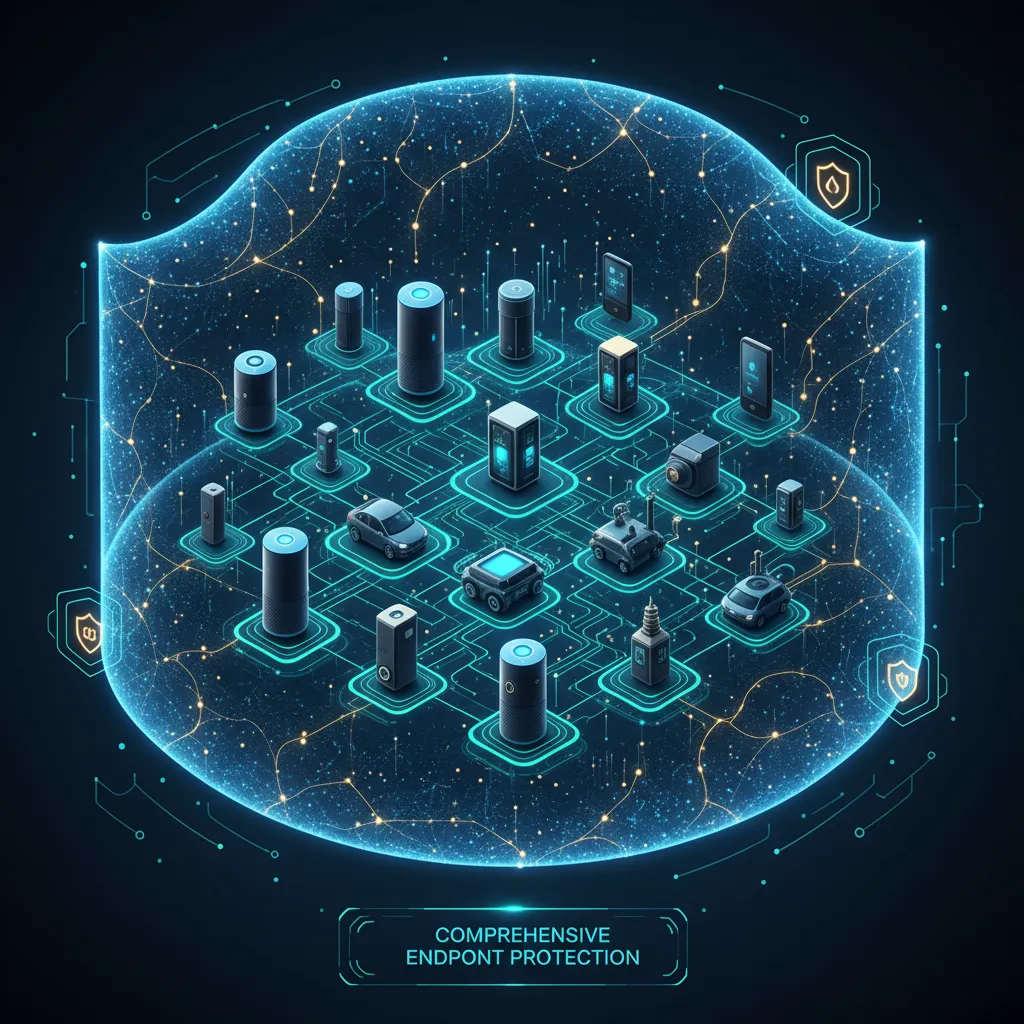
The Internet of Things (IoT) has connected everything from smart thermostats to industrial sensors, creating a massive new attack surface. Many of these devices have minimal built-in security. AI offers a scalable solution. By monitoring network traffic, AI can learn the normal behavior of every connected device. If a smart camera suddenly starts trying to communicate with an unknown server in another country, the AI can instantly flag this as a potential compromise and block the connection. This is a key area of cybersecurity innovation AI.
Navigating the Hurdles: AI Cybersecurity Challenges and Ethical Considerations
While AI offers transformative potential, its adoption is not without challenges. A clear-eyed view of these obstacles is essential for successful implementation and responsible use.
The Rise of Adversarial AI
The same AI tools used for defense can be weaponized by attackers. Adversarial AI involves creating malicious inputs designed to fool or evade security models. This can include:
- Data Poisoning: Attackers subtly feed malicious data into an AI’s training set to create blind spots or backdoors.
- Evasion Attacks: Malicious actors design malware that can slightly alter its behavior to slip past AI-based detectors.
- AI-Powered Attacks: Using AI to generate highly convincing phishing emails at scale or to automate the process of finding vulnerabilities.
The defense against this is a new arms race, requiring continuous model training and adversarial testing.
Data Quality, Bias, and the “Black Box” Problem
An AI is only as good as the data it’s trained on. Biased or incomplete data will lead to a biased and ineffective security model. Furthermore, many complex AI models, especially deep learning networks, operate as a “black box.” They can provide a correct answer (e.g., “this file is malicious”), but it can be difficult to understand why it reached that conclusion. This lack of interpretability can be a major hurdle during a security investigation.
The Skills Gap and Implementation Costs
Implementing and managing ai powered security platforms is not a plug-and-play affair. It requires a new set of skills, blending data science with cybersecurity expertise—a rare and expensive combination. The initial cost of these platforms and the talent needed to run them can be a significant barrier for many organizations.
Ethical AI Security
As AI becomes more autonomous, critical ethical questions arise. Who is liable when an autonomous AI takes a defensive action that inadvertently disrupts business operations? How do we prevent AI systems from developing biases that unfairly scrutinize certain user groups? The field of ethical AI security is focused on building principles of transparency, fairness, and accountability directly into these powerful systems.
Building a Future-Proof Strategy: How to Enhance Cyber Defense with AI
Successfully integrating AI into your security posture is a strategic journey, not a single purchase. For organizations looking toward future proofing cybersecurity, a thoughtful approach is key.
- Start with a Clear Use Case: Don’t just “buy AI.” Identify a specific, high-impact problem you need to solve. Is it reducing the number of false positive alerts? Is it speeding up incident response time? A focused goal will guide your strategy and demonstrate value quickly.
- Foster Human-Machine Collaboration: The goal of AI is not to replace human analysts but to augment and empower them. Use AI to handle the repetitive, data-heavy tasks, freeing up your human talent to do what they do best: creative problem-solving, strategic thinking, and complex threat hunting.
- Prioritize Data Hygiene: Before you can leverage AI, you need a solid data foundation. Ensure you are collecting clean, relevant, and well-structured data from across your environment (endpoints, network, cloud, applications). This is the fuel for any successful AI security engine.
- Adopt an AI Risk Management Framework: Treat the implementation of AI as a core business function that comes with its own set of risks. Develop a robust AI risk management framework that addresses potential issues like model drift, adversarial attacks, and ethical considerations.
Conclusion
The cyber threat landscape is evolving at a breakneck pace, and humanity’s digital future depends on our ability to stay ahead. The old ways of reactive defense are no longer enough. The shift to AI-powered proactive cybersecurity represents the single most important evolution in the industry’s history. By leveraging the speed, scale, and predictive power of machine learning, we can move from being perpetual victims to proactive defenders.
From AI threat prediction and real-time network analysis to automated security operations, AI is building a more intelligent, responsive, and resilient digital world. The challenges of implementation, cost, and ethics are real, but they are surmountable. The future of security is not about replacing humans with machines; it’s about creating a symbiotic partnership where AI provides the insight and automation for humans to make faster, smarter decisions. The journey toward autonomous cybersecurity has begun, and it promises a safer tomorrow for us all.
Frequently Asked Questions (FAQs)
How does AI contribute to proactive cybersecurity?
AI contributes to proactive cybersecurity by analyzing massive datasets to establish a baseline of normal system behavior. It then uses this baseline to detect anomalies and predict potential threats before they can execute. This shifts security from a reactive model (responding to attacks) to a proactive one (preventing them).
Can AI really predict cyber attacks?
Yes, to a significant extent. While AI cannot predict attacks with 100% certainty, predictive analytics cybersecurity models can identify patterns, vulnerabilities, and threat actor behaviors to forecast likely targets and attack vectors. This allows organizations to proactively strengthen defenses where they are most needed.
What are the main benefits of using AI in security?
The main benefits of AI in security are speed, scale, and accuracy. AI can process data and identify threats far faster than any human. It can operate at a massive scale across an entire organization’s digital footprint. Finally, it can significantly reduce false positives, allowing security teams to focus on real threats.
What is an example of an AI-powered security platform?
An example is a Next-Generation Endpoint Detection and Response (EDR) platform. Unlike traditional antivirus that uses known virus signatures, an AI-powered EDR platform monitors the behavior of processes on a computer. If it detects suspicious activity (like a Word document trying to encrypt files), it can block the action and isolate the device instantly, even if the threat is brand new.
What are the biggest challenges of implementing AI in cybersecurity?
The biggest AI cybersecurity challenges include the high cost of implementation, a significant shortage of skilled professionals who can manage these complex systems, the risk of “adversarial AI” where attackers use AI to fool security models, and the “black box” problem, where it can be difficult to understand why an AI made a specific security decision.
How does AI improve threat intelligence?
AI improves threat intelligence by automating the collection and analysis of threat data from millions of sources worldwide, including the dark web. It can identify emerging attack campaigns, new malware strains, and discussions of vulnerabilities in real-time, providing security teams with actionable intelligence to bolster their defenses preemptively.
Is AI the future of cybersecurity?
Absolutely. Given the increasing complexity and volume of cyber threats, AI is not just the future; it is becoming the necessary present. Its ability to automate, predict, and respond at machine speed is essential for defending against the next generation of automated and AI-driven cyber attacks. The continued development of cybersecurity innovation AI is critical for digital safety.