Unlock Your Dream Vacation: The Rise of AI-Powered Personalized Travel Planning

Remember the days of sifting through countless travel guides, cross-referencing hotel reviews, and wrestling with spreadsheets to create the “perfect” vacation? For many, the planning itself could be as stressful as the journey. But what if your dream trip could simply… manifest? Welcome to the era of AI-powered personalized travel planning, a revolutionary shift that’s transforming how we discover, book, and experience the world.
From crafting a personalized travel itinerary that matches your every whim to acting as your ultimate AI trip organizer, artificial intelligence is no longer a futuristic concept but a present-day reality in the travel industry. This isn’t just about finding the cheapest flight; it’s about curating a truly unique, bespoke travel AI experience that resonates with your individual desires, passions, and even your mood. In this comprehensive guide, we’ll dive deep into the world of smart travel planning, exploring how travel tech innovations are paving the way for the future of travel technology, making every journey an adventure perfectly tailored for you.
The Dawn of a New Era: Understanding AI Travel Planners
The landscape of travel is evolving at an unprecedented pace, largely thanks to the integration of artificial intelligence. Gone are the generic package tours and one-size-fits-all recommendations. Today, the focus is squarely on the individual, and AI is the key enabler of this transformation.
What Exactly is an AI Travel Planner?
At its core, an AI travel planner is a sophisticated digital assistant that leverages machine learning algorithms, natural language processing, and vast datasets to understand a traveler’s preferences, budget, historical travel patterns, and even real-time contextual information. Unlike traditional search engines or human travel agents bound by personal biases or limited knowledge, an AI can process and analyze millions of data points in seconds.
Imagine telling an AI your ideal trip involves “historical sites, great food, a moderate budget, and less crowded destinations in Europe in autumn.” An AI travel planner doesn’t just pull up popular cities; it understands the nuances of “less crowded,” considering seasonal variations, local events, and historical visitor data to suggest truly unique and appropriate options. It’s the ultimate digital travel planning tool, designed to simplify complexity and maximize enjoyment.
Beyond the Basics: How AI Transforms Trip Organization
The capabilities of an AI trip organizer extend far beyond simple recommendations. They are designed to manage the entire lifecycle of your trip planning.
- Preference Learning: Initial interactions with an AI travel assistant involve gathering data on your likes, dislikes, past trips, desired activities, accommodation styles, preferred modes of transport, and even your comfort level with different types of destinations. This forms a foundational profile for AI recommendations travel.
- Dynamic Itinerary Generation: Based on your profile and specific trip requests, the AI can construct a multi-day, multi-city personalized travel itinerary. This includes suggesting flights, hotels, activities, restaurants, and even local transportation options, optimizing for factors like travel time, cost, and your personal interest matrix.
- Real-time Adjustments: Life happens, and plans change. A truly effective AI travel planner can adapt in real-time. Missed a flight? Weather suddenly changed your outdoor plans? The AI can quickly re-route, re-book, or suggest alternative activities, demonstrating the true power of automated trip planning. This level of responsiveness is a hallmark of smart travel planning.
This blend of data analysis, predictive capabilities, and instantaneous adaptation makes the AI travel planner an indispensable tool for anyone looking to streamline their vacation preparations and unlock genuinely stress-free travel.
The Power of Personalization: Crafting Your Bespoke Journey
The most compelling aspect of AI in travel is its unparalleled ability to personalize experiences. No two travelers are alike, and AI recognizes this fundamental truth, moving beyond generic offerings to create truly individual journeys.
Decoding Your Desires: AI Recommendations Travel
Forget endless scrolling through generic lists. AI delves into the subtle nuances of your preferences. If you’re an art enthusiast, an AI travel planner won’t just suggest the Louvre; it might recommend a lesser-known contemporary art gallery based on your past browsing history or even a specific artist you follow. If you’re a foodie, it won’t just list Michelin-starred restaurants but might suggest local street food tours or cooking classes tailored to your dietary restrictions and culinary interests.
This is the essence of AI recommendations travel: systems learn from your explicit inputs and implicit behaviors (like how long you linger on certain types of content or what you’ve booked before) to present options that genuinely excite you. This deep understanding makes custom travel plans AI far more effective than human-curated options, which often rely on a general understanding of popular tourist attractions.

From Itinerary to Experience: Hyper-Personalized Travel
The term “hyper-personalized travel” goes beyond merely matching destinations to interests. It involves curating the entire fabric of your trip. Imagine an AI travel agent that:
- Suggests the perfect neighborhood to stay in, not just a hotel, based on your desired ambiance (lively nightlife vs. quiet local charm).
- Recommends specific activities at optimal times to avoid crowds or catch the best light for photography.
- Even considers your preferred pace of travel, ensuring you have enough downtime or packing your schedule with adventure, depending on your style.
- Connects you with local experiences, from private guides who share your specific hobbies to workshops that align with your personal growth goals.
This level of detail means every moment of your trip, from the first coffee to the last sunset, feels like it was designed just for you. It’s about creating personalized travel experiences that leave lasting memories, not just ticking off tourist spots.
Discovering Hidden Gems with AI-Powered Insights
One of the most exciting aspects of AI-driven travel experiences is the ability to unearth places and activities that traditional travel guides often miss. These are the “hidden gems” that truly make a trip memorable.
AI systems can analyze vast amounts of user-generated content – reviews, social media posts, blog articles – alongside geographical data and local insights to identify unique spots. An AI travel planner might suggest:
- A tucked-away cafe renowned for its local pastries, far from the tourist traps.
- A hiking trail offering breathtaking views that only locals know about.
- A pop-up art installation or a small, independent music venue that aligns with your specific cultural tastes.
This capability to discover authentic, off-the-beaten-path experiences is where AI travel inspiration truly shines, allowing you to explore destinations like a seasoned local rather than a transient visitor.

Efficiency and Innovation: The Benefits of AI Travel
Beyond personalization, the practical advantages of using AI for travel planning are immense, offering unprecedented levels of efficiency, cost savings, and a smoother overall journey.
Saving Time and Stress: Automated Trip Planning
The sheer volume of choices involved in planning a trip can be overwhelming. From flights and accommodation to activities and dining, the permutations are endless. This is where automated trip planning driven by AI becomes a game-changer.
- Rapid Itinerary Generation: Instead of hours or days, an AI travel planner can generate a comprehensive itinerary in minutes, presenting multiple options for you to refine.
- Information Consolidation: AI aggregates information from countless sources – flight aggregators, hotel booking sites, review platforms, local event calendars – presenting it in a single, digestible format.
- Decision Support: By analyzing your preferences and budget, AI can highlight the “best value” or “most relevant” options, significantly reducing decision fatigue.
This efficiency frees up your time and mental energy, allowing you to focus on the excitement of your upcoming trip rather than the drudgery of planning.
Optimized Logistics and Real-time Adjustments
Travel is rarely without its unpredictable moments. Delayed flights, unexpected closures, or sudden changes in weather can throw even the best-laid plans into disarray. Here, AI travel assistants prove invaluable.
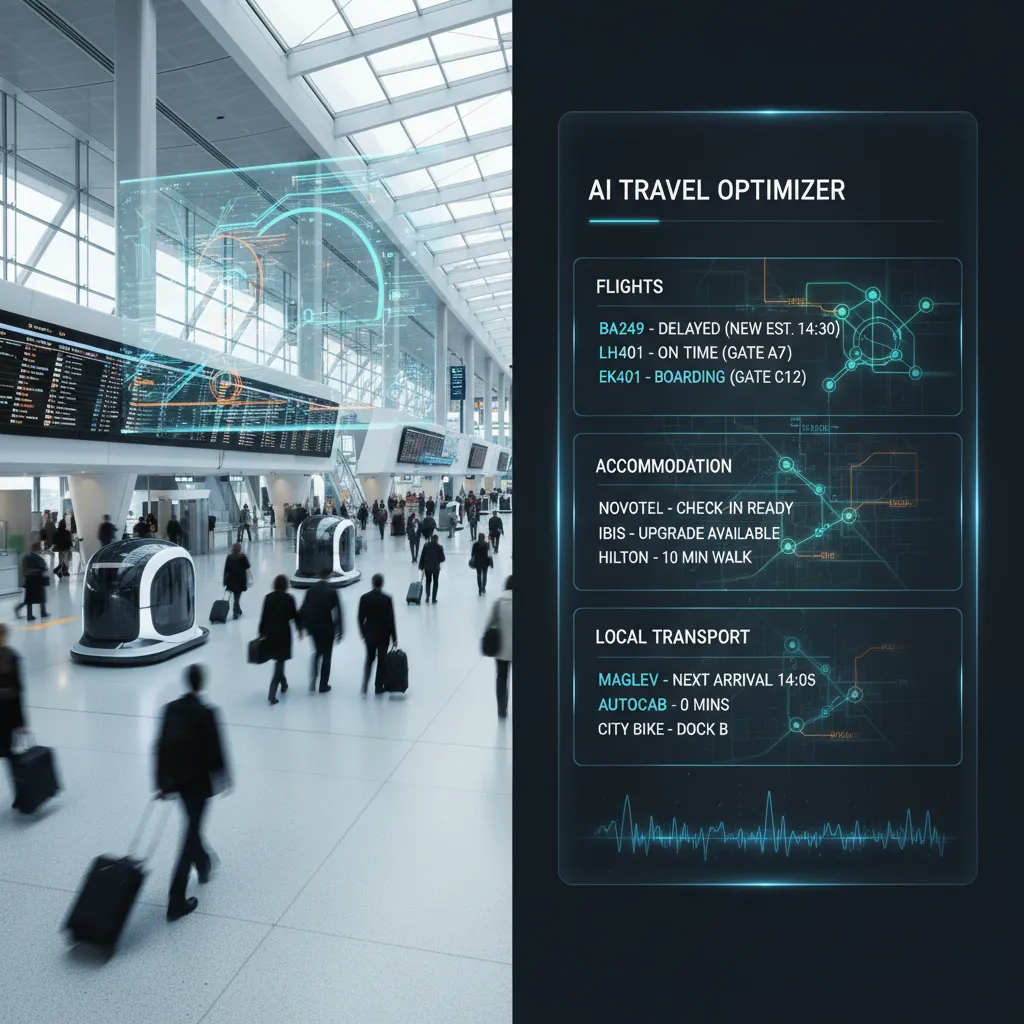
AI can monitor real-time data streams, including flight statuses, traffic conditions, weather forecasts, and even local news alerts. If your flight is delayed, the AI can proactively:
- Re-route your connecting flights.
- Notify your accommodation of your late arrival.
- Suggest alternative transport from the airport.
- Even adjust your next day’s activities to accommodate the change.
This dynamic response capability, often integrated into the best AI travel apps, ensures a seamless journey even when unforeseen circumstances arise, making your travel experience remarkably smooth and stress-free.
Budget-Friendly Adventures: Smart Holiday Planning
One common misconception is that personalized, AI-driven travel is expensive. In reality, smart holiday planning with AI can often lead to significant savings.
- Dynamic Pricing Analysis: AI can monitor flight and hotel prices across dozens of platforms, identifying optimal booking times and suggesting alternatives that offer better value without compromising quality.
- Cost-Effective Itineraries: By understanding your budget constraints, AI can construct itineraries that balance experiences with financial prudence, perhaps suggesting local eateries over high-end restaurants or public transport instead of taxis when appropriate.
- Deals and Discounts: Many AI travel tools are integrated with deal aggregators, alerting you to flash sales, loyalty program benefits, or exclusive discounts that you might otherwise miss.
By optimizing various cost factors, AI ensures you get the most out of your travel budget, making dream vacations more accessible. You might even find tips on using these tools to maximize savings in our article on AI Unleashed: Revolutionizing Money with Smart Personal Finance.
The Human Touch Enhanced: AI Travel Assistants vs. Traditional Agents
While the rise of the AI travel agent might seem to threaten traditional travel agencies, many view AI as a powerful augmentation rather than a replacement.
- AI for Research & Efficiency: AI excels at data analysis, itinerary generation, and real-time logistics – tasks that are often time-consuming for human agents.
- Humans for Nuance & Crisis: Human travel agents still offer invaluable emotional intelligence, empathy, and the ability to navigate complex, unforeseen crises that require subjective judgment and direct human interaction. They can also provide a reassuring presence for travelers who prefer direct consultation.
The most effective model often involves a hybrid approach, where AI handles the heavy lifting of research and optimization, allowing human agents to focus on providing bespoke advice, building relationships, and dealing with the less predictable, more emotionally driven aspects of travel. It’s about leveraging the benefits of AI travel to enhance, not diminish, the human element.
The Future Unfolds: Travel Tech Innovations and Beyond
The current capabilities of AI in travel are impressive, but they are merely a prelude to what’s to come. The future of travel technology is being shaped by continuous innovation, promising even more immersive, sustainable, and seamless journeys.
Immersive Experiences: AI-Driven VR Travel
Imagine “visiting” your hotel room before you book it, walking through ancient ruins from your living room, or experiencing the bustling streets of Tokyo without leaving home. AI-driven VR travel is making this a reality.
- Virtual Previews: AI can generate highly realistic virtual tours of destinations, accommodations, and attractions, helping travelers make more informed decisions.
- Digital Explorations: For those unable to travel physically, or seeking inspiration, AI-powered VR platforms offer immersive simulations of real-world locations, enriched with historical context, cultural insights, and interactive elements.
- Training & Planning: VR can also be used for pre-trip preparation, allowing travelers to familiarize themselves with airport layouts, local customs, or even practice navigating a new city.
This technology isn’t just for leisure; it has significant implications for AI for business travel, allowing virtual site visits or conference attendance without the carbon footprint.

Sustainable Travel AI: Guiding Eco-Conscious Journeys
As environmental awareness grows, so does the demand for sustainable travel. AI is emerging as a powerful ally in promoting eco-friendly choices.
- Carbon Footprint Calculators: AI can calculate the carbon emissions of different travel options (flights, trains, cars) and suggest lower-impact alternatives.
- Eco-Friendly Recommendations: An AI travel planner can identify and recommend hotels with strong sustainability practices, tours that support local communities, and transportation methods that minimize environmental impact.
- Waste Reduction Strategies: AI can analyze travel patterns to help destinations manage resources more efficiently and reduce waste, contributing to a more sustainable tourism industry overall.
This focus on sustainability is crucial for the future of tourism AI, ensuring that our explorations of the world don’t come at the cost of the planet. For more on conscious living, check out our article on Sustainable Style: Eco-Friendly Fashion Choices.
AI for Business Travel: Streamlining Corporate Trips
Business travel, often characterized by tight schedules and specific requirements, is ripe for AI optimization.
- Policy Compliance: AI can ensure all bookings adhere to company travel policies, flagging out-of-policy choices.
- Expense Management: Integration with expense systems allows for seamless tracking and reporting of travel costs.
- Productivity Optimization: An AI trip organizer can create efficient itineraries that minimize travel time and maximize productivity, even suggesting quiet co-working spaces or suitable meeting venues.
- Risk Management: For international business travel, AI can provide real-time alerts on political instability, health risks, or natural disasters, offering alternative routes or safe havens.
AI is transforming business travel from a necessary chore into a streamlined, efficient operation, contributing to the broader field of AI in tourism.
The Road Ahead: Future of Tourism AI
The future of tourism AI promises a landscape where travel is not just planned but anticipated, predicted, and dynamically adjusted to create unparalleled experiences. We can expect:
- Proactive Planning: AI systems will anticipate your travel needs even before you explicitly search, based on life events, past patterns, and external factors.
- Seamless Integration: Your AI travel planner will integrate seamlessly with smart home devices, wearables (like those discussed in Wearable Tech: Revolutionizing Health & Fitness), and personal calendars, creating an ambient travel support system.
- Predictive Personalization: AI will not only learn your preferences but predict what you might enjoy, introducing you to experiences you didn’t even know you wanted.
- Ethical AI in Travel: Increased focus on data privacy and ethical AI use will ensure that these powerful tools serve travelers responsibly, avoiding biases and ensuring transparency.
The continuous evolution of travel tech innovations guarantees that our future journeys will be more personalized, efficient, and inspiring than ever before.
Choosing Your Co-Pilot: Best AI Travel Apps and Tools
With the rapid expansion of AI in the travel sector, a plethora of AI travel tools and apps are emerging. Choosing the right one can significantly enhance your planning process and overall trip experience.
What to Look For in an AI Travel Tool
When evaluating the best AI travel apps or platforms, consider these key features:
- User Interface (UI) and Experience (UX): Is it intuitive and easy to use? A cluttered or complex interface can negate the benefits of automation.
- Personalization Capabilities: How deeply does it learn your preferences? Does it offer truly custom travel plans AI or just glorified filters?
- Comprehensive Data Integration: Does it pull from a wide range of reliable sources for flights, hotels, activities, and reviews?
- Real-time Updates and Flexibility: Can it adapt to changes, provide real-time alerts, and easily modify itineraries?
- Customer Support: Even with AI, human support for complex issues or emergencies is crucial.
- Cost and Value: Is it a free tool, a subscription service, or a pay-per-use model? Does the value justify the cost?
- Privacy and Security: How does the platform protect your personal and travel data?
Popular AI Travel Planner Categories
While specific app recommendations change frequently, several categories of AI travel tools are prominent:
- All-in-One AI Travel Planners: These platforms aim to cover the entire journey, from inspiration and booking to itinerary management. They often integrate multiple services and offer comprehensive AI for vacation planning.
- Specialized Recommendation Engines: Focused on specific aspects like hotel recommendations, flight deals, or activity suggestions based on your profile and location.
- Chatbot-Based AI Travel Assistants: These leverage natural language processing to interact with you conversationally, answering questions and helping you plan through a chat interface, providing immediate AI travel tips.
- Business Travel Management Platforms: Tailored for corporate needs, these focus on policy compliance, expense reporting, and efficient scheduling for AI for business travel.
- Sustainability-Focused AI Tools: These specifically highlight eco-friendly options and help calculate the environmental impact of your choices, contributing to sustainable travel AI.
Exploring various options and reading reviews will help you find the AI travel planner that best suits your individual or business travel needs. Remember to leverage these tools to truly unlock your potential, just as you might use other AI tools for productivity as discussed in Unlock Potential: Top AI Tools for Everyday Productivity.
Conclusion
The evolution of travel from a logistical challenge to a seamlessly personalized adventure is undoubtedly one of the most exciting developments of our time, spearheaded by the remarkable capabilities of artificial intelligence. We’ve explored how AI travel planners are not just simplifying the booking process but fundamentally transforming the very nature of our journeys.
From generating a meticulously personalized travel itinerary that mirrors your unique preferences to acting as your vigilant AI trip organizer that adapts to real-time changes, AI is making travel more efficient, more enjoyable, and profoundly more personal. The benefits of AI travel are clear: saving time, optimizing budgets through smart holiday planning, and uncovering those elusive hidden gems that make a trip truly unforgettable.
As travel tech innovations continue to advance, we stand on the precipice of a future where AI-driven travel experiences become the norm. The promise of hyper-personalized travel, immersive AI-driven VR travel, and a greater commitment to sustainable travel AI paints a vivid picture of a world more accessible and more deeply experienced than ever before. The future of tourism AI is not just about technology; it’s about enriching human connection with the world around us.
So, are you ready to ditch the travel planning woes and embrace the future? It’s time to let an AI travel assistant craft your next adventure, ensuring every journey is not just a trip, but your dream vacation, perfectly realized. Explore the possibilities, embrace the innovation, and prepare to unlock travel experiences you never thought possible.
FAQs
Q1. What is an AI travel planner?
An AI travel planner is a software system that uses artificial intelligence, including machine learning and natural language processing, to analyze user preferences, historical data, and real-time information to generate personalized travel itineraries, recommend destinations, and manage trip logistics automatically.
Q2. How does AI help in personalizing travel experiences?
AI personalizes travel by analyzing a vast array of data points related to a traveler’s past preferences, browsing history, budget, and stated interests. It uses this information to suggest unique destinations, activities, accommodations, and dining options that align perfectly with the individual’s desires, leading to hyper-personalized travel experiences.
Q3. Is an AI travel agent better than a human travel agent?
Neither is definitively “better”; they offer different strengths. AI travel assistants excel at data analysis, rapid itinerary generation, and real-time adjustments, offering unparalleled efficiency. Human travel agents provide invaluable subjective advice, emotional intelligence, and critical support during complex or crisis situations. Many find a hybrid approach, leveraging both, to be the most effective.
Q4. Can AI help me find cheaper travel deals?
Yes, smart travel planning with AI can often lead to significant cost savings. AI tools monitor dynamic pricing across numerous platforms, identify optimal booking times, and suggest budget-friendly alternatives for flights, accommodations, and activities, ensuring you get the best value for your money.
Q5. What are the key benefits of using AI for vacation planning?
The key benefits of AI travel include:
- Time Savings: Automated itinerary creation and research.
- Personalization: Tailored recommendations and custom travel plans AI.
- Efficiency: Real-time adjustments and optimized logistics.
- Cost Savings: Identifying best deals and budget-friendly options.
- Discovery: Unearthing hidden gems and unique local experiences.
Q6. Are there specific AI travel apps I should use for sustainable travel?
While many general AI travel tools integrate sustainability features, some specialized platforms focus explicitly on sustainable travel AI. These apps help travelers calculate carbon footprints, recommend eco-friendly accommodations and activities, and provide insights into making more environmentally responsible travel choices. Researching specific “green travel AI apps” can provide tailored options.
Q7. How does AI contribute to the future of tourism?
AI is central to the future of tourism AI by enabling more personalized, efficient, and sustainable travel. It facilitates immersive virtual and augmented reality experiences, streamlines business travel, enhances safety through predictive analytics, and drives continuous travel tech innovations that will reshape how we explore and interact with the world.
Q8. What about data privacy when using AI travel planners?
Data privacy is a crucial concern. Reputable AI travel planners and best AI travel apps adhere to strict data protection regulations. When choosing a service, always review their privacy policy to understand how your personal and travel data is collected, used, and secured. Prioritize platforms that are transparent about their data practices and offer robust security measures.