AI-Powered Digital Twins: Revolutionizing Industries & Future Innovation
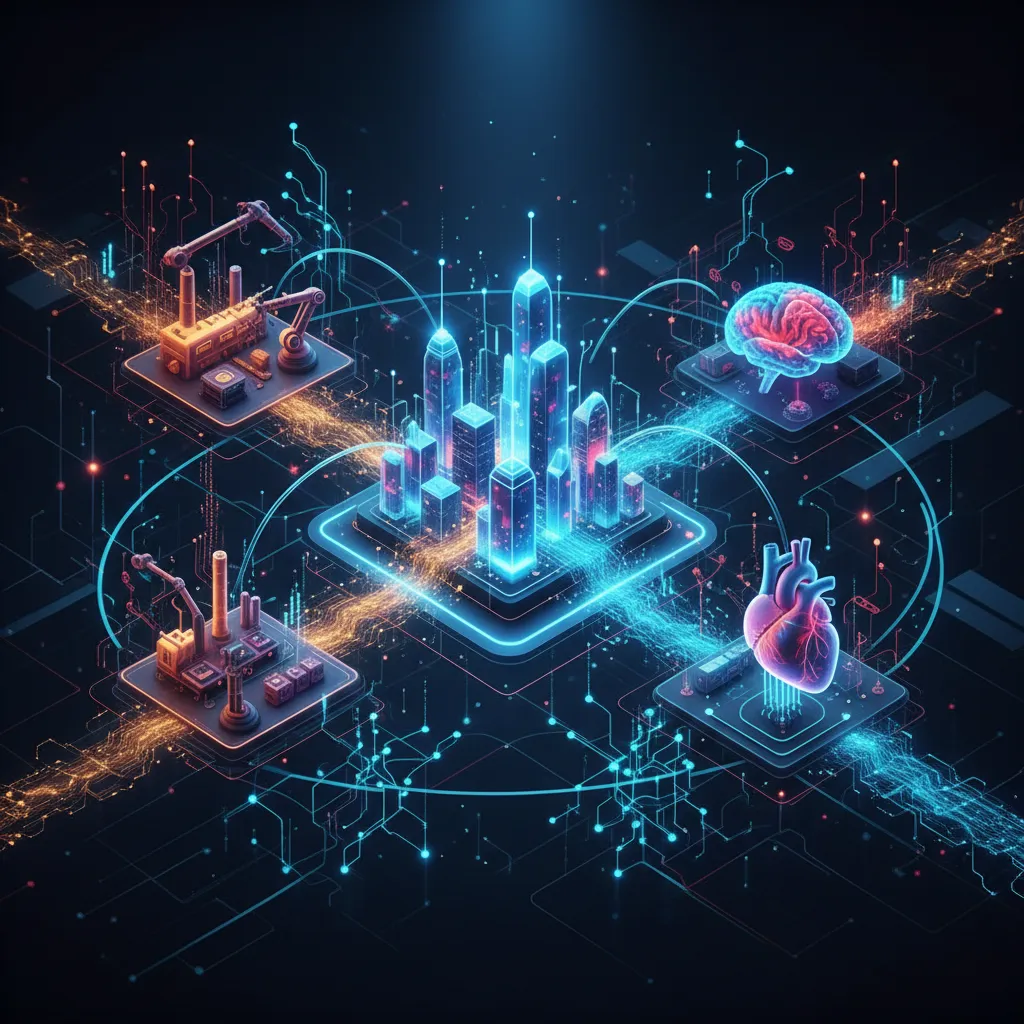
Imagine a jet engine, thousands of feet in the air, that can predict its own maintenance needs weeks in advance. Picture a sprawling city that can test a new traffic system’s impact during rush hour without moving a single car. Or a surgeon who can practice a complex procedure on a virtual replica of a patient’s heart before ever making an incision. This isn’t science fiction; it’s the reality being built today with AI-powered digital twins.
For years, we’ve had simulations and 3D models. But a digital twin is something far more profound. It’s a living, breathing, virtual counterpart to a physical object, process, or even a person, constantly fed with real-world data. The real magic, however, happens when we infuse this virtual twin technology with the predictive and analytical power of Artificial Intelligence.
By combining the Internet of Things (IoT), data analytics, and machine learning, digital twins are evolving from static blueprints into intelligent, dynamic systems that can learn, adapt, and forecast the future. This article dives deep into the world of AI-powered digital twins, exploring how this revolutionary technology is reshaping entire industries, the tangible benefits it delivers, and the incredible innovations it promises for the future.
What Exactly is a Digital Twin? A Bridge Between Worlds
At its core, a digital twin is a high-fidelity virtual model of a physical asset. Think of it as a sophisticated, data-rich avatar. Three key elements define it:
- The Physical Object: The real-world entity, like a wind turbine, a factory floor, or a building.
- The Virtual Model: The digital replica, rendered in precise detail.
- The Data Connection: The constant, two-way flow of information between the two, typically enabled by IoT sensors.
This connection is what separates a digital twin from a standard 3D model or a one-off simulation. A simulation might predict how a car will perform in a crash test, but a digital twin will tell you how that specific car is performing right now, based on data from its actual sensors. It’s a living model that mirrors the entire product lifecycle management—from design and creation to operation and decommissioning.
This real-time simulation digital twin capability allows engineers and operators to see what’s happening inside a complex system without physically being there, providing an unprecedented level of insight and control.
The AI Supercharger: How AI and Machine Learning Elevate Digital Twins
If IoT sensors are the senses of a digital twin, then Artificial Intelligence is its brain. Raw data from sensors can be overwhelming and difficult to interpret. AI and machine learning digital twins transform this flood of information into actionable intelligence, unlocking capabilities that were previously impossible. [Related: The Rise of Autonomous AI Agents: Revolutionizing Work]
Predictive Maintenance and Anomaly Detection
This is one of the most impactful ai digital twin applications. Instead of relying on scheduled maintenance (which can be too early or too late), AI algorithms analyze the twin’s data stream—vibration, temperature, output—to detect subtle patterns that signal an impending failure. This allows for predictive maintenance digital twin strategies, where repairs are made precisely when needed, drastically reducing downtime and costs.
Real-Time Simulation and Optimization
With an AI-powered twin, you can run countless “what-if” scenarios in the virtual world without any real-world risk. How will a new manufacturing process affect output? What is the most energy-efficient way to run our HVAC system during a heatwave? AI can simulate these possibilities at lightning speed, optimizing processes for maximum operational efficiency. These advanced ai simulation models are critical for modern ai in industrial simulation.
Enhanced Data Analytics and Autonomous Operation
Machine learning algorithms can uncover hidden correlations and complex patterns within the operational data of a digital twin. This deep digital twin data analytics provides insights that guide smarter business decisions. In more advanced applications, the AI can even trigger autonomous actions in the physical counterpart—for instance, automatically rerouting power in an electrical grid during a surge or adjusting a robot’s movements on an assembly line to avoid a bottleneck.
Revolutionizing Industries: Real-World AI Digital Twin Applications
The theoretical power of digital twins becomes tangible when you see their application across various sectors. The digital twin market growth is being fueled by these diverse and high-impact digital twin use cases.
Manufacturing: The Smart Factory Realized
The manufacturing sector has been a pioneer in adopting industrial digital twins. Here, a digital twin can mirror an entire production line or even a whole factory.
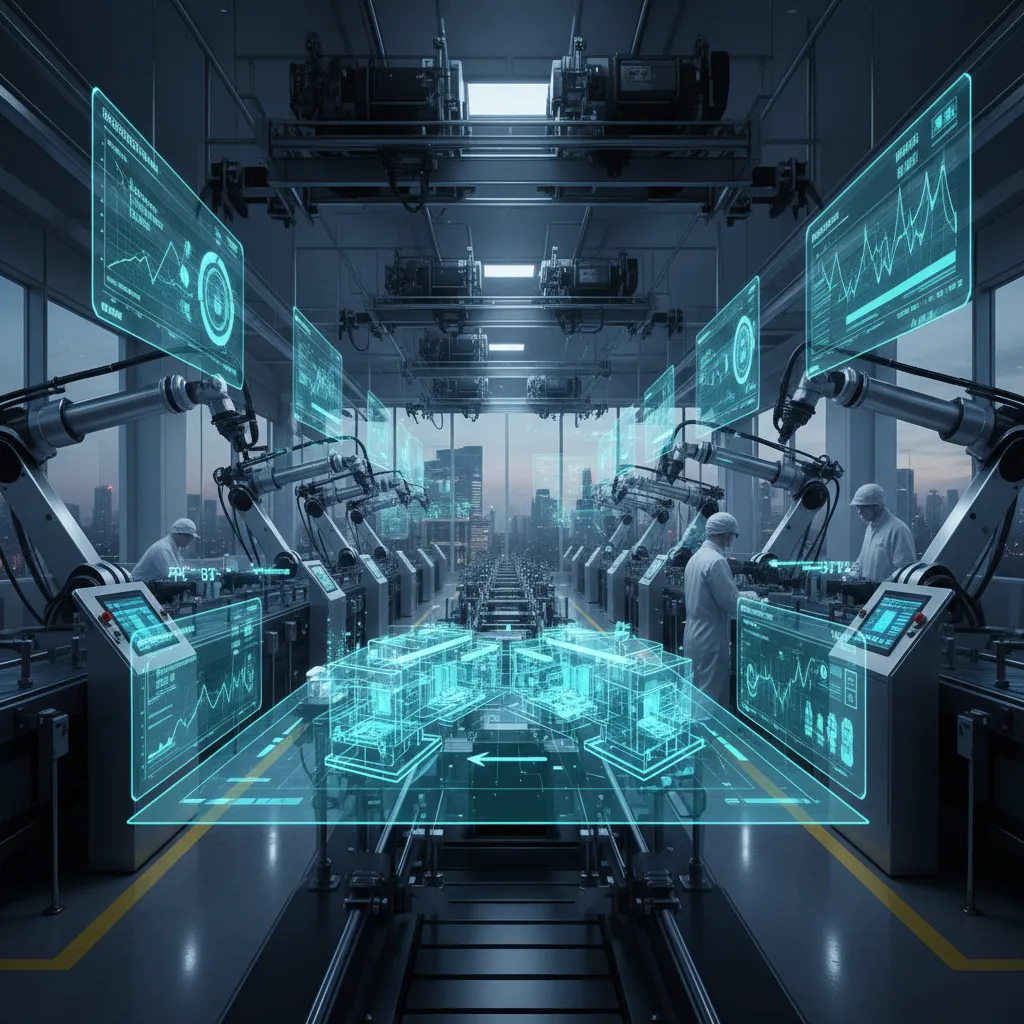
By creating a digital twin in manufacturing, companies can simulate changes to the assembly line, test new robot configurations, and predict production bottlenecks before they occur. This leads to improved product quality, reduced waste, and a more agile response to market demands. The twin serves as a central hub for the product lifecycle, from initial design simulations to monitoring performance in the field.
Healthcare: Pioneering Personalized Medicine
The healthcare digital twin is set to revolutionize patient care. Imagine a digital replica of a patient, created from their medical records, genetic information, and real-time data from wearables.
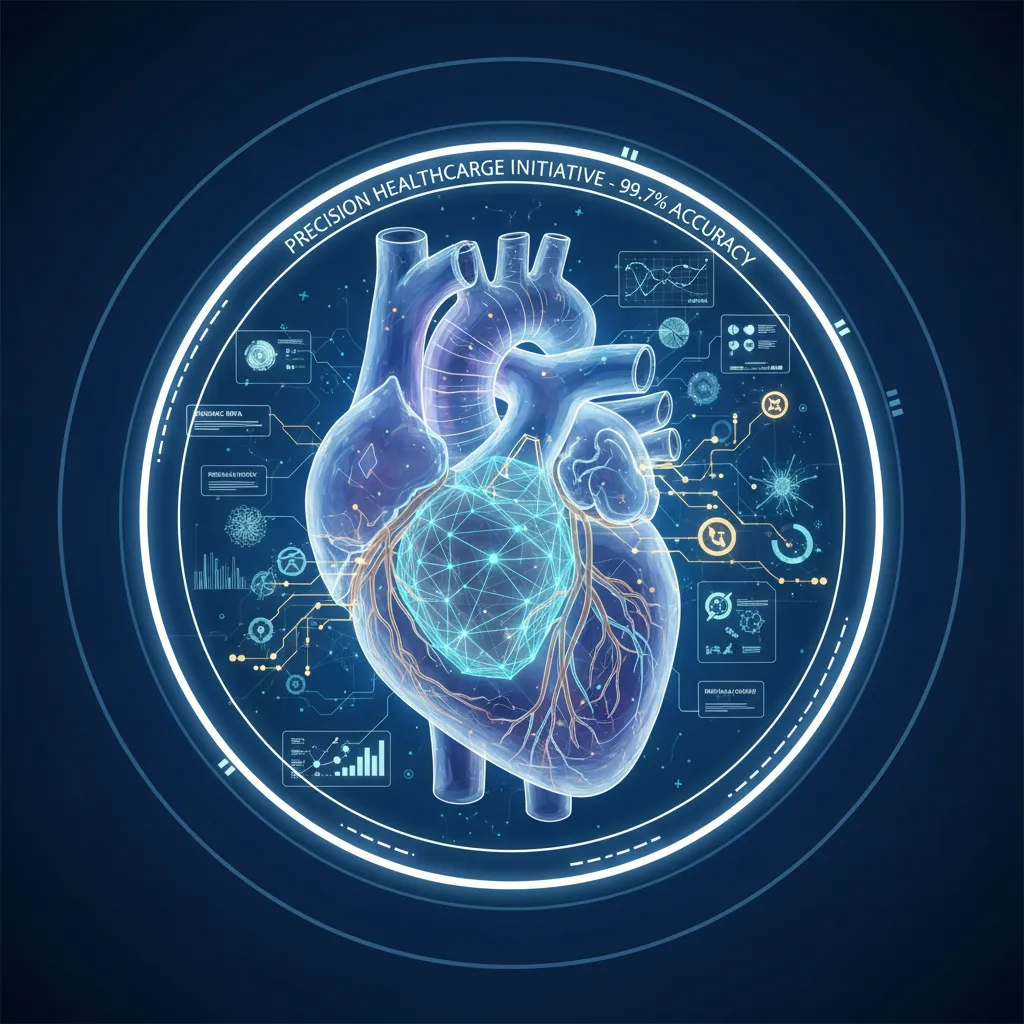
Doctors could use this virtual patient to:
- Test Drug Efficacy: Simulate how a particular patient will react to a new medication, minimizing adverse effects.
- Plan Surgeries: Practice complex procedures on a perfect model of the patient’s anatomy.
- Predict Disease: Analyze lifestyle and genetic data to forecast the risk of developing certain conditions. [Related: Galaxy Ring: Samsung’s Ultimate Health Tracker Guide]
This technology promises a future of truly personalized and preventative medicine.
Smart Cities: Building the Urban Future
A smart city digital twin is a virtual model of an entire urban area. This ambitious concept integrates data from traffic sensors, public transit, energy grids, buildings, and environmental monitors to create a holistic, real-time view of the city.
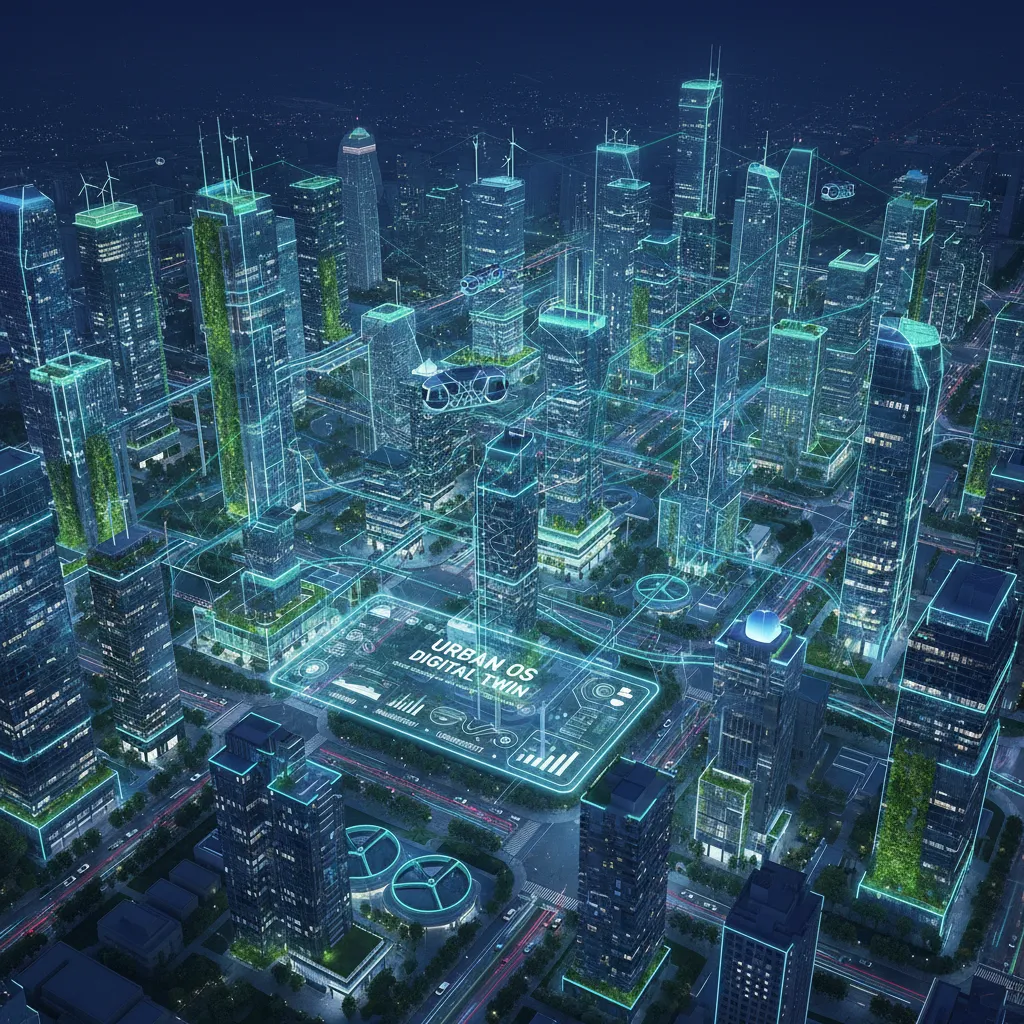
Urban planners and city officials can use this model for:
- Infrastructure Planning: Simulating the impact of a new subway line or a major construction project.
- Emergency Response: Modeling disaster scenarios like floods or fires to optimize evacuation routes and resource deployment.
- Sustainability Initiatives: Using
ai for smart infrastructureto analyze and improve energy consumption, waste management, and air quality, creating more livable andsustainable digital twinsof our cities.
Aerospace & Automotive
In the digital twin in aerospace sector, companies like GE and Rolls-Royce create twins for individual jet engines. These twins monitor engine health throughout every flight, enabling predictive maintenance that ensures passenger safety and airline efficiency. In automotive, digital twins are used to simulate vehicle performance, test autonomous driving algorithms in a safe virtual environment, and accelerate the design and validation process.
Supply Chain and Logistics
A digital twin for supply chain provides unprecedented end-to-end visibility. Companies can track products from the factory to the customer’s doorstep in real time, model the impact of potential disruptions (like a port closure or severe weather), and optimize inventory levels and logistics routes dynamically. [Related: AI Trading Bots: Your Automated Investing Guide]
The Unseen Benefits: Why Businesses Are Investing Heavily
The adoption of digital twins technology isn’t just about flashy models; it’s about delivering measurable business value. The core digital twin benefits create a powerful case for investment.
- Massive Cost Reduction: By predicting failures, optimizing maintenance schedules, and preventing downtime, digital twins save companies millions in operational and repair costs.
- Increased Operational Efficiency: Continuously
optimizing processesin a risk-free virtual environment allows businesses to squeeze every drop of performance from their assets. - Accelerated Innovation and R&D: Companies can design, build, and test new products and processes virtually. This dramatically shortens development cycles and reduces the need for expensive physical prototypes. [Related: GPT-4o: The Multimodal AI Revolution Is Here!]
- Enhanced Safety and Risk Mitigation: Simulating dangerous scenarios—from equipment malfunctions to emergency situations—allows organizations to develop and validate safety protocols without putting people or assets at risk.
- Improved Sustainability: By optimizing energy consumption, reducing material waste, and streamlining logistics,
sustainable digital twinshelp companies achieve their environmental goals.
Building Your Digital Twin: Key Components and Implementation
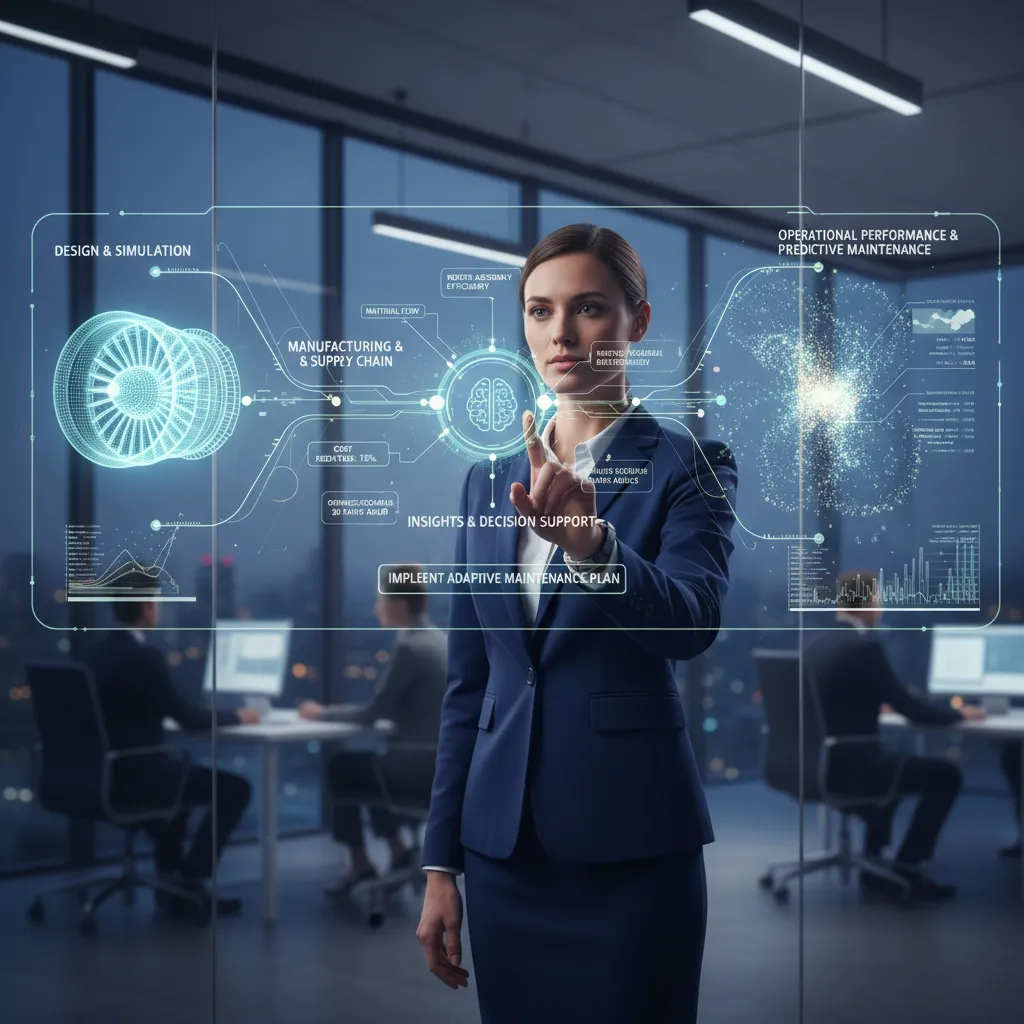
While incredibly powerful, digital twin implementation is a complex undertaking that requires careful planning and a robust technology stack. It’s not a single product but an ecosystem of integrated technologies.
The Technology Stack
- IoT Sensors and Edge Devices: These are the data collectors—the eyes and ears of the digital twin. They gather real-time information from the physical asset.
- Data Integration and Communication Networks: A secure and high-speed network (like 5G) is needed to transmit massive volumes of data from the sensors to the processing platform.
- Digital Twin Platforms: These are the software environments where the virtual model is built, managed, and visualized. Major cloud providers like AWS, Microsoft Azure, and Google Cloud offer comprehensive
iot digital twin solutions. - AI and Data Analytics Engines: This is the core intelligence layer where machine learning models process the data, generate insights, and run predictive simulations.
Implementation Challenges to Overcome
Despite the clear benefits, organizations face several digital twin challenges:
- High Initial Cost: The investment in sensors, software platforms, and skilled personnel can be significant.
- Data Security and Privacy: Transmitting sensitive operational or personal data requires robust cybersecurity measures.
- System Integration Complexity: Getting disparate systems (old and new) to communicate seamlessly for effective
digital twin system integrationis a major technical hurdle. - Data Quality and Governance: The mantra “garbage in, garbage out” is especially true here. The twin is only as good as the data it receives.
- Talent Gap: There is a shortage of professionals with the combined expertise in data science, AI, and domain-specific engineering required to build and manage digital twins. [Related: Copilot+ PC Buyer’s Guide: Top AI Laptops of 2024]
The Future is a Mirror World: What’s Next for Digital Twins?
The future of digital twins is incredibly bright, with advancements pushing the boundaries of what’s possible. The technology is moving toward creating a “Mirror World,” a complete virtual representation of our physical reality.
Integration with AR/VR and the Metaverse
The synergy between digital twins and extended reality (XR) is profound. Imagine an engineer wearing an AR headset, looking at a physical pump, and seeing an overlay of its digital twin data—real-time pressure, temperature, and predicted maintenance needs. This augmented reality digital twin will provide intuitive, hands-on interaction with complex machinery.
Democratization of Technology
As digital twin platforms become more user-friendly and cost-effective, the technology will become accessible to small and medium-sized businesses, not just large enterprises. This will unlock a new wave of innovation across the economy.
Interconnected “Systems of Systems”
The next frontier is connecting individual digital twins into a larger ecosystem. A smart city twin could connect to the digital twins of its energy grid, its public transportation network, and the autonomous vehicles navigating its streets. This interconnectedness will allow for holistic optimization on a scale never before seen. [Related: Apple Intelligence: All the New AI Features & Supported Devices]
Conclusion
AI-powered digital twins represent a paradigm shift in how we understand, manage, and optimize the physical world. By creating a dynamic, intelligent bridge between the physical and digital realms, this technology provides the foresight and agility needed to navigate an increasingly complex world. From making manufacturing more efficient and medicine more personal to building cities that are smarter and more sustainable, ai digital twin applications are already delivering transformative value.
While challenges in implementation and integration remain, the rapid pace of innovation in AI, IoT, and cloud computing is paving the way for a future where this powerful technology is ubiquitous. The journey into the mirror world has just begun, and it promises to reshape our future in ways we are only starting to imagine.
FAQs
Q1. What is a simple example of a digital twin?
A great example is a Formula 1 racing team creating a digital twin of their race car. Sensors on the real car continuously send performance data (tire pressure, engine temperature, aerodynamics) to the virtual model. Engineers in the pit garage can then run real-time simulations on the twin to advise the driver on the optimal race strategy mid-race.
Q2. What is the difference between a digital twin and a simulation?
A simulation is typically a one-time analysis of a model to answer a specific “what-if” question in a static environment. A digital twin is a living virtual model that is continuously updated with real-time data from its physical counterpart, allowing for ongoing monitoring, analysis, and prediction throughout the asset’s entire lifecycle.
Q3. How is AI essential for modern digital twins?
AI is the “brain” that turns the massive amount of data a digital twin receives into actionable intelligence. It powers predictive maintenance, runs complex optimization scenarios, detects anomalies humans might miss, and enables the twin to learn and adapt over time, making it far more powerful than a simple visual model.
Q4. What are the main challenges in implementing a digital twin?
The primary digital twin challenges include the high initial cost of sensors and software, ensuring data security and privacy, the complexity of integrating new technology with legacy systems (digital twin system integration), and the need for skilled professionals who can manage both the physical engineering and the data science aspects.
Q5. Are digital twins used in healthcare?
Yes, the healthcare digital twin is a rapidly emerging field. They are used to create virtual models of patients or organs to plan surgeries, simulate the effects of different treatments, and develop personalized medicine strategies. They can also model hospital operations to optimize patient flow and resource allocation.
Q6. Can a digital twin improve sustainability?
Absolutely. Sustainable digital twins are a key application. They can model and optimize energy consumption in buildings and factories, simulate the environmental impact of new projects, reduce waste in manufacturing by optimizing processes, and improve the efficiency of supply chains to lower carbon footprints.