AI in Personalized Medicine: The Future of Preventative Healthcare
Introduction
For centuries, medicine has largely operated on a one-size-fits-all model. A diagnosis was made, and a standard treatment was prescribed based on statistical averages. While this approach has saved countless lives, it often overlooks a crucial element: our individuality. What works wonders for one person might be ineffective or even harmful for another. But what if we could shift from this reactive, generalized approach to one that is proactive, predictive, and perfectly tailored to your unique biological makeup?
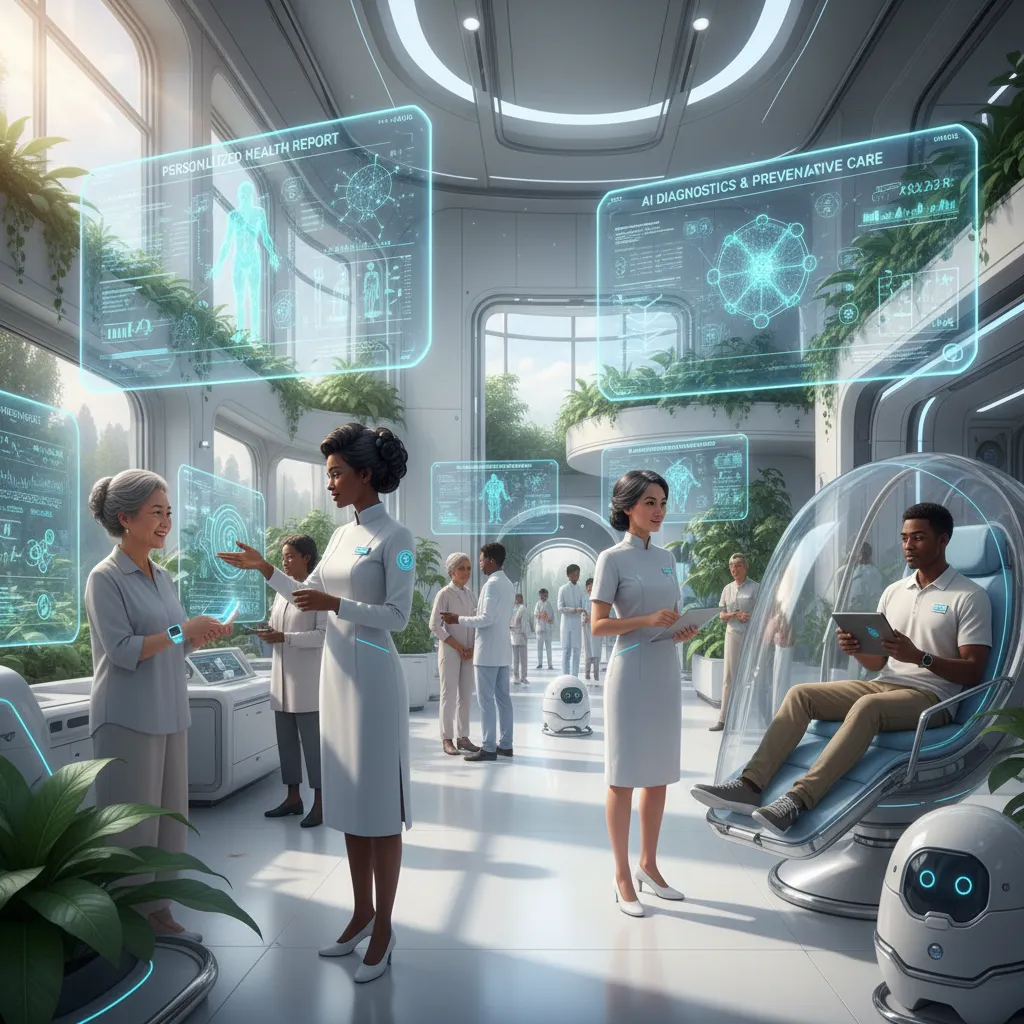
This is the promise of personalized medicine, a revolutionary field being supercharged by Artificial Intelligence. AI in personalized medicine isn’t science fiction anymore; it’s the engine driving the most significant transformation in healthcare we’ve seen in a generation. By harnessing the power of complex algorithms and vast datasets, AI is creating a future where healthcare is not just about treating sickness, but about cultivating lifelong wellness.
In this comprehensive guide, we’ll explore how the future of medicine AI is unfolding today. We’ll dive into everything from AI diagnostics that can spot disease before symptoms appear, to AI drug discovery that creates novel therapies in record time, and the wearable AI health devices that are turning us all into active participants in our own health journeys. Get ready to discover how this health tech innovation is building the future of preventative care, one data point at a time.
From One-Size-Fits-All to Precision Healthcare
The traditional healthcare model is inherently reactive. We wait for symptoms to appear, visit a doctor, get a diagnosis, and then begin treatment. This system, while effective for acute problems, often falls short when dealing with complex, chronic diseases like cancer, diabetes, and heart disease. The treatment that works for 80% of patients might fail the other 20%, who are then left to try second- or third-line therapies, losing precious time.
Precision medicine AI flips this model on its head. It acknowledges that our individual variability in genes, environment, and lifestyle dictates our health outcomes. The goal is to provide the right treatment to the right patient at the right time.
However, the sheer volume of data required to achieve this is staggering. The human genome alone contains over 3 billion base pairs. Add to that data from electronic health records (EHRs), medical imaging, and real-time biometric data from wearables, and the scale becomes impossible for any human to analyze.
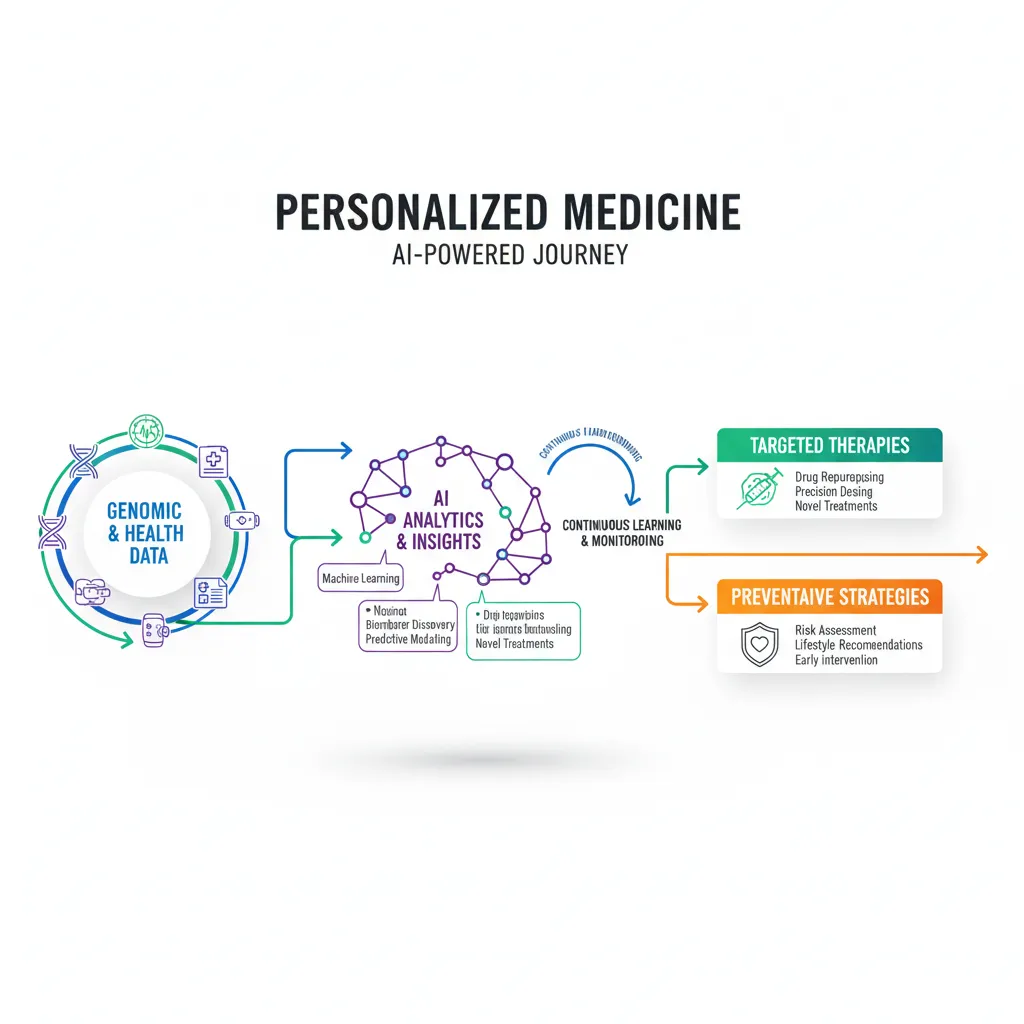
This is where AI excels. As a form of smart healthcare technology, AI algorithms can sift through these colossal datasets, identify subtle patterns, and generate insights that are beyond human capability. This allows for a move towards predictive healthcare AI, where the focus is on preventing disease rather than just curing it.
AI-Powered Diagnostics: Seeing the Unseen with Superhuman Accuracy
One of the most immediate and impactful applications of AI is in diagnostics. Early and accurate detection is the cornerstone of effective treatment, and AI is proving to be a game-changer.
Revolutionizing Medical Imaging
AI medical imaging is perhaps the most mature application of AI in diagnostics. Radiologists, pathologists, and dermatologists spend their careers training their eyes to spot abnormalities in scans like X-rays, CTs, and MRIs. However, fatigue, human error, and subtle, early-stage indicators can be missed.
AI algorithms, trained on millions of annotated images, don’t get tired and can detect microscopic patterns invisible to the human eye. Studies have shown AI models matching or even exceeding the accuracy of human experts in identifying conditions like:
- Cancer Detection: Identifying malignant tumors in mammograms, lung nodules in CT scans, and cancerous cells in digital pathology slides with incredible precision.
- Diabetic Retinopathy: Detecting signs of this blindness-causing disease from retinal scans, allowing for early intervention.
- Neurological Disorders: Analyzing brain scans to predict the onset of Alzheimer’s or identify the subtle signs of a stroke.
This AI for disease prediction capability doesn’t aim to replace doctors but to augment them, acting as a second pair of tireless, data-driven eyes to improve diagnostic confidence and catch diseases at their most treatable stage.
AI Health Analytics: Beyond the Image
Beyond images, AI health analytics combs through a patient’s entire health record—lab results, doctor’s notes, family history—to build a holistic risk profile. These intelligent healthcare systems can flag patients at high risk for conditions like sepsis in a hospital setting or predict a cardiac event weeks in advance, enabling preventative interventions. Related: AI Medical Marvel: Early Disease Detection and Personalized Treatment
The Genetic Revolution: AI and Genomic Sequencing
Our DNA is the blueprint for our bodies, holding secrets to our health, our ancestry, and our predispositions to certain diseases. The Human Genome Project, completed in 2003, took over a decade and cost billions. Today, sequencing a human genome can be done in about a day for under $1,000. This explosion of genetic data has created an incredible opportunity—and a massive analytical challenge.
Genomic sequencing AI is the key to unlocking the insights hidden within our DNA. AI algorithms can:
- Identify Genetic Markers: Pinpoint specific genes or mutations linked to diseases like breast cancer (BRCA1/BRCA2), cystic fibrosis, or Huntington’s disease.
- Pharmacogenomics: Predict how a patient will respond to a particular drug based on their genetic profile. This helps avoid adverse drug reactions and selects the most effective medication from the start.
- Develop Customized Treatment AI: For cancers, AI can analyze the specific genetic mutations of a tumor, allowing oncologists to choose targeted therapies that attack the cancer cells while sparing healthy tissue. This is the very definition of precision medicine AI.
By integrating genomic data with lifestyle and clinical information, AI creates a deeply personalized understanding of health, paving the way for truly customized treatment AI plans.
Accelerating Cures: AI in Drug Discovery and Clinical Trials
Developing a new drug is a notoriously slow and expensive process, often taking over a decade and costing billions of dollars, with a high failure rate. AI drug discovery is drastically changing this equation by accelerating nearly every stage of the process.
Here’s how AI is revolutionizing health in pharmaceuticals:
- Target Identification: AI analyzes biological and genetic data to identify new potential targets (like proteins or genes) for drugs to act upon.
- Molecule Design: Instead of relying on trial and error, generative AI models can design novel drug molecules from scratch that are optimized to hit a specific target with high efficacy and low toxicity.
- Predictive Analytics: AI can predict a drug candidate’s properties—how it will be absorbed, metabolized, and its potential side effects—before it’s even synthesized in a lab, saving immense time and resources.
- AI in Clinical Trials: AI helps design more efficient trials by identifying the ideal patient candidates from vast health databases. It can also monitor trial participants remotely, ensuring data quality and patient safety.
This AI-driven approach is not only making drug development faster and cheaper but is also enabling the creation of therapies for rare diseases that were previously considered unprofitable to pursue.
The 24/7 Health Guardian: AI Health Monitoring and Wearables
The revolution in personalized medicine isn’t just happening in labs and hospitals; it’s happening on our wrists, fingers, and in our homes. The proliferation of wearable AI health devices—from smartwatches and fitness trackers to continuous glucose monitors and smart rings—has created an unprecedented stream of real-time health data.
This is the frontier of AI health monitoring. These devices track metrics like:
- Heart rate and heart rate variability (HRV)
- Sleep quality and stages
- Blood oxygen levels (SpO2)
- Physical activity and calories burned
- Body temperature
- ECG (electrocardiogram)
Individually, these are interesting data points. But when analyzed by AI, they become powerful tools for AI driven wellness and prevention. For example, AI algorithms can detect atrial fibrillation (an irregular heartbeat) from a smartwatch’s heart rate sensor, alerting the user to a potentially serious condition.
This technology also powers remote patient monitoring AI, allowing doctors to track patients with chronic conditions from their homes. This reduces hospital readmissions, improves patient outcomes, and provides a continuous view of health rather than a brief snapshot during an office visit. The future is a personal health dashboards AI that consolidates this data, providing both you and your doctor with actionable insights. Related: AI-Powered Wellness: Your Smart Guide to Personalized Health

Beyond Data: AI-Driven Wellness and Patient Care
The ultimate goal of all this technology is to improve human health and well-being. Personalized healthcare AI extends beyond diagnostics and treatment into the daily habits that form the foundation of our health.
AI-powered health coaches, often delivered through mobile apps, are becoming increasingly sophisticated. These digital coaches provide personalized advice on nutrition, exercise, stress management, and sleep, adapting their recommendations based on your wearable data and logged activities. They can help you build sustainable habits, turning the vision of AI preventative health into a daily reality.
Furthermore, AI is enhancing AI patient care within the clinical setting. By automating administrative tasks like note-taking and charting, AI frees up doctors and nurses to spend more time on what matters most: human interaction. An AI-powered system can summarize a patient’s history, suggest potential diagnoses, and pull up relevant research, acting as an intelligent assistant that empowers clinicians to make better, faster decisions.

Navigating the Maze: The Ethics of AI in Personalized Healthcare
As with any powerful technology, the rise of digital health AI brings significant ethical considerations that we must address thoughtfully. The immense potential of AI in medicine is matched by its challenges.
Data Privacy and Security
Personalized medicine runs on our most sensitive information: our genetic code, health history, and real-time biometric data. Ensuring robust data privacy healthcare AI is paramount. We need clear regulations and secure systems to protect this data from breaches and misuse, ensuring patients retain control over who can access and use their information. Related: AI Agents for Personal Finance Mastery
Algorithmic Bias
AI models are trained on data, and if that data reflects existing biases in society and healthcare, the AI will learn and potentially amplify those biases. For example, if an algorithm is trained primarily on data from one demographic group, it may be less accurate for others, widening health disparities. Creating fair and equitable AI ethical healthcare systems requires careful curation of diverse datasets and continuous auditing of algorithms for bias.
The “Black Box” Problem
Some of the most powerful AI models are incredibly complex, making it difficult to understand exactly how they arrive at a specific conclusion. This “black box” nature can be problematic in medicine, where doctors and patients need to understand the reasoning behind a diagnosis or treatment recommendation. The field of “Explainable AI” (XAI) is working to make these models more transparent and trustworthy.
Conclusion: The Dawn of Proactive, Personalized Health
We are at the beginning of one of the most exciting AI medical breakthroughs in history. AI in personalized medicine is not just an incremental improvement; it is a fundamental paradigm shift. It’s the transition from a generalized, reactive system to an individualized, proactive one focused on keeping us healthy, not just treating us when we’re sick.
The AI revolutionizing health is creating a future where diseases are predicted and prevented before they take hold, where treatments are tailored to our unique genetic and molecular profiles, and where we are empowered with the data and tools to manage our own well-being. From AI health analytics that power intelligent healthcare systems to the AI-powered health coaches in our pockets, this technology is weaving itself into the fabric of modern healthcare.
The road ahead requires careful navigation of ethical challenges, but the destination is clear: a future of preventative care that is more effective, more equitable, and more deeply human than ever before. The era of personalized, predictive, and participatory medicine is here.
FAQs
Q1. What is personalized medicine AI?
Personalized medicine AI is the use of artificial intelligence and machine learning algorithms to analyze vast amounts of individual health data—including genomics, lifestyle, and clinical records—to tailor medical decisions, treatments, practices, and products to a specific patient. It enables a shift from a one-size-fits-all approach to highly customized healthcare.
Q2. How is AI used in precision medicine?
In precision medicine, AI is used to identify patterns in complex datasets that are impossible for humans to detect. Key applications include AI medical imaging for more accurate diagnoses, analyzing genomic data to select targeted therapies (genomic sequencing AI), accelerating the discovery of new drugs, and predicting a patient’s risk for specific diseases.
Q3. What is an example of AI in preventative health?
A great example of AI preventative health is wearable technology. A smartwatch can use AI to monitor your heart rhythm and detect signs of atrial fibrillation, an often asymptomatic condition. By alerting you early, it allows for preventative intervention that can drastically reduce your risk of a stroke.
Q4. What are the benefits of AI in healthcare?
The main benefits include increased accuracy in diagnostics, the ability to predict diseases earlier, faster and more cost-effective drug development, and the creation of highly personalized and effective treatment plans. AI also improves efficiency by automating administrative tasks, allowing healthcare professionals to focus more on AI patient care.
Q5. What are the biggest challenges for AI in medicine?
The biggest challenges include ensuring patient data privacy and security, overcoming algorithmic bias to ensure equitable care for all populations, and addressing the “black box” problem to make AI decision-making transparent and trustworthy. Regulatory approval and integration into existing clinical workflows are also significant hurdles for this health tech innovation.
Q6. How does AI help in drug discovery?
AI drug discovery dramatically accelerates the process by analyzing biological data to identify new drug targets. AI can then design and screen billions of potential molecules virtually, predicting their effectiveness and potential side effects in a fraction of the time and cost of traditional lab-based methods, leading to faster AI medical breakthroughs.