AI for Personalized Mental Health: Your Future Wellness Companion

Introduction
In our hyper-connected, fast-paced world, the conversation around mental health has never been more critical. Yet, for millions, quality care remains out of reach due to cost, stigma, or simple availability. The traditional “one-size-fits-all” model struggles to keep up, leaving many feeling unheard and unsupported. What if there was a way to make mental wellness support as unique as your fingerprint, available 24/7, right in your pocket?
This isn’t a far-off sci-fi concept; it’s the reality being built today with Artificial Intelligence. The rise of AI mental health is marking a seismic shift from reactive treatment to proactive, personalized wellness. This isn’t about replacing human therapists but augmenting their care with powerful, data-driven tools. We’re talking about an AI therapy companion that learns your emotional patterns, a virtual mental health assistant that guides you through a tough moment at 3 AM, and smart mental health solutions that can predict a depressive dip before it even happens.
This article delves into the exciting world of AI for personalized mental health. We’ll explore how this technology works, the incredible tools it’s powering, the tangible benefits for your well-being, and the crucial ethical questions we must address. Get ready to meet your future wellness companion.
The Silent Revolution: How AI is Reshaping Mental Wellness
For decades, mental healthcare has largely followed a standardized path. While effective for many, this approach can miss the subtle nuances of an individual’s experience. Mental health is deeply personal, shaped by a unique blend of biology, environment, and daily experiences. So why shouldn’t your support system be just as personal?
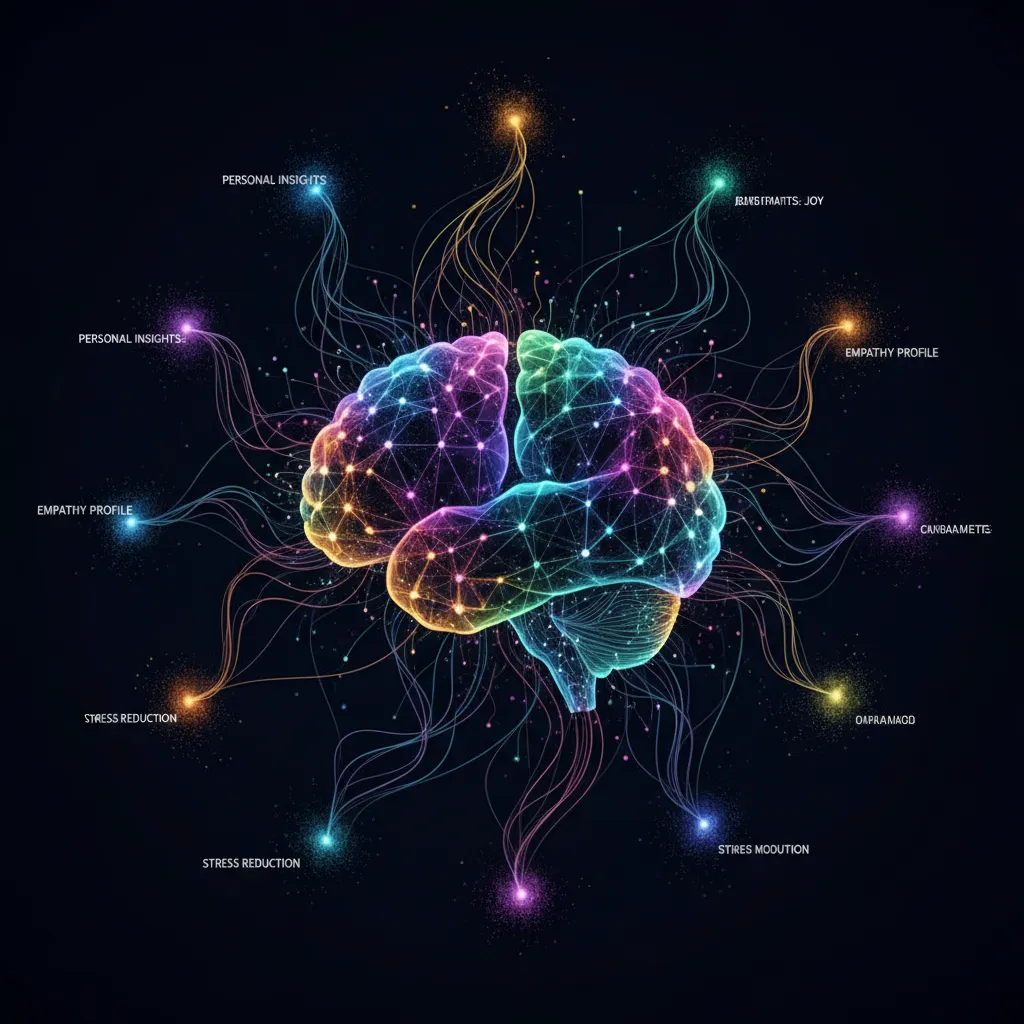
This is the core problem that personalized wellness AI is designed to solve. Instead of relying solely on session-based feedback, AI systems can analyze a continuous stream of data to build a dynamic, holistic picture of your mental state.
At the heart of this revolution are a few key technologies:
- Machine Learning (ML): Algorithms are trained on vast datasets of anonymized text, speech, and biometric data to recognize patterns associated with conditions like anxiety, stress, and depression.
- Natural Language Processing (NLP): This allows an AI to understand, interpret, and respond to human language. It’s the magic behind chatbots that can hold a coherent, empathetic conversation.
- Sentiment Analysis: A subset of NLP, this technology detects the emotional tone behind your words, whether you’re journaling in an app or talking to a virtual assistant.
By combining these, AI can move beyond generic advice and offer support that is specifically tailored to your mood, your triggers, and your goals. It’s the dawn of truly personalized mental wellness.
The Spectrum of AI Mental Health Tools: From Pocket Companions to Predictive Insights
The AI mental health tech landscape is no longer a niche market; it’s a booming ecosystem of innovative tools designed to fit seamlessly into our lives. These tools range from simple mood trackers to sophisticated platforms used in clinical settings.
AI Therapy Companions & Chatbots
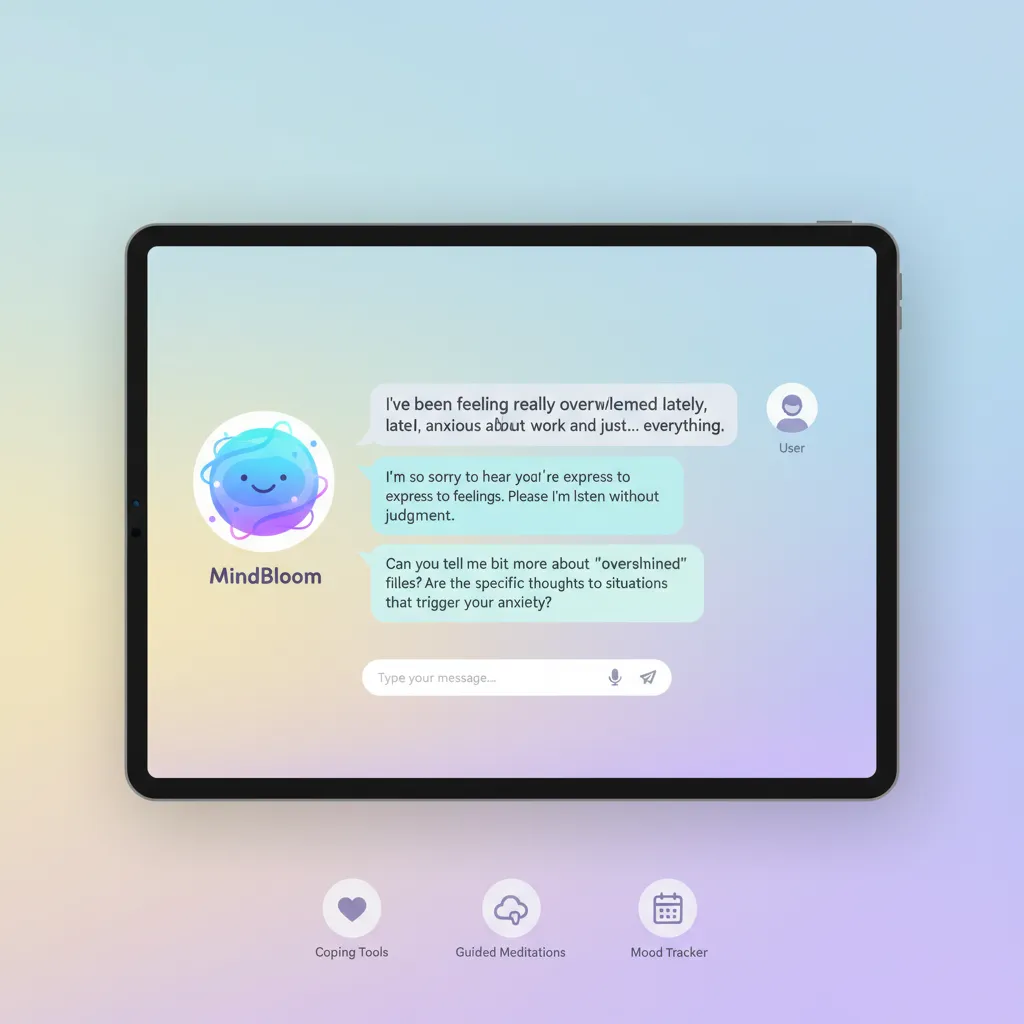
Perhaps the most recognizable form of AI emotional support is the therapy chatbot. These are more than just simple Q&A bots; they are sophisticated conversational agents, often built on principles of Cognitive Behavioral Therapy (CBT), a proven therapeutic method.
Platforms like Woebot, Wysa, and Youper offer a safe, non-judgmental space to talk through your feelings anytime, anywhere. They can:
- Teach Coping Mechanisms: Guide you through breathing exercises during a panic attack or help you reframe negative thoughts using AI cognitive behavioral therapy techniques.
- Track Mood and Patterns: By checking in with you daily, they help you identify triggers and understand the rhythm of your emotional life.
- Provide 24/7 Support: They offer an immediate outlet when you’re overwhelmed, bridging the gap between human therapy sessions.
This constant availability makes them an invaluable virtual mental health assistant for in-the-moment support.
Smart Wearables and Biosensors: Listening to Your Body’s Signals
Your body often knows you’re stressed before you do. Your heart rate variability (HRV) might drop, your sleep quality might decline, or your respiratory rate might increase. Modern wearables like the Oura Ring, Whoop, and even the Apple Watch are packed with sensors that capture this physiological data.
This is where wearable AI comes in. AI algorithms work in the background, analyzing these biosignals to provide real-time insights into your mental state.
- AI Stress Management: Your device might buzz with a notification suggesting a short breathing exercise when it detects rising stress levels.
- Holistic Wellness View: By correlating your sleep data, activity levels, and self-reported mood, AI can show you how your physical habits impact your mental well-being.
- Early Warning System: This continuous monitoring can act as an early warning system, helping you make proactive adjustments to prevent burnout or emotional exhaustion.
This form of digital mental wellness connects the dots between your mind and body in a way that was never before possible. [Related: Wearable AI: Reshaping Productivity and Daily Life]
AI-Guided Mindfulness and CBT
Mindfulness and meditation are powerful tools for mental clarity, but starting can be intimidating. Mindfulness AI apps like Headspace and Calm are now integrating AI to personalize the experience.
Instead of just offering a static library of meditations, these apps are becoming more like personal coaches. An AI can recommend a specific AI guided meditation for anxiety after you’ve logged a stressful day, or suggest a course on emotional regulation based on your long-term goals.
This AI mental health coaching model makes therapeutic techniques more engaging and effective by tailoring them to your immediate needs and progress over time. The AI learns what works for you, ensuring that the AI coping mechanisms it suggests are truly helpful.

The Frontier: Predictive AI and Preventative Care
The most groundbreaking development in AI driven therapy is its potential for prevention. Researchers are developing sophisticated AI models that can predict mental health crises before they occur.
This field of mental health predictions AI analyzes subtle shifts in behavior, language, and physiology. For instance, an AI could analyze:
- Vocal Biomarkers: Changes in tone, pitch, and pace of speech that can indicate the onset of depression.
- Typing Patterns: Variations in typing speed, error rates, and smartphone usage that correlate with manic episodes or anxiety.
- Social Engagement: A withdrawal from online social activity could be an early flag for a depressive state.
This is the ultimate goal of preventative mental health AI: to shift the entire paradigm from treatment to pre-emption. By identifying risks early, the system can prompt users to seek help or engage in preventative exercises, potentially averting a full-blown crisis. [Related: The AI Health Revolution: Smart Tracking and Proactive Wellness Insights]
The Tangible Benefits of an AI Wellness Companion
The rapid adoption of these AI wellbeing tools is driven by clear, life-changing advantages that address the shortcomings of the traditional mental healthcare system. The core AI mental health benefits are undeniable.
- Radical Accessibility: AI obliterates geographical barriers. Whether you live in a bustling city or a remote town, accessible mental health AI provides immediate support as long as you have a smartphone.
- Affordability: While not free, most AI mental health apps operate on a subscription model that is a fraction of the cost of traditional therapy, making ongoing support financially viable for more people.
- De-stigmatization: For many, the fear of judgment is a major barrier to seeking help. An AI offers a completely private, anonymous first step, allowing individuals to explore their feelings without fear.
- 24/7 Availability: Mental health crises don’t run on a 9-to-5 schedule. AI provides a constant safety net, offering support during a late-night anxiety attack or a moment of morning dread.
- Personalization at Scale: AI can deliver a level of personalization that is impossible to achieve at scale with human therapists alone. It learns your unique emotional landscape and tailors its support accordingly.
- Data-Driven Self-Awareness: By tracking moods, activities, and physiological responses, these tools empower you with insights into your own mental health, helping you understand your triggers and recognize patterns you might have otherwise missed.
Navigating the Ethical Maze: The Critical Questions We Must Ask
With great power comes great responsibility. The rush toward mental health innovation using AI brings a host of complex ethical challenges that we cannot afford to ignore. For this technology to be truly beneficial, we must build it on a foundation of trust, transparency, and equity.
Data Privacy and Security: Who Owns Your Thoughts?
The data collected by mental health apps is perhaps the most sensitive personal information imaginable. It includes your fears, your habits, and your innermost thoughts.
- The Question: How is this data being stored, protected, and used? Are companies selling anonymized data to third parties?
- The Need: We need ironclad privacy policies, end-to-end encryption, and absolute transparency about data usage. Users must have full control over their own information.
Algorithmic Bias and Equity
AI models are trained on data. If that data is drawn predominantly from a single demographic, the resulting AI may not be effective—or could even be harmful—for people from different cultural, racial, or socioeconomic backgrounds.
- The Question: Does an AI chatbot understand cultural nuances in expressing distress? Is its language accessible to non-native speakers?
- The Need: Development teams must prioritize training their models on diverse and representative datasets to ensure equitable and effective care for all users.
The “Human Touch” Dilemma
While AI can simulate empathy, it does not possess genuine consciousness, life experience, or the ability to form a true human bond. There are aspects of therapy—deep empathy, shared experience, intuitive understanding—that technology may never replicate.
- The Question: What are the risks of a person relying solely on an AI and becoming isolated from human support?
- The Need: We must be clear that AI psychological support is a tool to supplement, not replace, human connection. The best systems will know their limits and actively encourage users to seek human help when necessary.
Regulation and Accountability
The field of mental health tech is evolving faster than regulations can keep up. An app can market itself as a wellness tool without undergoing the rigorous clinical validation required of medical treatments.
- The Question: Who is responsible if an AI gives harmful advice or fails to recognize a user in serious crisis?
- The Need: A clear regulatory framework is essential to ensure these tools are safe, effective, and held to high clinical standards, creating a clear path for ethical AI mental health.
The Future of Mental Health is Hybrid
The debate over “AI vs. human therapists” presents a false choice. The true future of therapy isn’t a competition; it’s a collaboration. The most powerful model for mental healthcare is a hybrid one, where AI and human professionals work in synergy.
Imagine this future:
- Continuous Monitoring: Your personalized wellness AI companion tracks your daily mood, sleep, and stress levels through your phone and wearable devices. It provides in-the-moment coping strategies and guided meditations.
- Intelligent Triage: The AI notices a concerning trend—a steady decline in mood and sleep quality over two weeks. It flags this pattern and suggests it might be a good time to speak with a professional.
- Data-Informed Therapy: With your explicit consent, the AI generates a concise summary of your data for a human therapist. When you begin your session, your therapist already has valuable context. They can see the specific triggers, the times of day you struggle most, and which coping strategies you’ve already tried.
- Augmented Care: Your therapy sessions become incredibly efficient and targeted. Between sessions, the therapist can even assign specific modules or exercises within the AI app to support the work you’re doing together.
In this model, AI handles the continuous support and data gathering, freeing up human therapists to do what they do best: provide deep, empathetic, and nuanced care. This is the path to creating truly smart mental health solutions. [Related: AI-Powered Digital Twins: Revolutionizing Industries and the Future of Innovation]
Conclusion
We are at the dawn of a new era in mental wellness. Artificial Intelligence is no longer a fringe experiment but a powerful and accessible force for good. From the AI therapy companion that helps you navigate daily stressors to the promise of preventative mental health AI that can stop crises before they start, this technology is fundamentally democratizing and personalizing care.
The journey ahead requires careful navigation of the ethical landscape, ensuring that these powerful tools are built with privacy, equity, and human dignity at their core. But the potential is immense. By embracing AI wellbeing tools, we are not seeking to replace human connection but to enhance and extend it. We are building a future where mental health support is proactive, data-driven, and woven seamlessly into the fabric of our daily lives. Your future wellness companion might just be an algorithm away, ready to help you become a healthier, more resilient version of yourself.
Frequently Asked Questions (FAQs)
How is AI used in mental health?
AI is used in mental health in several ways: as 24/7 conversational agents (chatbots) that provide emotional support and teach coping skills, through wearable devices that monitor physiological signs of stress, in apps that deliver personalized meditation and mindfulness exercises, and as predictive tools that can identify individuals at risk of a mental health crisis.
Can AI replace therapists?
No, AI is not intended to replace human therapists. It is a powerful tool designed to augment and support their work. AI excels at providing 24/7 support, data collection, and scalable interventions, but it cannot replicate the deep empathy, nuanced understanding, and genuine human connection that are essential for effective therapy. The future is a hybrid model where AI and humans collaborate.
What are the ethical issues of AI in mental health?
The primary ethical concerns include data privacy and the security of highly sensitive personal information, algorithmic bias where AI may not work effectively for diverse populations, the lack of a “human touch” and genuine empathy, and an unclear regulatory landscape regarding the safety and clinical validation of these tools.
How effective are AI mental health apps?
Many AI mental health apps, particularly those based on established principles like Cognitive Behavioral Therapy (CBT), have shown promising results in clinical studies for managing mild to moderate symptoms of anxiety and depression. Their effectiveness often depends on user engagement and the specific condition being addressed. They are most effective as a support tool, not a cure-all.
What is an example of an AI mental health companion?
A great example is Woebot, an AI-powered chatbot that uses principles of CBT to have conversations with users. It checks in daily, helps users track their mood, and guides them through therapeutic techniques to reframe negative thought patterns and learn coping skills, acting as a virtual mental health assistant.
What are the limitations of AI in mental healthcare?
Key limitations include the inability to understand complex human context, sarcasm, or severe crisis situations that require immediate human intervention. AI can also suffer from biases inherited from its training data and cannot form a true therapeutic alliance, which is a critical component of successful therapy.
Is AI good for anxiety?
Yes, AI can be a very effective tool for managing anxiety. AI for anxiety often takes the form of guided breathing exercises, cognitive reframing techniques to challenge anxious thoughts, and 24/7 chatbot support for in-the-moment panic. Wearable AI can also detect physiological signs of rising anxiety and prompt a user to take a mindful break.