Supercharge Your Day: The Rise of AI Personal Assistants & Smart Agents

Introduction
The morning alarm blares. You’re immediately hit with a mental flood: check urgent emails, reschedule that 10 AM meeting, figure out what’s for dinner, remember to pay the hydro bill, and don’t forget it’s your turn to drive the kids to soccer practice. This daily juggling act, a frantic race against the clock, is the reality for millions. But what if you had a silent, hyper-efficient partner working in the background to manage the chaos?
This isn’t science fiction anymore. This is the world of the AI personal assistant and its more sophisticated sibling, the smart AI agent. We’ve moved far beyond simply asking a smart speaker for the weather. Today’s AI is a powerful force for AI personal productivity, designed to automate daily tasks, manage complex schedules, and genuinely streamline your daily routine with AI.
In this deep dive, we’ll explore the incredible evolution of the AI digital helper, from basic command-takers to proactive, intelligent personal agents. You’ll discover how these tools are reshaping both our professional and personal lives, offering unprecedented AI convenience and a chance to reclaim our most valuable asset: time. Get ready to learn how to harness the power of AI technology for life and transform your daily grind into a seamless, productive, and more balanced existence.
Beyond “Hey Siri”: What Exactly Are AI Personal Assistants?
For many, the term “AI assistant” conjures images of Amazon’s Alexa or Apple’s Siri. While these voice-activated helpers were groundbreaking, they represent just the first chapter. The new generation of AI personal assistants is fundamentally different.
A traditional AI virtual assistant is primarily reactive. It waits for a specific command—“Set a timer,” “Play this song,” “What’s the capital of Nebraska?”—and executes it. It’s a powerful tool, but the user is still the one driving every single action.
The emerging category of smart AI agents is proactive. These systems are designed to understand your context, learn your preferences, and take initiative. Instead of you telling it every step, you provide a goal, and the agent figures out the ‘how’.
Think of it this way:
- Assistant: “Remind me to book a flight to New York for next Tuesday.”
- Agent: “Book me the most cost-effective, non-stop flight to New York for next Tuesday, ensuring it aligns with my meeting-free windows, books a car from my preferred company, and adds it all to my calendar.”
This leap from executing commands to understanding intent and managing multi-step tasks is the core of the current revolution. These are not just tools; they are evolving into a true personal AI companion, capable of managing significant parts of your digital life.
The Evolution: From Simple Commands to Intelligent Personal Agents
The journey to today’s smart personal assistant has been a rapid and fascinating one. It’s a story of increasing autonomy and intelligence, fueled by breakthroughs in machine learning and natural language processing.
-
Early Voice Assistants (The Responders): The initial wave, including Siri, Alexa, and Google Assistant, mastered voice recognition and basic task execution. They connected us to information and controlled our smart devices, laying the groundwork for AI home automation.
-
Productivity-Focused Tools (The Organizers): The next stage saw the rise of specialized AI productivity tools. These platforms began integrating AI to optimize specific workflows, such as AI scheduling tools that find the perfect meeting time for a large group, or email clients that automatically sort and prioritize your inbox. This marked a key step in AI for task management.
-
Generative AI Integration (The Creators): With the explosion of Large Language Models (LLMs) like GPT-4, assistants gained the ability to understand, summarize, and generate human-like text. Suddenly, your assistant could not only schedule a meeting but also draft a summary of the previous one and prepare a preliminary agenda for the next.
-
Autonomous Smart Agents (The Doers): This is the cutting edge. Smart AI agents are now being developed to operate across different applications on your behalf. They can navigate websites, fill out forms, and execute complex sequences of actions to achieve a goal you’ve set. This is the pinnacle of AI workflow automation for individuals, acting as a personal concierge for your digital world.
This evolution is fundamentally changing how we interact with technology, moving from a command-based relationship to a collaborative one.
Revolutionizing Your 9-to-5: The AI Assistant as a Productivity Powerhouse
In the professional realm, the impact of AI assistants is nothing short of transformative. For busy professionals, these tools are the ultimate leverage, automating the mundane and freeing up mental bandwidth for high-value strategic work. The result is a significant boost in AI personal productivity and a better AI and work-life balance.
Taming the Inbox and Calendar
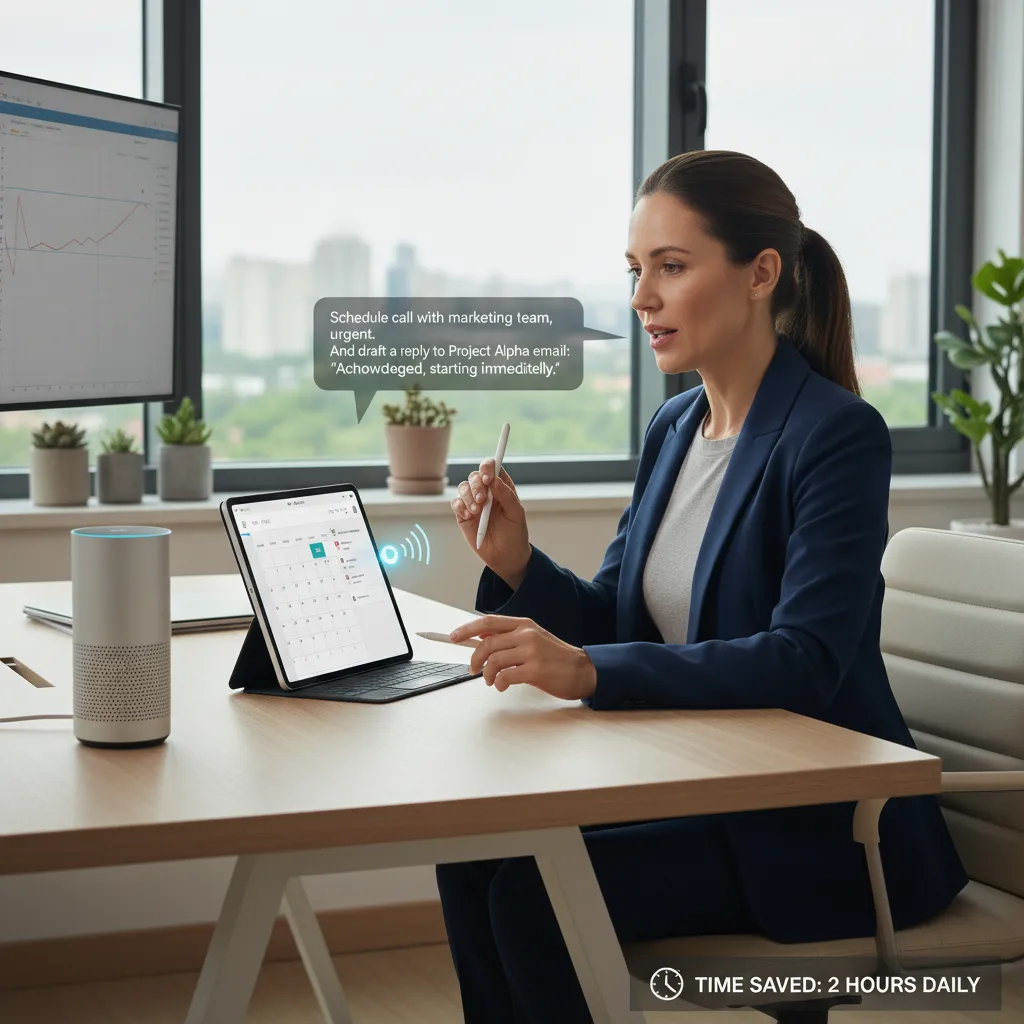
The average professional spends nearly 28% of their workweek on email. This is prime territory for AI intervention. Modern AI assistants can:
- Summarize long email threads into bullet points.
- Draft replies based on the context of the conversation.
- Prioritize your inbox, flagging urgent messages and archiving clutter.
- Automate scheduling, eliminating the endless back-and-forth. AI scheduling tools like Motion or Reclaim.ai can analyze your calendar, tasks, and priorities to build a dynamic, optimized schedule for your day.
Automating Tedious Workflows
AI workflow automation is where the magic truly happens. Think about the repetitive tasks that consume your time: compiling weekly reports, transcribing meeting notes, or pulling data from one application to another. An AI for busy professionals can handle this seamlessly.
- Meeting Management: An AI agent can join a virtual meeting, transcribe the entire conversation, identify key action items, and assign them to the correct people in your project management software.
- Research & Analysis: Instead of spending hours gathering data, you can task your AI assistant to research a topic, collate information from various sources, and present you with a summarized brief, complete with citations.
- Content Creation: Need a first draft of a blog post, a social media update, or a marketing email? An AI assistant can generate well-structured content based on a simple prompt, which you can then refine. Related: AI Reshapes Code and Software Development
Your Personal Research & Creative Partner
Beyond simple automation, these assistants are becoming collaborative partners. Stuck on a problem? You can brainstorm with an AI, asking it to play devil’s advocate or suggest alternative approaches. This conversational interaction makes AI a powerful tool for ideation and strategic thinking, pushing the boundaries of what a single individual can accomplish. Related: How AI PCs Will Boost Your Productivity and Creativity
Reclaiming Your Life: AI for Daily Life and Home Automation
The benefits of these intelligent systems extend far beyond the office. AI for daily life is about bringing the same efficiency and convenience to our personal lives, creating an environment of AI powered smart living.
The Smart Home Gets a Genius Upgrade
AI home automation is evolving past simple voice commands. The new generation of AI smart home devices learns your family’s patterns and anticipates your needs.
- Energy Efficiency: Your smart home can learn when you’re away and automatically adjust the thermostat, turn off lights, and lower blinds to save energy.
- Ambiance Control: Imagine a “movie night” scene that dims the lights, closes the curtains, and turns on the TV and sound system with a single command or even automatically at a set time on Friday nights.
- Security: AI-powered security cameras can differentiate between a package delivery, a familiar face, and a potential intruder, sending you smarter, more relevant alerts.

The goal is a home that runs itself, creating a comfortable and efficient environment with minimal effort.
From Meal Prep to Budgeting: The AI-Powered Household Manager
Managing a household involves a thousand small decisions and tasks. AI tools for home are designed to lift this cognitive load, acting as the ultimate household manager.
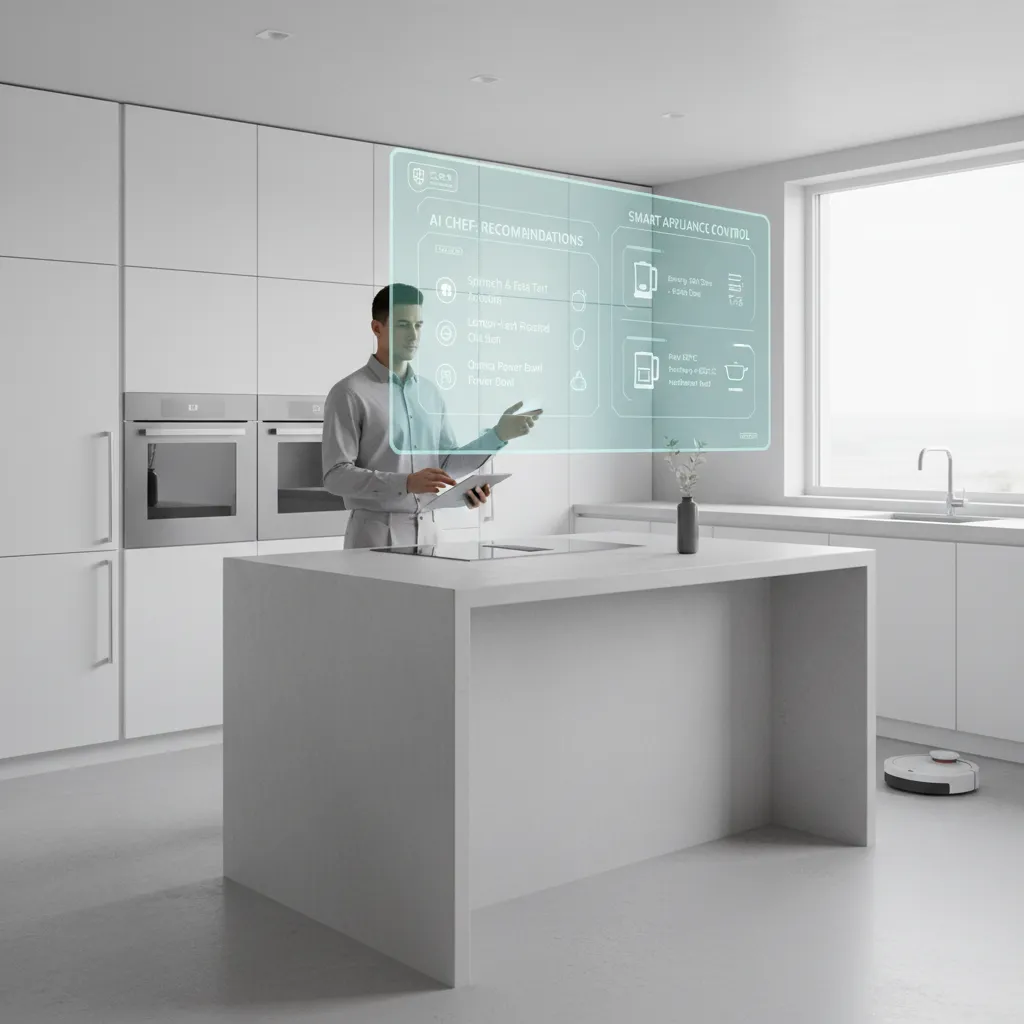
- Smart Kitchens: An AI assistant can suggest recipes based on the ingredients you have in your fridge, generate a weekly meal plan that caters to dietary restrictions, and automatically add the necessary items to your grocery list.
- Financial Management: AI tools can track your spending, categorize expenses, identify potential savings, and alert you when bills are due, providing a clear picture of your financial health.
- Personal Organization: From digitizing documents and managing warranties to reminding you of upcoming birthdays and suggesting gift ideas, an AI assistant can handle the administrative tasks of life.
Mastering Your Time and Achieving Balance
Ultimately, the greatest benefit of AI automation for individuals is the gift of time. By outsourcing the mundane, you free up hours each week. This is where AI time management becomes truly life-changing. You have more time for hobbies, family, learning, or simply relaxing. This shift helps foster a healthier AI and work-life balance, reducing burnout and increasing overall well-being. Related: AI and Longevity: Unlocking the Secrets to a Longer, Healthier Life
Meet Your Future Digital Companion: The Best AI Assistants of 2024
The market for AI assistants is diverse and rapidly expanding. The best AI assistants 2024 often depend on your specific needs and the ecosystem you’re in. Here’s a look at the key players and emerging categories:
The All-Rounders (Voice & Text)
- Google Assistant: Deeply integrated into Android and Google’s ecosystem (Search, Maps, Calendar), it excels at contextual awareness and providing real-time information. Its conversational abilities are top-tier.
- Amazon Alexa: The king of smart home control, with an unparalleled number of “skills” or third-party integrations. If your priority is AI home automation, Alexa is a powerful choice.
- Apple’s Siri: Offers seamless integration across Apple devices (iPhone, Mac, Apple Watch). Its strengths lie in on-device tasks and privacy-focused processing.
The Productivity Specialists (Task & Workflow)
These tools are designed specifically for professional and personal AI for task management.
- Notion AI: A powerful writing assistant and database organizer built directly into the popular Notion workspace.
- Motion: An AI scheduling tool that uses algorithms to automatically plan your day, building your to-do list directly into your calendar to ensure you have time for everything.
- Asana AI: Integrates AI into project management to set smarter goals, automate status updates, and identify potential project roadblocks.
The Emerging Smart Agents (Proactive & Autonomous)
This is the most exciting category, representing the future of AI assistants. These are true intelligent personal agents that can take action on your behalf. While many are still in early stages, they show incredible promise.
- MultiOn: A browser agent that can be given natural language instructions like “Order my usual groceries, but add avocados if they’re on sale” and will navigate the website to complete the purchase.
- Adept: Building a foundational model that aims to turn any text command into a set of actions across any software tool. This represents a future where you can simply state your goal, and the AI will operate the necessary programs to achieve it.

These agents are designed to be your AI personal concierge, capable of handling complex tasks like booking a multi-leg trip or finding the best available deal on a specific product across the internet. Related: AI Travel Planner: The Ultimate 2024 Guide
The Road Ahead: The Future of AI Assistants and Smart Living
The trajectory is clear: we are moving towards a future with a single, unified, and deeply personalized personal AI companion. This future assistant will be:
- Proactive and Anticipatory: It will know your routines and goals, suggesting actions before you even think to ask. It might remind you to leave early for a meeting because it’s detected unusual traffic, or suggest a dinner recipe based on your schedule and health goals.
- Multi-Modal: You’ll interact with it seamlessly through voice, text, and even vision. You could show it the contents of your fridge and ask for meal ideas.
- A True Agent: It will securely hold your credentials and preferences, allowing it to act on your behalf across the web and various apps to accomplish complex goals.
- Hyper-Personalized: Your AI will understand your unique communication style, your relationships, and your personal and professional priorities, making its assistance incredibly tailored and effective.
Of course, this future raises important questions about privacy, data security, and the potential for over-reliance. As we embrace these powerful tools, it will be crucial to do so mindfully, demanding transparency and control over our personal data. Related: The Psychological Impact of Hyper-Realistic AI Content
Conclusion
From a simple novelty to an indispensable partner, the AI personal assistant has evolved into a cornerstone of modern productivity and smart living. No longer just a voice that tells you the weather, these smart AI agents are powerful tools that can manage our schedules, automate our workflows, and bring a new level of intelligence to our homes.
By embracing AI for daily life, we’re not just offloading tasks; we’re strategically buying back our time and mental energy. This allows us to focus on creativity, strategic thinking, and the human connections that truly matter. The era of AI-powered smart living is here, offering a powerful way to supercharge your day and build a more balanced, efficient, and intentional life.
The only question left is, what will you do with all the time you save?
FAQs
Q1. What is an AI personal assistant?
An AI personal assistant is a software program designed to help individuals with daily tasks and automate digital routines. It uses technologies like natural language processing (NLP) and machine learning to understand voice and text commands, manage schedules, answer questions, and control smart devices, ultimately aiming to boost personal productivity and convenience.
Q2. What is the best AI personal assistant in 2024?
The “best” AI personal assistant depends on your needs and ecosystem. Google Assistant is often praised for its conversational intelligence and integration with Google services. Amazon Alexa excels in smart home control with its vast library of skills. For productivity-focused users, specialized tools like Motion or Notion AI might be the better choice for workflow automation and task management.
Q3. What is the difference between an AI assistant and a smart agent?
An AI assistant is typically reactive; it waits for a command and then executes a specific task (e.g., “Set a timer”). A smart AI agent is proactive and autonomous; it can understand a broader goal and execute a complex, multi-step plan across different applications to achieve it without step-by-step instructions (e.g., “Find and book a flight that fits my budget and schedule”).
Q4. How can AI help automate daily tasks?
AI can automate daily tasks by managing your calendar, sorting emails, transcribing meeting notes, creating grocery lists from recipes, tracking expenses, and controlling smart home routines like lighting and temperature. This automation saves time and reduces the mental load of managing day-to-day life.
Q5. Are AI personal assistants safe to use?
Major tech companies invest heavily in the security of their AI assistants. However, privacy is a valid concern. It’s important to review the privacy settings of any AI assistant you use, understand how your data is being handled, and be mindful of the information you share. Always use strong, unique passwords for associated accounts.
Q6. Can an AI assistant manage my schedule?
Yes, absolutely. AI scheduling tools are one of the most powerful applications of this technology. They can analyze your to-do list, existing appointments, and priorities to automatically find the best times for new meetings and tasks, preventing double-bookings and ensuring you have enough time to focus on your work.
Q7. Will AI assistants replace human personal assistants?
While AI assistants can automate many administrative and repetitive tasks traditionally handled by human assistants, they currently lack the emotional intelligence, complex problem-solving skills, and interpersonal nuance of a human. It’s more likely that AI will become a powerful tool that enhances the capabilities of human assistants, allowing them to focus on more strategic, high-value responsibilities.