The AI PC Revolution: Unlocking Next-Gen Productivity and Creative Power
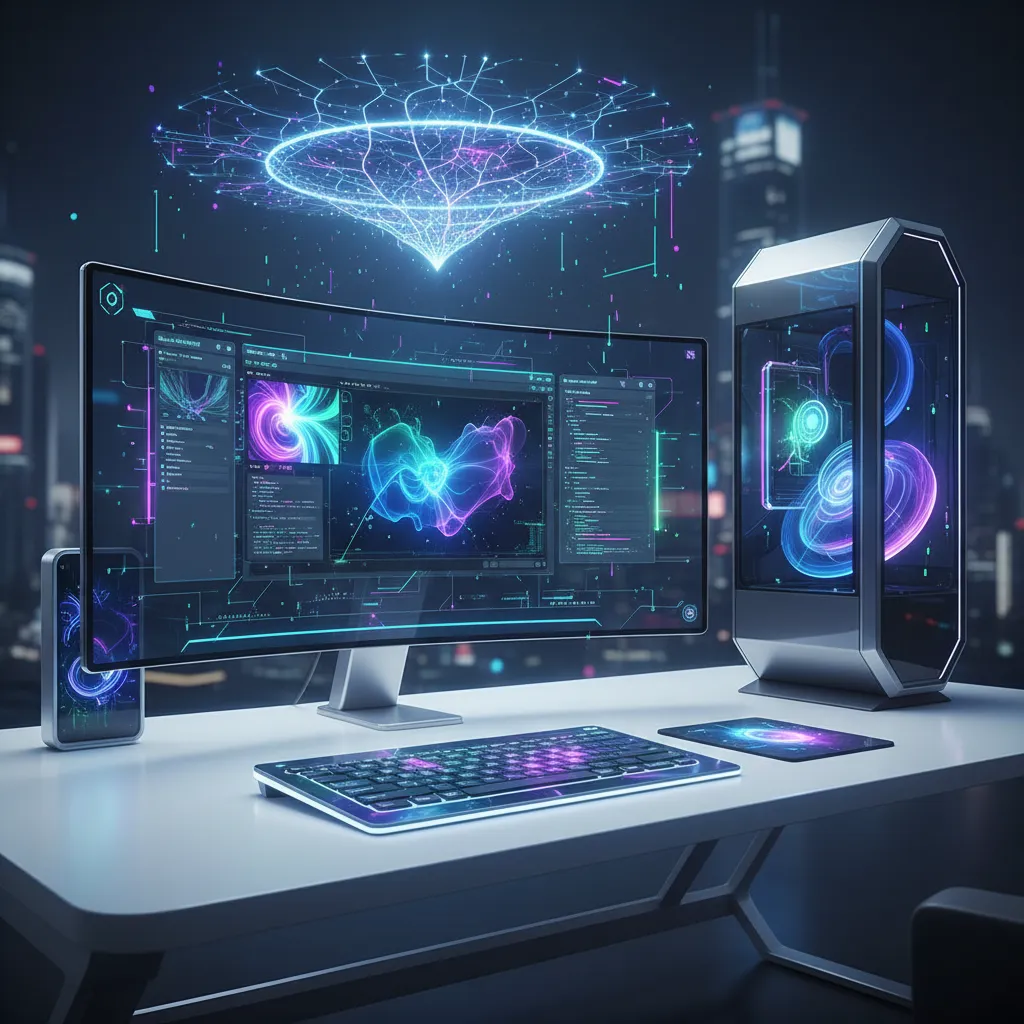
For decades, the evolution of the personal computer has been a relentless race for more speed. Faster CPUs, more powerful GPUs, and quicker storage have defined each new generation. But we’re now at the dawn of a new era, a paradigm shift where raw processing power shares the stage with intelligence. This is the AI PC revolution, and it’s poised to redefine our relationship with the devices we use every day.
Forget thinking of AI as just a chatbot in your browser or a feature in a cloud-based app. The AI PC brings artificial intelligence out of the cloud and directly onto your device. This is made possible by a new kind of specialized hardware that promises to make our computers more personal, intuitive, and powerful than ever before.
In this deep dive, we’ll demystify the AI PC, exploring the hardware that makes it tick, the tangible benefits it offers for both work and play, and why this leap forward in next-gen computing is about so much more than just a marketing buzzword. Get ready to discover how on-device AI is unlocking a new frontier of productivity, creativity, and privacy.
What Exactly Defines an AI PC? It’s More Than Just Software
So, what separates a shiny new AI PC from the powerful laptop you bought last year? The secret ingredient is dedicated hardware designed specifically for artificial intelligence workloads.
For years, we’ve interacted with AI primarily through the cloud. When you ask a question to a large language model or generate an image with a tool like Midjourney, your request is sent over the internet to massive data centers, processed by power-hungry servers, and the result is sent back to you. This works, but it has limitations related to latency, cost, and, most importantly, privacy.
The AI PC flips the script by enabling powerful local AI processing. This means complex AI tasks happen directly on your laptop, without needing a constant internet connection. The key to this capability lies in a new “holy trinity” of processors.
The Holy Trinity of AI Hardware: CPU, GPU, and the NPU
Every modern computer has a CPU and a GPU, but the AI PC introduces a third, crucial component: the NPU.
- CPU (Central Processing Unit): This is the brain of the computer, a versatile generalist that handles all the operating system’s core functions and most application tasks.
- GPU (Graphics Processing Unit): Originally designed for rendering graphics in video games, GPUs are excellent at handling many parallel tasks at once, which made them the go-to for early AI model training.
- NPU (Neural Processing Unit): This is the game-changer. An NPU is a specialized processor built from the ground up to handle the specific mathematical operations required for AI and machine learning tasks. It’s designed for extreme efficiency, performing these tasks at incredible speeds while using a fraction of the power of a CPU or GPU.
Think of it like a professional kitchen. The CPU is the head chef, directing all operations. The GPU is a team of line cooks, chopping dozens of vegetables simultaneously. The NPU is a highly specialized, energy-efficient pastry machine that can perfectly ice 1,000 cupcakes an hour using minimal electricity. By offloading AI tasks to the NPU, the AI PC frees up the CPU and GPU to do what they do best, leading to a smoother, faster, and more responsive experience.
The Rise of the Copilot+ PC
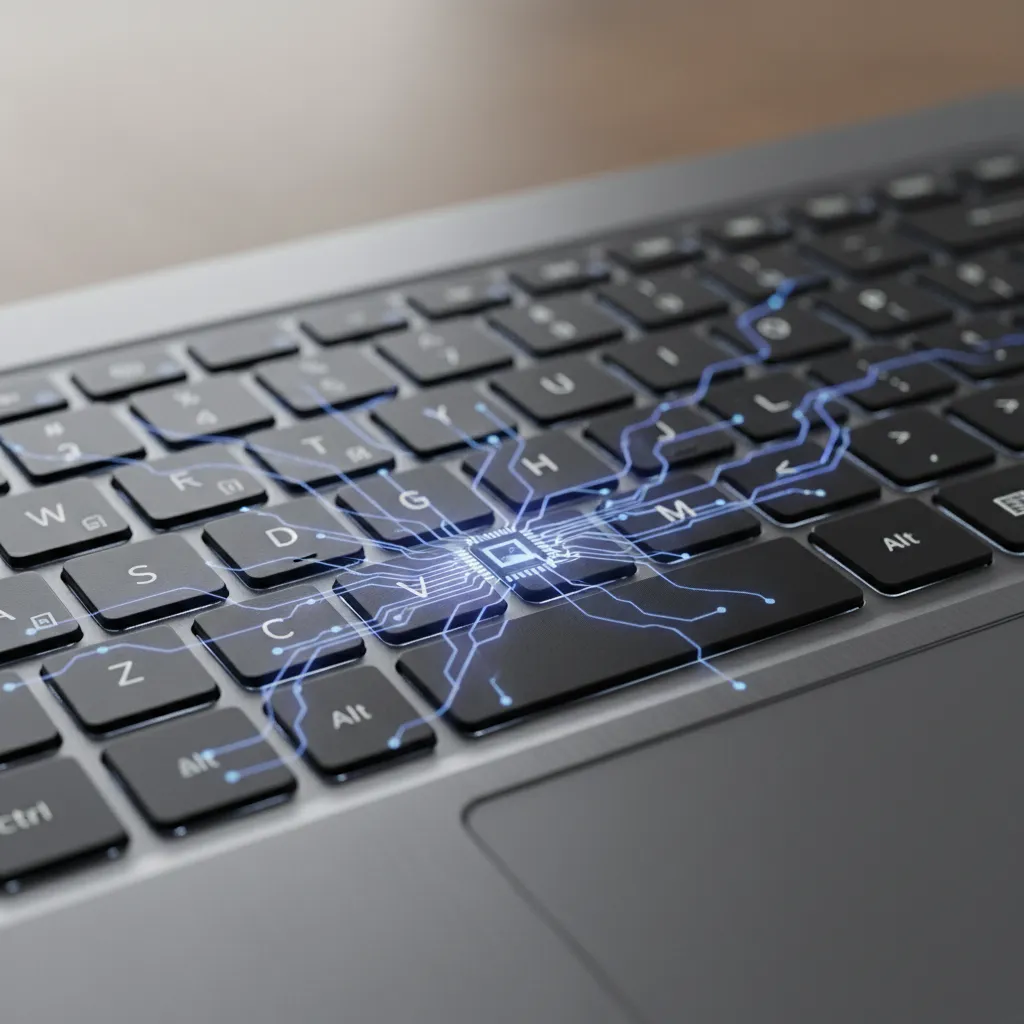
This hardware shift isn’t just a random assortment of new chips. Microsoft is standardizing the experience with its Copilot+ PC initiative. A laptop needs to meet specific hardware requirements to earn this branding, including a powerful NPU capable of over 40 trillion operations per second (TOPS), at least 16GB of RAM, and 256GB of fast SSD storage.
This initiative, powered by groundbreaking new chips like the Snapdragon X Elite, ensures that software developers have a consistent performance target to aim for, which will accelerate the creation of powerful new AI software integration.
The Tangible Benefits: How AI PCs Will Transform Your Daily Workflow
This all sounds great technically, but what are the real-world AI PC advantages? How does this new technology actually make your life easier? The impact will be felt across every aspect of computing, from mundane daily tasks to complex creative projects.
Supercharged Productivity for Professionals
For professionals, the era of AI-powered productivity is here. AI PCs are designed to be proactive assistants that understand your context and help you get work done faster.
Imagine these scenarios:
- Live Meeting Co-Pilot: Your PC transcribes a video call in real-time, creates a summary with action items, and even translates a speaker’s language instantly—all locally and securely.
- Intelligent Email Assistant: An AI agent running on your NPU can learn your writing style, draft replies to routine emails, and intelligently prioritize your inbox without ever sending your email data to the cloud.
- System-Wide Recall: Windows AI features like Recall (though currently being reworked after privacy concerns) showcase the potential of a PC that has a photographic memory of everything you’ve seen or done, allowing you to find a file or webpage with a simple natural language query. This is the essence of true personal AI.
- AI Accelerated Tasks: Background processes like video conferencing effects (blurring, virtual backgrounds), noise cancellation, and even malware scanning can be offloaded to the NPU, ensuring your main applications never slow down.
This level of intelligent assistance transforms the PC from a passive tool into an active collaborator, a core principle behind the push for better AI PC for professionals.
Related: AI Agents for Personal Finance Mastery

A New Canvas for Creators: The AI PC for Content Creation
The creative field is arguably where the AI PC innovation will be most visually stunning. AI for content creators is no longer about waiting for a cloud server to render your vision; it’s about real-time, interactive creation.
From Blank Page to Masterpiece in Record Time
Creative AI tools are becoming exponentially more powerful when they can leverage dedicated hardware.
- Local Image Generation: Generate and iterate on high-resolution images using models like Stable Diffusion directly on your laptop, with no internet connection, no subscriptions, and no wait times. You have complete control and privacy over your creations.
- Instant Video and Audio Editing: Imagine applying complex video effects, removing backgrounds, or transcribing and editing video by just editing the text—all instantly. NPUs can handle these AI accelerated tasks in the background, making the editing process seamless.
- Real-Time Artistic Assistance: In apps like Photoshop and DaVinci Resolve, AI features will run faster and more smoothly. Generative Fill, object tracking, and color grading will feel instantaneous, allowing for an uninterrupted creative flow.
This shift empowers artists, musicians, and filmmakers to experiment and create at the speed of thought, making the AI PC an indispensable tool for the modern creative.
Related: The iPad Pro M4: The Ultimate Guide for Creatives in 2024

Privacy and Security in the Age of Personal AI
In an increasingly connected world, data privacy is a paramount concern. This is where the AI PC offers perhaps its most significant advantage: private AI computing.
Why On-Device AI is a Game-Changer for Your Data
When you use a cloud-based AI service, you are sending your data—your queries, your documents, your photos—to a third-party server. While companies have security measures in place, your data is fundamentally outside of your control.
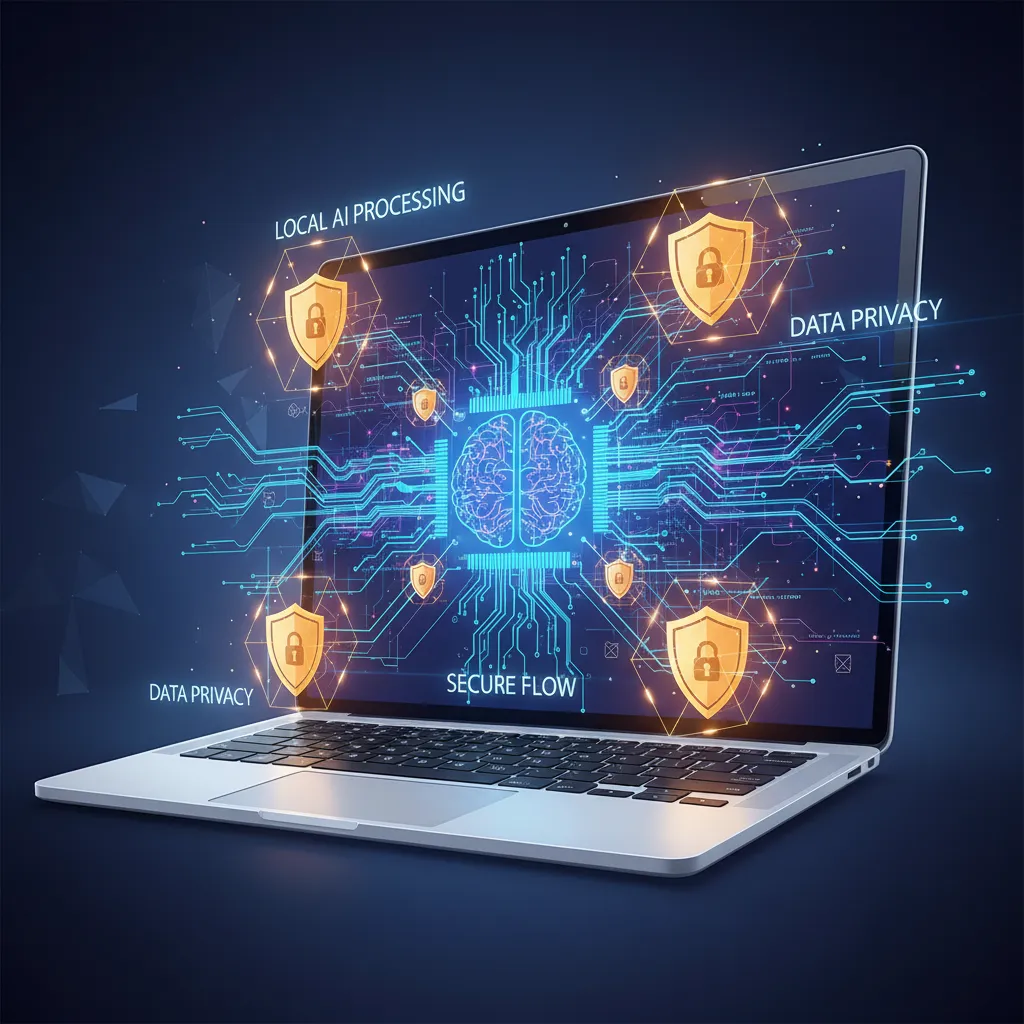
Secure AI on device changes this dynamic completely. By processing information locally, your most sensitive data never has to leave your machine.
- Analyzing a confidential business document? It stays on your hard drive.
- Organizing your personal photo library by face? The analysis happens on your NPU.
- Summarizing your private emails? The process is entirely self-contained.
This approach dramatically reduces the attack surface for bad actors and gives you complete sovereignty over your personal information. It’s a foundational shift that makes AI not just more powerful, but also more trustworthy.
Related: AI-Powered Proactive Cybersecurity: Predicting and Preventing Threats
AI PC vs. Traditional PC: Is It Time to Upgrade?
The core question for many is whether the AI PC vs traditional PC debate warrants an immediate upgrade. While a high-end traditional PC can still perform many AI tasks, the difference lies in efficiency, performance, and future-proofing.
A Head-to-Head Comparison
This table breaks down the key differences:
| Feature | Traditional PC | AI PC |
|---|---|---|
| Core Hardware | CPU, GPU | CPU, GPU, and NPU |
| AI Task Handling | Relies on CPU/GPU (less efficient) or the Cloud | Uses dedicated NPU for efficient, low-power AI tasks |
| Performance | Can slow down during background AI tasks | AI tasks offloaded to NPU, freeing up CPU/GPU for main applications |
| Battery Life | Drained quickly by sustained AI workloads | Significantly better battery life during AI-intensive tasks |
| Privacy | Often sends data to the cloud for AI processing | Processes sensitive data locally via on-device AI |
| Connectivity | Requires internet for most advanced AI features | Can perform many powerful AI tasks completely offline |
The AI PC performance boost isn’t just about raw speed for one task; it’s about the ability to run multiple intelligent processes in the background without compromising battery life or system responsiveness. It’s a move from brute force to intelligent efficiency.
The Future Landscape: What’s Next for Personal AI Computing?
We are at the very beginning of the AI PC era. The launch of Copilot+ PCs and the integration of powerful NPUs into mainstream devices represent the foundation upon which the future of personal computing will be built.
Gaming, Education, and Beyond
The influence of edge AI in laptops will expand into every corner of our digital lives.
- AI PC Gaming: While the GPU will remain king for graphics, the NPU will revolutionize gaming in other ways. Imagine NPCs with dynamic, unscripted behavior that learn from your playstyle, or real-time performance optimization that delivers higher frame rates with less power consumption. Related: AI in Gaming: Revolutionizing Worlds, Players, and Development
- Accessibility: On-device AI will power incredibly responsive and nuanced accessibility tools, from real-time sign language translation to screen readers that can describe the contents of an image with human-like detail.
- Mac AI Capabilities: Apple has been a pioneer in this space with its Neural Engine in Apple Silicon, and its upcoming AI features will further push the industry toward powerful on-device intelligence, validating the entire AI PC concept.
As developers begin to build software that specifically leverages the NPU, we will see a new class of applications that are more intuitive, context-aware, and helpful than anything we’ve seen before.
Conclusion: The Dawn of a Smarter Age
The AI PC is not an incremental update; it’s a fundamental re-imagining of what a personal computer can be. By integrating a Neural Processing Unit (NPU) into the core architecture, these devices unlock a new era of on-device AI that is fast, efficient, and, most importantly, private.
From supercharging your productivity with intelligent assistants to unleashing new possibilities for content creation and ensuring your data remains yours, the benefits are clear and compelling. The revolution isn’t a distant promise; it’s happening now with the arrival of the first best AI laptops 2024. This is the next step in the evolution of the PC—transforming it from a simple tool into a true digital partner.
The AI PC revolution is here. Are you ready to upgrade your workflow and unlock your full creative potential?
Frequently Asked Questions (FAQs)
Q1. What is an AI PC?
An AI PC is a personal computer that includes a dedicated Neural Processing Unit (NPU) in addition to the standard CPU and GPU. This specialized hardware is designed to run AI and machine learning tasks efficiently and quickly, directly on the device rather than in the cloud.
Q2. What is the main advantage of an AI PC?
The main advantage is the ability to perform powerful local AI processing. This results in faster performance for AI tasks, improved battery life, enhanced user privacy (as data isn’t sent to the cloud), and the ability to use advanced AI features even when offline.
Q3. How does an NPU work in an AI PC?
An NPU is a highly specialized processor optimized for the types of calculations common in AI workloads, like matrix multiplication. By offloading these tasks from the CPU and GPU, the NPU can perform them much faster and with significantly less power consumption, leading to a more responsive and efficient system.
Q4. Are Copilot+ PCs the only type of AI PC?
No, but they represent a new standard. “AI PC” is a broader category for any PC with an NPU. Copilot+ PC is a specific Microsoft branding for Windows PCs that meet a high-performance standard for their NPU (40+ TOPS), ensuring a premium, consistent AI experience across different manufacturers. Apple’s Macs with M-series chips and their Neural Engine are also a form of AI PC.
Q5. Do I need an AI PC for creative work?
While not strictly necessary today, an AI PC offers significant advantages for creators. Creative AI tools for photo editing, video production, and 3D modeling are increasingly using AI. An NPU will dramatically accelerate these features, providing a smoother, faster, and more interactive creative workflow.
Q6. Is an AI PC more secure than a traditional PC?
Yes, in a key way. By processing sensitive personal data on the device itself (on-device AI), an AI PC significantly enhances privacy and security. It reduces the need to send your information to external cloud servers, minimizing the risk of data breaches and giving you more control over your digital footprint.
Q7. Will AI PCs make my cloud-based AI tools obsolete?
Not necessarily. AI PCs will likely work in a hybrid model. Simple, quick, and private tasks will run on your local NPU, while extremely large-scale tasks that require massive computational power (like training a foundational AI model from scratch) will still rely on the cloud. The AI PC gives you the best of both worlds.