AI for Ocean Conservation: Protecting Marine Life with Smart Tech
Introduction
Our oceans are the lifeblood of our planet, covering over 70% of its surface, producing more than half the oxygen we breathe, and regulating our climate. Yet, this vast, vital ecosystem is facing an unprecedented crisis. From the silent threat of climate change and the insidious spread of plastic pollution to the destructive practices of overfishing and illegal poaching, the challenges are immense and multifaceted. Traditional conservation methods, while noble, are often too slow, too small-scale, and too resource-intensive to keep pace with the sheer scale of the threats.
Enter the world of artificial intelligence (AI). What if we could monitor the health of every coral reef in real-time? What if we could track endangered whales across entire oceans to protect them from ship collisions? What if we could predict and intercept illegal fishing operations before they happen? This isn’t science fiction; this is the reality of AI ocean conservation.
This article dives deep into how smart tech ocean preservation is creating a new frontier in marine biology and environmental protection. We’ll explore how artificial intelligence marine biology is providing researchers with unprecedented insights, how ocean monitoring AI is revolutionizing data collection, and how these innovative ocean tech solutions are giving us a fighting chance to save our seas. Get ready to discover the incredible impact of AI on our oceans and the promising future of ocean conservation.
The Unseen Crisis: Why Our Oceans Need a Technological Revolution
For centuries, our understanding of the ocean has been limited by our ability to explore it. We’ve known more about the surface of the moon than our own seafloor. This information gap has allowed destructive activities to go unchecked and the full impact of climate change to remain partially hidden beneath the waves.
The statistics are sobering:
- Plastic Pollution: Over 11 million metric tons of plastic enter our oceans every year, harming marine life and breaking down into microplastics that infiltrate the entire food web.
- Overfishing: More than a third of global fish stocks are being exploited at biologically unsustainable levels, threatening both marine ecosystems and the livelihoods of millions.
- Climate Change: Rising sea temperatures cause catastrophic coral bleaching events, while ocean acidification threatens the very existence of shell-forming organisms, the foundation of many marine food chains.
- Biodiversity Loss: Marine vertebrate populations have declined by nearly 50% in the last 50 years, signaling a rapid unraveling of the ocean’s complex web of life.
Manual surveys, sporadic satellite images, and limited research vessels simply can’t provide the comprehensive, real-time ocean data AI can now deliver. The sheer volume and velocity of data required to understand and manage these global problems are beyond human capacity alone. This is where AI transforms from a novel concept into an essential tool for planetary survival.
How AI is Revolutionizing Marine Science and Conservation
Artificial intelligence isn’t a single technology but a suite of powerful tools—machine learning, computer vision, predictive analytics—that are being deployed across the marine world. These AI tools marine biologists use are creating a paradigm shift in how we study, manage, and protect our oceans.
Real-Time Ocean Monitoring and Data Analysis
The foundation of effective conservation is data. AI’s greatest strength lies in its ability to process petabytes of information from a vast network of sources, including satellites, smart sensors ocean, acoustic monitors, and AI underwater drones.
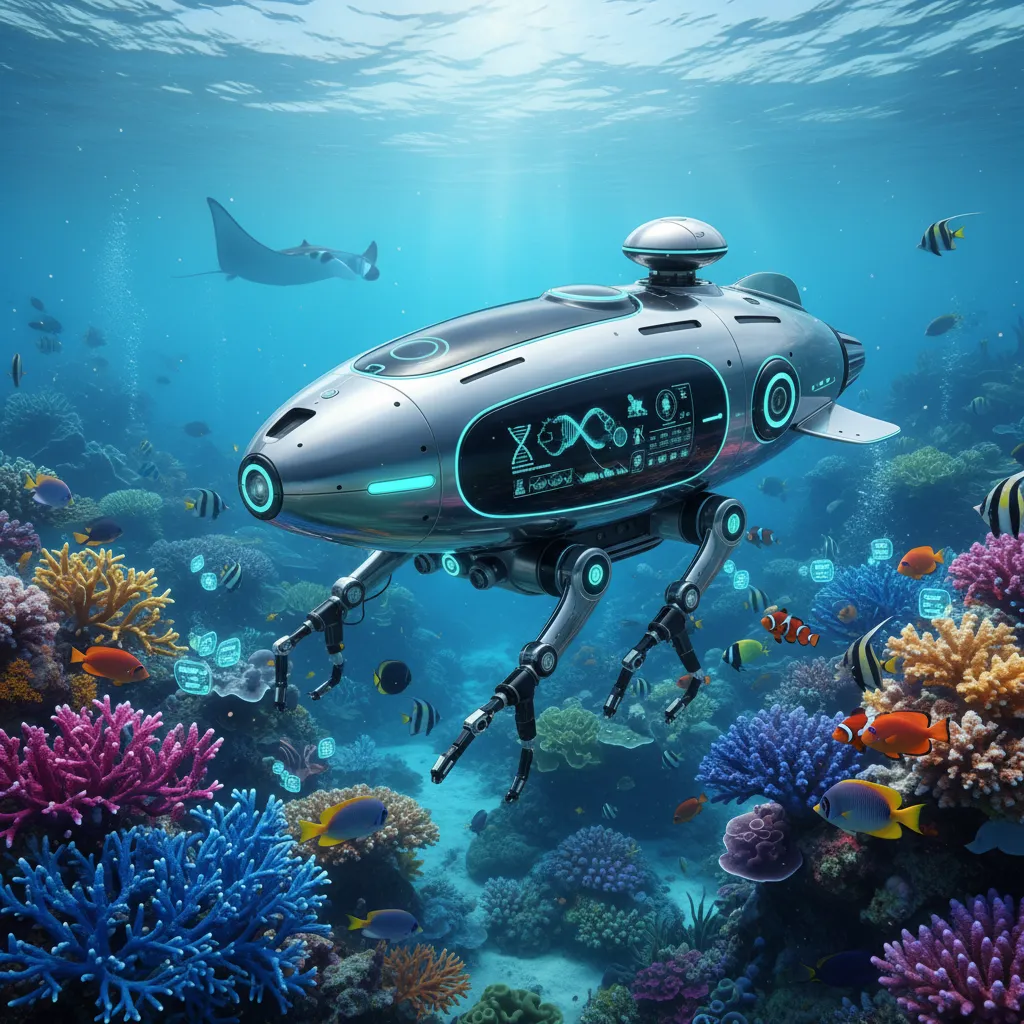
Autonomous Underwater Vehicles (AUVs), equipped with a battery of sensors and cameras, can patrol vast areas of the ocean for extended periods. They collect high-resolution images, water samples, and temperature and salinity data. AI algorithms then process this firehose of information to identify patterns and anomalies that would be impossible for humans to spot, providing a near-instantaneous pulse check on ocean health AI. This AI-driven marine research enables scientists to move from reactive problem-solving to proactive ecosystem management.
Protecting Endangered Species and Biodiversity
For decades, tracking elusive and wide-roaming marine animals was a near-impossible task. AI has changed the game, offering non-invasive and highly effective methods for monitoring and protecting vulnerable populations.
AI-Powered Whale Tracking and Acoustic Monitoring
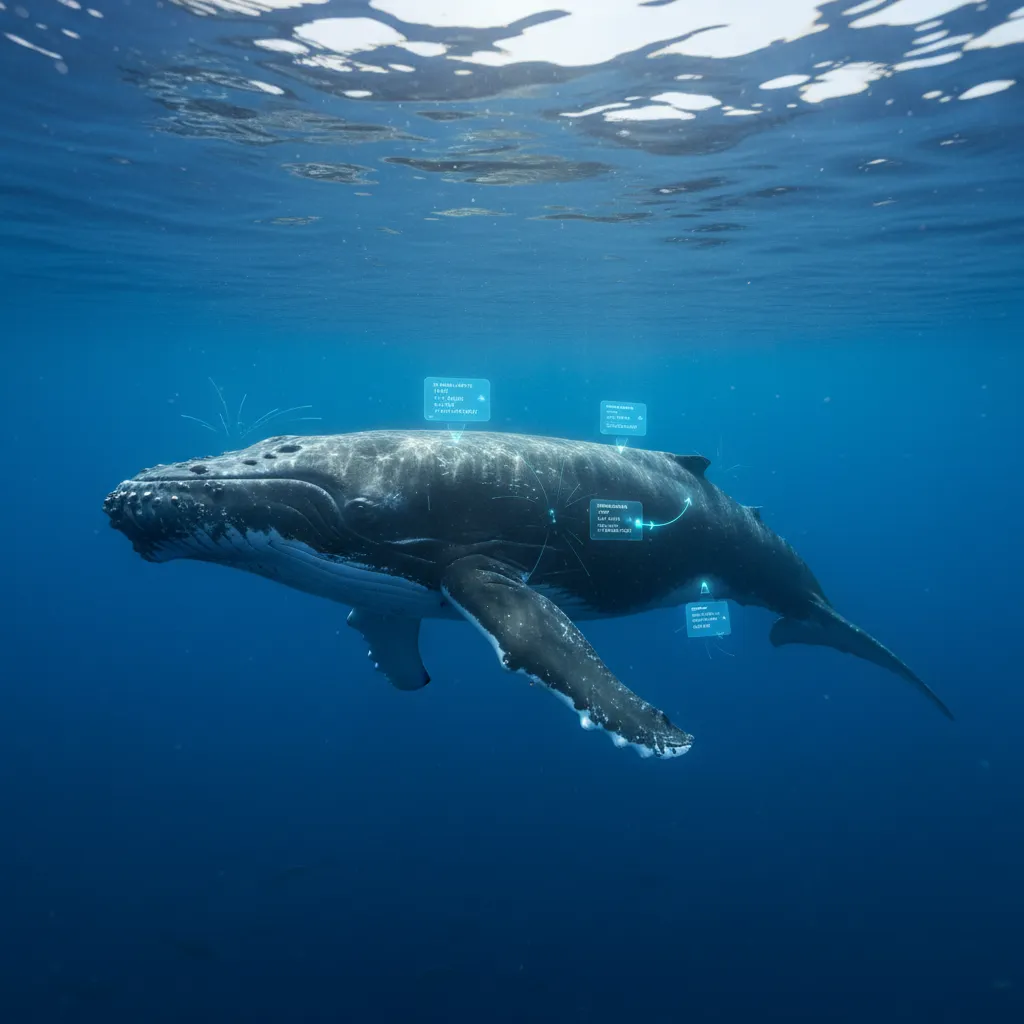
The ocean is a world of sound. Whales communicate, navigate, and hunt using complex vocalizations. By deploying underwater microphones (hydrophones) and applying AI, researchers can listen in on this “ocean internet.” AI models are trained to distinguish the calls of different species and even individual whales.
This acoustic monitoring is a cornerstone of AI for whale tracking. For example, the “Whale Safe” system uses AI to analyze acoustic data and ship tracking information in real-time to alert large vessels when whales are nearby, significantly reducing the risk of fatal ship strikes. It’s a prime example of AI for endangered species in action, creating a safer environment for these majestic creatures.
AI Recognition for Marine Life
Just as facial recognition works for humans, computer vision algorithms can now identify individual animals like sea turtles, sharks, and fish based on their unique patterns and markings. Projects like “Wildbook for Whale Sharks” allow citizen scientists and researchers to upload photos, and AI algorithms match them against a global database. This marine life protection AI helps track migration patterns, estimate population sizes, and understand social structures without the need for stressful physical tagging. This approach is fundamental to building effective biodiversity AI solutions.
Combating Ocean Pollution with AI
The fight against pollution is another area where AI is making significant waves. The sheer scale of the ocean makes finding and cleaning up debris a monumental task.
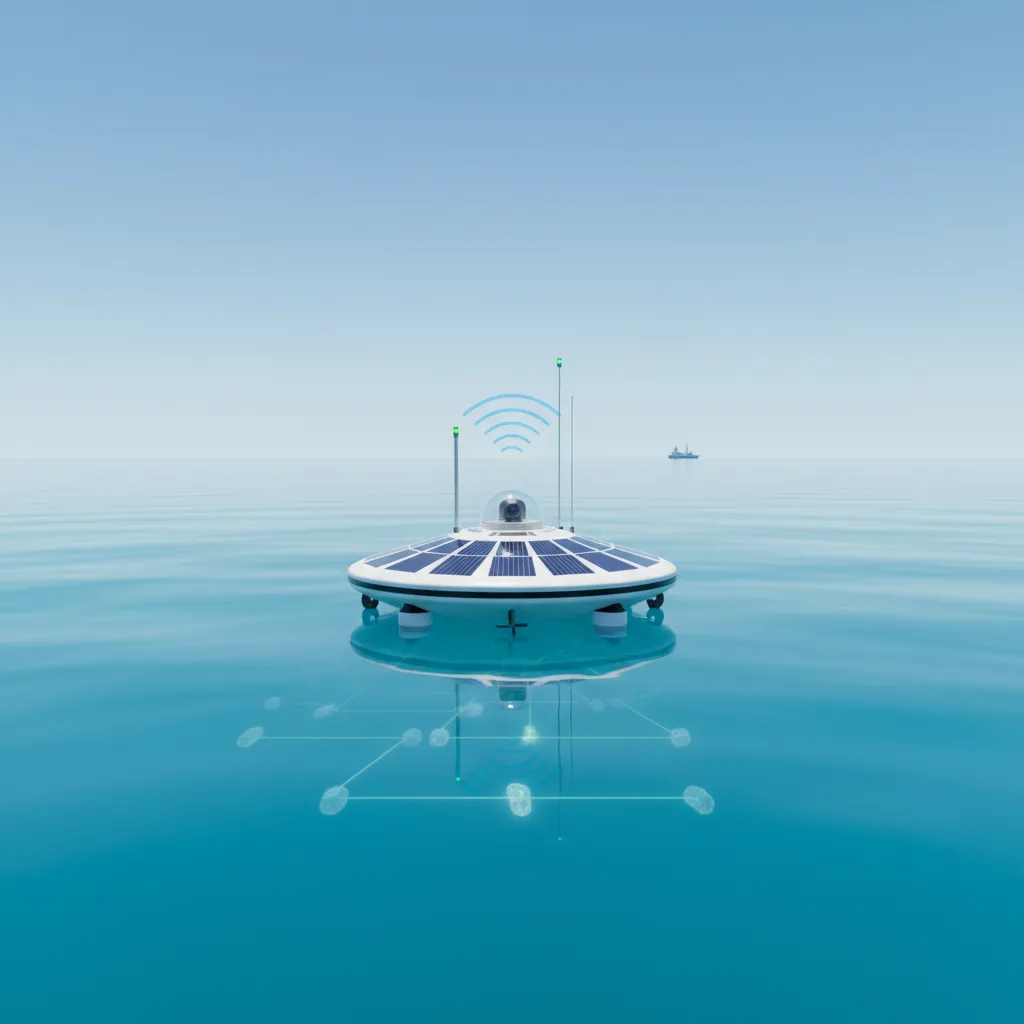
AI is being used for ocean pollution detection AI in several innovative ways. Machine learning models can analyze satellite imagery and aerial drone footage to identify and track large accumulations of plastic waste, like the Great Pacific Garbage Patch. This marine plastic detection AI helps cleanup organizations deploy their resources more efficiently.
Furthermore, AI can predict where pollution will travel. By analyzing ocean currents, wind patterns, and the location of a spill (be it oil or plastic), AI models can forecast its trajectory, allowing response teams to intercept it before it hits sensitive coastlines or marine habitats. Related: Sustainable Finance: How to Invest Responsibly and Grow Your Green Portfolio
Sustainable Fisheries and Fighting Illegal Poaching
Illegal, Unreported, and Unregulated (IUU) fishing costs the global economy billions of dollars and is a major driver of overfishing. Patrolling the vast ocean to police this activity is nearly impossible.
This is where AI anti-poaching ocean systems come in. Organizations like Global Fishing Watch use AI to analyze Automatic Identification System (AIS) data broadcast by vessels. The AI learns the patterns of normal fishing activity and can automatically flag suspicious behavior, such as a ship turning off its tracker in a restricted area or meeting another vessel at sea (a potential sign of illegal transshipment). This provides authorities with actionable intelligence to combat illegal operations.
Moreover, fisheries management AI helps create more sustainable practices. AI can analyze catch data, sonar readings, and environmental factors to provide more accurate estimates of fish populations, helping to set sustainable quotas and prevent the collapse of vital fisheries.
The Tech Toolkit: Key AI Applications in Marine Biology
Let’s break down the specific technologies powering this conservation revolution. These are the core components of the sustainable ocean tech movement that are empowering scientists and conservationists.
Computer Vision: The Eyes Beneath the Waves
Computer vision is one of the most impactful AI technologies for our oceans. It gives machines the ability to “see” and interpret the visual world from images and videos.
- Protecting Coral Reefs: Manually analyzing the health of a coral reef is a painstaking process. With
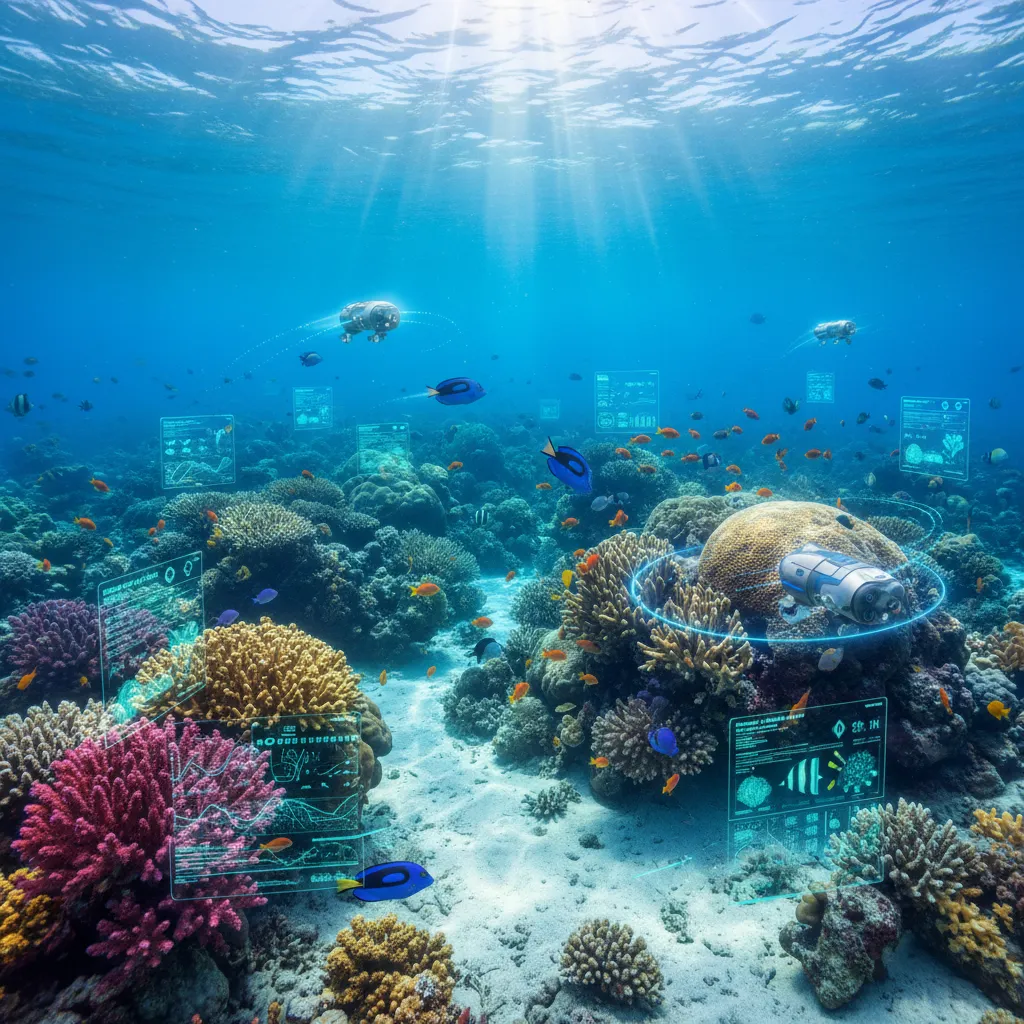
protecting coral reefs AI, AUVs can swim over a reef, capturing thousands of images. A computer vision model then instantly analyzes these images to classify coral species, measure the extent of bleaching, and identify signs of disease, providing a rapid health assessment that would take a team of divers weeks to complete. - AI Seafloor Mapping: Much of the ocean floor remains unmapped. AI helps stitch together sonar and image data from autonomous vessels to create detailed, 3D maps of the seabed. This
AI seafloor mappingis crucial for identifying critical habitats, understanding deep-sea ecosystems, and planning the placement of marine protected areas. - Deep Sea Exploration AI: In the extreme pressures and darkness of the deep sea,
AI underwater dronesare our primary explorers. Onboard AI helps these vehicles navigate complex terrain, identify new species, and decide which data is most important to collect and transmit back to the surface.
Predictive Analytics and Machine Learning
Predictive analytics uses historical data to forecast future events. In marine conservation, its applications are profound, forming the brain behind many climate change ocean solutions.
- Forecasting Environmental Threats: Machine learning models can analyze long-term data on sea surface temperatures, currents, and weather patterns to predict where and when coral bleaching events or harmful algal blooms are likely to occur. This gives conservation managers a crucial heads-up to implement protective measures.
- Modeling Species Migration: As climate change warms the oceans, marine species are on the move. AI can predict how fish populations will shift their ranges, helping the fishing industry adapt and preventing conflict over resources.
- Identifying Poaching Hotspots: By analyzing patterns in illegal fishing activities, AI can predict where and when poachers are most likely to strike next, allowing for more effective patrol deployments.

These AI tools marine biologists are using don’t replace human expertise but augment it, allowing scientists to ask bigger questions and find answers faster. Related: Apple Intelligence: The Ultimate 2024 AI Guide
Challenges and the Path Forward: Ethical AI Conservation
Despite its incredible promise, the deployment of AI in ocean conservation is not without its challenges. The future of ocean conservation depends on addressing these hurdles thoughtfully.
The Hurdles: Data, Cost, and Accessibility
- Data Scarcity: High-quality, well-labeled datasets are the fuel for AI. In the vast and often inaccessible ocean, collecting this data is difficult and expensive.
- High Costs: The
conservation technology trendspoint towards sophisticated hardware like AUVs and sensor networks, which can be prohibitively expensive for smaller NGOs or developing nations. - Accessibility & Expertise: Developing and implementing AI solutions requires specialized expertise, creating a potential gap between technologically advanced regions and those on the front lines of conservation with limited resources.
Ethical AI Conservation: Ensuring a Responsible Future
As we lean more heavily on AI, we must proceed with caution. Ethical AI conservation means considering the potential pitfalls. For instance, AI-powered surveillance used for anti-poaching could be misused. Algorithms trained on biased data could lead to inequitable conservation outcomes.
The goal is not to replace human oversight but to enhance it. A human-in-the-loop approach ensures that the final decisions are made by experts who can consider the broader context and ethical implications. Collaboration, open-source data, and a commitment to building equitable access to these technologies are paramount to ensuring AI serves all of humanity and the planet we share.
Conclusion: A New Wave of Hope for Our Oceans
The state of our oceans is critical, but the narrative is not one of despair. It is one of action, innovation, and hope. AI ocean conservation represents a seismic shift in our ability to be effective stewards of our marine ecosystems. From the microscopic analysis of plankton to the satellite-level tracking of poaching vessels, artificial intelligence marine biology is illuminating the darkest corners of the sea and providing us with the tools to protect it.
The impact of AI on oceans is no longer a future concept; it’s happening right now. Smart technologies are empowering scientists, conservationists, and governments to work faster, smarter, and more effectively than ever before. While technology alone is not a silver bullet—it must be paired with strong policy, global cooperation, and a fundamental shift in our relationship with the planet—it is an undeniably powerful ally.
The fusion of human passion and artificial intelligence is creating a new wave of conservation. By embracing these tools, we can turn the tide and ensure a healthy, thriving ocean for generations to come.
Frequently Asked Questions (FAQs)
Q1. How can AI help protect the ocean?
AI helps protect the ocean by processing vast amounts of data to monitor marine health, track endangered species, detect pollution, and combat illegal fishing. For example, AI algorithms analyze satellite images to find plastic waste and track illegal vessels, and they listen to underwater sounds to help prevent ships from colliding with whales.
Q2. What is marine conservation technology?
Marine conservation technology refers to any innovative ocean tech used to protect and preserve marine environments. This includes hardware like AI underwater drones, smart sensors, and acoustic monitors, as well as software like artificial intelligence and machine learning platforms that analyze environmental data.
Q3. How does AI help in detecting ocean pollution?
AI assists in ocean pollution detection AI by analyzing data from various sources like drones, satellites, and sensors. Computer vision models can identify plastic debris or oil slicks from aerial images, while predictive algorithms can forecast how currents and winds will spread pollutants, enabling faster and more effective cleanup responses.
Q4. Can AI stop illegal fishing?
AI is a powerful tool to help stop illegal fishing. AI anti-poaching ocean systems analyze satellite data and vessel tracking signals (AIS) to automatically flag suspicious activities, such as fishing in protected areas or turning off trackers. This provides authorities with crucial intelligence to intercept and penalize illegal operators more effectively.
Q5. What are the main challenges of using AI for marine conservation?
The main challenges include the high cost of technology (like drones and sensors), the need for vast amounts of high-quality data to train AI models, and the lack of technical expertise in some conservation organizations. Additionally, ensuring the ethical AI conservation of these powerful tools is a critical consideration.
Q6. How is AI used to monitor coral reefs?
AI is used for protecting coral reefs AI by rapidly analyzing thousands of underwater images taken by drones or divers. AI-powered computer vision can automatically identify coral species, detect signs of bleaching or disease, and measure changes in reef health over time far faster and more accurately than manual methods.