AI for Neurodivergent Learners: Personalized Paths & Inclusive Futures in Education
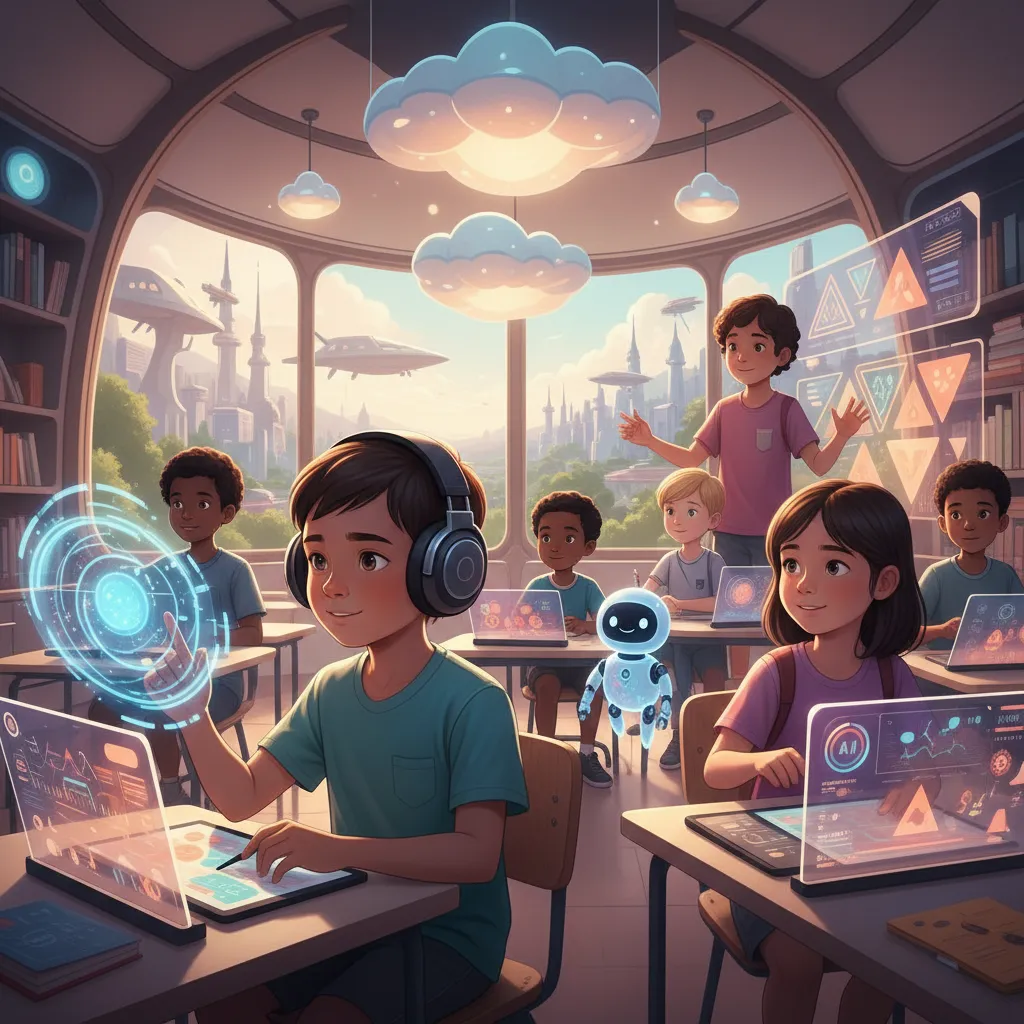
For decades, the traditional classroom has operated on a “one-size-fits-all” model. A single curriculum, delivered at a uniform pace, designed for a hypothetical “average” student. But what about the students who aren’t average? For the estimated 15-20% of the population who are neurodivergent—individuals with brains that learn, process, and perceive information differently—this rigid structure can feel less like a place of learning and more like an obstacle course.
Enter the era of Educational AI innovation. Artificial intelligence is no longer a concept confined to science fiction; it’s a tangible, powerful force poised to dismantle the outdated one-size-fits-all approach. This isn’t about replacing teachers with robots. It’s about empowering educators with sophisticated tools to create truly personalized education AI experiences.
This article explores the transformative potential of AI for neurodivergent learning. We’ll delve into how these technologies are creating inclusive learning AI environments, offering tailored support for conditions like autism, ADHD, and dyslexia. From adaptive learning neurodiversity platforms to AI assistive technology, we will uncover how we are building more equitable, effective, and empathetic educational futures for every student.
The Cracks in the “One-Size-Fits-All” Foundation
The concept of neurodiversity champions the idea that neurological differences are natural variations in the human genome. This includes autism, ADHD, dyslexia, dyscalculia, and Tourette’s syndrome, among others. In a traditional educational setting, these differences are often viewed as deficits to be corrected rather than unique cognitive styles to be supported.
This mismatch creates significant hurdles:
- Pacing Issues: A student with ADHD might struggle to stay engaged with a slow-paced lecture, while a student who needs more time to process information may be left behind.
- Sensory Overload: The typical classroom—with its fluorescent lights, constant noise, and visual clutter—can be an overwhelming environment for students on the autism spectrum.
- Executive Function Challenges: Tasks like organizing assignments, managing time, and breaking down large projects can be monumental for students with executive function difficulties, common in ADHD.
- Standardized Testing: Methods that rely heavily on timed, text-based exams can fail to accurately measure the knowledge of a dyslexic student who excels at verbal communication or hands-on problem-solving.
This rigid system forces neurodivergent students to constantly adapt to an environment not built for them, leading to frustration, anxiety, and untapped potential. The goal of equitable education AI is to flip this script—to make the learning environment adapt to the student.
AI as the Architect of Personalized Education
At its core, AI neurodivergent learning is about using technology to create custom learning experiences AI. Instead of a single, linear path, AI can design a dynamic, branching journey tailored to each student’s unique strengths, weaknesses, pace, and preferences.
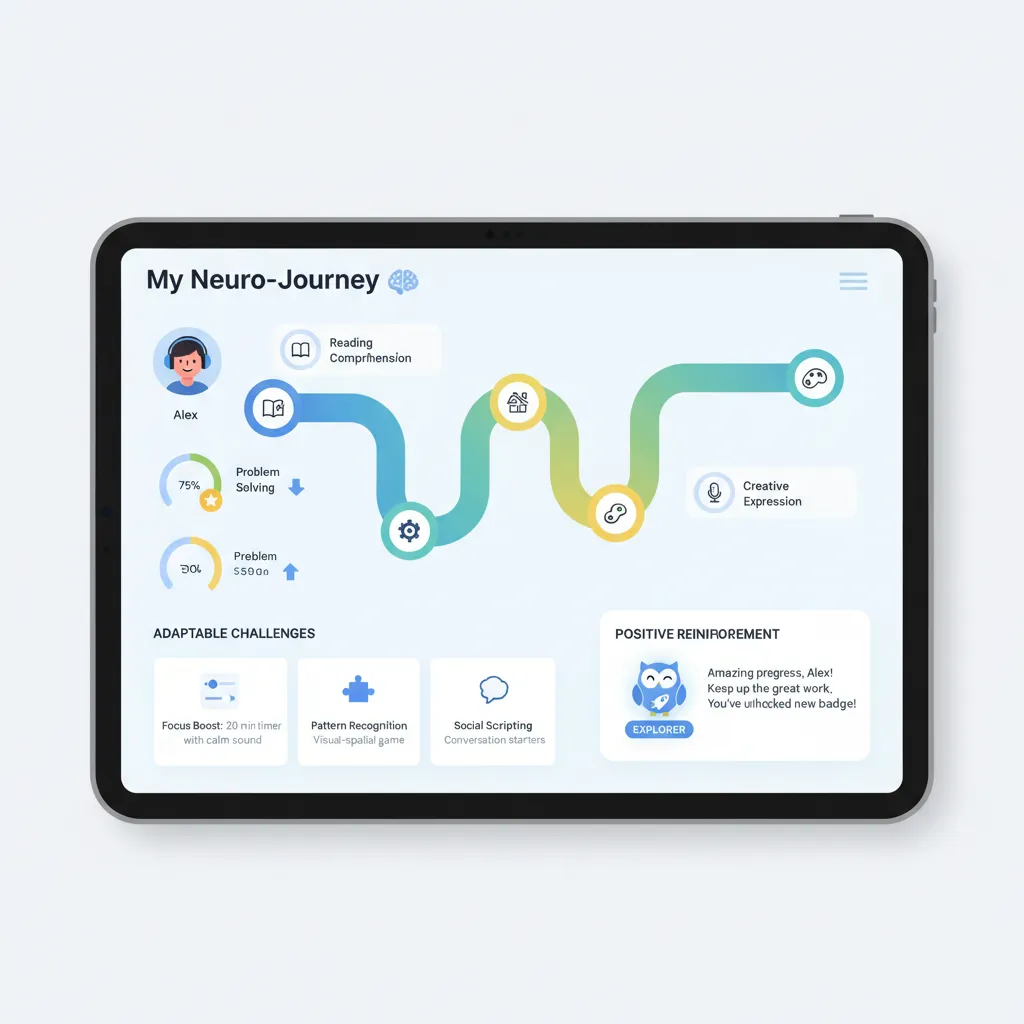
Personalized Learning Pathways: A GPS for Education
Imagine an educational “GPS” for every learner. This is the essence of AI learning pathways. These systems, powered by machine learning algorithms, continuously assess a student’s performance and understanding.
- Real-Time Adaptation: If a student masters a concept quickly, the AI presents more challenging material. If they struggle, it offers remedial exercises, alternative explanations, or foundational content to bridge the gap. This prevents the boredom that leads to disengagement and the frustration that causes students to give up.
- Data-Driven Insights: These personalized learning platforms provide educators with incredibly detailed analytics. Teachers can see exactly where a student is excelling and where they need more support, allowing for targeted, effective interventions.
- Student Agency: Many platforms empower students to have a say in their learning journey. They might choose the format of the content (video, text, interactive game) or the topic of their next project, fostering a sense of ownership and motivation. This is a cornerstone of empowering neurodiverse students.
Related: What are AI Agents? A Guide to the Next Tech Frontier
AI Curriculum Adaptation and Multi-Modal Content
A key aspect of inclusivity is presenting information in multiple ways. AI curriculum adaptation excels here. An AI system can take a core lesson and instantly render it in various formats:
- A text-heavy chapter can be converted into an audiobook for an auditory learner or a student with dyslexia.
- An abstract scientific concept can be transformed into an interactive 3D model or simulation.
- A complex historical event can be summarized in a clear, concise video with animated timelines.
This multi-modal approach ensures that the content is accessible and engaging, regardless of a student’s learning preference or cognitive style, a core principle of AI cognitive accessibility.
AI in Action: Tailored Tools for Specific Needs
The true power of AI in K-12 special needs and higher education becomes clear when we look at the specific tools being developed to address distinct challenges faced by neurodivergent students.
AI Support for Autism Spectrum Disorder (ASD)
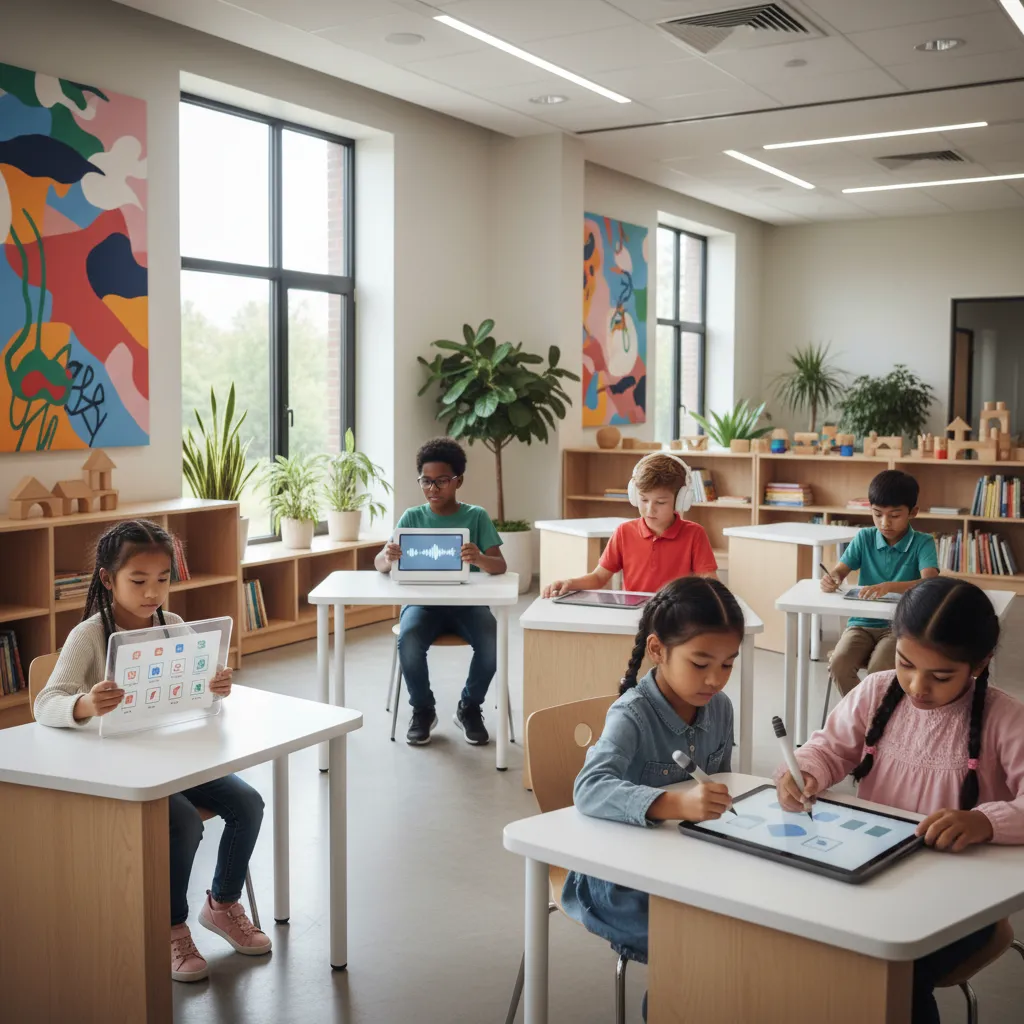
For students with autism, AI can provide support in areas from social communication to managing sensory input.
- Social Skills Simulators: AI-powered applications and VR experiences can create safe, controlled environments for students to practice social interactions. They can learn to recognize facial expressions, understand social cues, and navigate conversations with AI characters that provide gentle, non-judgmental feedback.
- Communication Aids: Advanced text-to-speech (TTS) and speech-to-text (STT) apps powered by AI have more natural-sounding voices and better recognition, serving as powerful tools for non-verbal students or those who struggle with written expression.
- Sensory-Friendly AI Tools: Imagine noise-canceling headphones that use AI to specifically filter out overwhelming background noise while allowing the teacher’s voice to come through clearly. Or screen overlays that use AI to adjust color, contrast, and brightness in real-time to create a more comfortable visual experience.
AI-Powered Tools for Dyslexia
Dyslexia primarily affects reading and language processing. AI dyslexia tools are designed to break down these barriers, turning the written word into an accessible resource rather than a source of stress.
- Advanced Text-to-Speech: Modern AI readers don’t just sound robotic; they can use natural intonation and highlight words as they are read, improving comprehension and fluency.
- Intelligent Speech-to-Text: For students who struggle with writing and spelling, dictation software that uses sophisticated AI to accurately transcribe spoken words into text is a game-changer for essays, notes, and assignments.
- Predictive Text and Smart Grammar Checkers: AI algorithms can now learn an individual’s common error patterns, offering more relevant suggestions for spelling and grammar than standard spell-checkers, effectively acting as a personal writing coach.
Related: The Rise of AI Copilots: Revolutionizing Work & Boosting Creativity
AI Solutions for ADHD
Students with ADHD often face challenges with executive functions like focus, organization, and time management. AI for ADHD education focuses on creating structure and maintaining engagement.
- Executive Function Support: AI-powered apps can act as personal assistants. They can help break down large assignments into manageable sub-tasks, set intelligent reminders that adapt to a student’s schedule, and visually track progress to provide a sense of accomplishment.
- Gamified Learning: To combat challenges with sustained attention, AI can present educational content in a game-like format. Points, badges, and leaderboards can turn rote learning into a motivating challenge, keeping students engaged for longer periods.
- AI Focus Assistants: Tools like browser extensions can use AI to identify and block distracting websites and notifications during study sessions, creating a digital environment conducive to deep work.
The Educator’s New Role: AI as a Collaborative Partner
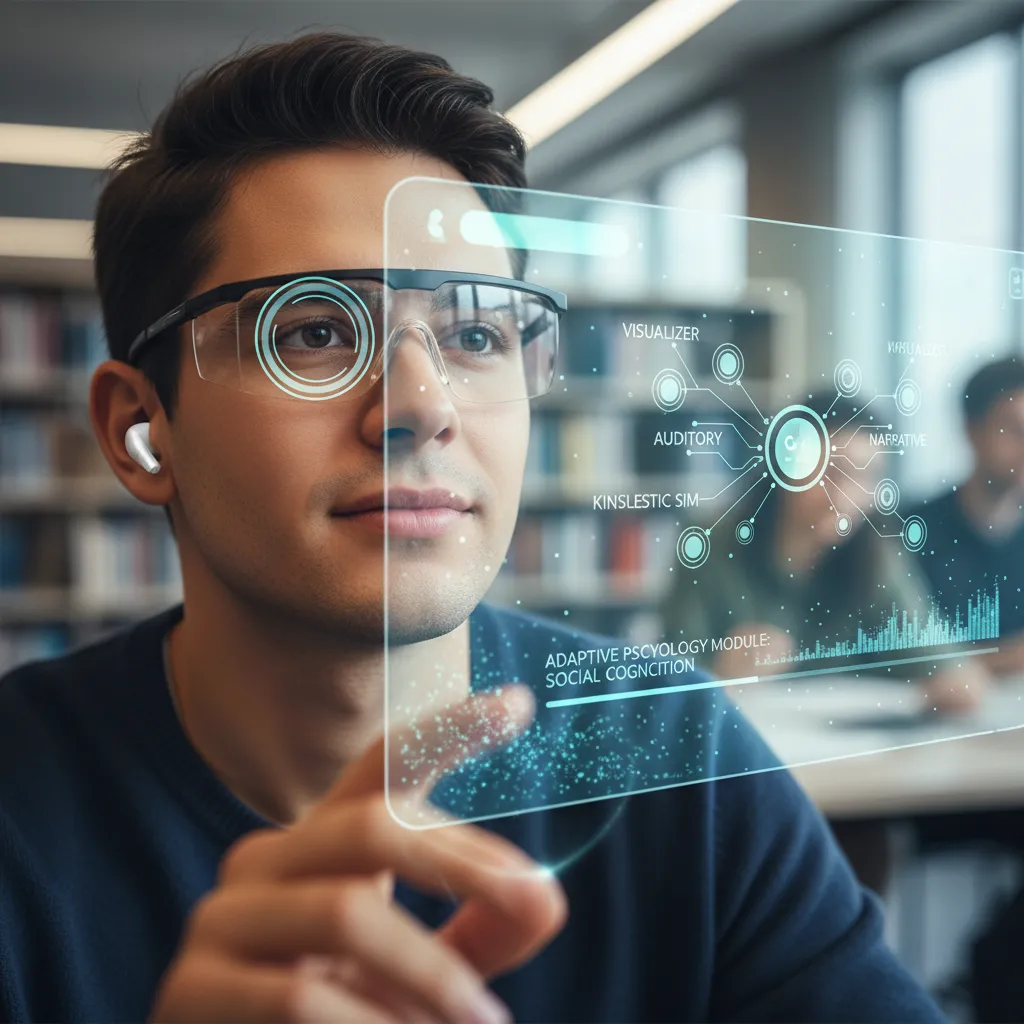
The rise of tech for inclusive classrooms raises a critical question: What happens to the teacher? The fear of AI making educators obsolete is misplaced. Instead, AI is poised to become the ultimate teaching assistant, a “copilot” that handles administrative burdens and provides data-driven insights, freeing up teachers to do what they do best: connect with, inspire, and mentor their students.
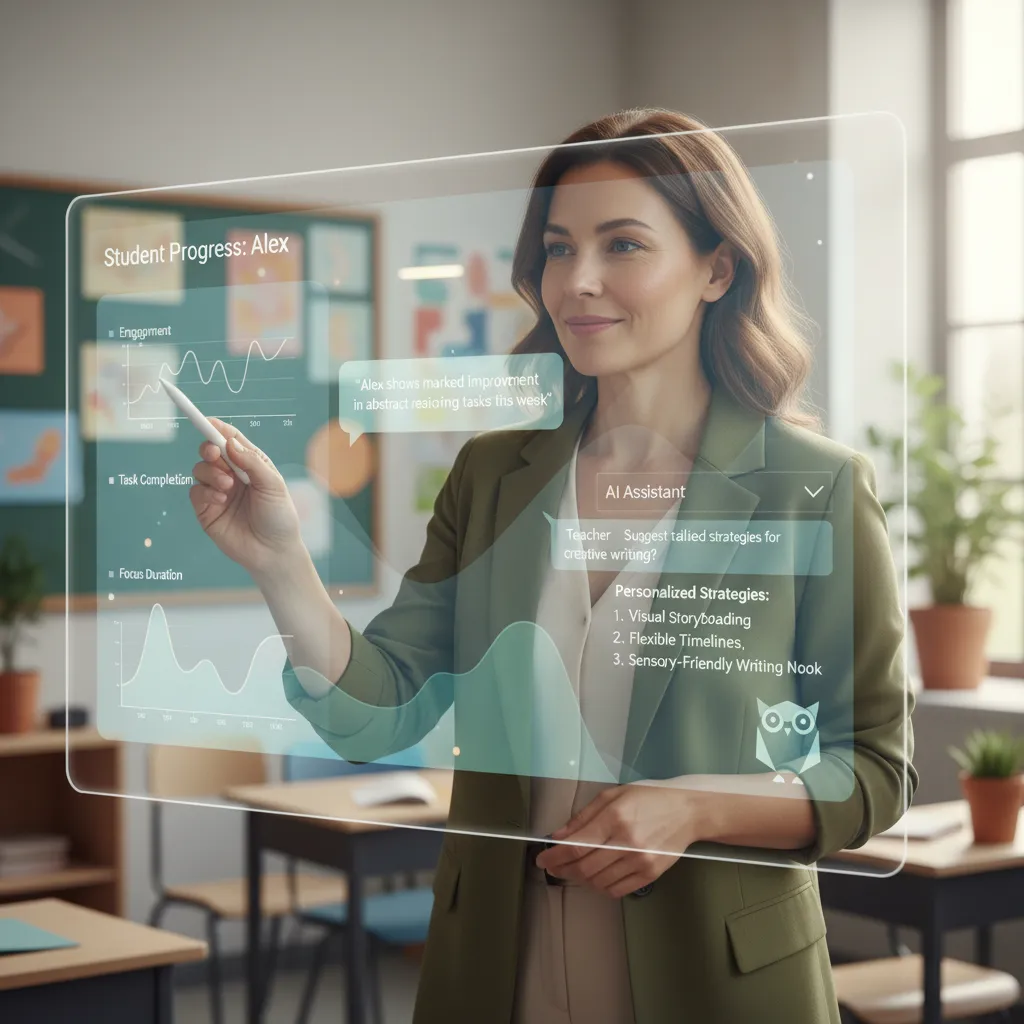
- Automating the Tedious: AI can automate grading for multiple-choice quizzes, manage administrative record-keeping, and even generate initial drafts of lesson plans and reports. This saves countless hours, reducing burnout and allowing teachers to focus on high-impact activities.
- Deepening Understanding: AI dashboards can synthesize performance data from an entire class, instantly highlighting common misconceptions or identifying individual students who are falling behind. This allows for proactive, targeted support long before a student fails an exam.
- Facilitating Inclusion: With AI handling the mechanical aspects of differentiation, teachers can devote more energy to fostering a supportive and inclusive classroom culture, managing group dynamics, and providing crucial social-emotional guidance.
Related: Streamline Your Day: How AI is Revolutionizing Daily Routines and Habits
Navigating the Ethical Maze: Challenges and Considerations
While the promise of AI special education is immense, its implementation is not without challenges. A responsible approach requires a clear-eyed view of the potential pitfalls.
- Data Privacy: Personalized learning platforms collect vast amounts of sensitive student data. Strong regulations and transparent school policies are essential to ensure this data is protected, used ethically, and not exploited for commercial purposes.
- Algorithmic Bias: AI systems learn from the data they are trained on. If this data reflects existing societal biases, the AI could inadvertently perpetuate them, misidentifying the needs of students from certain backgrounds or unfairly labeling them. Developing fair and equitable education AI is a critical ongoing challenge.
- The Digital Divide: Not all students have equal access to the necessary devices and high-speed internet. If AI tools become central to education, we risk widening the achievement gap between affluent and low-income districts.
- Over-reliance and Human Connection: Technology is a tool, not a panacea. The goal is to supplement, not supplant, the vital human connection between teachers and students. We must ensure that the integration of AI enhances, rather than diminishes, the development of social-emotional skills and collaborative learning.
Related: Safeguarding Sanctuary: Smart Home Security & Privacy in the AI Era
The Future of Inclusive Education is Now
We are at the dawn of a new educational paradigm. The future of inclusive education is one where technology enables a fundamental shift from standardization to personalization. We can expect to see even more sophisticated digital tools for neurodivergent learners:
- Emotion-Aware AI: Systems that can detect signs of frustration, confusion, or anxiety through facial expressions or interaction patterns and offer support or a break in real-time.
- Hyper-Personalized AI Tutors: Lifelong learning companions that understand a student’s entire educational history, career goals, and personal interests to provide guidance and mentorship.
- Immersive Learning with AR/VR: Augmented and virtual reality, guided by AI, will allow students to conduct virtual science experiments, walk through historical sites, or practice vocational skills in a safe, simulated environment.
This technological revolution is not just about improving academic outcomes; it’s about fostering a sense of belonging and self-worth. By providing AI-powered academic support that respects and adapts to individual differences, we are empowering neurodiverse students to not only succeed in school but to thrive in a world that is finally beginning to recognize the value of their unique minds.
The journey toward truly inclusive education is ongoing, but with AI as a powerful and intelligent ally, that future is closer than ever.
Frequently Asked Questions (FAQs)
How can AI help neurodivergent students?
AI helps neurodivergent students by providing personalized learning experiences. It can adapt the pace and style of curriculum, offer content in multiple formats (text, audio, video), and provide specialized tools like text-to-speech for dyslexia or focus aids for ADHD. This creates a more flexible and supportive educational environment tailored to individual needs.
What is an example of AI assistive technology in education?
A prime example is an adaptive learning platform. These platforms use AI to track a student’s progress in real-time. If a student is struggling with a math concept, the AI can automatically provide simpler problems, video tutorials, or step-by-step guides until the concept is mastered, acting as a personal digital tutor.
Can AI replace special education teachers?
No, AI is not intended to replace special education teachers. It is a tool to augment their capabilities. AI can handle data analysis, content differentiation, and administrative tasks, freeing up teachers to focus on providing the crucial human elements of instruction: emotional support, mentorship, and fostering social skills.
What are the potential drawbacks of using AI in special education?
The main drawbacks include concerns over student data privacy, the potential for algorithmic bias if the AI is trained on flawed data, the digital divide (unequal access to technology), and the risk of over-relying on technology at the expense of human interaction and social-emotional learning.
How does AI support students with ADHD?
AI supports students with ADHD primarily by assisting with executive functions. It can power apps that break down large projects into smaller steps, manage schedules with intelligent reminders, and create gamified learning environments to maintain engagement. It can also help by blocking digital distractions during study periods.
What are some specific AI tools for dyslexia?
AI-powered tools for dyslexia include advanced text-to-speech (TTS) readers that sound natural and can highlight text as it’s read, highly accurate speech-to-text (STT) dictation software for writing, and smart grammar/spell-checkers that can recognize and correct common dyslexic error patterns.