AI & Micro-Investing for Gen Z: Build Wealth with Smart Algorithms

For many in Gen Z, the world of investing has long felt like an exclusive club—a place of confusing jargon, high minimums, and intimidating charts reserved for Wall Street veterans. Faced with student debt, rising living costs, and the gig economy’s unpredictability, building wealth can seem like a distant dream. But what if you could turn your spare change into a diversified portfolio, guided by the same powerful technology that curates your playlists and recommends your next binge-watch?
Welcome to the new era of finance, where Artificial Intelligence (AI) and micro-investing are joining forces to tear down the old barriers. This isn’t just about making investing easier; it’s about making it smarter, more accessible, and deeply personalized. The convergence of fintech for Gen Z and intelligent automation is creating a powerful new path toward financial independence.
This comprehensive guide will explore how the synergy between AI micro investing and Gen Z investing habits is reshaping personal finance. We’ll demystify how smart algorithms create wealth, unpack the mechanics of the best micro investing apps, and provide a clear roadmap for you to start your journey to build wealth young, one automated, intelligent investment at a time.
What is Micro-Investing and Why is it Perfect for Gen Z?
At its core, micro-investing is the practice of investing very small sums of money on a regular basis. Instead of needing thousands of dollars to buy a single share of a major company, you can start with as little as $1. This concept isn’t new, but its recent explosion in popularity is a direct result of technology that makes it seamless and accessible, perfectly aligning with the lifestyle and values of Gen Z.
Here’s why it resonates so strongly with the digital-native generation:
- Low Barrier to Entry: The primary appeal is the elimination of high initial capital requirements. You can start with the money you’d spend on a coffee. This democratizing investing principle makes it possible for anyone, regardless of their current income, to begin building an asset base.
- Habit Formation: Micro-investing transforms a daunting task into a simple, repeatable habit. By making small, consistent contributions, you leverage the power of dollar-cost averaging and compound growth over time without feeling a significant impact on your daily budget.
- Mobile-First Experience: These platforms are designed as sleek, intuitive mobile investing apps. For a generation that manages their lives through a smartphone, this seamless digital experience is a natural fit.
- Fractional Shares: You don’t need $500 to invest in a company whose stock costs $500 per share. Fractional shares AI platforms allow you to buy a small slice of that share for just a few dollars, giving you ownership in top companies you know and love without needing to break the bank.
This approach transforms investing from a one-time, high-stakes event into a continuous, low-pressure background process—a perfect entry point for beginner investing apps and those new to the market.
The AI Revolution in Your Pocket: How Smart Algorithms Power Modern Investing
The real game-changer in the micro-investing space is the integration of sophisticated AI. This isn’t just about basic automation; it’s about bringing a level of data-driven intelligence previously reserved for high-net-worth individuals directly to your smartphone. Automated investing AI works tirelessly behind the scenes to optimize your portfolio and align it with your goals.
From Simple Automation to Predictive Insights: The Evolution of Robo-Advisors
At the forefront of this revolution are robo advisors for Gen Z. These are digital platforms that use algorithms to provide automated, goal-based financial planning and investment management.
Here’s how they work their magic:
- Onboarding & Risk Assessment: When you sign up, the platform asks you a series of questions about your financial goals (e.g., saving for a car, retirement), your timeline, and your comfort level with risk.
- AI-Powered Portfolio Construction: Based on your answers, the AI algorithm constructs a diversified portfolio for you, typically using a mix of low-cost Exchange-Traded Funds (ETFs). This portfolio is tailored to your specific risk profile, from conservative (more bonds) to aggressive (more stocks).
- Continuous Rebalancing: The AI constantly monitors your portfolio. If market fluctuations cause your asset allocation to drift from its target (e.g., stocks grow to be too large a percentage of your holdings), it automatically rebalances by selling some of the high-performers and buying more of the under-performers. This disciplined, emotion-free approach is a cornerstone of successful passive investing AI.
Hyper-Personalization: AI Crafting Your Unique Financial Fingerprint
The next generation of AI investing goes beyond simple risk profiles. It’s moving toward true hyper-personalization, creating investment strategies as unique as you are.
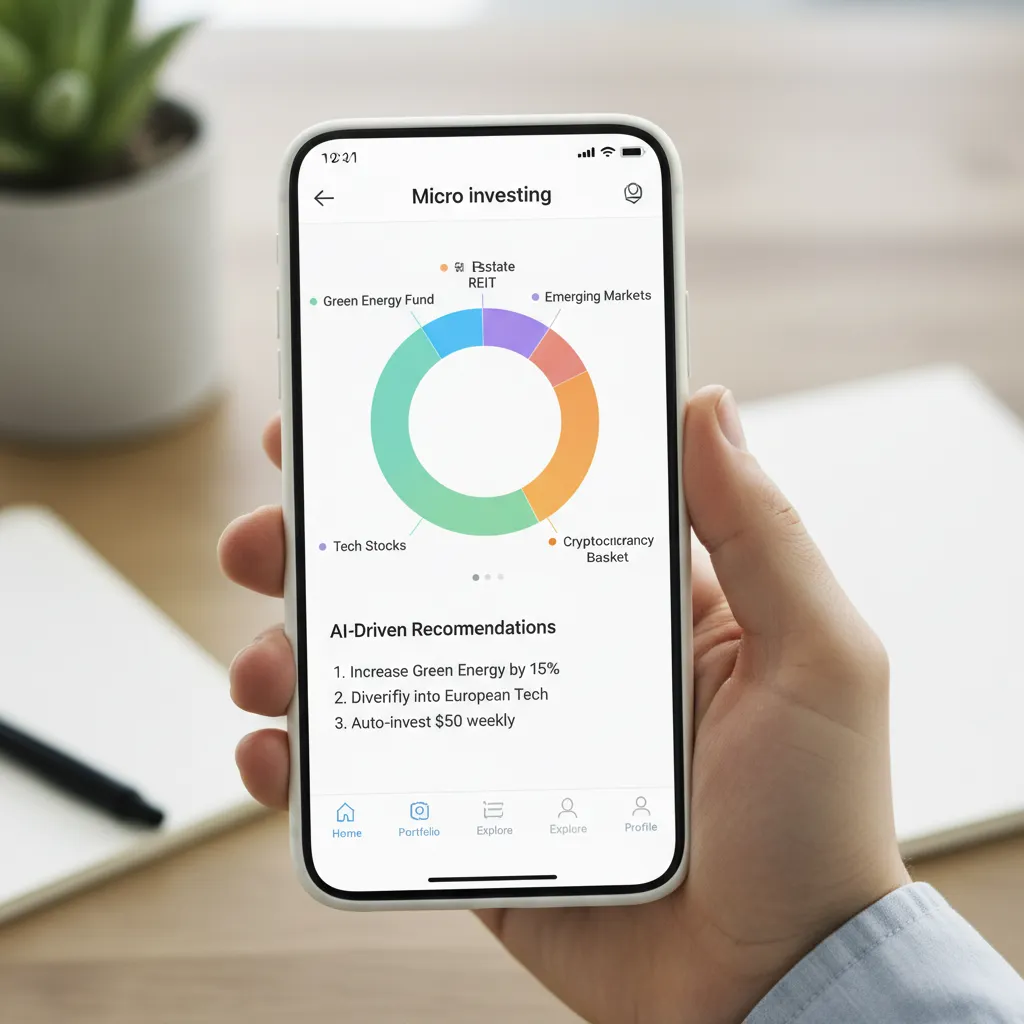
Modern AI for financial planning can analyze your spending habits (with your permission), income streams, and stated goals to offer highly tailored advice. It can suggest adjusting your savings rate, identify opportunities to cut back, and dynamically shift your investment strategy as your life changes. This focus on personalized investing ensures your financial plan evolves with you, whether you’re saving for a down payment or starting to think about retirement.
The Magic of Round-Ups: How AI Turns Spare Change into Assets
Perhaps the most ingenious application of micro savings AI is the “round-up” feature. It’s a brilliantly simple concept powered by smart technology.
When you link your debit or credit card to the app, it monitors your transactions. If you buy a coffee for $3.50, the app automatically rounds the purchase up to the nearest dollar ($4.00) and invests the $0.50 difference for you.

This frictionless method of saving money AI capitalizes on behavioral psychology. Each micro-investment is so small that you barely notice it, yet these cents quickly add up to significant sums over time. It’s a powerful tool for building an investment habit without having to consciously think about it.
Top AI-Powered Micro-Investing Platforms for the Next Generation
The market for digital investing platforms is booming, with each offering a unique spin on AI-powered wealth-building. While we won’t declare a single “best,” here are the types of platforms leading the charge and what they specialize in.
Platform Type 1: The All-in-One Robo-Advisor
- Examples: Betterment, Wealthfront
- Who they’re for: The “set it and forget it” investor who wants a fully managed, diversified portfolio.
- Key AI Features: These platforms are the pioneers of wealth management AI. Their algorithms handle everything from initial portfolio allocation to sophisticated strategies like tax-loss harvesting, which can help reduce your tax bill. They are a prime example of low fee investing AI, often charging a small percentage of your total assets under management.
Platform Type 2: The Round-Up & Fractional Share Pioneers
- Examples: Acorns, Stash
- Who they’re for: Absolute beginners who want to start investing with spare change and own pieces of their favorite companies.
- Key AI Features: Their core innovation is the AI-driven round-up system. They are also masters of fractional shares AI, making it possible to invest in hundreds of big-name stocks and ETFs with just a few dollars. This approach is key to democratizing investing for the masses.
Platform Type 3: The Social and Ethical Investing Innovators
- Examples: Public, Ellevest
- Who they’re for: Investors who want their money to align with their personal values.
- Key AI Features: Gen Z investing is often driven by a strong ethical compass. These platforms use AI to help you discover and invest in companies that match your values, whether it’s environmental sustainability, gender diversity, or social justice. Their algorithms can filter thousands of stocks to create portfolios focused on ethical AI investing and connect you with sustainable investing apps. Related: Eco-Smart Living: How AI is Building Sustainable Homes
Beyond the Basics: Advanced AI Features Shaping the Future of Investing
The influence of AI in finance is only just beginning. The future of investing will be even more intelligent, predictive, and integrated into our daily lives.
AI-Driven Financial Literacy and Education
A major challenge for new investors is a lack of knowledge. Leading platforms are tackling this head-on by integrating AI budgeting tools and educational resources. Imagine an AI chatbot that can answer your financial questions in plain English, provide personalized learning modules based on your activity, and celebrate your saving milestones. This commitment to improving financial literacy for Gen Z is crucial for building long-term confidence and success. Related: How AI Transforms Education and Future-Proofs Your Skills

Predictive Analytics and Market Sentiment Analysis
While no one can predict the future, advanced AI is getting better at identifying trends. Sophisticated algorithms can now perform sentiment analysis by scanning millions of data points—from news articles and financial reports to social media chatter—to gauge the market’s mood. While this is more common in institutional investing, elements of this technology are trickling down to retail platforms, offering users unique insights into market trends and company health.
Security and Fraud Detection with AI and Blockchain
With your financial data online, security is paramount. AI algorithms are the first line of defense, working 24/7 to detect unusual activity and prevent fraud on your account. Looking ahead, the combination of AI and blockchain technology promises an even more secure future. Blockchain’s decentralized and immutable ledger could provide unprecedented transparency and security for transactions, making the entire investing ecosystem more robust and trustworthy.

A Practical Guide: How to Get Started with AI Micro-Investing in 5 Steps
Ready to dive in? Getting started is easier than you think. Follow this simple, step-by-step guide to begin your journey toward building wealth.
Step 1: Define Your “Why” Before you download a single app, take a moment to define your financial goals. Are you saving for a down payment on a house? A new car? A travel fund? Or are you playing the long game for financial independence and Gen Z retirement? Having a clear goal will keep you motivated and help you choose the right platform.
Step 2: Choose the Right Platform for You Based on your goals and investment style, select an app.
- Want a completely hands-off experience? Go with a full-service robo-advisor.
- Nervous about committing? Start with a round-up app to test the waters.
- Passionate about social causes? Look for a platform with strong ESG (Environmental, Social, and Governance) options.
Step 3: Link Your Accounts and Set Up Contributions Securely link your primary checking account. This will be the source of your investment funds. Then, decide on your contribution method. We recommend enabling both:
- Round-Ups: To capture your spare change automatically.
- Recurring Deposits: A set amount (e.g., $5, $10, or $25) transferred weekly or monthly. This is the key to consistent growth.
Step 4: Determine Your Risk Tolerance The app will guide you through a short questionnaire to gauge your comfort with market ups and downs. Be honest with your answers. The AI will use this to build a portfolio that lets you sleep at night. Remember, if you have a longer time horizon (like most of Gen Z), you can generally afford to take on more risk for potentially higher returns.
Step 5: Stay Consistent and Think Long-Term The single most important rule of investing is to stay consistent. Don’t panic and sell when the market dips. Trust the process and the AI’s rebalancing strategy. Investment strategies for Gen Z should focus on time in the market, not timing the market. Let compound growth do its work over years, not days.
The Risks and Considerations: A Reality Check
While AI micro investing is a powerful tool, it’s essential to be aware of the realities and potential downsides.
- Market Risk is Real: AI cannot eliminate market volatility. The value of your investments will go up and down. Investing is a long-term strategy, and you should only invest money you won’t need in the short term.
- Fees Matter: While generally low, these platforms are not free. Understand the fee structure. Is it a flat monthly subscription (better for larger balances) or a percentage of your assets (better for smaller balances)?
- Over-reliance on Automation: These tools are fantastic for execution, but don’t let them become a substitute for financial education. Take the time to understand the basics of what you’re investing in.
- Data Privacy: You are trusting these apps with sensitive financial data. Ensure you choose reputable platforms with strong security measures like two-factor authentication and encryption.
Conclusion: The Future of Your Finances is Now
The days of investing being an opaque, inaccessible world are over. The powerful combination of artificial intelligence and micro-investing has fundamentally changed the landscape, placing the tools for wealth creation directly into the hands of Gen Z. By harnessing smart algorithms, you can automate your savings, access diversified portfolios, and invest in a way that aligns with your personal values.
This is more than just a technological trend; it’s a movement toward financial empowerment. The ability to build wealth young through consistent, small investments with AI is a paradigm shift that gives the next generation a crucial head start on achieving their long-term goals.
The future of finance is personalized, automated, and accessible. It’s in your pocket, waiting for you to take the first step. Start your journey today—your future self will thank you.
Frequently Asked Questions (FAQs)
Q1. Is micro-investing actually worth it?
Yes, absolutely. While individual contributions are small, the power of consistency and compound interest over many years can turn small, regular investments into a substantial nest egg. It’s an excellent way for beginners to build the habit of investing without taking on significant risk.
Q2. How does AI actually choose the investments?
AI in robo-advisors typically uses a strategy based on Modern Portfolio Theory. It builds a diversified portfolio using low-cost ETFs that track different sectors of the market (like US stocks, international stocks, and bonds). The AI’s job is to select the right mix of these ETFs based on your risk tolerance and automatically rebalance them to stay on target.
Q3. Can you lose money with AI-powered investing apps?
Yes. All investing involves risk, and AI does not eliminate it. If the overall stock market declines, the value of your portfolio will likely decline as well. However, the AI’s strategy of diversification and automated rebalancing is designed to manage that risk over the long term and avoid emotion-driven mistakes.
Q4. What’s the difference between a robo-advisor and a regular brokerage account?
A regular brokerage account (like Fidelity or Charles Schwab) is a DIY platform where you choose exactly which stocks, bonds, or funds to buy and sell. A robo-advisor does all of that work for you, managing your portfolio automatically based on an algorithm, making it ideal for those who prefer a hands-off approach.
Q5. Are AI investing apps safe and secure?
Reputable AI investing apps in the United States are highly regulated. They are typically members of the Securities Investor Protection Corporation (SIPC), which protects your securities up to $500,000 in the event the brokerage firm fails. They also use bank-level security and encryption to protect your personal data.
Q6. How much money do I need to start with AI micro-investing?
Most micro-investing platforms are designed for you to start with as little as $1 or $5. Many have no account minimums at all, making them incredibly accessible for anyone who wants to begin their investing journey.