AI in the Kitchen: Reshaping the Future of Food & Gastronomy

Introduction
Imagine a world where your refrigerator suggests meals based on your dietary needs, available ingredients, and even your mood. Picture chefs crafting entirely new flavor profiles with algorithmic precision, or farms producing perfect produce with minimal waste. This isn’t science fiction; it’s the rapidly evolving reality of AI in the kitchen, fundamentally reshaping the future of food & gastronomy.
From the vast fields where our ingredients begin their journey to the intricate dance of a Michelin-starred kitchen, Artificial Intelligence is permeating every aspect of the food ecosystem. This isn’t just about automation; it’s about intelligence, optimization, and personalization on an unprecedented scale. As consumers, chefs, and industry leaders, understanding this transformation is crucial. We’re on the cusp of a culinary revolution, driven by AI food tech that promises to enhance efficiency, reduce waste, improve safety, and unlock entirely new gastronomic experiences. In this deep dive, we’ll explore how AI is redefining everything from AI recipe generation and smart kitchen AI to personalized nutrition AI and the broader culinary AI trends that are setting the stage for tomorrow’s dining table.
The Dawn of AI Food Tech: A Culinary Revolution
The integration of AI into the food sector is more than just a passing trend; it’s a foundational shift. AI food tech encompasses a broad spectrum of applications, from sophisticated algorithms analyzing market demands to robotic systems perfecting food preparation. This convergence of cutting-edge technology and ancient human necessity is creating a dynamic landscape where innovation thrives.
Historically, food production and preparation have relied on human intuition, experience, and manual labor. While these elements remain invaluable, AI introduces a layer of data-driven insight and precision that was previously unimaginable. This means everything from predicting crop yields with greater accuracy to designing hyper-customized meal plans for individuals. The goal isn’t to replace human creativity but to augment it, providing tools that empower us to create, manage, and consume food in smarter, more sustainable, and more enjoyable ways. The future of food AI isn’t just about efficiency; it’s about unlocking potential and addressing some of the most pressing global challenges related to food security, health, and environmental impact.
From Farm to Fork: AI’s Impact Across the Food Value Chain
The journey of food, from its origin in the soil to its placement on our plates, is complex and multifaceted. AI is streamlining and optimizing every single step, creating a more interconnected and efficient food value chain.
Revolutionizing Agriculture: Smart Farming and Vertical Farms
The foundation of our food supply begins in agriculture. Here, AI in agriculture is proving to be a game-changer, moving us towards smarter, more sustainable farming practices. AI-powered sensors and drones monitor crop health, soil conditions, and irrigation needs with unparalleled precision. This data allows farmers to apply water, fertilizer, and pesticides only where and when necessary, significantly reducing resource consumption and environmental impact. Predictive analytics can forecast weather patterns and pest outbreaks, enabling proactive measures that save crops and livelihoods.
Furthermore, the rise of vertical farming AI is transforming urban agriculture. These indoor, multi-layered farms leverage AI to control every environmental variable – light, temperature, humidity, and nutrients – creating optimal growing conditions year-round, regardless of external climate. AI algorithms manage hydroponic or aeroponic systems, detect nutrient deficiencies, and even optimize plant spacing for maximum yield in minimal space. This approach not only brings fresh produce closer to urban consumers but also drastically reduces water usage and eliminates the need for vast tracts of land.
Intelligent Food Processing and Supply Chain Optimization
Once harvested, food enters a complex world of processing, packaging, and distribution. AI food processing solutions are enhancing efficiency and consistency. Machine vision systems can inspect produce for quality defects at speeds impossible for human eyes, sorting items based on ripeness, size, and blemishes. This reduces manual labor and ensures only high-quality products move forward.
The supply chain, often riddled with inefficiencies, is another area where AI shines. Food delivery AI and broader AI in food industry applications are optimizing logistics, route planning, and inventory management. AI algorithms analyze traffic patterns, delivery demand, and warehouse stock levels to minimize transportation costs, reduce delivery times, and prevent spoilage. This leads to fresher products reaching consumers faster and significantly lowers the carbon footprint associated with food distribution. Companies are leveraging AI to predict demand fluctuations, ensuring that shelves are stocked appropriately, and waste from overstocking is minimized.
Enhancing Food Safety and Quality Assurance
Food safety is paramount, and AI is adding an extra layer of vigilance that traditional methods simply cannot match. AI food safety systems utilize sensors and image recognition to detect contaminants, pathogens, and spoilage at various stages of production. For instance, AI-powered cameras can identify foreign objects on production lines or spot early signs of bacterial growth in packaged goods.
Beyond immediate safety, AI ingredient analysis is helping companies ensure the quality and authenticity of their products. AI can quickly verify the origin and composition of ingredients, guarding against fraud and ensuring compliance with labeling standards. This not only protects consumers but also helps maintain brand integrity and trust in an increasingly complex global food market. By analyzing vast datasets, AI can even predict potential contamination risks based on historical data and environmental factors, allowing for proactive interventions.
AI in the Kitchen: Transforming Cooking and Gastronomy
The most tangible impact of AI for many of us will be felt directly in our kitchens and dining experiences. Here, AI is not just assisting; it’s inspiring, personalizing, and revolutionizing AI in cooking.
Smart Kitchens and Appliances: The Connected Culinary Hub
The concept of the “smart home” has extended robustly into the kitchen, creating connected culinary hubs powered by smart kitchen AI. Imagine refrigerators that track inventory, suggest recipes based on what’s available, and even order groceries when supplies run low. These intelligent appliances integrate seamlessly with smart ovens and other devices, preheating themselves when you leave work or adjusting cooking times based on the precise weight of the food.
/smart-fridge-meal-planning-102.webp

Voice-activated AI assistants guide you step-by-step through recipes, convert measurements, and set timers, freeing your hands for the actual cooking. This level of integration transforms the kitchen into a truly intuitive space, making precision cooking AI accessible to home cooks and alleviating some of the daily meal planning stress. [Related: Mastering AI Workflow: Productivity & Automation]
AI Recipe Generation and Menu Optimization
One of the most exciting applications of Gastronomy AI is in the realm of creativity itself: AI recipe generation. Algorithms can analyze vast databases of recipes, ingredients, and flavor profiles to create entirely new dishes, or adapt existing ones to specific dietary requirements or ingredient availability. For professional chefs, this offers an unparalleled tool for inspiration, allowing them to experiment with novel combinations and textures.
In restaurants, AI menu optimization goes beyond just suggesting dishes. AI can analyze customer preferences, sales data, ingredient costs, and even local trends to design menus that maximize profitability and customer satisfaction. It can predict which dishes will be popular, suggest ideal pricing, and even recommend daily specials based on ingredient availability and seasonality. This data-driven approach allows restaurants to be more agile, responsive, and ultimately, more successful. This also contributes to AI food discovery, helping both chefs and consumers explore new culinary horizons. [Related: The Rise of AI Copilots: Revolutionizing Work, Boosting Creativity, Driving Innovation]
The Rise of AI Chef Assistants and Robotic Kitchens
While the image of a robot flipping burgers might seem futuristic, robotic kitchens are already a reality in some commercial settings. These systems can perform repetitive tasks with incredible speed and consistency, from chopping vegetables to assembling complex dishes. An AI chef assistant can manage multiple cooking stations, monitor temperatures, and ensure dishes are cooked to perfection every time.
/robotic-chef-plating-gourmet-849.webp
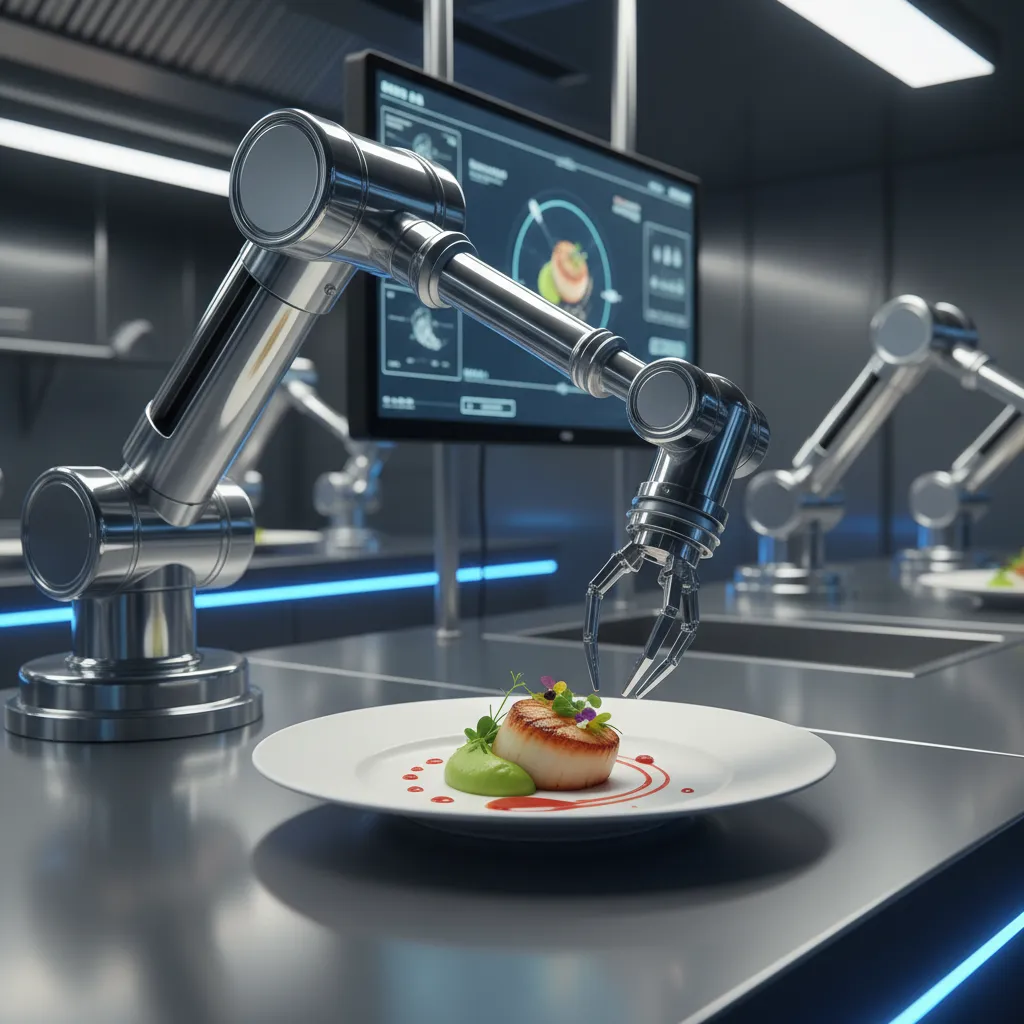
For high-volume establishments, restaurant AI solutions offer significant benefits in terms of labor efficiency, consistency, and reduced waste. While the human touch of a chef remains irreplaceable for creative fine dining, AI and robotics handle the grunt work, freeing up human talent to focus on innovation, artistry, and customer experience. These systems are also crucial for maintaining hygienic standards and precision in fast-paced environments.
Precision Cooking and Taste Analysis
Precision cooking AI takes the guesswork out of culinary execution. Smart ovens equipped with AI can learn your cooking preferences, adjust temperatures and times dynamically, and even recognize different food items to ensure they are cooked perfectly. Imagine an oven that knows exactly when your steak is medium-rare or your bread is perfectly golden brown.
Beyond temperature and time, AI taste analysis is an emerging field. AI models are being trained to understand and predict flavor interactions. By analyzing the chemical composition of ingredients and cross-referencing with vast databases of human taste preferences, AI can suggest ingredient pairings, seasoning adjustments, and even identify potential flavor clashes. This has profound implications for food product development, allowing companies to create new snacks, beverages, and meals that appeal to specific consumer tastes with greater accuracy and less trial and error.
Personalized Nutrition and Dietary Wellness Powered by AI
One of the most impactful applications of AI in our daily lives is in the realm of health and wellness, specifically through personalized nutrition AI. The concept that “one size fits all” for diet is rapidly becoming obsolete. AI takes individual health data – including genetics, microbiome analysis, activity levels, allergies, and lifestyle – to create highly customized dietary recommendations.
This level of AI food personalization means tailored meal plans, ingredient suggestions, and even shopping lists that align precisely with an individual’s unique biological needs and health goals, whether it’s weight management, athletic performance, or managing chronic conditions. Apps and devices leverage AI food research to provide real-time feedback on nutrient intake, suggest healthier alternatives, and track progress towards dietary objectives. [Related: Unlock Your Best Self: AI-Powered Personalized Nutrition & Fitness for Optimal Health]
/personalized-food-cafe-experience-305.webp

This shift from generalized dietary advice to hyper-individualized guidance is revolutionizing how we approach health. It empowers individuals with actionable insights, making healthy eating not just a goal, but a truly personalized and achievable journey. Imagine stepping into a cafe where an AI already knows your preferences and dietary restrictions, offering you a perfectly balanced and delicious meal tailored just for you.
Addressing Global Challenges: Sustainability and Food Waste with AI
Beyond individual convenience, AI is a powerful ally in tackling some of humanity’s most pressing global challenges related to food: waste and sustainability.
AI food waste reduction is a critical area. Globally, a staggering one-third of all food produced for human consumption is lost or wasted. AI helps address this at multiple points:
- Predictive Demand: In retail and hospitality, AI analyzes sales data, seasonality, and events to predict demand more accurately, reducing over-ordering and subsequent waste from unsold perishable goods.
- Inventory Management: Smart inventory systems track stock levels and expiration dates, alerting businesses when items need to be used or sold, thus minimizing spoilage.
- Optimal Storage: AI-controlled storage facilities maintain optimal temperature and humidity, extending the shelf life of produce.
- Consumer Solutions: Apps can help consumers manage their home inventory, suggest recipes for ingredients nearing expiration, and even connect them with food banks for donations.
Furthermore, sustainable food AI is driving innovation across the entire ecosystem. From optimizing resource use in farming (as discussed earlier) to designing more efficient and eco-friendly food processing techniques, AI is central to building a more sustainable food future. Food innovation AI is leading to the development of alternative proteins, lab-grown meats, and new plant-based ingredients with a lower environmental footprint. [Related: Sustainable Investing: Grow Wealth & Impact the Future]
/ai-sustainable-food-science-lab-777.webp

By providing data-driven insights and automating complex processes, AI empowers us to make more informed decisions that reduce environmental impact and ensure food security for a growing global population. The goal is to create a closed-loop system where waste is minimized, resources are conserved, and food production is harmonized with the planet’s health.
The Future Landscape: Culinary AI Trends and Beyond
The journey of AI in food and gastronomy is still in its early stages, yet the future of food AI looks incredibly promising. We can expect even more sophisticated integration and groundbreaking developments in the coming years.
Some key culinary AI trends and food tech trends 2024 and beyond include:
- Hyper-Personalized Dining Experiences: Beyond just nutrition, AI will cater to taste preferences, mood, and even social contexts to recommend or create truly unique dining experiences. Imagine restaurants where every dish is subtly tweaked by AI to perfectly match each diner’s palate.
- Ethical AI and Transparency: As AI becomes more pervasive, there will be increased focus on ensuring its ethical deployment, particularly regarding data privacy in personalized nutrition and fairness in AI-driven agricultural decisions. Transparency in how AI makes recommendations or processes food will become crucial.
- Advanced Sensory AI: AI’s ability to “taste” and “smell” will improve dramatically, leading to more accurate flavor creation, quality control, and even the ability to recreate lost or historical food flavors.
- Biotech Integration: The convergence of AI with biotechnology will accelerate, leading to faster development of novel ingredients, disease-resistant crops, and optimized fermentation processes for food production.
- Adaptive Robotics: Robotic kitchens will become more adaptable and capable of handling a wider array of complex culinary tasks, potentially moving beyond commercial settings into more sophisticated home applications.
- Enhanced Food Accessibility: AI could play a role in addressing food deserts by optimizing food distribution and supporting localized, hyper-efficient food production systems in underserved areas.
While the potential is vast, it’s essential to consider the human element. The role of the chef will evolve, shifting from manual labor to curating AI-driven insights and infusing dishes with artistry and soul that only a human can provide. The future kitchen won’t be devoid of humans; it will be a collaborative space where human creativity and AI efficiency work hand-in-hand to elevate the culinary experience.
Conclusion
The journey of AI in the kitchen: reshaping the future of food & gastronomy is an exciting and transformative one. We’ve explored how AI food tech is revolutionizing every step, from intelligent farming and efficient processing to personalized nutrition and sustainable practices. From AI recipe generation to the precision of robotic kitchens, AI is not just changing how we cook, but fundamentally altering our relationship with food.
As we look ahead, the continuous evolution of culinary AI trends promises a future where food is safer, more accessible, less wasteful, and profoundly personalized. It’s a future where chefs are empowered with new tools, where home cooks enjoy unparalleled convenience, and where global food challenges are met with innovative, data-driven solutions. Embrace this new era of gastronomy, where technology and taste converge to create a healthier, more delicious, and sustainable world for all.
FAQs
Q1. What is AI food tech?
AI food tech refers to the application of artificial intelligence across the entire food ecosystem, from agriculture and processing to cooking, consumption, and waste management. It encompasses technologies like machine learning, computer vision, and robotics to optimize processes, personalize experiences, and solve challenges within the food industry.
Q2. How is AI transforming the culinary industry?
AI is transforming the culinary industry by enabling smart kitchen appliances, powering AI recipe generation, optimizing restaurant menus, assisting chefs with precision cooking, and even operating robotic kitchens. It enhances efficiency, consistency, and allows for greater creativity and personalization in food preparation and service.
Q3. Can AI personalize my diet?
Yes, personalized nutrition AI is one of the most significant applications. AI analyzes individual data such as genetics, health metrics, activity levels, and dietary preferences to create highly customized meal plans and recommendations, helping individuals achieve specific health and wellness goals.
Q4. How does AI help with food waste?
AI significantly helps with AI food waste reduction by improving demand forecasting, optimizing inventory management, enhancing storage conditions, and developing consumer-facing applications that help manage food at home, all of which minimize spoilage and unnecessary disposal.
Q5. Are robotic kitchens common today?
While not yet ubiquitous, robotic kitchens are becoming increasingly common, particularly in commercial and fast-casual dining settings. They excel at repetitive tasks, ensuring consistency and efficiency, and are expected to grow in prevalence as the technology advances and becomes more affordable.
Q6. What are the benefits of AI in food safety?
AI in food safety provides numerous benefits, including the rapid detection of contaminants and pathogens through machine vision, verification of ingredient authenticity, and predictive analysis to identify potential risks in the supply chain. This leads to safer food products and greater consumer trust.
Q7. How is AI used in agriculture for food production?
In agriculture, AI is used for smart farming to monitor crop health, soil conditions, and irrigation needs with precision, optimizing resource use. It also drives vertical farming AI by controlling indoor growing environments, leading to higher yields and reduced water consumption.
Q8. What are the ethical considerations of AI in food?
Ethical considerations for AI in food include data privacy related to personalized nutrition, ensuring fairness in AI-driven agricultural resource allocation, the potential impact on human employment in the food industry, and ensuring transparent and unbiased algorithmic decision-making.