AI in Gaming: Revolutionizing Worlds, Players, and Development
Introduction: The Dawn of a New Era in Interactive Entertainment
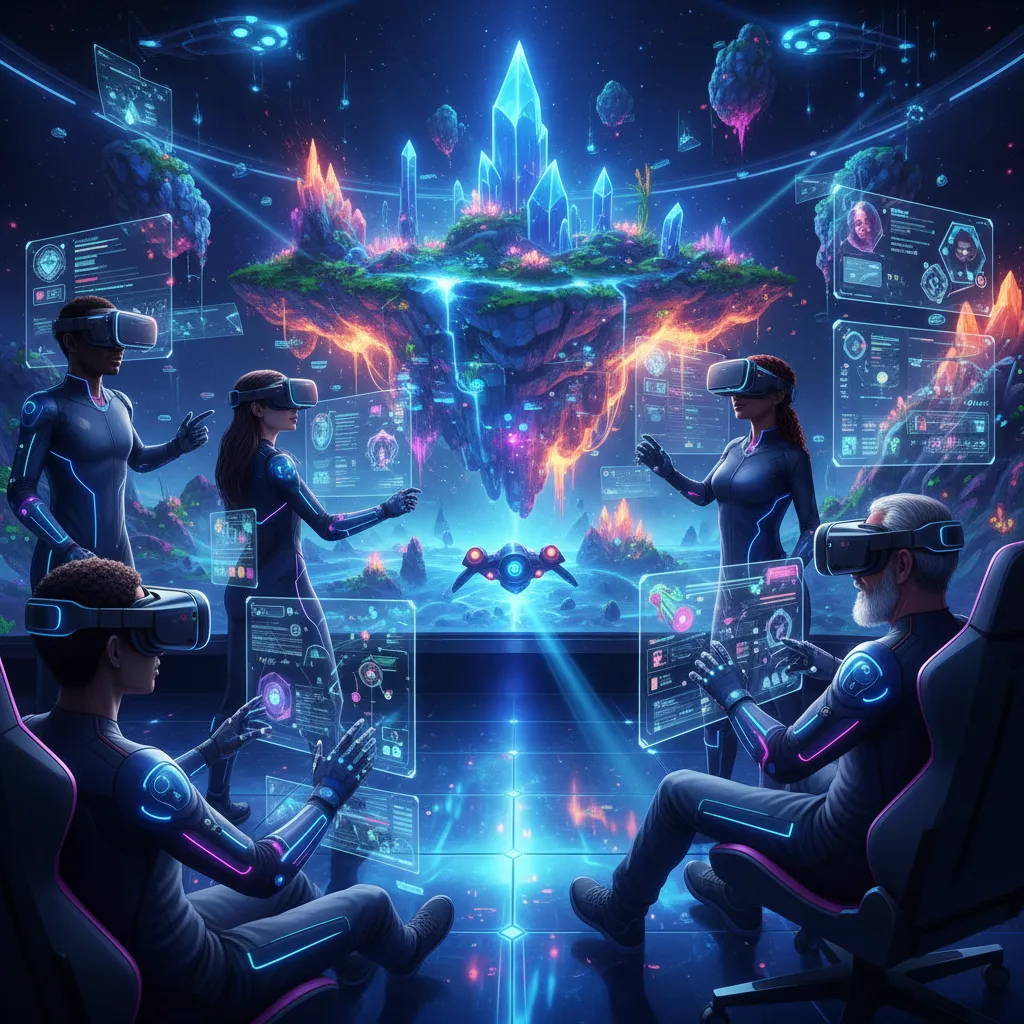
The gaming industry stands at the precipice of its most profound transformation yet, driven by the relentless advancement of Artificial Intelligence in games. Far from being a mere buzzword, AI gaming is reshaping every facet of interactive entertainment, from the intelligent foes we face to the vast, evolving worlds we explore. Once limited to predictable patterns and scripted responses, game AI development has evolved to create dynamic, responsive, and deeply personalized experiences that were once the stuff of science fiction.
This comprehensive guide delves into the intricate ways AI in gaming is not just enhancing, but fundamentally revolutionizing digital worlds, player interactions, and the very process of game creation. We’ll explore how cutting-edge machine learning in gaming is powering everything from hyper-realistic NPC behavior AI to stunning procedural content generation AI, crafting personalized gaming experiences that adapt to individual playstyles. Join us as we uncover the current impact, future potential, and ethical considerations surrounding this thrilling fusion of technology and creativity, paving the way for a future where every game is an intelligent, evolving ecosystem.
The Pillars of AI in Modern Gaming
Artificial intelligence isn’t a singular entity within games; rather, it’s a multifaceted discipline that contributes to various core components, dramatically elevating the overall experience. Let’s explore the key areas where AI is making its indelible mark.
Intelligent Non-Player Characters (NPCs): Beyond the Script
For decades, NPCs (Non-Player Characters) were often ridiculed for their simplistic routines and predictable behaviors. Today, NPC behavior AI has transcended these limitations, powered by sophisticated algorithms that mimic human-like intelligence, decision-making, and even emotions.
Crafting Realistic Interactions and Dynamic Foes
Modern game AI development allows NPCs to:
- Adapt to Player Actions: NPCs can now observe player strategies, learn from their movements, and adjust their tactics in real-time. This adaptive game AI creates more challenging and unpredictable adversaries, ensuring no two encounters are exactly alike.
- Exhibit Complex Personalities: From friendly shopkeepers with distinct conversational quirks to formidable bosses with evolving attack patterns, AI is breathing life into digital characters, making them feel more like conscious entities than mere code.
- Engage in Realistic Social Dynamics: In open-world RPGs, NPCs powered by advanced AI can have their own schedules, relationships, and reactions to events unfolding in the game world, fostering a deeper sense of immersion.
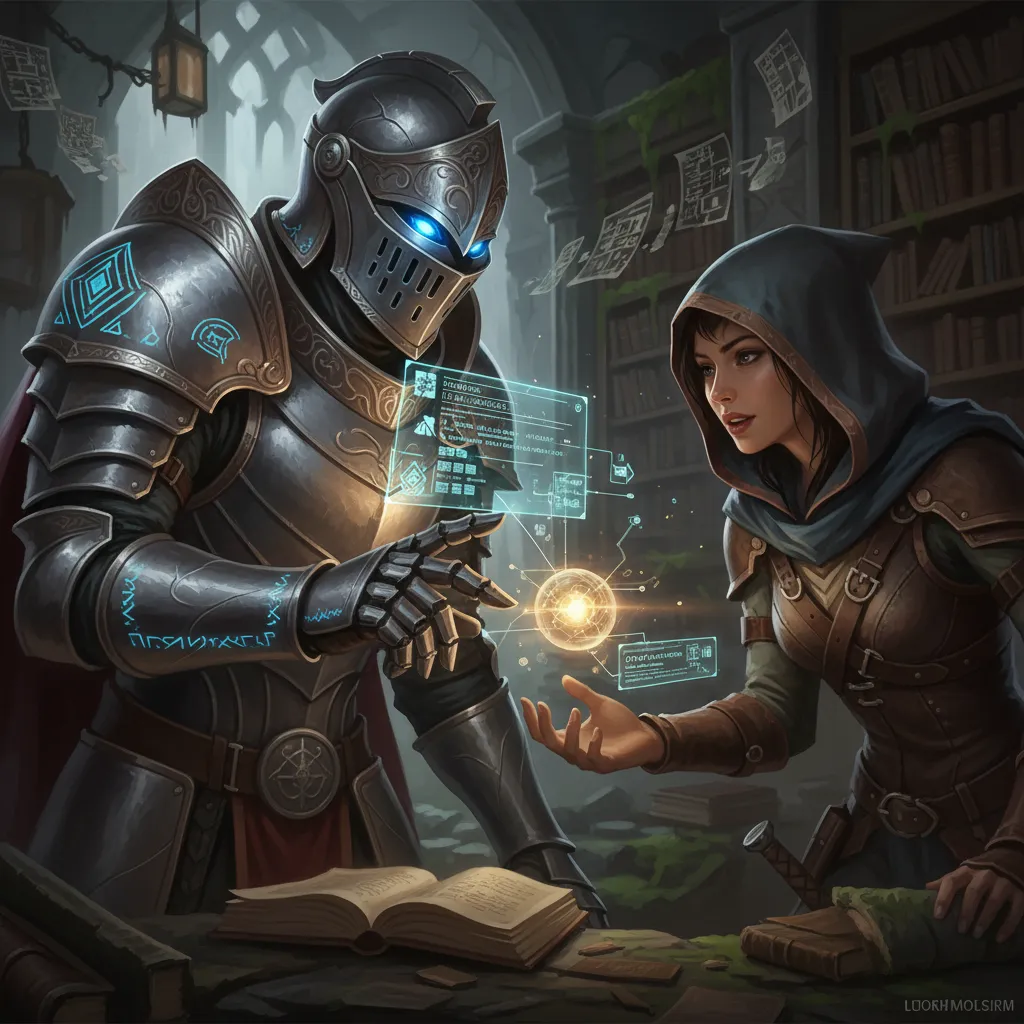
Consider the advanced AI character creation and decision-making systems in titles like Red Dead Redemption 2 or The Last of Us Part II, where companions and enemies alike demonstrate surprising levels of tactical awareness and emotional depth. This leap in immersive gaming AI transforms simple interactions into meaningful narrative moments.
Procedural Content Generation (PCG): Infinite Worlds at Our Fingertips
One of the most revolutionary applications of AI in gaming is procedural content generation AI. Instead of relying solely on human designers to craft every tree, mountain, or dungeon, AI algorithms can dynamically generate vast and unique game assets, environments, and even quests.
Building Expansive and Ever-Changing Game Worlds
PCG, driven by generative AI gaming, allows developers to:
- Create Massive Worlds: Imagine planets, solar systems, or sprawling dungeons that are uniquely generated for each playthrough, offering limitless exploration. Games like No Man’s Sky showcase the incredible potential of AI to create entire universes.
- Reduce Development Time and Cost: Manually creating vast quantities of assets is incredibly resource-intensive. AI can automate much of this process, freeing up human designers to focus on fine-tuning core mechanics and narrative elements.
- Ensure Replayability: With new content generated each time, the element of surprise remains fresh, encouraging players to revisit games repeatedly. This contributes significantly to gaming innovation AI.

The impact of PCG is particularly evident in sandbox games, roguelikes, and titles aiming for truly AI powered virtual worlds, offering unparalleled scale and variety. This technique is a game-changer for game design with AI, pushing the boundaries of what’s possible in terms of scope and dynamic environments.
Adaptive Game AI: Tailoring Experiences to Every Player
No two players are exactly alike. Some prefer a brutal challenge, while others seek a more relaxed narrative experience. Adaptive game AI utilizes machine learning in gaming to observe player behavior, identify preferences, and dynamically adjust game elements to create a truly personalized gaming experience.
From Dynamic Difficulty to Tailored Content
Player experience AI in this domain manifests in several ways:
- Dynamic Difficulty Adjustment: AI can subtly increase or decrease enemy strength, resource availability, or puzzle complexity based on a player’s performance, ensuring an optimal challenge level. This avoids frustrating roadblocks for new players and keeps veterans engaged.
- Personalized Recommendations and Content: Imagine an AI that suggests side quests based on your playstyle, character build, or even your past dialogue choices. This moves beyond simple recommendations to deeply integrated, tailored content.
- Emotional AI: Emerging AI game mechanics are exploring how AI can interpret player emotions (via biometrics or gameplay patterns) and adjust the game’s atmosphere, music, or narrative beats accordingly. This creates truly interactive AI games that respond to your state of mind.
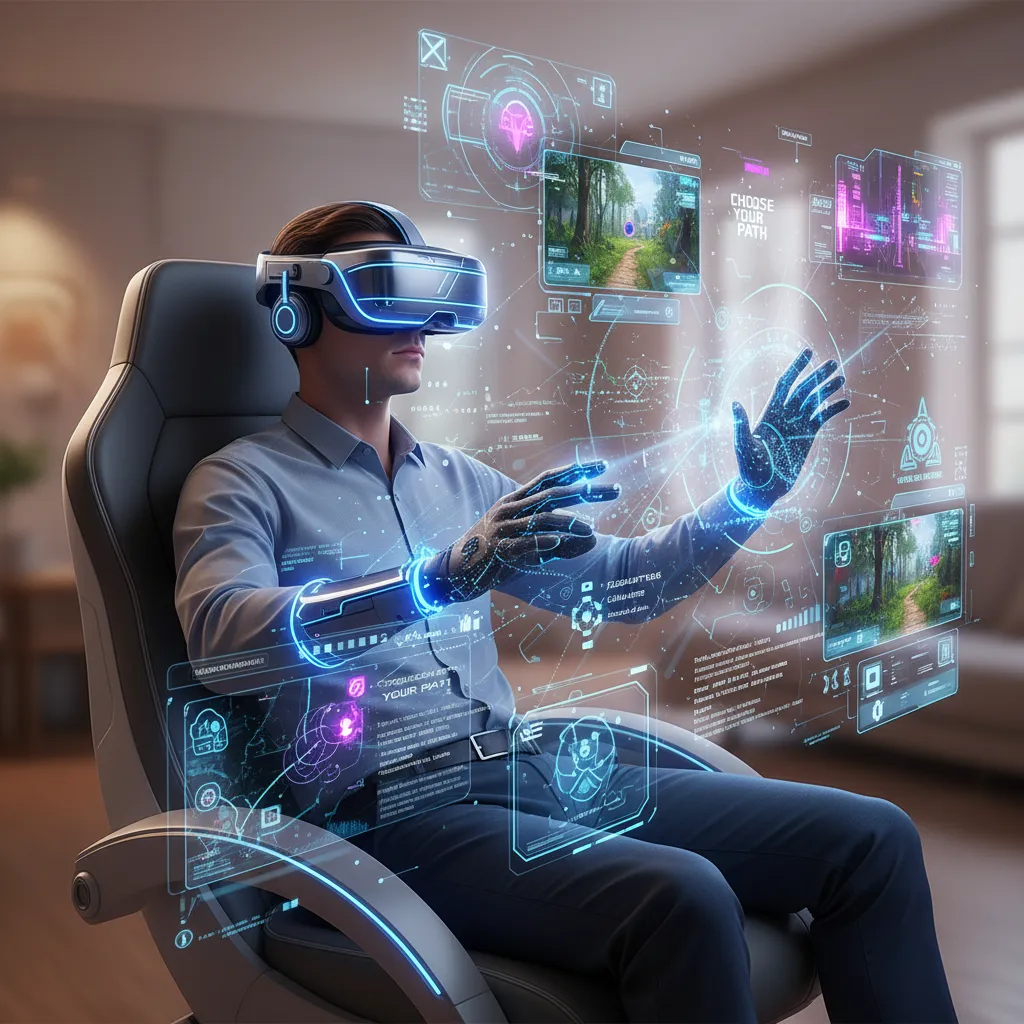
This level of personalization, deeply rooted in deep learning game AI, promises to make every playthrough feel unique and catered specifically to the individual. For more on the power of personalization, consider how AI is transforming other aspects of life, such as in AI-powered personalized nutrition and fitness.
AI’s Transformative Impact on Players and Worlds
Beyond the foundational mechanics, AI significantly enhances how players interact with games and how game worlds evolve. It’s about creating deeper connections, more challenging scenarios, and entirely new forms of entertainment.
Enhanced Gameplay and Immersive Storytelling
The goal of any great game is to transport the player to another reality. AI enhanced gameplay is crucial in achieving this, making game worlds feel more alive, reactive, and compelling.
AI-Driven Game Narratives and Emotional Depth
Traditional game narratives are often linear or branching along predetermined paths. However, AI-driven game narratives are introducing unprecedented levels of dynamism:
- Dynamic Storytelling: AI can analyze player choices and emergent gameplay to weave unique storylines on the fly, reacting to player actions in ways that feel organic and consequential.
- Character Development: NPCs can remember past interactions, hold grudges, or form alliances based on player behavior, influencing their future roles in the narrative.
- Emergent Lore: In open-world AI powered virtual worlds, AI can generate local events, rumors, and mini-narratives that contribute to the game’s overarching lore, making the world feel like it has its own history and ongoing events.
This level of detail, driven by gaming innovation AI, ensures a more engaging and emotionally resonant experience. The ability of AI to adapt and generate content on the fly contributes significantly to immersive gaming AI.
AI in Esports and Competitive Gaming
The competitive gaming scene, or esports, is a high-stakes arena where skill and strategy reign supreme. AI is not only influencing player training but also changing how games are designed and balanced for competitive play.
Training, Analysis, and Fair Play
AI in esports plays several critical roles:
- Training Bots: Highly sophisticated AI bots can emulate professional player strategies, offering invaluable sparring partners for human players to hone their skills. These are far beyond the simple bots of yesteryear.
- Performance Analysis: Machine learning algorithms can analyze vast amounts of match data, identifying player strengths, weaknesses, and optimal strategies. This provides coaches and players with actionable insights to improve performance.
- Anti-Cheat Systems: AI is being deployed to detect and prevent cheating more effectively, ensuring a level playing field and preserving the integrity of competitive play.
- Commentary and Spectator Experience: AI can even generate dynamic commentary or highlight reels, enhancing the spectator experience for viewers.
The application of deep learning game AI in this sector ensures that the competitive edge is sharpened, and the integrity of the sport is maintained.
Behind the Scenes: AI Revolutionizing Game Development
The impact of AI isn’t limited to what players see on screen; it’s also profoundly transforming the very craft of creating games. Game development AI tools are empowering developers to be more efficient, creative, and innovative.
Streamlining Production with AI Game Development Tools
The development cycle for modern games is incredibly complex and resource-intensive. AI is stepping in to automate tedious tasks, accelerate content creation, and improve overall efficiency.
From Asset Creation to Quality Assurance
Game AI development leveraging AI tools includes:
- Automated Asset Generation: Beyond PCG for environments, AI can assist in generating textures, character models, animations, and even sound effects, significantly speeding up production.
- AI for Game Testing: One of the most laborious parts of game development is testing. AI can simulate countless play sessions, identifying bugs, glitches, and balancing issues far more rapidly and thoroughly than human testers alone. This AI for game testing is invaluable for ensuring a polished final product.
- Code Optimization: AI can analyze game code to identify inefficiencies and suggest optimizations, leading to smoother performance and reduced processing demands. This is critical for AI game optimization.
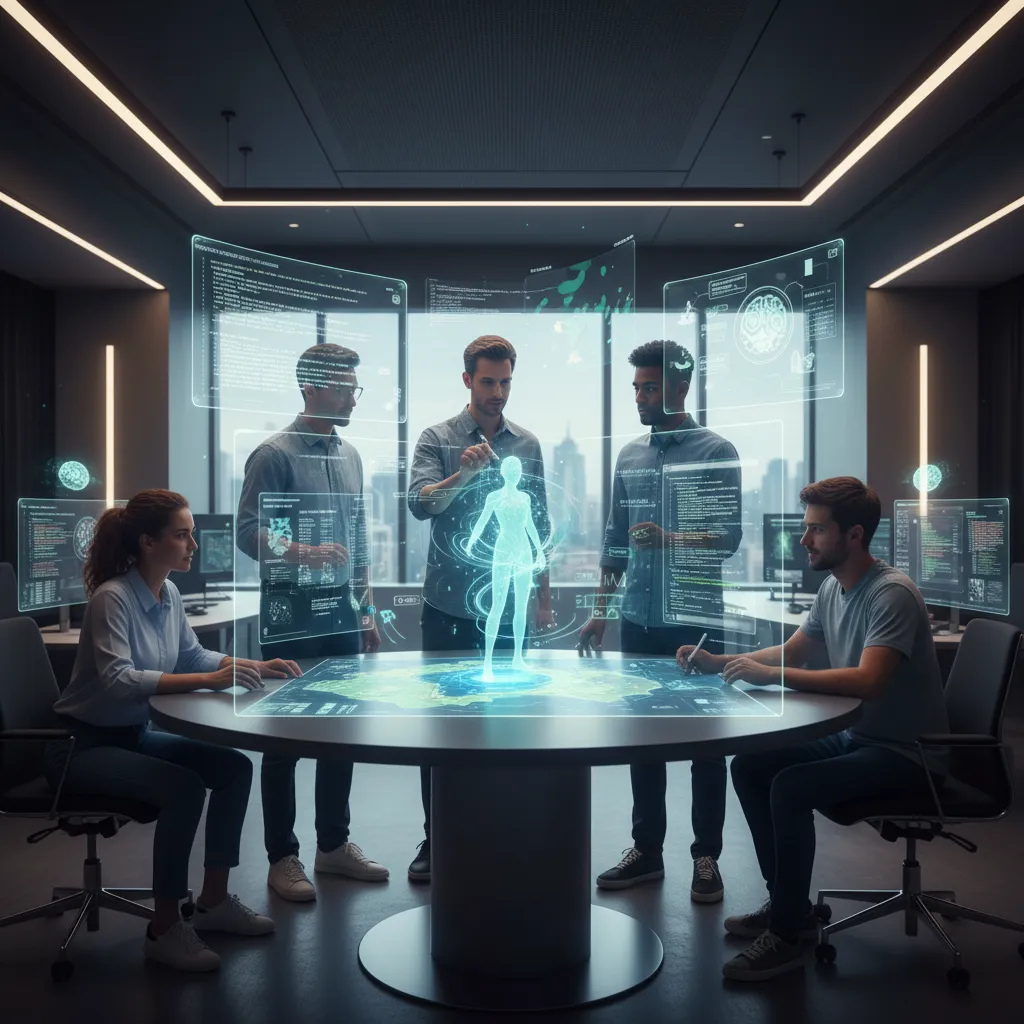
These tools are not replacing human creativity but rather augmenting it, allowing developers to focus on the truly artistic and innovative aspects of game design with AI. For those interested in how AI tools are enhancing various industries, explore the top AI tools for small business success.
The Power of Machine Learning and Deep Learning in Games
At the heart of many advanced AI functionalities in gaming lies machine learning in gaming and deep learning game AI. These subfields of AI allow systems to learn from data, identify patterns, and make decisions without explicit programming for every scenario.
Learning, Adapting, and Evolving
- Reinforcement Learning: This branch of ML is particularly potent in game AI development. AI agents learn by trial and error, receiving rewards for desirable actions and penalties for undesirable ones. This is how AI can learn to play complex games, often surpassing human capabilities.
- Neural Networks: Deep learning, utilizing neural networks, is behind many breakthroughs in AI character creation, realistic animation, and even predictive player behavior models.
- AI Game Engines: Modern AI game engines are increasingly integrating machine learning frameworks, making it easier for developers to implement sophisticated AI behaviors without building them from scratch. This democratizes access to advanced AI for a wider range of studios.
The constant evolution of these technologies ensures that the capabilities of Artificial intelligence in games will continue to expand at a rapid pace.
The Future of Gaming AI: Frontiers and Ethical Considerations
As powerful as AI is, its integration into gaming also raises important questions and opens up new avenues for innovation. The journey of future of gaming AI is not just about technological advancement, but also about responsible development.
Generative AI and Hyper-Realistic Worlds
The current wave of generative AI gaming is just the beginning. We are moving towards a future where AI can create entire game assets, characters, and even narrative segments from simple prompts, blurring the lines between creation and automation.
Beyond Procedural: Truly Dynamic and Evolving Content
- AI Character Creation: Imagine not just unique faces, but fully realized character backstories, personalities, and voice acting generated by AI, all fitting seamlessly into the game’s lore.
- Dynamic Music and Soundscapes: AI could compose soundtracks and sound effects in real-time, adapting to the player’s actions, emotional state, and the in-game environment, creating truly immersive gaming AI.
- AI Powered Virtual Worlds: Future games could be truly emergent, with AI systems continually generating new quests, events, and world changes, ensuring that a game world is never truly “finished” but constantly evolving. This makes for endlessly interactive AI games.
This ongoing innovation in gaming innovation AI will redefine expectations for digital experiences. The potential for AI in casual games and AI for serious games to deliver unique, unbounded experiences is immense.
Ethical AI in Gaming: Navigating the New Frontier
With great power comes great responsibility. As AI becomes more sophisticated in games, ethical considerations become paramount. Ethical AI in gaming addresses issues of fairness, bias, player well-being, and transparency.
Addressing Bias, Player Manipulation, and Creative Control
- Bias in AI: If AI is trained on biased data, it can perpetuate harmful stereotypes in character design, narrative choices, or even gameplay mechanics. Ensuring diverse and unbiased training data is crucial.
- Player Manipulation: Personalized gaming experience could, if unchecked, lead to manipulative tactics, keeping players engaged in unhealthy ways or pushing them towards microtransactions. Transparency and player control over AI personalization settings will be vital.
- Algorithmic Transparency: Understanding why an AI made a certain decision can be challenging. Developers need to consider how to make AI behaviors more transparent, especially when AI influences crucial game outcomes or narratives.
- Job Displacement vs. Augmentation: While AI automates some tasks, it also creates new roles. The discussion must shift to how AI augments human creativity rather than replacing it entirely.
- Privacy and Data Security: As games collect more data to fuel AI, questions about player privacy and how this data is stored and used become critical. This aligns with broader concerns about smart home security and privacy in the AI era.
Ensuring sustainable AI and ethical practices is not just good for business; it’s essential for the long-term health and reputation of the gaming industry. Discussions around eco-friendly innovation in a greener digital future are increasingly relevant to this evolving landscape.
Conclusion: The Infinite Playfield of AI-Powered Gaming
The journey of AI in gaming is a testament to human ingenuity and the boundless possibilities that emerge when technology and creativity converge. From designing more believable NPC behavior AI to generating sprawling, unique worlds through procedural content generation AI, and delivering truly personalized gaming experiences with adaptive game AI, artificial intelligence is not merely a tool – it is a co-creator, an architect, and an enhancer of our digital playgrounds.
The future promises even more astonishing advancements, with generative AI gaming pushing the boundaries of what virtual worlds can be, and deep learning game AI creating experiences that learn and evolve alongside us. However, this revolution also calls for vigilance, urging us to embrace ethical AI in gaming to ensure that these powerful technologies serve to enrich, not exploit, the player experience.
As developers continue to harness the power of AI game engines and game development AI tools, and as players immerse themselves in increasingly interactive AI games and AI powered virtual worlds, one thing is clear: the future of gaming AI is bright, dynamic, and full of unexplored frontiers. The game has truly changed, and we are all players in this exhilarating new era.
FAQs: Your Questions About AI in Gaming Answered
Q1. What is AI in gaming?
AI in gaming refers to the use of Artificial Intelligence technologies to simulate intelligence in non-player characters (NPCs), generate game content, adapt to player behavior, and assist in game development. It encompasses various techniques like machine learning, deep learning, and procedural generation to create more dynamic, realistic, and engaging interactive experiences.
Q2. How does AI impact the player experience?
AI significantly enhances the player experience by creating more challenging and realistic opponents through advanced NPC behavior AI, offering unique personalized gaming experiences that adapt to individual playstyles, and generating vast, dynamic game worlds through procedural content generation AI. It leads to greater immersion, replayability, and unexpected gameplay moments, making every session feel unique.
Q3. What are some examples of AI in popular games?
Many popular games utilize AI. For instance, open-world games like Grand Theft Auto V and Red Dead Redemption 2 feature complex NPC behavior AI for their citizens and wildlife. Strategy games such as StarCraft II employ sophisticated AI for opponent factions. Games like No Man’s Sky heavily rely on procedural content generation AI for their vast, unique planets, while dynamic difficulty systems in many modern action games are forms of adaptive game AI.
Q4. How is AI used in game development?
In game development, AI is used in several ways, including AI for game testing to find bugs, game AI development tools to automate asset creation and animation, and AI game optimization to improve performance. AI-driven analytics help developers understand player behavior and balance gameplay, streamlining the entire production pipeline. These game development AI tools boost efficiency and creativity.
Q5. What is the difference between AI and machine learning in gaming?
AI (Artificial Intelligence) is a broad field encompassing any intelligence demonstrated by machines. Machine Learning (ML) is a subset of AI that focuses on enabling systems to learn from data without explicit programming. In gaming, AI refers to the overall intelligent behaviors (like an NPC’s decisions), while ML is a method used to achieve many of those behaviors, such as an AI learning optimal strategies through reinforcement learning or adapting to a player’s skill level.
Q6. What are the ethical considerations for AI in gaming?
Ethical AI in gaming involves addressing issues such as potential biases in AI algorithms that could lead to unfair or stereotypical content, the risk of AI-driven personalization becoming manipulative (e.g., to encourage excessive playtime or microtransactions), and questions of player privacy with increased data collection. Ensuring transparency, fairness, and player control are key ethical considerations.
Q7. How will AI change the future of gaming?
The future of gaming AI promises truly transformative experiences. We can expect even more realistic and emotionally intelligent NPCs, infinitely evolving AI powered virtual worlds generated by generative AI gaming, and narratives that adapt profoundly to player choices. AI in esports will further enhance training and analysis, while gaming innovation AI will continue to push the boundaries of what interactive entertainment can be, offering completely new genres and modes of play. This will lead to highly immersive gaming AI experiences unlike anything seen before.