AI for Hyper-Personalized Eco-Cities: Urban Planning’s Smart Future
Introduction
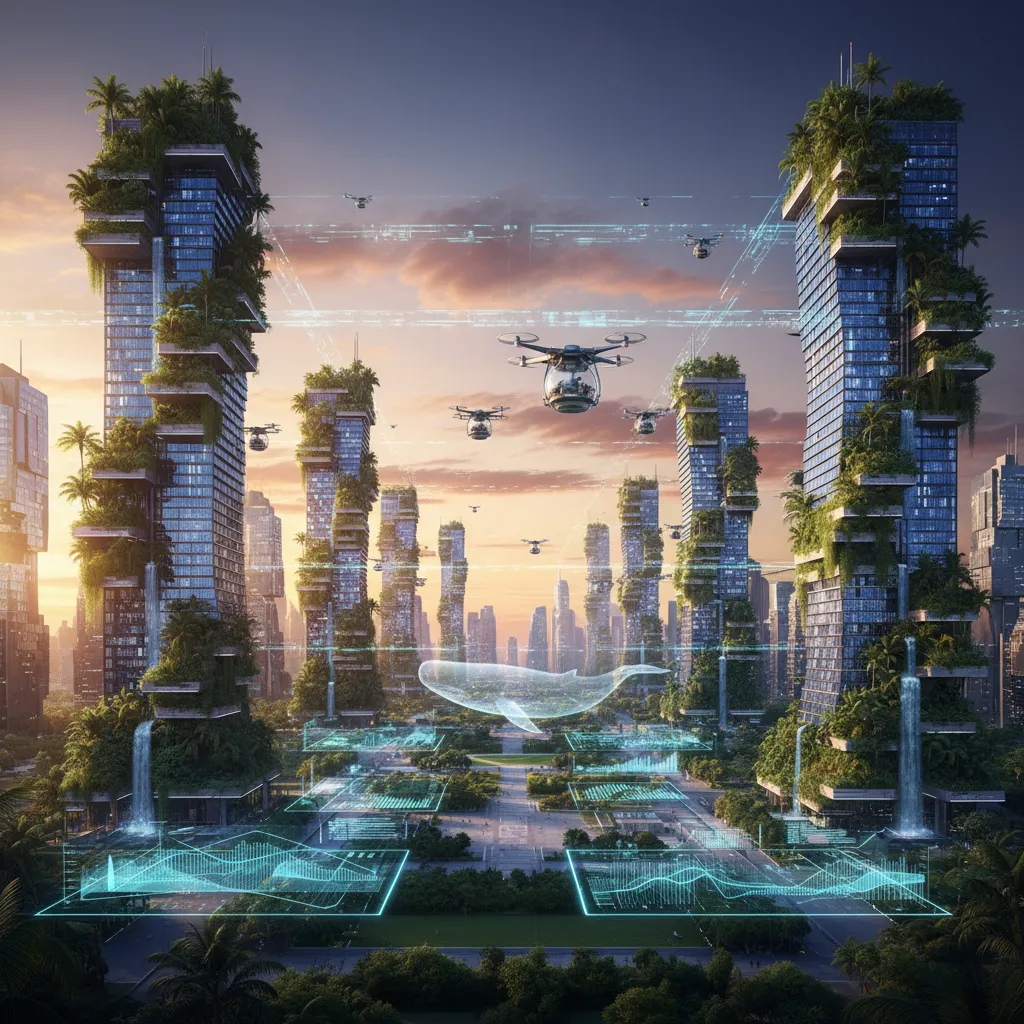
Imagine a city that knows you. Not in an invasive way, but in a helpful one. A city where your morning commute is always green-lit, the air is consistently clean, and the park bench you like is available because the city’s green spaces are optimized for how people actually use them. This isn’t science fiction; it’s the dawn of the hyper-personalized eco-city, a revolutionary concept powered by Artificial Intelligence that is set to redefine the future of urban living.
For decades, we’ve talked about “smart cities”—urban areas wired with sensors to collect data. But data collection is only the first step. The true revolution lies in using that data to create environments that are not only sustainable and efficient but also deeply personal and responsive to the needs of every single citizen. This is the leap from a smart city to an intelligent, living one.
This article explores the exciting intersection of AI urban planning, sustainable city planning, and personalized urban design. We’ll dive deep into how AI is making this future possible, from optimizing energy grids and creating dynamic green spaces to delivering personalized public services that cater to individual needs. We will examine the core smart city technology driving this change, the immense benefits of AI in urban development, and the crucial ethical considerations we must address. Get ready to explore the blueprint for tomorrow’s green, intelligent, and citizen-centric metropolis.
Beyond ‘Smart’: The Dawn of the Hyper-Personalized City
The concept of a “smart city” has often focused on top-down efficiency: optimizing traffic flows, managing waste collection, and monitoring infrastructure. While valuable, this approach often treats the city as a machine and its residents as cogs. The next evolution, the hyper-personalized city, flips the script. It uses AI to create a feedback loop between the city and its inhabitants, fostering a truly citizen-centric urban design.
So, what is hyper-personalized urban planning? It’s a data-driven approach that uses AI to understand and predict the unique needs, preferences, and behaviors of individuals and communities. Instead of designing a one-size-fits-all park, it designs a park whose features can adapt based on real-time usage data. Instead of a fixed bus schedule, it creates a dynamic, on-demand public transit system that responds to where people actually need to go.
This paradigm shift is about moving from passive data collection to active, intelligent adaptation. The goal is to enhance quality of life, promote sustainability, and foster a deeper sense of community by making the urban environment feel like it was designed just for you.
The AI Engine: Core Technologies Shaping Our Future Cities
This urban revolution isn’t powered by a single breakthrough but by a convergence of powerful AI technologies. These systems form the central nervous system of the future city, enabling it to sense, think, and act.
Urban Analytics AI and Big Data: The City’s Nervous System
At the heart of any intelligent city is data. A vast network of IoT (Internet of Things) sensors—embedded in everything from lampposts and trash bins to roads and buildings—continuously gathers real-time information. This data stream includes:
- Environmental Data: Air quality, noise levels, temperature, and water quality.
- Mobility Data: Traffic flow, public transport usage, pedestrian movement, and parking availability.
- Infrastructure Data: Energy consumption in buildings, water pressure in pipes, and the structural health of bridges.
- Citizen Data: Anonymized and aggregated data from public apps and services about facility usage, event attendance, and community feedback.
Urban analytics AI then processes this torrent of information, identifying patterns, predicting trends, and uncovering insights that would be impossible for human planners to see. This forms the foundation for all data-driven city planning. [Related: Google Project Astra: The Future of AI as a Universal Agent]

Predictive Urban Modeling AI: Seeing the Future in a Digital Twin
One of the most powerful tools in AI in city development is the “digital twin.” This is a dynamic, virtual replica of the entire city, updated in real-time with data from IoT sensors. With a digital twin, urban planners can use predictive urban modeling AI to:
- Simulate Policy Changes: Before implementing a new bike lane or changing a zoning law, planners can test its potential impact on traffic, pollution, and property values in the virtual world.
- Optimize Emergency Response: By simulating disaster scenarios like floods or earthquakes, cities can develop more effective evacuation routes and resource allocation strategies.
- Plan for Climate Change: AI models can predict the effects of rising sea levels or extreme heat on different neighborhoods, guiding resilient city planning with AI.
This ability to experiment and foresee consequences without real-world risk is a game-changer for creating more robust and future-proof urban environments.
Generative AI: Co-Creating the Urban Landscape
Generative AI, the technology behind models like Llama 3 and Gemini, is also entering the world of architecture and urban design. Planners can input a complex set of constraints—such as maximizing sunlight, minimizing wind tunnels, preserving green space, and adhering to zoning laws—and a generative AI can produce thousands of optimized design variations in minutes. This accelerates the creative process and helps discover novel, highly efficient layouts for buildings, neighborhoods, and public spaces, making AI for smart infrastructure a creative partner, not just an analytical tool. [Related: Meta Llama 3: The Ultimate Guide for 2024]
Building the Green Metropolis: AI’s Role in Sustainable City Planning
The challenges of urbanization—pollution, resource depletion, and carbon emissions—demand intelligent solutions. Eco-cities AI is at the forefront of this battle, offering powerful tools to build sustainable communities.
AI for Resource Management in Cities
Efficiency is the cornerstone of sustainability. AI optimizes the flow of critical resources throughout the city, drastically reducing waste:
- Smart Grids: AI predicts energy demand in real-time, redirecting power from solar panels on one side of the city to a high-demand area on the other, preventing blackouts and reducing reliance on fossil fuels.
- Intelligent Water Systems: Sensors detect leaks in pipes long before they become major breaks, saving billions of gallons of water. AI also optimizes irrigation for parks and public spaces based on soil moisture and weather forecasts.
- Automated Waste Management: Smart bins notify sanitation departments when they are full, optimizing collection routes to save fuel, reduce emissions, and prevent overflows.
Cultivating Green Urban Solutions
Greener cities are healthier, happier cities. AI is helping to integrate nature back into the urban fabric in innovative ways.
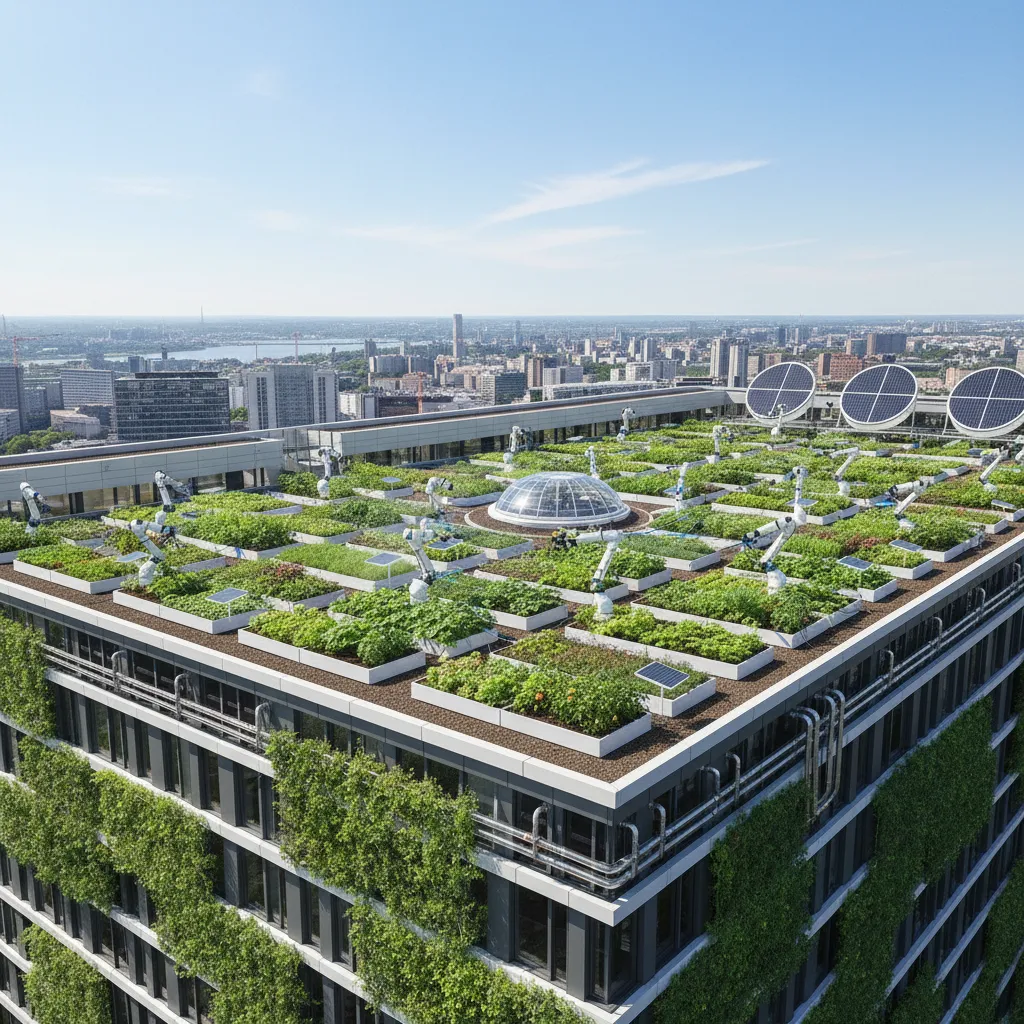
Urban green spaces AI optimization involves using algorithms to determine the best locations for new parks based on factors like air quality, population density, and the urban heat island effect. Furthermore, AI is revolutionizing urban agriculture. AI-powered vertical farms and rooftop gardens can grow fresh produce year-round with 95% less water than traditional agriculture, reducing food miles and increasing food security. These systems use AI to control lighting, nutrients, and temperature for maximum yield, bringing the farm directly to the city block. [Related: Harvesting Innovation: How AI is Revolutionizing Precision Agriculture]
AI and Smart Mobility: The End of Traffic Jams?
Traffic congestion is a major source of pollution and lost productivity. AI and smart mobility systems are designed to make getting around cities faster, cleaner, and more efficient.
- Adaptive Traffic Signals: AI-powered traffic lights analyze real-time traffic flow and adjust their timing to keep vehicles moving, reducing idling and emissions.
- On-Demand Public Transit: Instead of rigid routes, autonomous shuttles can be summoned via an app, creating flexible routes based on real-time passenger demand, offering the convenience of a ride-share with the efficiency of public transport.
- Smart Parking: Apps guide drivers directly to available parking spots, cutting down on the time (and emissions) spent circling the block.
A City for Everyone: AI-Powered Personalized Services
The ultimate goal of a hyper-personalized city is to improve the daily lives of its residents. By understanding individual needs, AI can tailor public services to an unprecedented degree.
Hyper-Customized Living Spaces
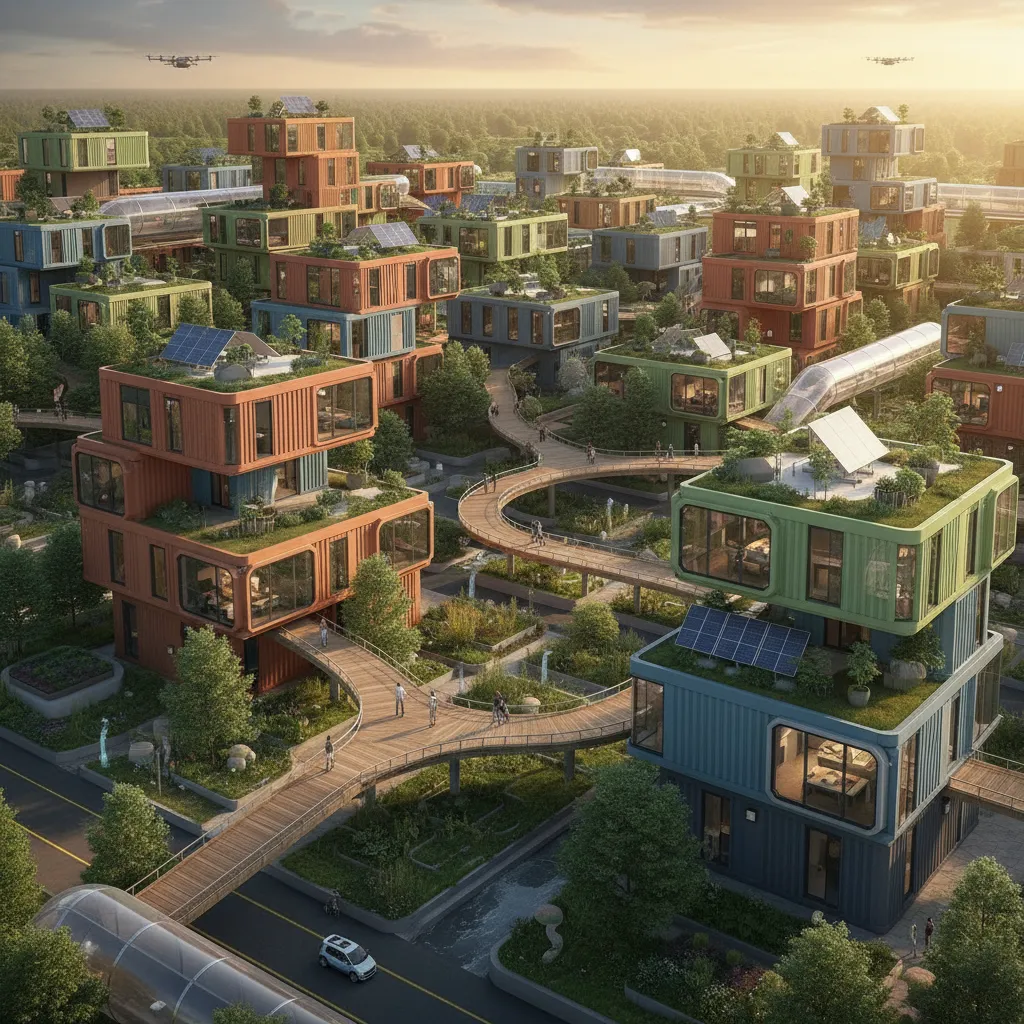
The future of housing may be modular and adaptable. Personalized urban design extends to our homes, where generative AI can help design flexible living spaces. Imagine modular housing units that can be reconfigured or expanded as a family grows, or interior layouts that automatically adjust lighting and temperature based on your personal preferences and circadian rhythms. This is the future urban planning of living spaces.
Personalized Healthcare, Education, and Wellness
AI-powered city services can extend to our well-being. A city could offer:
- Hyper-local Health Alerts: An app could warn an asthma sufferer about high pollen counts in their specific neighborhood and suggest an alternative, cleaner route for their daily walk.
- Adaptive Learning Paths: Public libraries and community centers could use AI to offer personalized learning programs for residents, suggesting courses or resources based on their skills and career goals.
- Curated Recreation: City-run apps could recommend parks, community events, or fitness classes based on your past activities and stated interests. [Related: AI for Mental Wellness: Your Personalized Path to a Calmer Mind]
Fostering Citizen Engagement with Urban AI
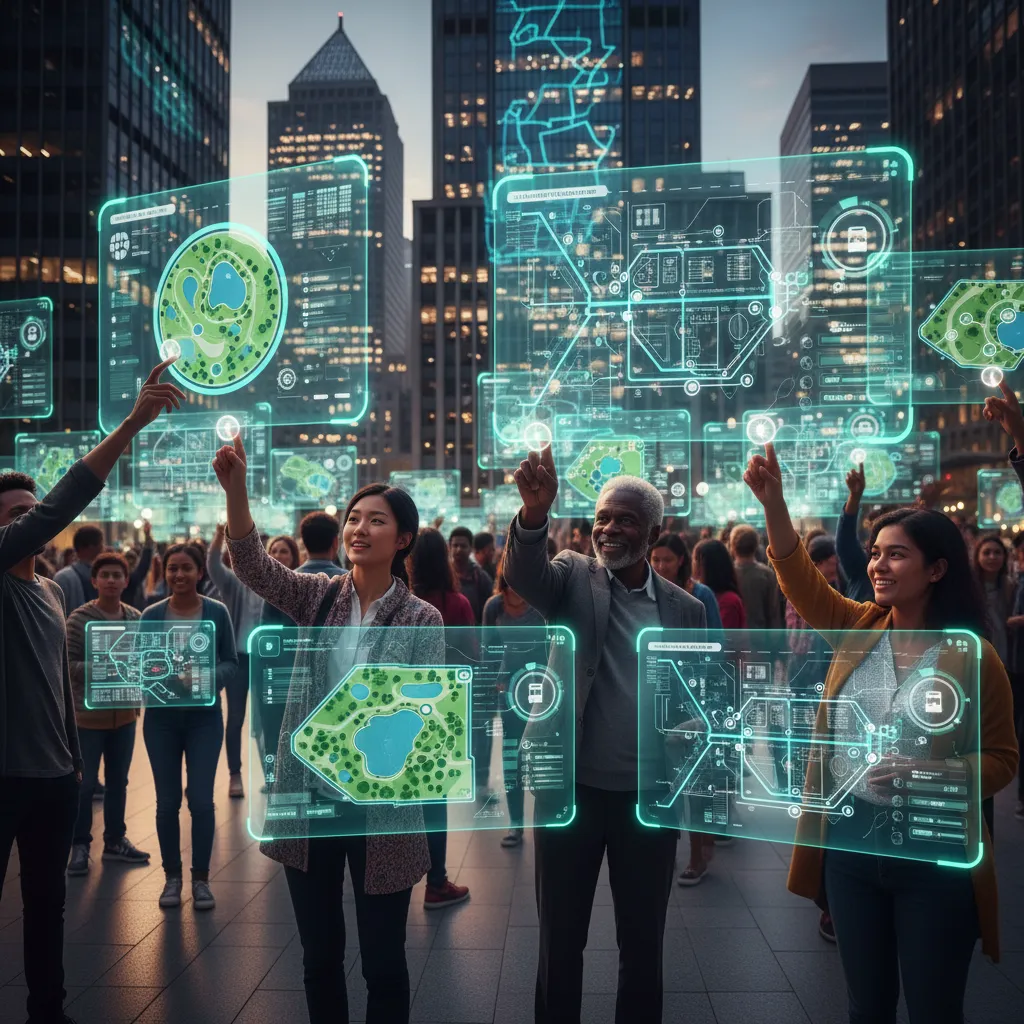
Technology shouldn’t distance residents from governance; it should empower them. Citizen engagement urban AI platforms can create more direct and meaningful participation:
- AI-Powered Feedback: Residents can report issues like potholes or broken streetlights by simply taking a photo. AI can analyze the image, categorize the problem, and automatically create a work order.
- Participatory Design: When planning a new community center, AI-driven platforms can survey residents and use generative design to create proposals that reflect the community’s collective preferences.
- Transparent Governance: AI-powered dashboards can provide citizens with easy-to-understand, real-time data on city spending, project progress, and environmental metrics, fostering trust and accountability.
The Blueprint for Tomorrow: Ethical AI in Smart Cities
The vision of a responsive, personalized eco-city is inspiring, but it’s not without significant challenges. The vast amount of data required raises critical questions about privacy, equity, and security.
The Data Privacy and Security Dilemma
To function, these systems need data—a lot of it. Protecting this data from breaches is paramount. More importantly, we need transparent policies governing how this data is used. Robust anonymization techniques and “privacy by design” principles must be baked into every system. Citizens must have control over their data and a clear understanding of the value exchange.
Algorithmic Bias and Digital Equity
One of the biggest risks of AI urban planning is that algorithms, if trained on biased historical data, can perpetuate and even amplify existing social inequalities. For example, if a predictive policing algorithm is trained on data that over-represents arrests in minority neighborhoods, it will direct more police to those areas, creating a feedback loop of bias. Ensuring ethical AI in smart cities means rigorously auditing algorithms for fairness and ensuring that new technologies don’t create a “digital divide” that leaves less tech-savvy or lower-income residents behind.
Building Resilient and Future-Proof Communities
While AI presents challenges, it’s also our best tool for building resilience. By modeling future shocks—from pandemics to climate events—resilient city planning with AI helps us design infrastructure, supply chains, and social safety nets that can bend without breaking. The goal is to create AI for sustainable communities that are not just efficient in the present but also durable for the future.
Conclusion: The Future of Urban Living is Personal, Green, and Intelligent
We stand at a pivotal moment in the history of urbanization. The monolithic, one-size-fits-all city of the industrial age is giving way to something far more organic, adaptive, and human-centric. The convergence of AI, smart city technology, and sustainable design is not just about creating more efficient cities; it’s about building happier, healthier, and more equitable communities.
AI for hyper-personalized eco-cities offers a compelling vision: a future where our environment actively works to support our well-being, where sustainability is woven into the fabric of daily life, and where every citizen feels seen, heard, and valued. The path forward requires careful planning, robust ethical frameworks, and a commitment to putting people first. But the blueprint is here. The future of urban living is not just smart—it’s profoundly and personally intelligent.
Frequently Asked Questions (FAQs)
Q1. How is AI transforming urban planning?
AI is transforming urban planning by shifting it from a static, top-down process to a dynamic, data-driven one. It uses machine learning and urban analytics AI to analyze vast datasets from sensors and public records, enabling planners to optimize everything from traffic flow and energy consumption to the placement of parks and public services. Predictive urban modeling AI also allows them to simulate the impact of new projects before they are built, leading to more efficient, sustainable, and citizen-centric urban design.
Q2. What is an example of AI in a smart city?
A great example is adaptive traffic management. Instead of using fixed timers, AI-powered traffic signals analyze real-time vehicle and pedestrian flow from cameras and sensors. The AI can then adjust signal timings dynamically to reduce congestion, prioritize emergency vehicles, or give preference to public buses that are running behind schedule. This single application of AI and smart mobility reduces travel times, cuts fuel consumption, and lowers air pollution.
Q3. What are the main goals of an eco-city?
The primary goal of an eco-city is to create a sustainable urban environment that minimizes its environmental impact while maximizing the quality of life for its residents. Key objectives include achieving carbon neutrality, relying on renewable energy sources, implementing circular economies for waste (reduce, reuse, recycle), protecting biodiversity through green urban solutions, and promoting sustainable transportation like walking, cycling, and electric public transit. Eco-cities AI is a critical tool for optimizing these systems.
Q4. What are the challenges of implementing AI in cities?
The main urban planning challenges AI solutions face include the high cost of implementing AI for smart infrastructure, the need for a highly skilled workforce, and ensuring robust cybersecurity to protect city systems. The most significant challenges, however, are ethical. These include protecting citizen data privacy, preventing algorithmic bias from reinforcing social inequalities, and ensuring equitable access to technology and its benefits for all residents.
Q5. How does AI improve sustainability in cities?
AI improves sustainability by optimizing resource use on a massive scale. It enables smart grids to reduce energy waste, intelligent water systems to prevent leaks, and automated logistics for waste collection to save fuel. AI also helps design more energy-efficient buildings and transportation networks. Through urban green spaces AI optimization and support for urban farming, it helps reduce the AI environmental impact in cities and create healthier living conditions.
Q6. What is the difference between a smart city and a hyper-personalized city?
A smart city primarily focuses on using technology (like IoT sensors) to collect data and improve the efficiency of city-wide systems like traffic, waste, and energy. A hyper-personalized city is the next evolution; it uses AI to analyze that data to understand and cater to the specific, real-time needs of individual citizens, delivering personalized public services AI and creating a more adaptive, responsive, and citizen-focused urban experience.