Unlock Your Best Life: How AI Hyper-Personalization is Revolutionizing Daily Habits
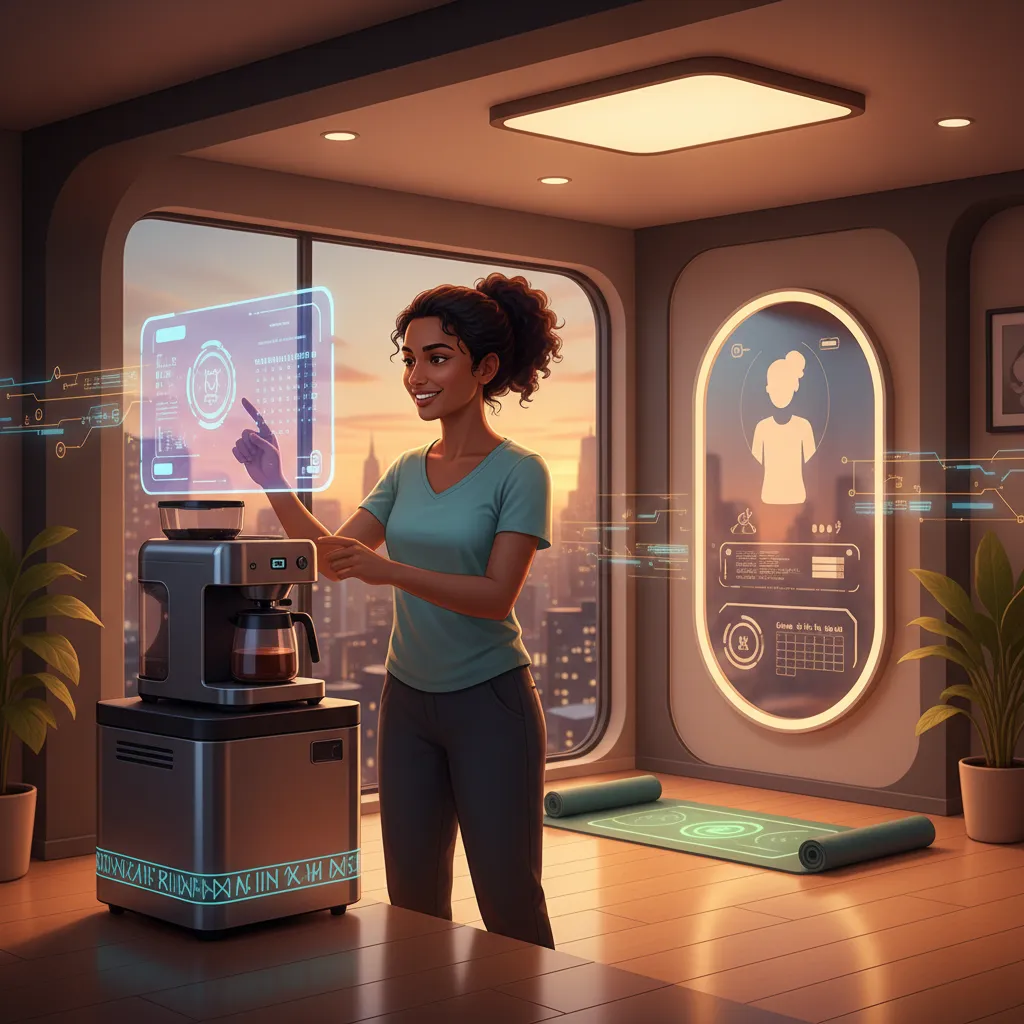
Imagine waking up not to a blaring alarm, but to gentle, simulated sunlight timed perfectly to your sleep cycle. Your smart speaker murmurs a 5-minute news brief curated from your industry, followed by a podcast episode on a topic you’ve been meaning to explore. As you walk into the kitchen, your smart display suggests a breakfast recipe based on your fitness goals and the ingredients you have left in the fridge.
This isn’t a scene from a sci-fi movie. This is the tangible reality being built by AI hyper-personalization, a technological leap that’s quietly moving from our shopping carts and streaming queues into the very fabric of our daily routines. We’ve grown accustomed to AI recommending products or shows, but that was just the beginning. The true revolution is in using AI for daily life—to optimize our health, boost our productivity, and help us build better habits.
This article delves into the exciting world of hyper-personalization AI. We’ll explore how this technology works, showcase real-world examples that are reshaping our daily lives, and discuss the incredible benefits—and potential challenges—of creating a life that is truly, uniquely yours. Get ready to discover how to customize your AI experience and unlock a new level of efficiency and well-being.
Beyond the Algorithm: What Exactly is AI Hyper-Personalization?
Before we dive into the applications, it’s crucial to understand what separates “hyper-personalization” from the standard personalization we’ve known for years.
Personalization uses basic data—like your past purchases, browsing history, or stated interests—to offer relevant suggestions. Think of Amazon showing you more sci-fi books because you bought one last month. It’s helpful, but it’s often based on past actions.
Hyper-personalization AI, on the other hand, is a far more dynamic and intelligent process. It leverages a rich tapestry of data in real-time:
- Behavioral Data: Your app usage, sleep patterns, and daily movements.
- Contextual Data: Your current location, the time of day, the weather, and even your calendar schedule.
- Biometric Data: Your heart rate, stress levels, and activity metrics from wearables.
By combining these data streams, hyper-personalization doesn’t just look at what you did; it predicts what you need or want in the present moment. It’s the difference between a helpful suggestion and a proactive, almost prescient, assistant.
| Feature | Standard Personalization | AI Hyper-Personalization |
|---|---|---|
| Data Source | Historical (e.g., past purchases) | Real-time & Predictive (e.g., location, biometrics) |
| Timing | Static, based on past events | Dynamic, based on the current moment |
| Scope | Segment-based (“People like you…”) | Individual-based (“For you, right now…”) |
| Example | Netflix suggesting a genre you like. | Your wellness app suggesting a 5-minute meditation because your wearable detects rising stress levels before a big meeting. |
This shift from reactive to proactive assistance is the core of its power, enabling a new wave of AI lifestyle solutions designed for one person: you.
The Morning Reboot: Optimizing Your Productivity and Focus
For many, the morning sets the tone for the entire day. A chaotic, reactive morning can lead to a day of playing catch-up. Hyper-personalization aims to transform this, creating a seamless and productive launchpad.
AI-Driven Routine Optimization
The goal of AI for routine optimization is to eliminate friction and decision fatigue. Instead of juggling multiple apps and schedules, a centralized AI assistant can orchestrate your morning. This isn’t just about a smarter calendar; it’s about a system that understands your energy levels and priorities.
- Intelligent Alarms: Apps like Sleep Cycle analyze your sleep phases and wake you during your lightest sleep within a 30-minute window, leaving you feeling refreshed instead of groggy.
- Personalized Briefings: Your smart assistant can learn that you prefer to hear about tech industry news, your stock portfolio’s performance, and the local weather before anything else, delivering a custom audio digest.
- Dynamic Scheduling: AI tools like Reclaim.ai or Clockwise integrate with your calendar to find the best times for tasks, meetings, and personal habits. It can automatically block out “focus time” for deep work before your day gets filled with meetings, effectively managing your time for you. This is AI for time management at its most powerful.

Personalized Learning and Skill Development
Lifelong learning is essential, but finding the time can be a challenge. AI personalized learning platforms are changing the game by integrating micro-lessons into the gaps in your day. Imagine an AI that knows you have a 15-minute commute and curates a short podcast to help you with your goal of learning Spanish. Or an app like Refind that analyzes your reading habits to deliver five highly relevant articles to your inbox each day, fueling your AI driven personal development.
These systems adapt to your learning speed, repeat concepts you struggle with, and suggest new topics based on your evolving interests, ensuring that every spare moment can be an opportunity for growth. Related: Unlocking Potential: AI’s Role in Revolutionizing Personalized Learning
Revolutionizing Health & Wellness: Your AI-Powered Lifestyle Coach
Perhaps the most impactful application of hyper-personalization is in our health and well-being. By moving from one-size-fits-all plans to deeply individualized guidance, AI is becoming an indispensable partner in our wellness journeys.
AI Fitness Programs That Adapt to You
Generic workout plans are often ineffective because they don’t account for individual differences in energy, recovery, and progress. AI fitness programs are shattering this model.
Apps and platforms like Whoop, Future, and Athlytic use data from wearables to provide real-time feedback. Your AI health monitoring data—including sleep quality, heart rate variability (HRV), and daily strain—informs your workout for the day.
- Did you sleep poorly? The AI might recommend a lower-intensity session or a recovery-focused activity like yoga.
- Are you hitting a plateau? The system can analyze your performance metrics and automatically adjust the intensity, volume, or type of exercise to stimulate new progress.
- Are you performing an exercise incorrectly? Some advanced systems use your phone’s camera to analyze your form and provide immediate corrective feedback.
This creates a truly personalized AI experience where your fitness plan evolves with you, day by day.

AI Mental Health Support on Your Terms
Mental wellness is just as important as physical health, and AI wellness apps are providing accessible, personalized support. Apps like Headspace, Calm, and Wysa are using AI to offer AI mental health support that adapts to your emotional state.
By checking in with you about your mood, analyzing journal entries (with privacy at the forefront), or even integrating with biometric data, these apps can suggest specific meditations, breathing exercises, or cognitive behavioral therapy (CBT) techniques tailored to what you’re feeling right now. For someone feeling anxious, the AI might suggest a calming breathing exercise. For someone feeling unmotivated, it might offer an uplifting guided meditation. Related: Personal AI Agents: The Mental Wellness Revolution
The Future of Nutrition: AI Cooking and Meal Planning
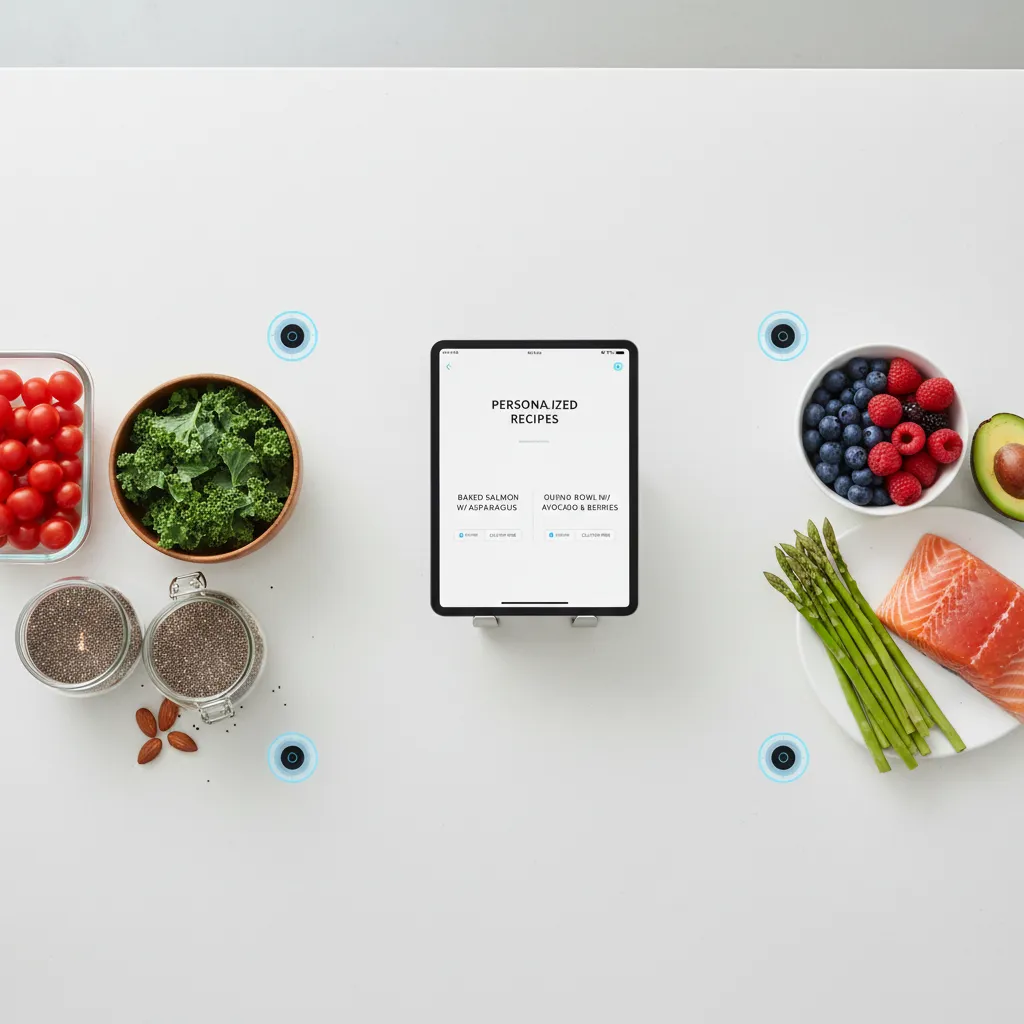
“What’s for dinner?” is a question that plagues households daily. AI is providing a powerful answer. Modern AI cooking recommendations go far beyond simply finding a recipe.
Apps like Sidekick or PlateJoy create meal plans based on your dietary preferences (vegan, low-carb, etc.), health goals, budget, and even how much time you have to cook. The most advanced systems can:
- Generate a shopping list and integrate it with grocery delivery services.
- Suggest recipes based on ingredients you already have to reduce food waste.
- Adapt recipes in real-time if you’re missing an ingredient, suggesting suitable substitutes.
This level of AI personalization removes the guesswork and stress from healthy eating, making it easier to stick to your goals.
Smart Living, Smarter Life: AI Integration in Your Personal Space
The concept of a “smart home” is evolving into a “responsive home”—an environment that actively anticipates and adapts to your needs, powered by smart living AI.
The Truly Smart Home
The first generation of smart homes required constant commands. The hyper-personalized home, however, learns from your behavior. AI smart home automation means your home knows your routines.
- Energy Optimization: Your thermostat learns when you’re usually away and adjusts the temperature to save energy, then brings it back to your preferred setting just before you arrive. Related: Smart Home Energy Savings: Top Gadgets for Eco-Friendly, Affordable Living
- Adaptive Ambiance: Your lighting system can sync with your calendar, brightening for a morning “focus” session and dimming to a warm, relaxing hue in the evening as you wind down.
- Proactive Security: Instead of just reacting to motion, an AI-powered system can differentiate between a package delivery, a family member, and an unfamiliar person, sending you more intelligent and relevant alerts.
Financial Freedom Through AI Financial Planning
Managing finances can be complex and overwhelming. AI financial planning tools are bringing the power of a personal financial advisor to everyone’s fingertips. Apps like Copilot Money and Monarch Money use AI to analyze your spending habits and provide hyper-personalized insights.
These tools don’t just show you charts; they offer actionable advice. They can identify wasteful subscriptions, create a realistic budget based on your actual spending, and project your progress toward goals like saving for a down payment or retirement. By understanding your unique financial DNA, they empower you to make smarter decisions, turning complex data into a clear path toward financial wellness. This is a prime example of how AI personalizes daily tasks that were once manual and tedious.

Streamlining Your World: AI Assistants for Shopping, Travel, and More
Beyond our homes and health, hyper-personalization is smoothing out countless other daily interactions, saving us time, money, and stress.
The End of Buyer’s Remorse: Your AI Shopping Assistant
The e-commerce world is noisy. An AI shopping assistant acts as a filter, learning your personal style, brand affinities, ethical preferences, and budget. Instead of just showing you “blue sweaters,” it can find “a sustainably made, merino wool, navy blue crewneck sweater under $100 from a brand you’ve purchased from before.” This level of AI tailored content and recommendations makes shopping faster, more enjoyable, and more aligned with your values.
Crafting the Perfect Itinerary: AI Travel Planning
Planning a trip involves juggling flights, hotels, activities, and reservations. AI travel planning tools are consolidating this entire process. AI can analyze your past travel styles—do you prefer adventure or relaxation? museums or beaches?—and craft a complete, day-by-day itinerary. It can monitor flight prices and alert you at the optimal time to buy, find hotels in neighborhoods you’d like, and even suggest restaurants based on your dietary preferences, all while optimizing for budget and logistics. Related: The Future of Travel: How AI Crafts Your Perfect Personalized Journey
The Double-Edged Sword: Navigating the Challenges
While the benefits of AI personalization are immense, it’s essential to approach this new frontier with awareness and intention. A truly smart user understands both the power and the potential pitfalls.
- The Privacy Paradox: Hyper-personalization runs on data. It’s crucial to be mindful of what information you’re sharing and with whom. Opt for services that prioritize user privacy, offer transparent data controls, and allow you to manage or delete your information.
- The Echo Chamber Effect: If an AI only ever shows you what it thinks you’ll like, you risk getting stuck in a “filter bubble,” limiting your exposure to new ideas, music, or viewpoints. Consciously seek out new things and use features that encourage discovery rather than just reinforcement.
- The Importance of Transparency (XAI): As AI makes more decisions for us, the field of Explainable AI (XAI) becomes critical. We should demand to know why an AI recommended a particular stock, workout, or product. This transparency builds trust and keeps the user in control. Related: The XAI Revolution: Demystifying AI Decisions for Trust & Transparency
Conclusion: Crafting Your Personalized Future
AI hyper-personalization is more than a technological trend; it’s a fundamental shift in how we interact with the digital world. It’s about moving from a one-size-fits-all model to a world built for an audience of one. From optimizing our AI daily habits for peak performance to receiving health advice that understands our unique bodies, the future of AI daily living is one of profound empowerment.
We are at the beginning of this journey, but the trajectory is clear. The tools are becoming more intelligent, more integrated, and more intuitive. By embracing these technologies mindfully and demanding privacy and transparency, we can harness the incredible power of AI to eliminate friction, build better habits, and unlock our full potential.
The ultimate promise isn’t a life run by robots; it’s a life where technology fades into the background, acting as a silent, intelligent partner that helps you be healthier, more productive, and more present. The future isn’t just personalized—it’s your’s. How will you shape it?
Frequently Asked Questions About AI Hyper-Personalization
Q1. What is the main difference between personalization and hyper-personalization?
The key difference is the use of real-time data and predictive analytics. Standard personalization uses past data (like purchase history) to make recommendations. Hyper-personalization uses real-time, contextual data (like your current location, biometrics, and time of day) to anticipate your needs and deliver a highly individualized experience in the moment.
Q2. What is a real-world example of hyper-personalization?
A great example is a modern fitness app connected to a wearable. If it detects you had a poor night’s sleep (via sleep tracking) and your heart rate variability is low, it won’t push you to do a high-intensity workout. Instead, it will proactively suggest a lighter activity like yoga or a recovery walk, adapting its recommendation to your real-time physical state.
Q3. How is AI used to personalize daily tasks?
AI personalizes daily tasks by learning your patterns and preferences to automate and optimize them. For example, an AI calendar can automatically schedule focus time by analyzing your meeting load, or a smart home can learn your daily routine to adjust lighting and temperature for comfort and energy savings without you needing to issue commands.
Q4. What are the biggest benefits of AI personalization in daily life?
The primary benefits include increased efficiency and productivity, improved health and wellness outcomes through tailored guidance, and reduced decision fatigue. It saves you time by automating routine tasks and provides data-driven insights that help you make better decisions about your health, finances, and time management.
Q5. Is hyper-personalization AI safe to use?
Safety depends heavily on the service provider’s commitment to data privacy and security. Reputable companies use encryption and provide users with transparent controls over their data. It is crucial for users to review privacy policies, manage app permissions, and choose services that prioritize user security to ensure a safe experience.
Q6. Can AI help me build better habits?
Absolutely. This is one of the most powerful applications of the technology. AI for habit building works by providing consistent, personalized reminders, tracking your progress, and offering positive reinforcement. For instance, an AI can learn the best time of day to remind you to meditate or go for a walk, increasing the likelihood that you’ll stick with your new routine.