AI’s Green Leap: Accelerating Climate Solutions for a Sustainable Future
Introduction
In the race against time to address the climate crisis, humanity is turning to its most powerful tools. Among them, artificial intelligence (AI) has emerged not just as a buzzword, but as a critical catalyst for change. We stand at a pivotal moment where complex algorithms and machine learning models are being deployed on the front lines of the environmental battle. But how exactly does AI fight climate change?
The conversation around AI often spirals into discussions of chatbots and creative tools, but its most profound impact may be happening quietly in our power grids, farms, and climate research labs. From predicting extreme weather events with unprecedented accuracy to designing hyper-efficient sustainable cities, AI is offering innovative solutions to our most pressing environmental challenges.
This article explores the transformative potential of AI for climate action. We’ll delve into the real-world environmental AI applications that are making a difference today, from enhancing renewable energy to revolutionizing waste management. We’ll also confront the dual nature of this technology, examining the artificial intelligence environmental impact and the growing movement for Green AI solutions. Prepare to discover how this green leap in technology is accelerating our journey toward a more sustainable future.
The Dual Nature of AI: A Carbon Footprint vs. a Climate Solution
Before we champion AI as an environmental hero, it’s crucial to address the elephant in the room: its own energy consumption. Training large-scale AI models, like the ones that power generative AI, requires immense computational power. This, in turn, consumes vast amounts of electricity, often generated from fossil fuels, contributing to a significant carbon footprint.
The very data centers that are the backbone of the AI revolution are energy hogs. A 2023 study from the University of California, Riverside, estimated that by 2027, the AI industry could consume as much electricity as a country the size of Sweden. This is the central paradox of AI’s impact on the environment: a tool with the potential to solve our greatest challenge is also a contributor to the problem.
This is where the concept of “What is green AI?” becomes vital. Green AI is a field of research and practice focused on making artificial intelligence itself more sustainable. It advocates for:
- Efficient Model Design: Creating smaller, less computationally intensive models that deliver powerful results without the massive energy draw.
- Sustainable Hardware: Developing energy-efficient processors and data center cooling systems.
- Renewable Energy Sources: Powering data centers and AI operations with 100% renewable energy.
- Measuring Impact: Accurately calculating the carbon cost of training and running models to make informed decisions.
By acknowledging and actively working to mitigate AI’s own footprint, we can ensure its net impact on the planet is overwhelmingly positive. The goal is not to stop using AI, but to use it wisely and sustainably, unlocking its immense potential for global good.
Revolutionizing Climate Science: AI-Driven Research and Prediction
One of the most powerful applications of AI in the climate fight is its ability to make sense of bewilderingly complex data. Climate science is built on massive datasets from satellites, ocean buoys, weather stations, and historical records. AI is the key to unlocking the patterns hidden within.
Sharpening Our Vision with AI Climate Modeling
Traditional climate models are incredibly sophisticated, but they can take months to run on supercomputers. Climate modeling AI can accelerate this process dramatically. By training on decades of climate data, machine learning algorithms can run complex simulations in a fraction of the time, allowing scientists to test more scenarios and refine their predictions.
This isn’t just about speed; it’s about accuracy. AI can identify subtle correlations in the climate system that human analysts might miss, leading to more precise forecasts for sea-level rise, temperature changes, and regional climate shifts. This capability is paramount for AI disaster prediction, giving communities more time to prepare for hurricanes, floods, and wildfires by forecasting their paths and intensity with greater certainty.

Unlocking Insights with Explainable AI (XAI)
For AI’s predictions to be trusted and acted upon by policymakers, we need to understand how it reaches its conclusions. This is the role of Explainable AI (XAI) climate solutions. XAI techniques aim to demystify the “black box” of complex algorithms, providing clear, human-understandable reasoning behind an AI’s output. This transparency is essential for building trust and ensuring that critical decisions about our planet’s future are based on sound, verifiable science. Related: Google’s AI Overviews: The Future of Search is Here.
Powering the Planet: AI’s Role in Energy Transformation
The transition to a clean energy economy is fundamental to combating climate change. AI is proving to be an indispensable ally in accelerating this shift, enhancing both the efficiency and reliability of renewable energy sources.
Optimizing Renewable Energy Grids
Solar and wind power are incredible resources, but they’re intermittent—the sun doesn’t always shine, and the wind doesn’t always blow. This variability poses a major challenge for grid stability. AI in renewable energy tackles this head-on.
- Smart Forecasting: AI algorithms analyze weather patterns, historical generation data, and energy demand to predict solar and wind output with remarkable accuracy. This allows grid operators to anticipate fluctuations and balance the energy supply seamlessly.
- Intelligent Grid Management: AI-powered systems can automatically reroute power, manage energy storage (like large-scale batteries), and adjust demand in real-time. This dynamic management maximizes the use of available renewable energy and minimizes reliance on backup fossil fuel plants.
- Predictive Maintenance: AI monitors wind turbines and solar panels for signs of wear and tear, predicting potential failures before they happen. This proactive approach reduces downtime, lowers maintenance costs, and increases the overall efficiency of clean energy infrastructure.
Through these applications, AI is making renewable energy more reliable, affordable, and scalable, directly contributing to reducing emissions with AI.
Cultivating a Greener Future: Smart Agriculture and Conservation
The way we grow food and manage our natural ecosystems has a profound impact on the planet. AI is bringing a new level of intelligence and precision to these fields, paving the way for more sustainable practices.
Precision Farming with Smart Agriculture AI
Traditional agriculture can be resource-intensive, often leading to wasted water, fertilizer overuse, and soil degradation. Smart agriculture AI is transforming farming into a high-tech, data-driven science.
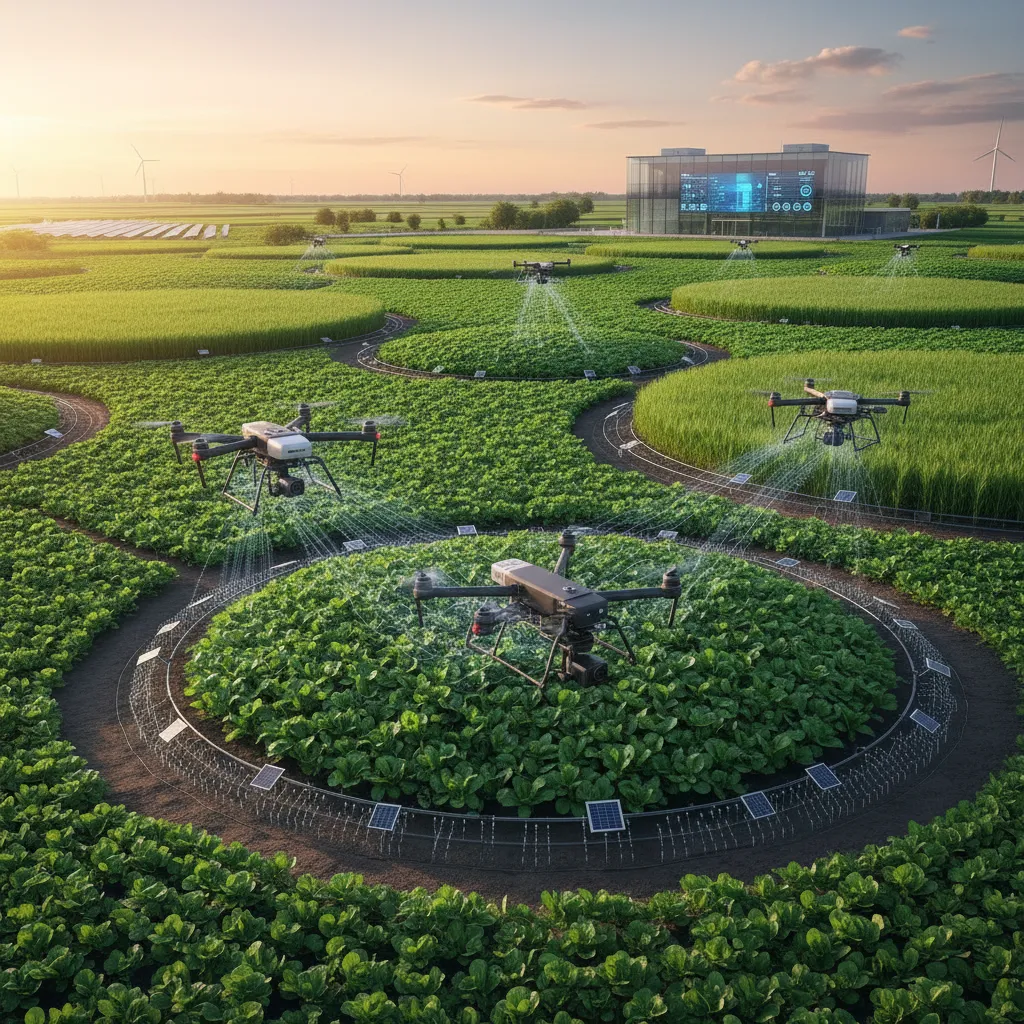
AI-powered systems use drones, sensors, and satellite imagery to monitor crop health in real-time. They can detect early signs of disease, identify nutrient deficiencies, and measure soil moisture with pinpoint accuracy. This allows farmers to apply water, fertilizer, and pesticides only when and where they are needed, drastically reducing waste, runoff, and the overall environmental footprint of farming. This is a clear example of the tangible benefits of AI for the planet.
Protecting Biodiversity and Ecosystems
Our planet’s biodiversity is under threat. AI conservation efforts are providing new hope. Machine learning algorithms can analyze camera trap images and acoustic sensor data to monitor endangered species populations without invasive human interference. AI can also scour satellite imagery to detect illegal deforestation or mining activities in near real-time, alerting authorities to take action much faster than before. These sustainable technology AI tools act as a global watchdog for our most vulnerable ecosystems. Related: The Rise of AI Copilots: Revolutionizing Work, Boosting Creativity, & Driving Innovation.
Building Sustainable Systems: Cities, Supply Chains, and Waste
The infrastructure of modern life—our cities, how we move goods, and what we do with our trash—is ripe for an AI-driven green revolution. AI’s ability to optimize complex systems is key to building a truly circular and sustainable economy.
Designing the Smart Cities of Tomorrow
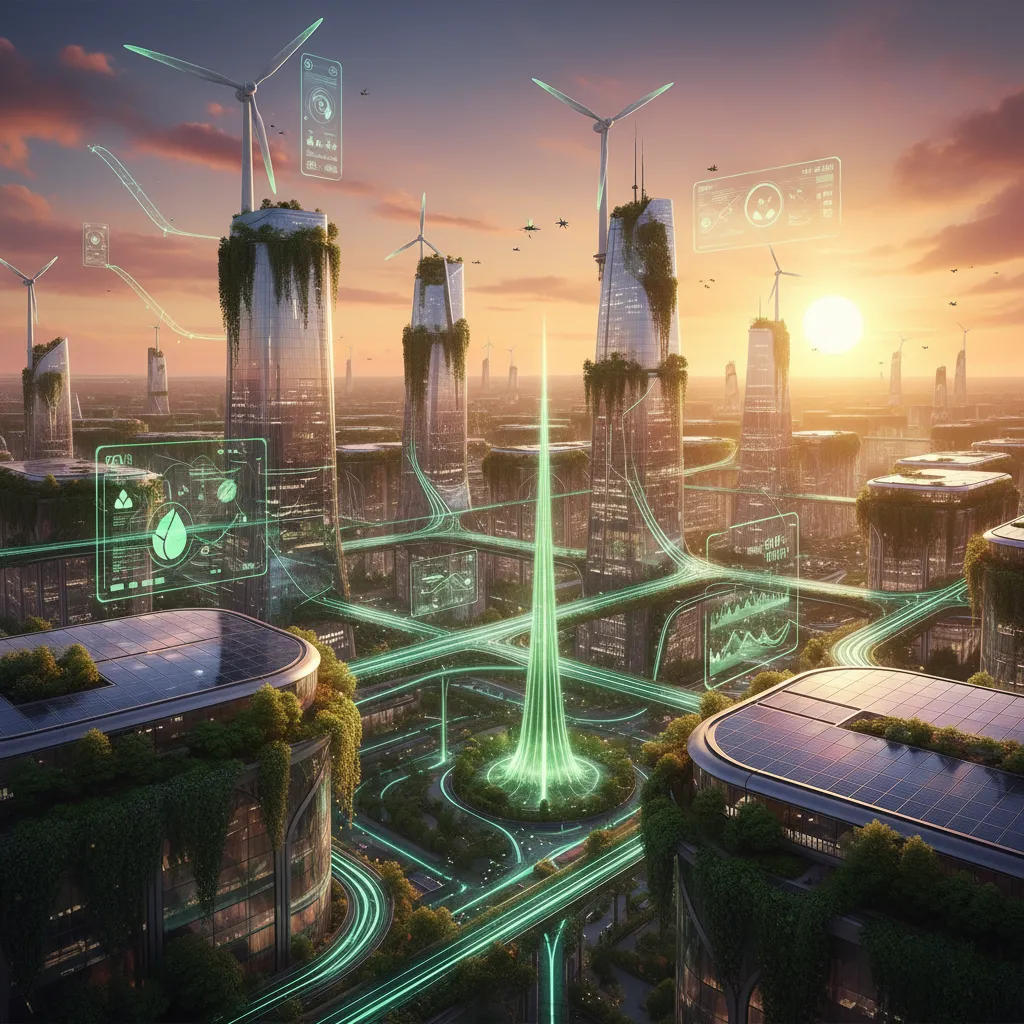
Over half the world’s population lives in urban areas, making cities central to the climate fight. Sustainable urban planning AI is helping design and manage cities that are greener, more efficient, and more livable.
AI can optimize traffic light systems to reduce congestion, idling, and vehicle emissions. It can manage the energy consumption of buildings, adjusting heating and cooling based on occupancy and weather forecasts. It can even help plan the layout of green spaces and public transit routes to maximize their positive environmental impact.

Greening the Global Supply Chain
The journey a product takes from factory to front door is often long and carbon-intensive. AI supply chain optimization green strategies are changing that. AI algorithms can calculate the most fuel-efficient routes for shipping fleets, forecast consumer demand more accurately to prevent overproduction and waste, and help companies track and reduce the carbon footprint of their products at every step.
Tackling the Trash Crisis with AI Waste Management
Waste is a massive environmental problem. AI waste management is bringing new efficiency to recycling and disposal. In advanced recycling facilities, AI-powered robots use computer vision to identify and sort different types of materials with a speed and accuracy that surpasses human capabilities. This increases the purity of recycled materials, making them more valuable and diverting more waste from landfills. This is one of the most visible AI for eco friendly initiatives in action.

The Path Forward: Ethical Considerations and the Future of AI in Climate
As we integrate AI more deeply into our climate strategies, we must navigate the ethical landscape with care. Ethical AI environmental applications require us to consider issues of fairness, equity, and transparency. For example, if an AI model is used to determine which areas are most at risk from climate change, we must ensure it doesn’t perpetuate existing societal biases.
The future of AI in climate is incredibly promising, but it hinges on our commitment to developing and deploying this technology responsibly. Aligning these climate tech innovations with the broader AI and sustainable development goals is essential. This means ensuring that the benefits of Green AI are shared globally and that the technology empowers, rather than displaces, communities on the front lines of climate change. Related: Ethical AI in Content Creation: Navigating Bias, Trust, and Authenticity.
Conclusion
Artificial intelligence is no longer a futuristic concept in the fight against climate change; it’s a present-day reality and one of our most powerful allies. From sharpening our understanding of the planet with advanced climate models to greening our energy grids, farms, and cities, AI’s potential is vast and varied.
We’ve seen how AI is helping to manage renewable energy, foster sustainable agriculture, and optimize the complex systems that underpin our society. While we must remain vigilant about its own environmental footprint and navigate the ethical challenges, the evidence is clear: the benefits of AI for the planet are profound.
The journey ahead requires a concerted effort from scientists, policymakers, engineers, and citizens. By championing Green AI solutions and investing in AI for climate action, we can harness the full power of this transformative technology. AI is the tool; our collective will is the force that will use it to build a truly sustainable future for generations to come.
Frequently Asked Questions
Q1. How can AI help fight climate change?
AI can fight climate change in numerous ways. It helps by creating more accurate climate models, optimizing renewable energy grids for maximum efficiency, enabling precision agriculture to reduce waste, improving energy efficiency in buildings and cities, and making supply chains and waste management systems more sustainable.
Q2. What is Green AI?
Green AI is an approach to artificial intelligence that prioritizes environmental sustainability. It focuses on designing and using AI models and systems that are highly energy-efficient, minimizing their own carbon footprint. This includes developing more efficient algorithms, using sustainable hardware, and powering AI computations with renewable energy.
Q3. What is the negative environmental impact of AI?
The primary negative environmental impact of AI is its significant energy consumption. Training large AI models and running the data centers that support them requires vast amounts of electricity, which often comes from fossil fuels. This contributes to greenhouse gas emissions and the overall AI carbon footprint.
Q4. What are some real-world examples of AI in sustainability?
Real-world examples include Google’s DeepMind using AI to predict wind power output 36 hours in advance to help grid operators, companies like Blue River Technology using AI-powered computer vision in tractors to precisely spray herbicides only on weeds, and AI-driven sorting robots in recycling plants that dramatically increase recycling rates.
Q5. Can AI help reduce my personal carbon footprint?
Yes, indirectly. AI powers many apps and services that can help. For instance, navigation apps like Google Maps use AI to find the most fuel-efficient routes. Smart home thermostats use AI to learn your patterns and optimize heating and cooling, saving energy. As AI is integrated into more consumer products, its role in helping individuals reduce their footprint will grow.
Q6. What are the biggest challenges in using AI for climate action?
The biggest challenges include the high energy consumption of AI itself (the need for Green AI), ensuring access to large, high-quality datasets for training models, addressing potential biases in algorithms, and overcoming policy and implementation hurdles. There is also a need for more explainable AI so that policymakers and the public can trust and act on its recommendations.