AI for Student Success: Smart Tools & Adaptive Learning Strategies
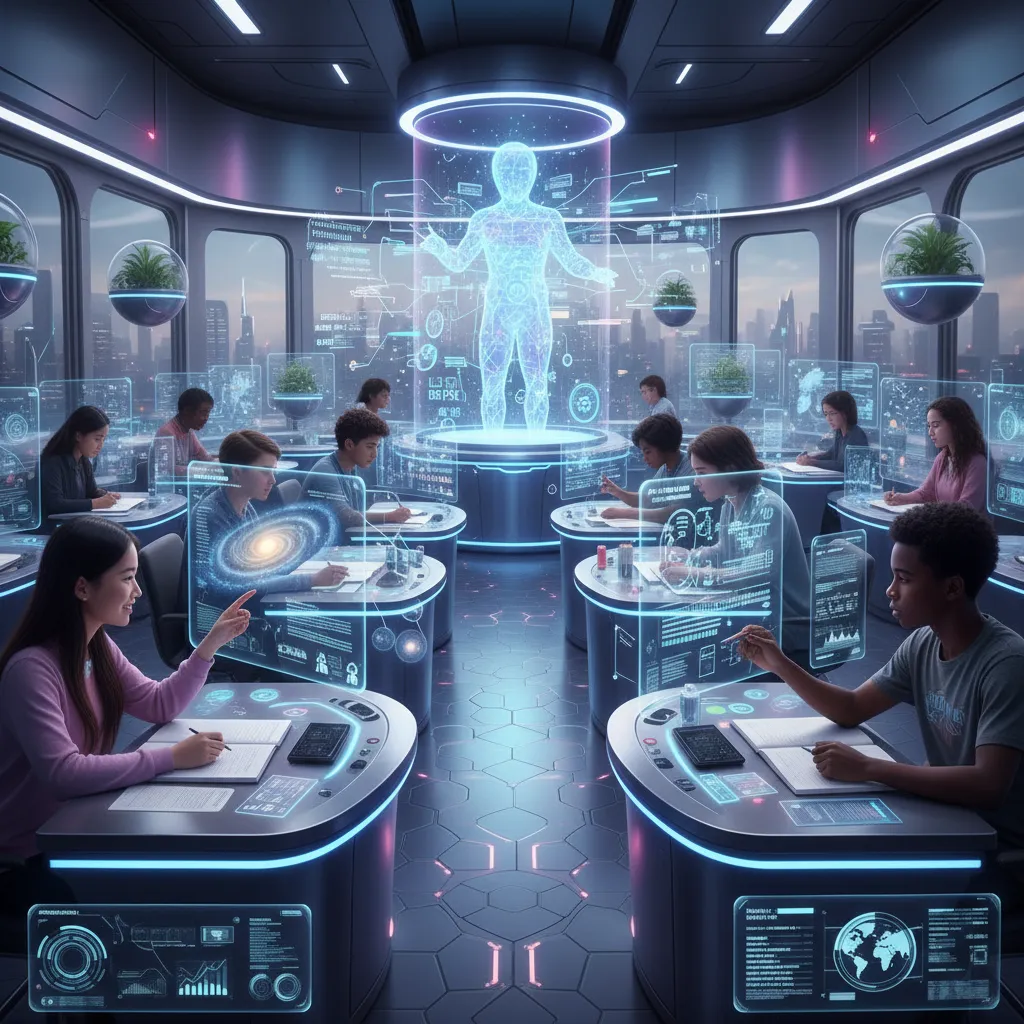
The traditional classroom model, a cornerstone of society for centuries, has served its purpose. But in a world of instant information and boundless complexity, the one-size-fits-all approach to learning is showing its age. Students today face unprecedented challenges, from information overload to the pressure of standardized tests. The question is no longer just what we learn, but how we learn. Enter the most significant shift in the future of education technology: Artificial Intelligence.
AI is not about replacing teachers with robots or automating creativity out of the classroom. It’s about forging a new partnership between human intellect and machine intelligence to create a learning environment that is deeply personal, incredibly efficient, and profoundly effective. This is the era of AI for student success, where generic lesson plans give way to custom learning paths AI creates for each individual.
This guide will illuminate the transformative AI impact on learning. We’ll explore the core concepts of personalized and adaptive learning platforms, unveil the most powerful smart learning tools at your fingertips, and provide actionable AI learning strategies to help you conquer your academic goals. Get ready to discover how AI is becoming the ultimate academic ally for students everywhere.
The Dawn of a New Era: What is AI in Education?
When we talk about AI in education, we’re referring to a broad spectrum of technologies designed to mimic human intelligence to enhance the learning process. It’s more than just a calculator or a spell-checker. It involves complex systems that can analyze data, recognize patterns, understand language, and make decisions.
At its core, educational AI software leverages machine learning algorithms and vast datasets to create tools that can:
- Analyze Student Performance: AI can track every interaction—every correct answer, every hesitation, every mistake—to build a detailed profile of a student’s knowledge and skills.
- Understand Queries: Through Natural Language Processing (NLP), AI can comprehend questions asked in plain language, providing instant AI homework help or explaining complex concepts.
- Personalize Content: Based on performance data, AI can dynamically adjust the curriculum, serving up the right content at the right time to either challenge a high-flyer or support a struggling learner.
- Automate Tedious Tasks: For educators, AI can handle administrative burdens like grading multiple-choice tests, freeing them to focus on mentoring and one-on-one instruction.
This AI driven learning model marks a fundamental departure from linear, syllabus-driven education, paving the way for a more dynamic and responsive academic experience. It’s a key part of the broader technology landscape, where major players are constantly pushing the boundaries of what’s possible. [Related: Google I/O 2024: The Biggest AI Announcements]
The Core Revolution: Personalized and Adaptive Learning with AI
The true power of AI in education lies in its ability to dismantle the one-size-fits-all classroom. The two pillars supporting this revolution are personalized learning and adaptive learning.
From One-Size-Fits-All to Custom Learning Paths
For decades, education has largely followed a standardized script. The entire class moves at the same pace, regardless of individual aptitude or interest. Personalized learning AI shatters this mold. It acts as a master data analyst, meticulously tracking how each student learns best.
Imagine an AI system that notices you excel at visual explanations but struggle with dense text. It will automatically start presenting you with more video tutorials, interactive diagrams, and infographics. If it detects you’ve mastered a concept, it moves on. If you’re struggling, it offers remedial exercises or alternative explanations until the idea clicks.
This is where student performance AI dashboards come into play. These tools provide a real-time, granular view of a student’s progress, highlighting strengths, pinpointing weaknesses, and predicting future challenges. This data-driven approach allows for the creation of truly personalized study plans that are as unique as the students themselves.

The Power of Adaptive Learning Platforms
If personalization is about tailoring the content, adaptation is about adjusting the challenge. Adaptive learning platforms are dynamic environments that change in real-time based on a student’s performance.
Think of it like a video game. When you master a level, the game gets harder. If you keep failing, it might offer you a tutorial or lower the difficulty. Adaptive assessments AI operates on a similar principle. Instead of a static 50-question exam, an adaptive test might start with a medium-difficulty question.
- If you get it right, the next question is harder.
- If you get it wrong, the next one is easier.
This process allows the system to quickly and accurately gauge a student’s true competency level. This has a profound effect on AI and teaching methods. Teachers are no longer just lecturers; they become facilitators, using AI-driven insights to guide students, intervene when necessary, and foster a love for learning. This shift allows them to automate a significant part of their workflow, boosting overall productivity. [Related: Mastering AI Workflow Productivity & Automation]
Your Personal Academic Sidekick: The Rise of Smart Learning Tools
The theoretical benefits of AI are being realized through a growing ecosystem of powerful AI tools for students. These applications are transforming how we study, write, and even think.
Intelligent Tutoring Systems & Virtual Tutors
One of the most exciting developments is the rise of Intelligent Tutoring Systems (ITS). These platforms act as on-demand, one-on-one tutors available 24/7. The AI tutor benefits are immense:
- Immediate Feedback: Get instant help with a tough math problem or a complex physics concept without waiting for office hours.
- Judgment-Free Learning: Students can ask “silly” questions and work through problems at their own pace without fear of judgment from peers.
- Infinite Patience: An AI tutor can explain a concept in a dozen different ways until it finally makes sense.
- Personalized Pacing: The system adapts to your speed, ensuring you fully grasp one topic before moving to the next.
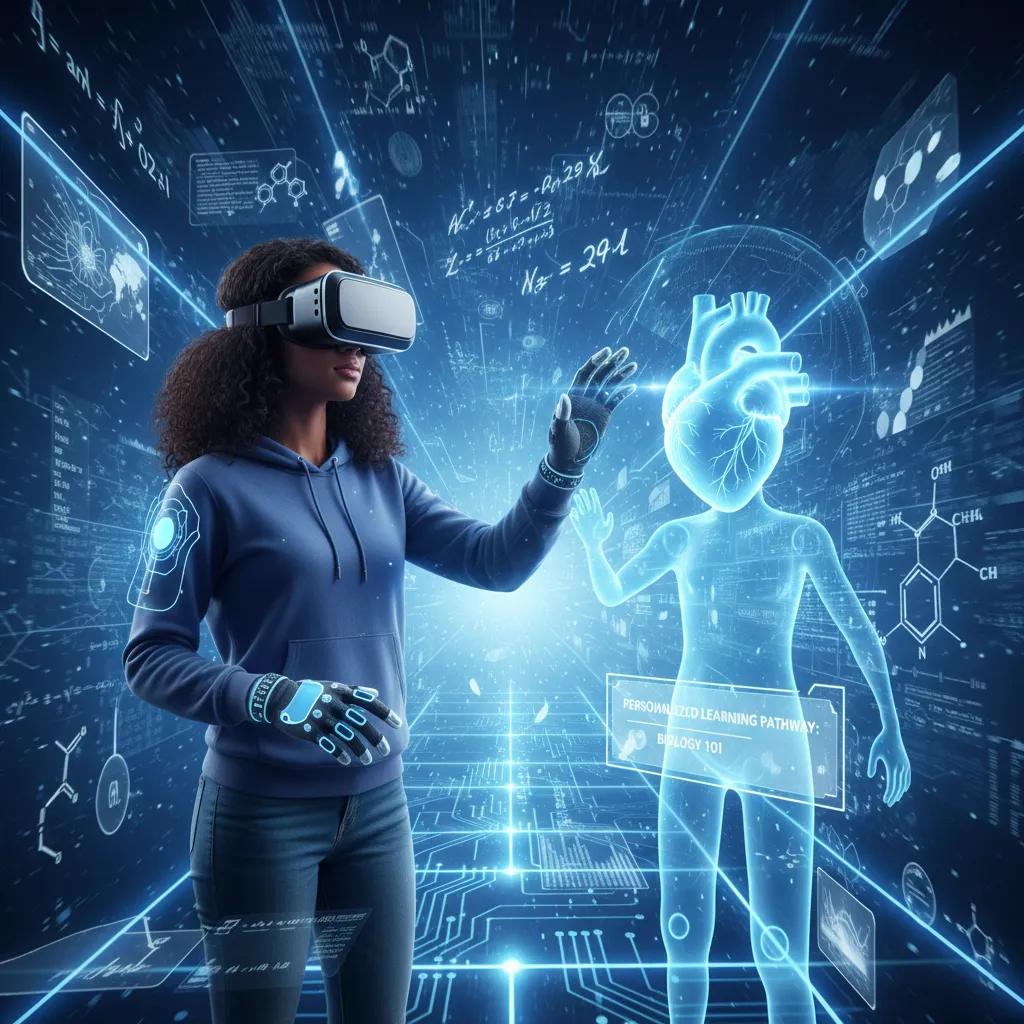
The next generation of these systems, often called virtual tutors AI, is incorporating immersive technologies like VR and AR to create even more engaging learning experiences. Imagine dissecting a virtual frog in biology class or walking through ancient Rome for a history lesson, all guided by an intelligent AI.
AI-Powered Research and Writing Assistants
Writing essays and research papers is a staple of academic life, and AI is revolutionizing this process. Modern AI writing assistants go far beyond simple spell-checking. They can:
- Improve Clarity and Style: Suggest ways to rephrase sentences for greater impact and readability.
- Check for Plagiarism: Ensure your work is original and properly cited.
- Summarize Complex Sources: Help you quickly grasp the main points of dense academic journals or articles.
- Generate Citations: Automatically format bibliographies in any style (MLA, APA, Chicago, etc.), saving hours of tedious work.
Crucially, the goal of these tools is not to write for you, but to augment your abilities. They are your co-pilot, helping you organize your thoughts, refine your arguments, and present your ideas more professionally. The rise of on-device AI promises to make these assistants even more responsive and integrated into our daily workflows. [Related: Apple Intelligence Guide: Your New AI Superpowers]
Gamified Learning and Engaging Educational Apps
Let’s face it: traditional studying can be a grind. Gamified learning AI injects elements of fun and competition into the process to boost motivation. AI educational apps use points, badges, leaderboards, and narrative storylines to make learning feel less like a chore and more like a quest.
Language-learning apps like Duolingo are a prime example, using AI to personalize lesson plans and gamify vocabulary practice. Math apps can turn solving equations into a space-faring adventure. This approach is particularly effective for younger learners but is proving beneficial for students of all ages by increasing engagement and knowledge retention.
Practical AI Learning Strategies for Modern Students
Having access to tools is one thing; knowing how to use them effectively is another. Here are some concrete AI learning strategies to integrate into your academic routine.
Crafting Personalized Study Plans with AI
Don’t just study harder; study smarter. Use AI to create a hyper-efficient study schedule. You can feed your entire syllabus—including lecture notes, assignment deadlines, and exam dates—into an AI tool. It can then:
- Prioritize Topics: Identify the most heavily weighted topics and suggest allocating more study time to them.
- Break Down Large Tasks: Convert a daunting “write research paper” task into manageable steps like “conduct literature review,” “create outline,” and “draft introduction.”
- Optimize for Test Prep: As an exam approaches, AI can serve as the ultimate tool for AI for test prep. It can generate thousands of unique practice questions, create flashcards from your notes, and simulate exam conditions to build your confidence and stamina.
Enhancing Collaboration and Group Projects
Group projects can be a source of stress due to coordination challenges. AI can act as the perfect project manager. AI-powered collaborative platforms can:
- Transcribe Meetings: Automatically generate transcripts of brainstorming sessions so no ideas are lost.
- Assign and Track Tasks: Help delegate responsibilities and monitor progress toward shared goals.
- Facilitate Communication: Integrate with chat apps to keep everyone on the same page.
- Synthesize Ideas: Some advanced AIs can even analyze group discussions and suggest common themes or potential outlines for the final project.

AI-Powered Academic Support for Deeper Understanding
When you hit a conceptual wall, don’t just rely on a standard web search. Use AI for AI-powered academic support. Specialized educational chatbots and platforms can provide Socratic-style dialogues, guiding you to the answer instead of just giving it to you. This method promotes critical thinking and ensures you genuinely understand the material, rather than just memorizing it. This is a core part of the AI education innovation happening right now.
The Bigger Picture: The Impact of AI on the Educational Landscape
The integration of AI is not just changing things for students; it’s reshaping the entire educational ecosystem, from kindergarten to AI in higher education.
Redefining the Role of Teachers
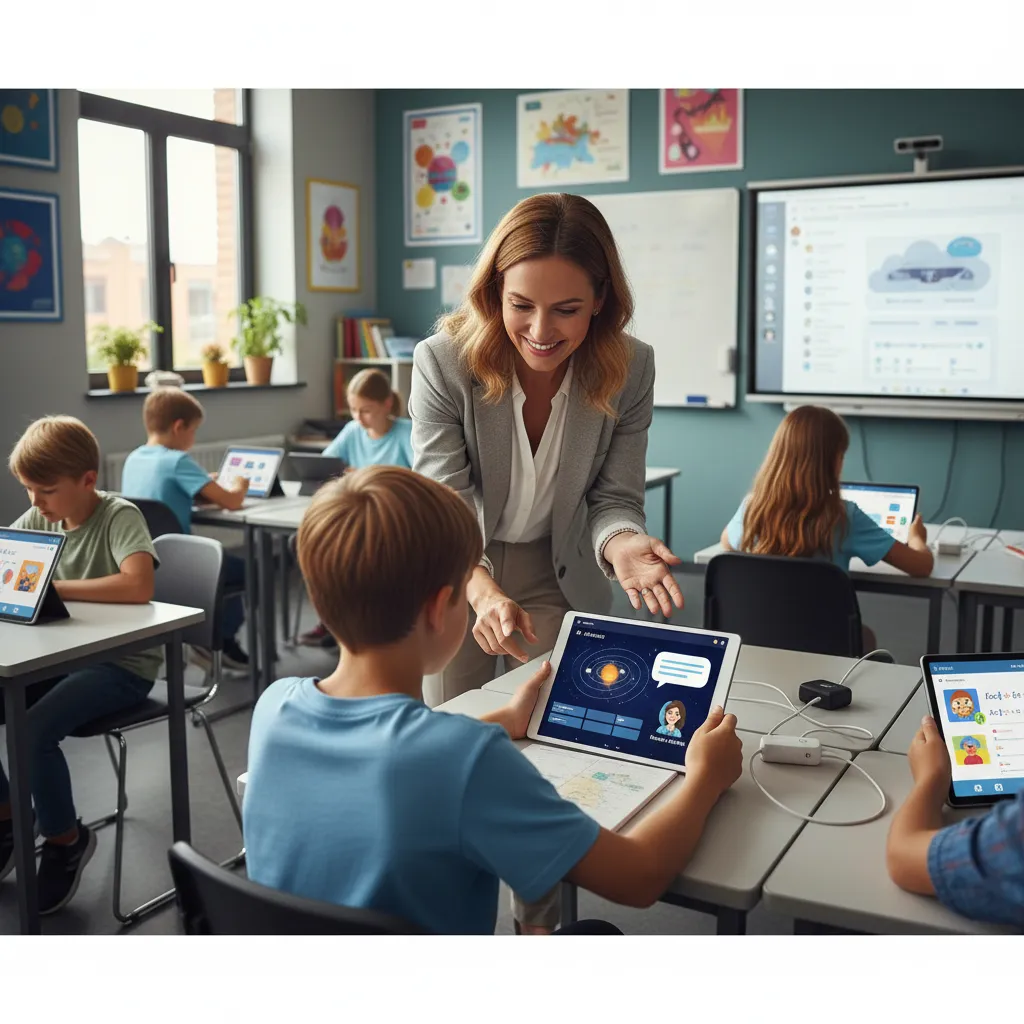
A common fear is that AI will make teachers obsolete. The reality is quite the opposite. AI is poised to empower educators by automating the most time-consuming parts of their job. By offloading tasks like grading, lesson planning, and administrative paperwork, AI frees up teachers to do what they do best: inspire, mentor, and connect with students on a human level.
AI provides teachers with powerful analytics to understand their classroom at a glance. They can see which students are excelling and who needs extra help, allowing for timely interventions. In this new model, the teacher evolves from a “sage on the stage” to a “guide on the side,” orchestrating a personalized learning journey for each student.
Addressing the Challenges: Ethics, Equity, and Data Privacy
Of course, this technological leap is not without its challenges. It’s crucial to address the ethical implications of AI in education.
- Algorithmic Bias: AI systems are trained on data, and if that data reflects existing societal biases, the AI can perpetuate them.
- Data Privacy: How is student performance data being stored, used, and protected? Clear regulations are needed to ensure privacy.
- The Digital Divide: Access to these powerful tools requires reliable internet and modern devices. We must ensure that AI doesn’t widen the gap between well-funded and under-resourced schools.
Addressing these issues proactively is essential to building a fair and equitable future for online learning AI and in-person education alike.
Conclusion: Your Academic Future, Amplified by AI
The integration of AI in education is far more than a passing trend; it is the most powerful catalyst for change our academic systems have seen in generations. We are moving away from a rigid, one-to-many broadcast model and toward a dynamic, one-to-one conversational model of learning.
For students, this shift is incredibly empowering. Smart learning tools and adaptive learning platforms are providing the AI-powered academic support needed to not just pass exams, but to truly master subjects. By embracing these technologies and implementing effective AI learning strategies, you can create custom learning paths that align perfectly with your unique skills, pace, and passions.
The future of learning isn’t about choosing between a human teacher and an algorithm. It’s about a powerful synergy between the two. The journey to AI for student success has begun, and the tools to unlock your full academic potential are now at your fingertips. It’s time to start learning smarter.
Frequently Asked Questions (FAQs)
How does AI help students learn?
AI helps students by providing personalized learning experiences. It analyzes their performance to identify strengths and weaknesses, creating custom study plans and adapting content difficulty in real-time. Tools like AI tutors offer 24/7 homework help, instant feedback, and explanations tailored to a student’s individual learning style.
What is an example of an adaptive learning platform?
An example of an adaptive learning platform is a math software that gives a student a problem. If the student answers correctly, the next problem is slightly more difficult to challenge them. If they answer incorrectly, the platform provides a simpler problem or a tutorial to reinforce the underlying concept before moving forward.
What are the main benefits of using AI in schools?
The main benefits of AI in schools include personalized learning paths for every student, increased engagement through gamification, immediate academic support, and better data for teachers to make informed decisions. It also automates administrative tasks, freeing up educators to focus on high-impact mentoring and instruction.
Can AI replace human teachers?
No, AI is not intended to replace human teachers. Instead, it acts as a powerful assistant. AI handles data analysis, content personalization, and routine grading, allowing teachers to focus on complex human skills like mentorship, fostering creativity, emotional support, and inspiring students—things AI cannot replicate.
What are the disadvantages of AI in education?
The primary disadvantages include the risk of algorithmic bias perpetuating inequalities, concerns over student data privacy, and the high cost of implementation, which can widen the digital divide. There’s also a risk of over-reliance on technology, potentially hindering the development of critical thinking and problem-solving skills if not used correctly.
How can students start using AI tools for their studies?
Students can start by using AI-powered writing assistants to improve their essays, exploring AI educational apps for gamified learning in subjects they find difficult, and using AI-driven platforms to create personalized study plans for upcoming exams. Many tools offer free or freemium versions, making them highly accessible for AI for test prep and daily homework.