AI for Enhanced Hobbies & Creative Pursuits: Unleashing Your Inner Artist
We’ve all been there. You have a brilliant idea for a painting, a melody stuck in your head, or the seed of a story you’re dying to tell. But then, life gets in the way. You hit a creative block, lack the technical skills, or simply don’t know where to start. What if you had a collaborator available 24/7—an infinitely patient muse that could help you brainstorm, visualize, and execute your wildest creative ideas? That’s no longer science fiction; it’s the reality of using AI for hobbies.
Artificial intelligence is rapidly moving beyond corporate boardrooms and into our personal creative spaces. This isn’t about replacing human artistry; it’s about augmenting it. Think of creative AI tools as a new set of brushes, a super-powered instrument, or a co-writer that never runs out of ideas. Whether you’re a seasoned artist or a curious beginner, AI offers a revolutionary way to enhance your creative pursuits, making them more accessible, enjoyable, and fulfilling than ever before.
In this comprehensive guide, we’ll explore how you can leverage hobby enhancement AI to transform your personal projects. We’ll dive into the best AI tools for visual arts, music, writing, photography, and even DIY crafts, showing you how to unleash your inner artist and bring your imagination to life.
The New Creative Revolution: How AI is Reshaping Personal Hobbies
The fear that AI will render human creativity obsolete is a common, yet increasingly outdated, narrative. The reality is far more exciting. AI is acting as a democratizing force, breaking down barriers that once stood in the way of artistic expression. You no longer need years of training in music theory to compose a beautiful melody or a deep understanding of perspective to sketch a breathtaking landscape.
The true power of AI lies in its ability to serve as a co-pilot, handling the tedious or technically demanding aspects of a project so you can focus on the core vision. [Related: The Rise of AI Copilots: Revolutionizing Work, Boosting Creativity & Driving Innovation] This shift allows for unprecedented levels of experimentation. You can generate a hundred variations of a design in minutes, test a dozen different chord progressions instantly, or explore countless plot twists for your novel. This process isn’t just about efficiency; it’s about using AI creative problem solving to discover new paths you might never have considered on your own.
This new paradigm empowers you to boost creativity with AI, turning passive consumption of media into active creation. It’s an invitation to take on that AI creative challenge you’ve been dreaming of, whether it’s designing your own video game or writing a collection of poetry.
Visual Arts Unleashed: From Digital Painting to Graphic Design
The visual arts have experienced one of the most dramatic transformations thanks to AI. From generating photorealistic images out of thin air to intelligently editing photos, the possibilities are staggering.
AI Art Generators: Your Personal Idea Factory
At the forefront of the visual AI revolution are AI art generators like Midjourney, DALL-E 3, and Stable Diffusion. These platforms allow you to turn simple text descriptions (prompts) into complex, detailed images. This is more than a novelty; it’s a powerful tool for ideation and inspiration.
- Brainstorming and Concept Art: Stuck on what your fantasy character should look like? Need AI art inspiration for a landscape painting? Describe your vision to an AI, and it will generate a dozen different visual interpretations, providing a rich foundation to build upon.
- Digital Art & Drawing: You can use these tools to create base layers, textures, or backgrounds for your digital art AI projects. For those interested in AI for drawing, you can generate a rough sketch and then import it into a program like Procreate or Photoshop to add your personal touch and refine the details.
- Exploring New Styles: Ever wondered what your idea would look like in the style of Van Gogh, as a piece of cyberpunk art, or as a minimalist line drawing? AI art generators make stylistic exploration effortless, broadening your artistic horizons.
Intelligent Painting and Editing: Beyond the Filter
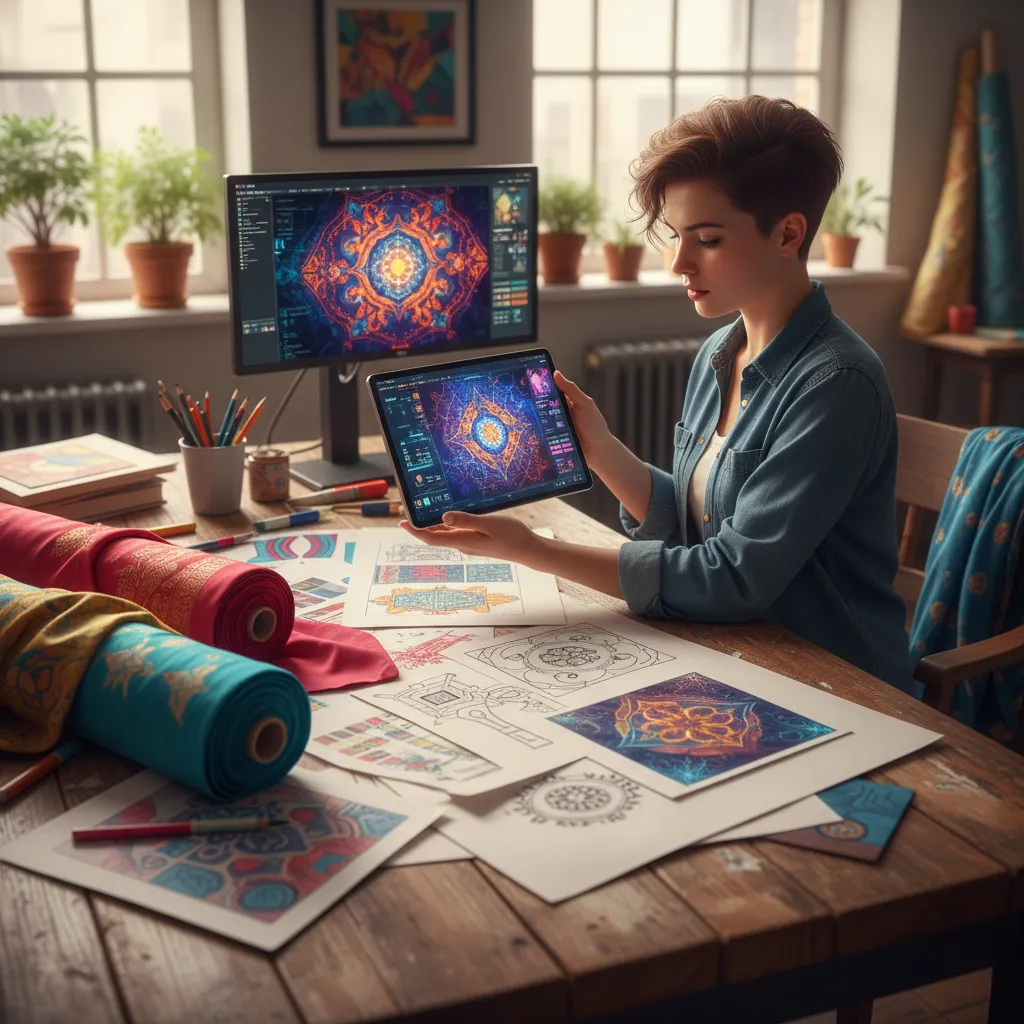
For photographers and digital painters, AI is being integrated directly into flagship software, creating workflows that feel like magic. These are not your average photo filters; these are sophisticated AI photography tools.
Adobe Photoshop’s Generative Fill, for example, allows you to select an area of an image and simply type what you want to add or remove. You can extend backgrounds, remove unwanted objects, or even change a subject’s clothing seamlessly. Tools like Luminar Neo and Topaz Labs use AI to handle complex tasks like noise reduction, sharpening, and sky replacement with stunning realism. This level of AI photography editing frees you from hours of meticulous manual work, allowing you to focus on the creative aspects of color grading and composition. Similarly, AI painting apps are emerging that can assist with color blending, brush strokes, and even converting photos into stylized paintings.
AI for Graphic Design and DIY Crafts
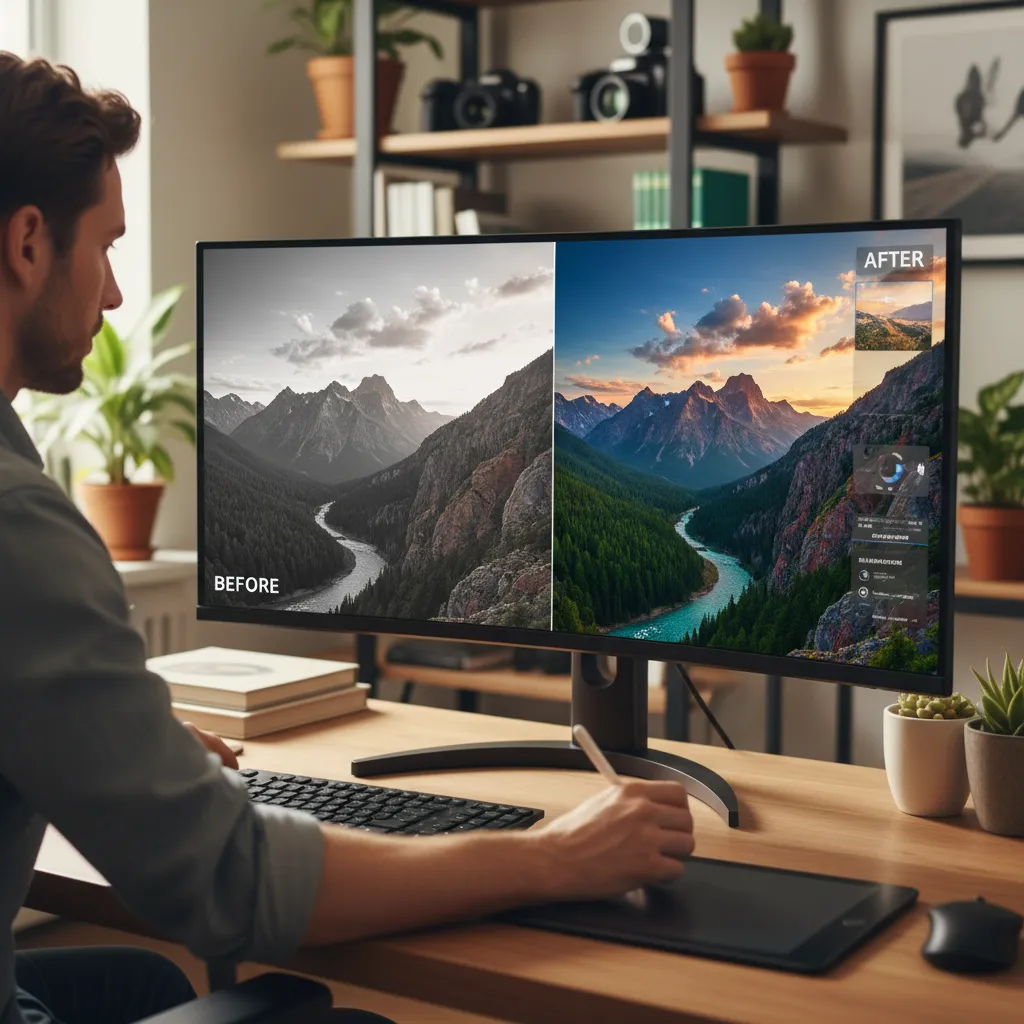
The creative potential of AI extends into the tangible world of crafts and design. AI design software for amateurs, like Canva’s Magic Studio, can generate entire presentations, social media posts, and logos from a simple prompt. This is a game-changer for AI for graphic design hobbies, empowering anyone to create professional-looking visuals for their personal brand or projects.
Furthermore, you can generate AI craft ideas for anything from pottery designs to quilting patterns. Want to create custom fabric for a sewing project? Use an AI image generator to create a unique seamless pattern. This application of AI for DIY projects is a perfect example of how digital tools can fuel physical creativity. [Related: AI’s Green Thread: Revolutionizing Sustainable Fashion]
Composing the Future: AI in Music and Audio Creation
For musicians and audio enthusiasts, AI is opening new doors for composition, production, and experimentation. It’s like having a virtual bandmate who is an expert in music theory and never gets tired.
Your AI Bandmate: Music Composition and Generation
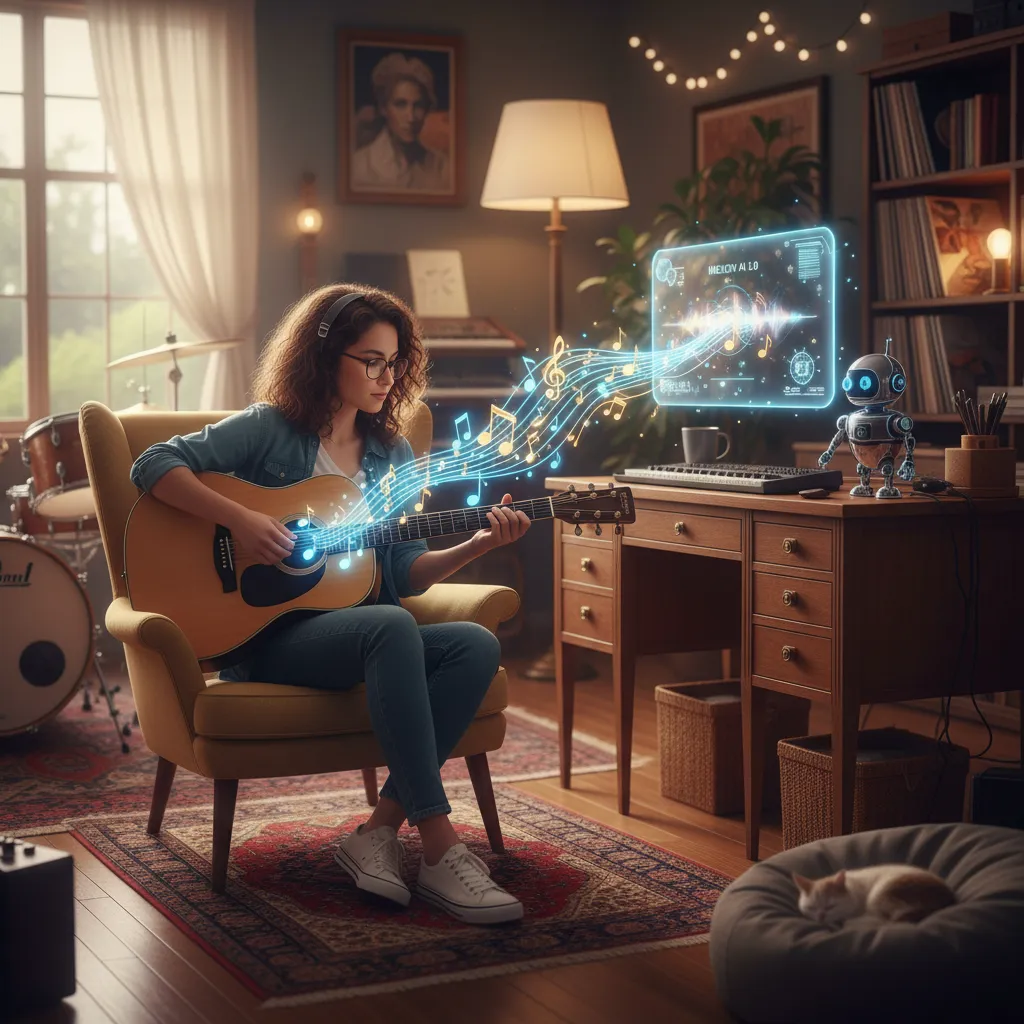
The world of AI music creation has exploded with platforms like Suno and Udio, which can generate full-fledged songs—complete with vocals and instrumentation—from a text prompt. While they might not be topping the charts just yet, they are incredible tools for hobbyists.
- Songwriting and Ideation: Use music composition AI to break through writer’s block. Input a mood, a genre, and a theme, and listen to the ideas it generates. You can get inspiration for a chord progression, a vocal melody, or a rhythmic pattern.
- Backing Tracks: Need a backing track to practice your guitar solo over? Generate a custom track in any key, tempo, and style you want.
- Soundtracks for Personal Projects: If you’re creating a YouTube video or a short film for fun, you can use AI to generate royalty-free background music that perfectly fits the tone of your content. This is a huge leap forward for AI video creation for hobbies.
From Sound Design to Podcast Editing
Beyond composition, AI is streamlining the technical side of audio production. Tools like Adobe Podcast’s Enhance Speech can make amateur voice recordings sound like they were captured in a professional studio. Other AI tools can help with audio mastering, generating unique sound effects, or even isolating stems (like vocals or drums) from an existing song for remixing projects. This technology makes high-quality audio production more accessible to everyone.
The Writer’s New Best Friend: AI for Storytelling and Poetry
Whether you’re an aspiring novelist, a poet, or just someone who enjoys journaling, AI can be a powerful partner in the writing process.
Overcoming Writer’s Block with an AI Writing Assistant
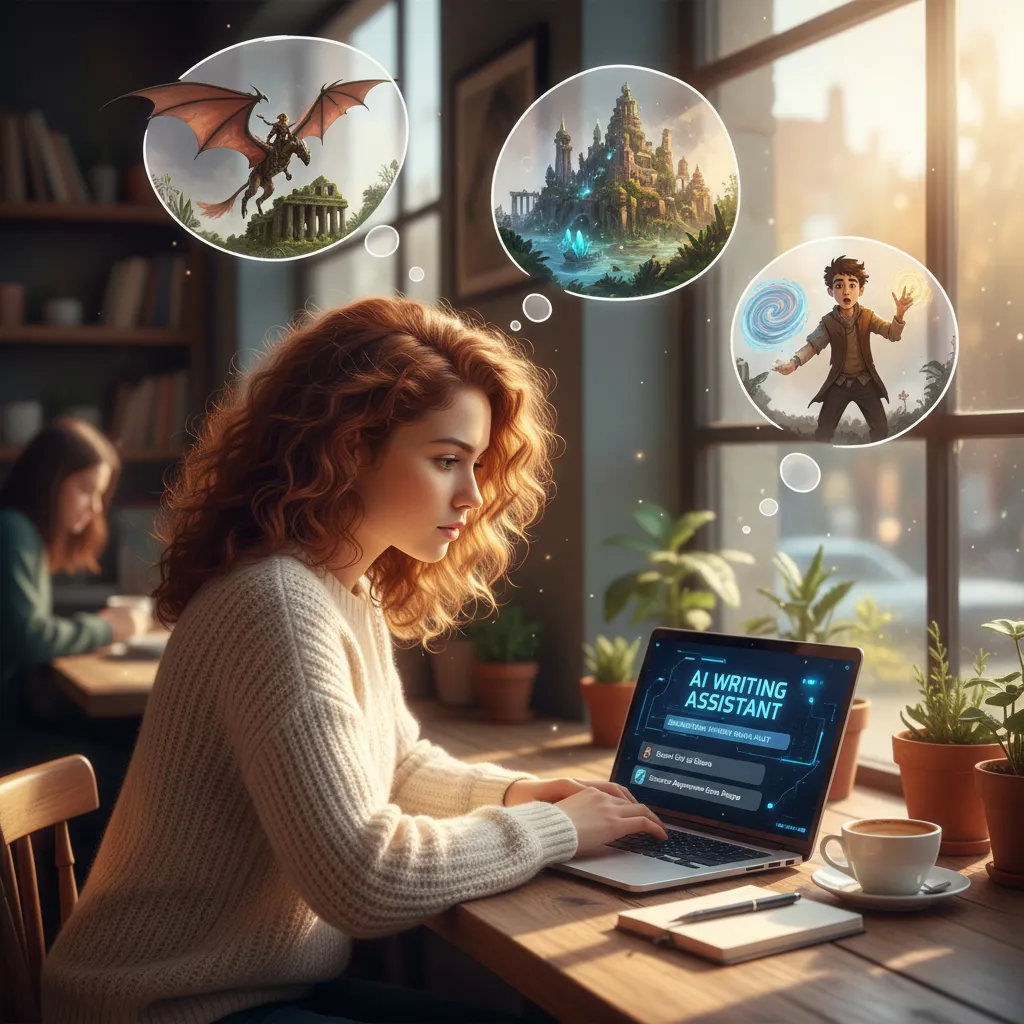
An AI writing assistant for creativity is not about having a robot write your story for you. It’s about having a tool to help you when you get stuck. Large language models like ChatGPT, Claude, and specialized writing tools like Sudowrite are fantastic for brainstorming and outlining.
You can feed them creative writing AI prompts like:
- “Give me ten plot ideas for a mystery novel set in a futuristic library.”
- “Describe a bustling medieval market from the perspective of a pickpocket.”
- “Help me brainstorm weaknesses for a superhero whose power is controlling plants.”
This interactive process can spark new ideas and help you see your story from different angles. It’s a way to keep the creative momentum going when the blank page feels intimidating. [Related: GPT-4o: What Is It & Why It Matters]
Crafting Narratives: AI Storytelling and Poetry
Beyond brainstorming, AI storytelling tools can assist with the finer details of world-building, character development, and dialogue. You can have a “conversation” with your own character to flesh out their personality or ask the AI to generate descriptions of fantastical locations to enrich your setting.
For poets, an AI poetry writer can be a fun way to experiment with form, meter, and rhyme schemes. You can use it as a creative exercise to generate lines or stanzas that you can then rework and infuse with your own unique voice and emotion, truly enhancing your capacity for AI for artistic expression.
Expanding the Playground: AI in Niche and Emerging Hobbies
The creative applications of AI are constantly expanding into new and exciting areas, empowering hobbyists to tackle projects that were once out of reach.
AI for Hobbyist Game and Video Creation
Dream of making your own video game but don’t know how to code or create 3D models? AI game design for hobbyists is a rapidly growing field. AI tools can help generate game assets like character sprites, textures, and background environments. Some platforms are even experimenting with AI-assisted level design and narrative generation.
Similarly, AI video creation for hobbies is taking a massive leap forward. Tools like Runway and Pika Labs allow you to generate short video clips from text or images, opening up a new frontier for amateur filmmakers and content creators who want to produce animated shorts or visually stunning social media content.
Learning and Experimentation: Using AI to Master New Skills
Perhaps one of the most powerful uses of AI is its ability to help you learn new hobbies with AI. You can use a conversational AI as a personalized tutor.
- Learn to Code: Ask ChatGPT to explain programming concepts, debug your code, and give you practice exercises.
- Master an Instrument: Use an AI app that listens to you play and gives you real-time feedback on your timing and pitch.
- Explore Cooking: Ask for recipes based on the ingredients you have, with step-by-step instructions and explanations of cooking techniques.
This personalized creative AI acts as a patient guide, adapting to your learning pace and answering your questions, making the process of acquiring new skills more engaging and effective. [Related: What is Apple Intelligence? Key AI Features Explained]
Conclusion: Your Creative Journey, Amplified
We are standing at the threshold of a new creative era. AI is not a threat to human artistry but its greatest catalyst yet. It is a powerful collaborator that breaks down technical barriers, obliterates creative blocks, and provides an infinite sandbox for experimentation. From AI art generators that visualize your dreams to music composition AI that scores them, the tools to amplify your passions are more accessible than ever.
The key is to embrace AI as a partner in your creative process. Use it to handle the grunt work, to spark new ideas, and to explore uncharted territory. The final vision, the emotional core, and the unique human touch will always be yours. So, pick a tool, start one of your AI for personal projects, and begin the exciting journey of unleashing your inner artist. The canvas is waiting.
Frequently Asked Questions (FAQs)
Q1. What are the best creative AI tools for beginners?
For beginners, the best tools are those with user-friendly interfaces. For visual art, Canva’s Magic Studio and Microsoft Designer are excellent starting points. For writing assistance, ChatGPT’s free version is incredibly powerful and versatile. For music, Suno.ai is remarkably simple for generating full songs from text prompts.
Q2. Can AI actually be creative on its own?
This is a topic of philosophical debate. Currently, AI models are technically pattern-recognition and generation machines. They learn from vast datasets of human-created content and generate new outputs based on those patterns. While the results can be astonishingly novel and appear creative, AI does not possess consciousness, intention, or personal experience—the hallmarks of human creativity. It’s best viewed as an incredibly sophisticated tool for human-led AI for artistic expression.
Q3. Is using AI for art considered cheating?
Using AI in art is not cheating; it’s using a new tool, much like the invention of the camera or digital software like Photoshop. The creativity lies in the artist’s vision, their prompts, their curation of the results, and the subsequent editing or integration into a larger piece. It simply shifts some of the technical execution, allowing the artist to focus more on the concept and idea.
Q4. How do I start using AI to learn a new hobby?
Start by identifying the skill you want to learn. Then, use a general AI chatbot like ChatGPT or Google Gemini as a personalized tutor. Ask it to create a learning plan, explain fundamental concepts, provide practice exercises, and answer your specific questions. For example, you could ask, “Create a 4-week plan for a beginner to learn Python for AI for DIY projects.”
Q5. Are AI-generated images and music free to use?
The copyright and usage rights for AI-generated content are complex and vary by the platform you use. Some services grant you full commercial rights to the images you create, while others have more restrictive licenses. It is crucial to read the terms of service for any creative AI tools you use, especially if you plan to use the output for anything beyond personal projects.
Q6. What is the difference between generative AI and other types of AI?
Generative AI, as the name suggests, creates new content (like images, text, or music) that did not previously exist. Other types of AI are often analytical or predictive; for example, they might classify an email as spam, recognize a face in a photo, or predict stock market trends. The tools discussed in this article, like AI art generators and AI storytelling tools, are all forms of generative AI.
Q7. How can AI help with creative problem-solving?
AI is an excellent tool for divergent thinking, a key component of problem-solving. You can present a creative challenge to an AI (e.g., “How can I design a small apartment for maximum storage?”) and ask it to brainstorm dozens of unconventional solutions. This allows you to quickly evaluate a wide range of possibilities, some of which you may never have thought of, accelerating the AI creative problem solving process.