Unlock Your Wealth: How AI is Revolutionizing Personal Finance in 2024

Introduction
Remember the days of manually entering expenses into a clunky spreadsheet? Or paying hefty fees for one-size-fits-all financial advice? For generations, managing money has been a reactive, often confusing, and time-consuming chore. But in 2024, a silent revolution is underway, and it’s happening right in your pocket. Artificial Intelligence is no longer a futuristic concept; it’s the engine powering a new era of next-gen personal finance.
This isn’t about sci-fi robots managing a dystopian economy. It’s about accessible, intelligent tools designed to function as your personal CFO. The future of finance AI is here, offering unprecedented levels of personalization and automation that were once reserved for the ultra-wealthy. From smart budgeting that anticipates your spending habits to automated investing that grows your wealth while you sleep, AI personal finance is fundamentally changing our relationship with money.
In this comprehensive guide, we’ll dive deep into how AI is reshaping everything from daily spending to long-term wealth building. You’ll learn about the cutting-edge AI financial planning tools at your disposal, discover powerful AI investing strategies, and understand how to leverage this technology to achieve your financial goals faster and more efficiently than ever before. Get ready to unlock your wealth potential.
The Dawn of a New Financial Era: What is AI Personal Finance?
At its core, AI personal finance uses complex algorithms and machine learning to analyze your financial data, understand your behavior, and provide actionable insights to improve your financial health. It’s the brain behind the most innovative Fintech AI trends, transforming static data into dynamic, forward-looking strategies.
Think of it this way:
- Traditional Finance: You look at last month’s bank statement to see where your money went. It’s historical and reactive.
- AI-Powered Finance: An app analyzes your spending in real-time, projects your future cash flow, identifies a potential budget shortfall in two weeks, and suggests a specific spending adjustment today to prevent it. It’s predictive and proactive.
This is made possible by machine learning models that process vast amounts of data—your transaction history, income streams, bills, and stated goals—to identify patterns invisible to the human eye. This is the foundation of smart money management AI: technology that doesn’t just track your money but understands it.
Smart Budgeting and Expense Tracking: Your Money on Autopilot
For most people, the journey to financial wellness begins with mastering the budget. It’s the bedrock of any solid financial plan, yet it’s often the most tedious part. This is where AI makes its most immediate impact.
AI-Powered Budgeting Apps: Beyond Simple Spreadsheets
Modern budgeting apps AI have evolved far beyond simple income-versus-expense calculators. They are dynamic ecosystems designed to automate and simplify your financial life.

Here’s how they leverage AI:
- Intelligent Categorization: Forget manually tagging every coffee purchase. AI algorithms instantly recognize transactions from thousands of vendors and categorize them with stunning accuracy, learning your unique spending habits over time.
- Predictive Forecasting: By analyzing your past income and spending cycles, these apps can accurately predict your future account balances, helping you avoid overdrafts and plan for large expenses.
- Subscription Management: AI scans your recurring payments and flags unused subscriptions, saving you money on services you forgot you were even paying for. This is one of the simplest AI money growth hacks to implement.
- Personalized Insights: Instead of generic advice, you get tailored AI financial insights. For example, an app might notify you: “You’ve spent 40% more on dining out this month compared to your 6-month average. Here are some top-rated home cooking recipes to help you save.”
Platforms like Copilot Money and Monarch Money are at the forefront of this, offering a holistic view of your financial world through slick, intuitive interfaces. They are the epitome of smart budgeting with AI.
AI-Driven Savings Tips and Debt Management
Once your spending is under control, AI helps you build momentum. AI-driven savings tips are no longer generic (“save 10% of your income”). They are hyper-personalized. AI can analyze your cash flow and identify “safe-to-save” amounts, automatically transferring small, painless sums into your savings account.
Furthermore, AI for debt management is a game-changer. Specialized AI tools can analyze all your debts (credit cards, student loans, mortgages) and create an optimized repayment strategy based on your financial situation and goals. It can run thousands of simulations in seconds to determine whether the “Avalanche” (highest interest first) or “Snowball” (smallest balance first) method will save you more money and keep you more motivated. Related: Deep Work Mastery: Unlock Focus and Boost Productivity in a Distracted World
Revolutionizing Investing: AI Strategies for Wealth Building
Beyond saving, true financial independence is achieved through wealth creation. Investing has historically been intimidating, complex, and gated by high fees. AI is democratizing access to sophisticated investment strategies, making AI wealth building a reality for everyone.
The Rise of Robo-Advisors in 2024
Robo-advisors 2024 are the most prominent example of AI in investing. These AI investment platforms, such as Betterment and Wealthfront, act as digital financial advisors, using algorithms to build and manage a diversified investment portfolio tailored to you.
The process is remarkably simple:
- Onboarding: You answer a questionnaire about your financial goals (e.g., retirement, buying a house), timeline, and risk tolerance.
- Portfolio Allocation: The AI uses Modern Portfolio Theory to construct a globally diversified portfolio of low-cost ETFs (Exchange-Traded Funds) that matches your profile.
- Automation: Once you deposit funds, the platform handles everything. It executes trades, reinvests dividends, and continuously monitors your portfolio.
A key feature is automatic rebalancing. If the stock market soars and your stock allocation drifts from 70% to 75%, the AI will automatically sell some stocks and buy bonds to return to your target, ensuring you’re not taking on unintended risk. This is the essence of automated investing AI.

AI Stock Market Prediction and Advanced Strategies
For the more adventurous investor, AI offers even more advanced tools. While no algorithm can perfectly predict the future, AI stock market prediction models analyze technical indicators, market sentiment from news and social media, and economic data to identify potential trends and trading opportunities.
This technology also powers AI crypto trading bots, which can execute trades 24/7 based on predefined strategies. However, it’s crucial to approach these advanced tools with caution. They carry significant risk and are best suited for experienced investors who understand the underlying volatility. These are powerful wealth management AI solutions, but they require careful handling. Related: AI Ethics Unpacked: Navigating the Moral Maze of Intelligent Systems
Personal Wealth Automation: The Set-it-and-Forget-it Dream
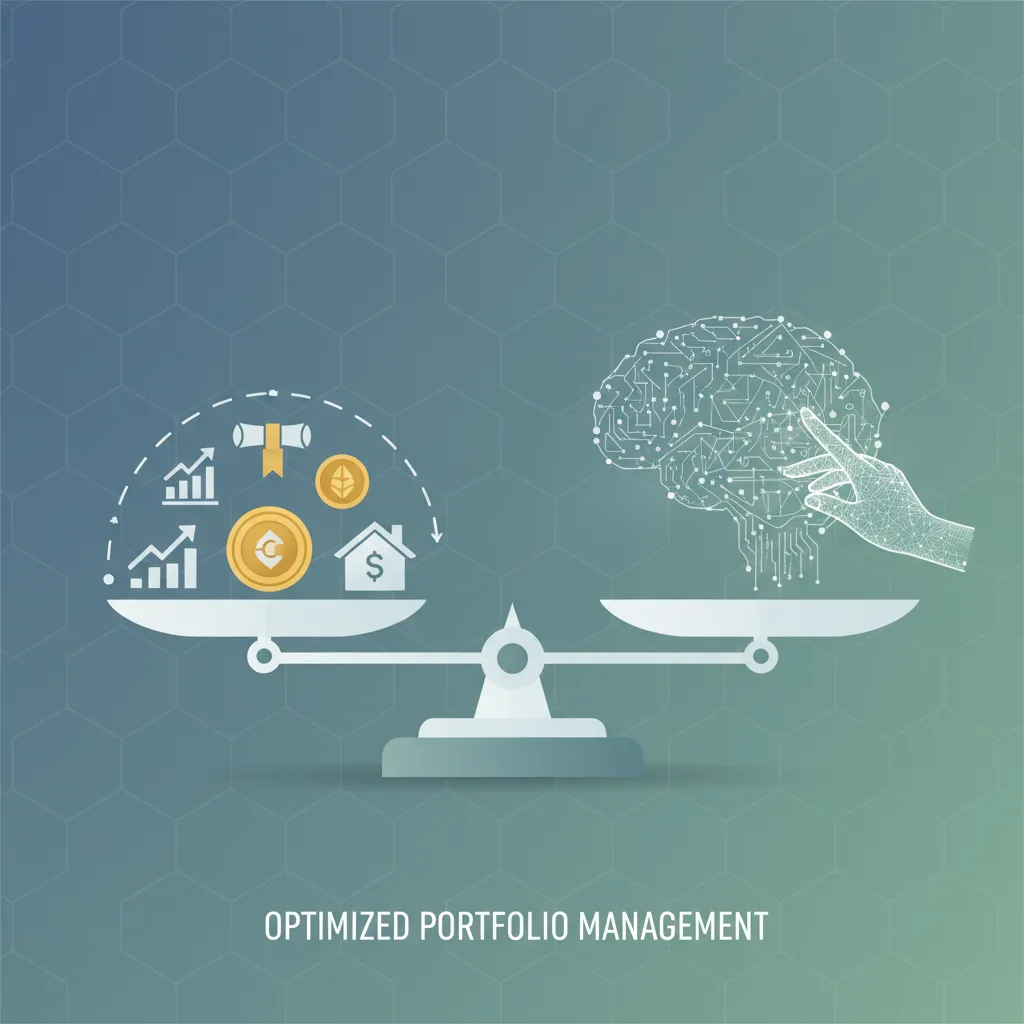
The ultimate goal is achieving a state of personal wealth automation. Imagine a seamless system: your paycheck is deposited, AI allocates money to bills, transfers a calculated amount to your emergency fund, and invests the rest into your diversified portfolio—all without you lifting a finger. This is no longer a dream. By integrating AI banking apps, budgeting tools, and robo-advisors, you can create a powerful, automated financial engine working constantly to build your net worth.
The Future is Personalized: AI Financial Planning and Advice
The holy grail of personal finance technology is truly personalized advice. AI is making this accessible to the masses, moving beyond generic rules of thumb to deliver guidance that understands your unique life circumstances.
From Generic Advice to Hyper-Personalized Insights
Traditional financial advice often relies on broad generalizations. Personalized financial advice AI shatters this model. By integrating all your financial accounts, AI can see the complete picture: your income, expenses, assets, debts, and long-term goals.
This allows AI financial planning tools to answer complex questions like:
- “If I contribute an extra $200 per month to my 401(k), how will that impact my retirement date?”
- “Can I afford to buy a $400,000 house in three years? If not, what specific steps should I take to get there?”
- “Based on my career and savings rate, what’s my trajectory toward AI for financial independence?”
The AI can run millions of simulations (a technique called Monte Carlo simulation) to model different market conditions and provide you with a probable range of outcomes, giving you confidence in your financial plan.
AI and Retirement Planning: Securing Your Golden Years
Nowhere is this personalization more critical than in retirement planning. AI and retirement planning tools can create a dynamic roadmap to your golden years. They can help you optimize your contributions across different retirement accounts (401(k), Roth IRA, HSA), suggest appropriate investment strategies that become more conservative as you age, and adjust your plan in real-time based on market performance or changes in your life.
Navigating the Risks: Security and Ethics in AI Finance
With great power comes great responsibility. Entrusting your sensitive financial data to an algorithm naturally raises questions about safety and reliability.
Is Your Money Safe? Understanding Secure AI Finance
Reputable financial technology companies invest heavily in security. When choosing a platform, look for these key features to ensure you’re using secure AI finance tools:
- Bank-Level Encryption: Data should be protected with AES-256 encryption, both in transit and at rest.
- Two-Factor Authentication (2FA): This provides a critical layer of security for your account login.
- Read-Only Access: Most apps use API tokens that grant them “read-only” access to your bank accounts, meaning they can’t move money without your permission.
- Regulatory Compliance: Ensure the company is regulated by appropriate bodies like the SEC (for investing) and is transparent about its security practices.
The Human Element: When to Trust the Algorithm
AI is an incredible tool for analysis and automation, but it lacks human empathy and life experience. For complex, emotionally charged financial decisions—like navigating a divorce, planning an inheritance, or dealing with a sudden job loss—the guidance of a certified human financial planner is irreplaceable. The best approach is often a hybrid one: use AI for 90% of your day-to-day financial management and data analysis, and consult a human expert for the major life moments. Related: AI Personal Assistants: The Daily Life Revolution
Getting Started: Top AI Financial Tools and Platforms in 2024
Ready to dive in? The ecosystem of AI banking apps and financial tools is vast. Here’s a look at some of the leading platforms across different categories:
| Category | Platform | Key AI Features | Best For |
|---|---|---|---|
| Investing / Robo-Advisors | Betterment | Automated portfolio management, tax-loss harvesting, goal-based planning. | Hands-off investors looking for automated, diversified portfolios. |
| Investing / Robo-Advisors | Wealthfront | Automated investing, financial planning tools, high-yield cash accounts. | Tech-savvy investors who want robust digital planning tools. |
| Budgeting & Net Worth | Copilot Money | Real-time expense tracking, AI-powered categorization, subscription management. | iPhone users seeking a beautifully designed, all-in-one financial dashboard. |
| Budgeting & Net Worth | Monarch Money | Collaborative budgeting (for couples), custom dashboards, goal tracking. | Individuals and couples wanting a highly customizable and holistic view. |
| All-in-One Wealth Mgmt. | Empower (Personal Capital) | Free net worth/portfolio tracking, retirement planner, access to human advisors. | Investors who want to analyze their existing portfolio and plan for retirement. |

Conclusion
The revolution in personal finance is not coming; it is here. Artificial Intelligence has moved from a novelty to a fundamental utility, creating a new landscape of personal finance technology that is more accessible, intelligent, and powerful than ever before. From AI expense tracking that sharpens your daily budget to sophisticated AI investing strategies that build long-term wealth, these tools are empowering individuals to take control of their financial destinies.
The journey towards smart money management AI isn’t about letting a robot make all your decisions. It’s about augmenting your own knowledge with data-driven insights, automating the tedious tasks to free up your time, and using personalized guidance to build a clear, actionable path to your goals.
Don’t let the complexity of finance hold you back. Start today by exploring one of the tools mentioned above. Connect your accounts, review the insights it generates, and take one small, AI-guided step. This is the new frontier of personal finance, and it’s time to unlock your full financial potential.
FAQs
Q1. What is AI in personal finance?
AI in personal finance refers to the use of artificial intelligence, machine learning, and data analytics to power financial tools and services. These technologies help automate tasks like budgeting, provide personalized financial advice, manage investments through robo-advisors, and offer deep insights into spending habits to improve overall financial health.
Q2. How do AI budgeting apps work?
AI budgeting apps connect securely to your bank accounts and credit cards to automatically import and categorize your transactions. They use machine learning algorithms to recognize vendors, learn your spending patterns, forecast future cash flow, and identify opportunities to save, such as by flagging unused subscriptions or unusual spending spikes.
Q3. Are robo-advisors a good investment for beginners?
Yes, robo-advisors 2024 are an excellent option for beginners. They offer a low-cost, automated way to access a professionally managed, diversified investment portfolio. By asking simple questions about your goals and risk tolerance, they eliminate the guesswork and complexity often associated with starting to invest.
Q4. Can AI really predict the stock market?
While AI stock market prediction tools exist, they cannot predict the market with 100% accuracy. Instead, they analyze vast amounts of historical data, news sentiment, and economic indicators to identify patterns and probabilities that may suggest future price movements. They are powerful analytical tools but should be used with an understanding of their inherent risks and limitations.
Q5. Is it safe to connect my bank accounts to AI finance apps?
Reputable AI finance apps use bank-level security measures to protect your data. This includes AES-256 encryption, secure API connections that often provide “read-only” access, and multi-factor authentication. Always choose well-known, highly-rated apps and review their security policies before connecting your accounts.
Q6. What is the biggest advantage of using AI for my finances?
The biggest advantage is personalization at scale. AI can analyze your unique financial situation in immense detail to provide tailored advice and automation that was previously only available through expensive human financial advisors. This democratization of sophisticated financial management is the core benefit of the AI personal finance revolution.
Q7. How can AI help me achieve financial independence?
AI helps you achieve financial independence by optimizing every aspect of your financial life. It automates savings and investing, provides a clear, data-driven path for debt repayment, maximizes investment returns through tools like robo-advisors, and offers long-term planning simulations to keep you on track toward your retirement and wealth-building goals. It acts as a tireless co-pilot on your journey to AI for financial independence.