AI Eco-Homes & Smart Green Living: Cut Power Bills & Carbon Footprints
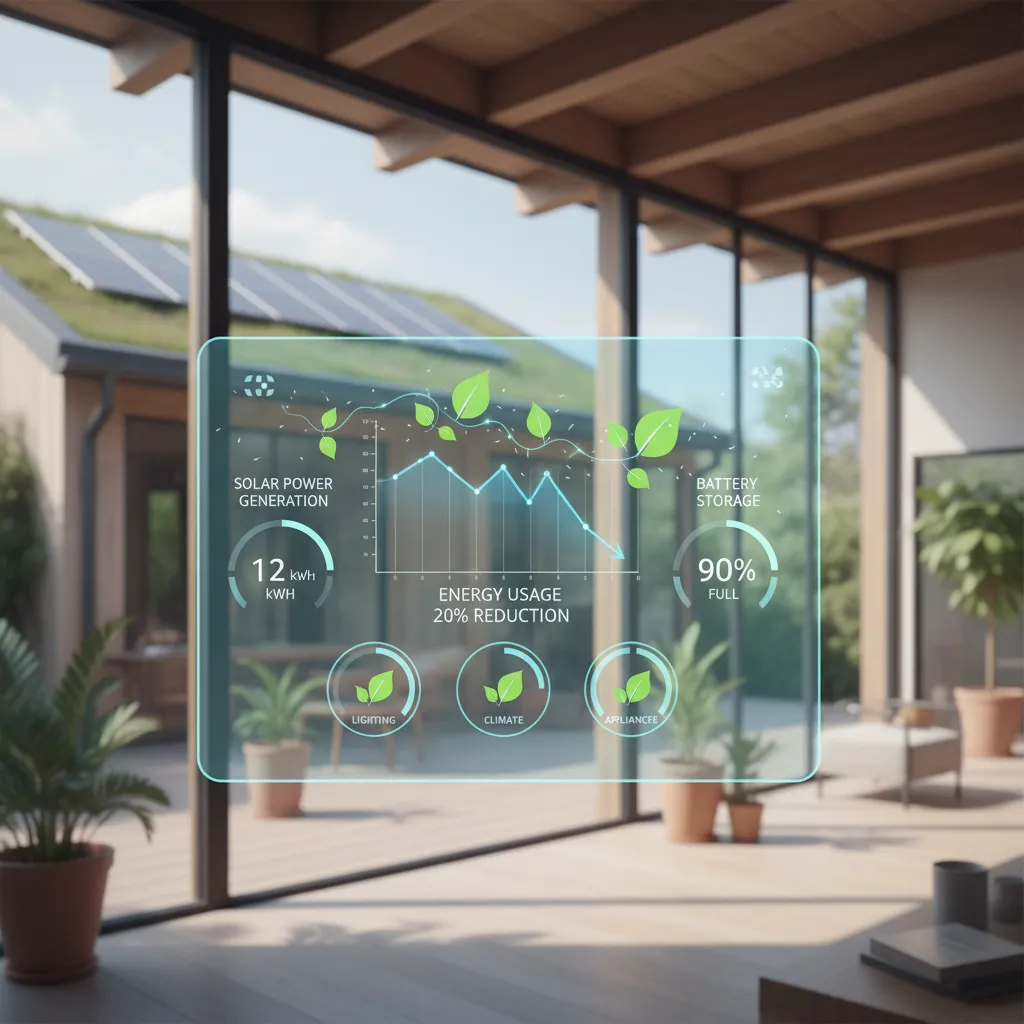
Residential energy consumption accounts for over 20% of global greenhouse gas emissions, with the average household losing thousands of dollars annually to inefficient heating, cooling, and vampire power drains.
AI-powered eco-homes turn passive living spaces into active, self-optimizing energy ecosystems—slashing monthly utility bills while creating a cleaner, more sustainable living environment.
[!NOTE] What is an AI Eco-Home? An AI eco-home is a residential living space that uses machine learning algorithms, IoT smart sensors, and automated energy routers to balance solar generation, battery storage, HVAC zoning, and water usage in real time based on occupancy and dynamic grid tariffs.
⚖️ Conventional Household Energy vs. AI-Powered Eco-Living
| Green Living Dimension | Conventional Household | AI-Optimized Eco-Home | Annual Household Impact |
|---|---|---|---|
| Electricity Costs | Paying full peak-rate utility tariffs | Predictive load-shifting & solar arbitrage | 25% to 35% lower electric bills |
| HVAC Climate Control | Uniformly conditioning empty rooms | Room-by-room presence-based micro-zoning | Cuts heating/cooling waste by 40% |
| Solar Self-Consumption | Exporting solar power cheaply to grid | Storing solar energy for high-rate evening hours | 90%+ solar self-sufficiency |
| Garden Water Usage | Fixed timer sprinklers that run during rain | Satellite weather sync + soil moisture sensors | Saves 10,000+ gallons of water annually |
| Vampire Energy Drain | Idle electronics continuously drawing watts | Smart smart-plug auto-shutoff when idle | Saves $200+ annually on phantom loads |
🏡 The 4 Core Energy Zones of an AI Eco-Home
Eco-Home Energy Cycle:
Solar & Grid Input ──► AI Smart Distribution ──► Micro-Zoned HVAC ──► Eco-Smart Storage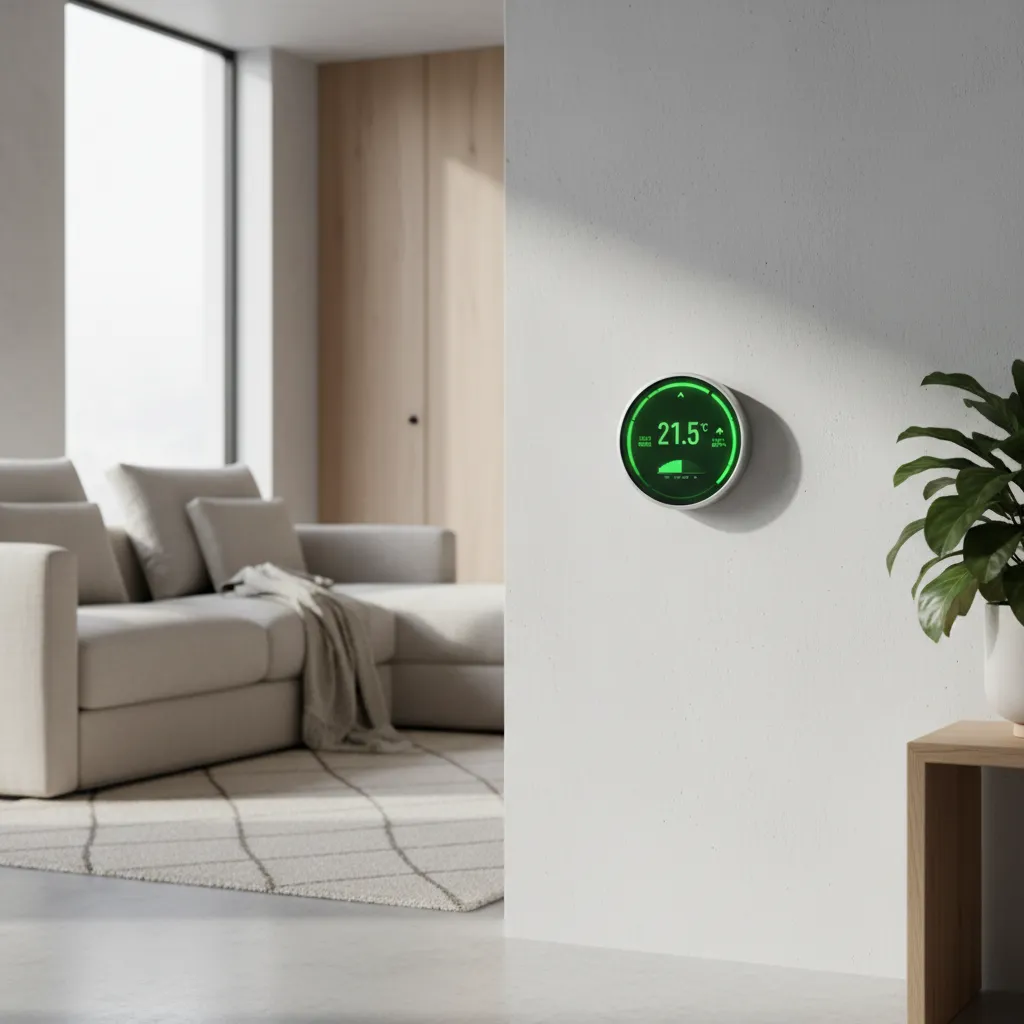
1. Adaptive Smart Thermostats & Thermal Inertia
Machine learning thermostats track your home’s unique thermal retention curve, pre-cooling or pre-heating rooms during low-rate morning hours before peak afternoon utility tariffs take effect.
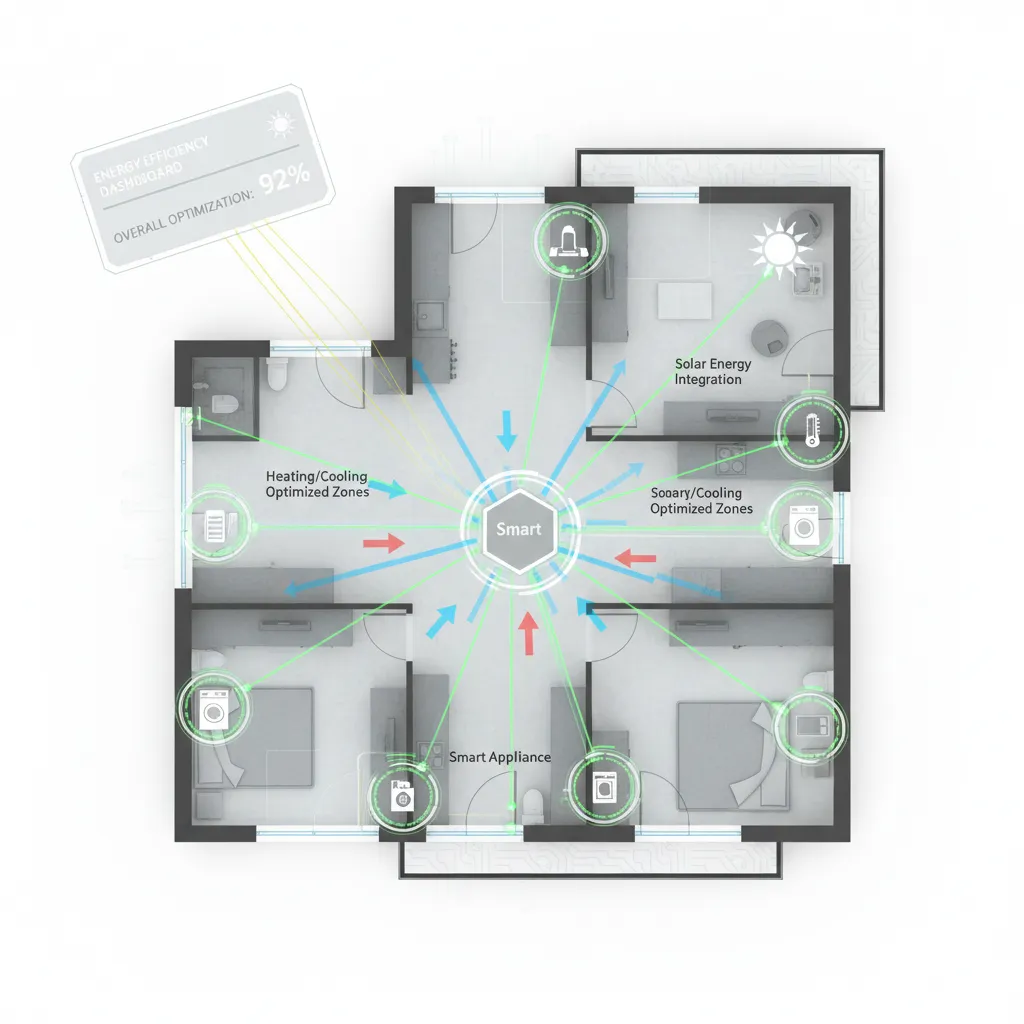
2. Intelligent Power Routing & Battery Arbitrage
Smart energy routers balance power between rooftop solar panels, home storage batteries, and electric vehicle chargers, selling energy back to the grid only when feed-in tariffs peak.
For broader applications in sustainable residential technology, read our guide on AI Agents for Sustainable Smart Homes.
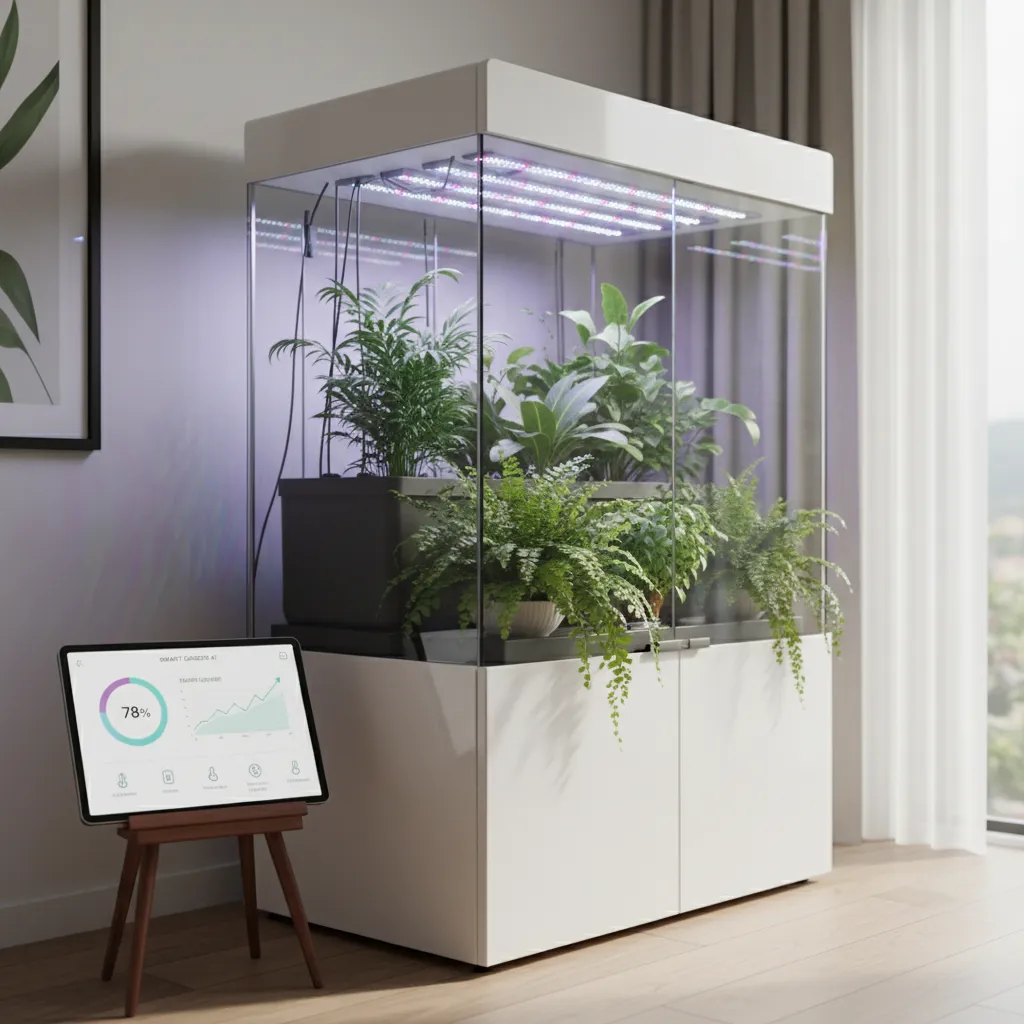
3. Precision Smart Garden Irrigation
Smart controllers analyze soil moisture levels and local rain forecasts, ensuring plant root zones receive optimal hydration without wasting municipal water.
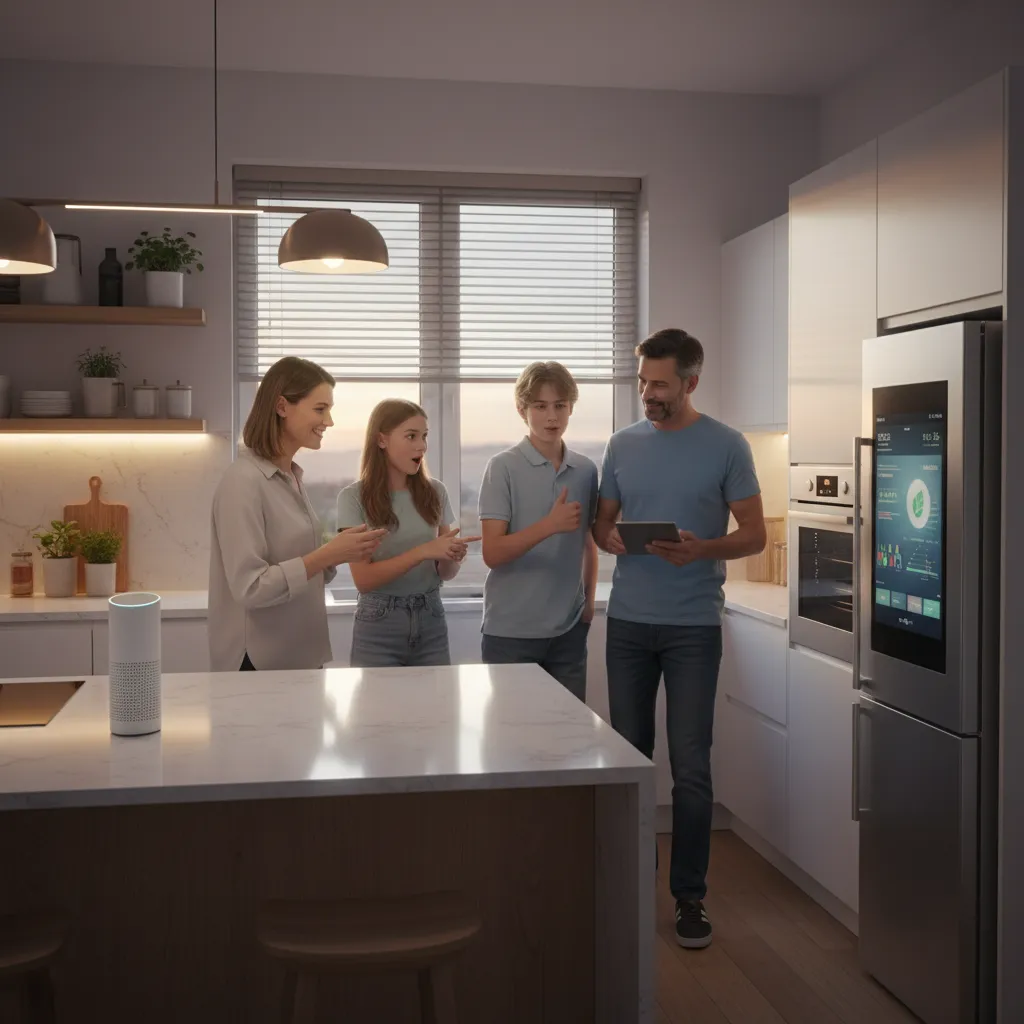
4. Effortless Family Voice Coordination
Voice-enabled ambient interfaces allow family members to activate whole-home eco-modes with simple commands like “Goodnight” or “Leaving Home”, securing locks and shutting down non-essential circuits instantly.
For ambient living and wellness routines, check out AI Agents for Smart Living.
🚀 3 Quick Retrofit Steps for Homeowners in 2026
- Install an Electrical Panel Monitor: Track real-time wattage across every individual circuit breaker to spot rogue power drains.
- Upgrade to Smart Motorized Blinds: Program window shades to close automatically during the hottest hours of summer afternoons to reduce cooling loads by 20%.
- Automate Appliance Off-Peak Runs: Set EV chargers, heat pumps, and dishwashers to execute strictly during off-peak super-saver hours.