AI Digital Mindfulness: Your Guide to Future Well-being & Mental Peace

Introduction
In our hyper-connected world, technology often feels like a double-edged sword. It brings us closer, yet simultaneously bombards us with a relentless stream of notifications, emails, and social media updates, leaving many of us feeling drained and digitally overwhelmed. This constant digital noise has given rise to a critical need for digital mindfulness—the practice of being present, aware, and intentional with our technology use.
But what if the very technology contributing to our burnout could also be our most powerful ally in reclaiming our mental peace?
Enter the fascinating world of AI digital mindfulness. This emerging field harnesses the power of artificial intelligence not to distract us further, but to guide us back to ourselves. It represents a paradigm shift in how we approach mental health, moving from reactive treatments to proactive, personalized well-being.
This comprehensive guide will explore the revolutionary landscape of AI mental health. We’ll delve into how AI wellness apps and sophisticated AI therapy tools are offering on-demand support, fostering a calm mind through data-driven insights. You’ll discover how this mental well-being technology is shaping the future of mental health, making it more accessible, personalized, and integrated into our daily lives than ever before.
The Digital Dilemma: Why We Urgently Need Mindfulness
Before we explore the AI-powered solution, it’s crucial to understand the problem. We live in an “attention economy” where our focus is the currency. Tech platforms are designed to capture and hold it, often at the expense of our mental well-being.
The consequences are real and measurable:
- Increased Stress & Anxiety: The pressure to be constantly “on” and responsive triggers our sympathetic nervous system, leading to chronic stress.
- Information Overload: Our brains aren’t wired to process the sheer volume of information we encounter daily, leading to cognitive fatigue and decision paralysis.
- Fragmented Attention: Constant task-switching between apps and notifications erodes our ability to engage in deep, focused work, impacting productivity and satisfaction.
- Comparison Culture: Curated social media feeds can fuel feelings of inadequacy, anxiety, and depression.
Traditional mindfulness practices like meditation and yoga are effective, but they often require us to step away from our digital lives. Digital mindfulness, however, asks us to bring that same awareness into our interactions with technology. The challenge is that our devices are actively working against this goal. This is where AI steps in as an unlikely, but incredibly effective, coach.
Enter AI: The Unlikely Ally for a Calm Mind
For years, AI has been seen as a driver of complexity and digital noise. But a new generation of AI is being built with human well-being at its core. These smart mental health solutions are not just passive tools; they are active partners in our mental fitness journey.
This new wave of technology leverages sophisticated algorithms to provide:
- Personalization: AI can analyze your unique patterns—mood logs, journal entries, sleep data, and even vocal tone—to tailor interventions specifically for you.
- Accessibility: It breaks down barriers like cost, stigma, and scheduling, offering AI emotional support 24/7, wherever you are.
- Scalability: AI can provide foundational mental health support to millions of people simultaneously, a feat impossible with traditional one-on-one therapy alone.
Instead of a one-size-fits-all approach, you get a dynamic, responsive system that learns and grows with you, making the path to mental well-being a truly personal one. Related: AI Hyper-Personalization is Changing Our Daily Life and Habits.
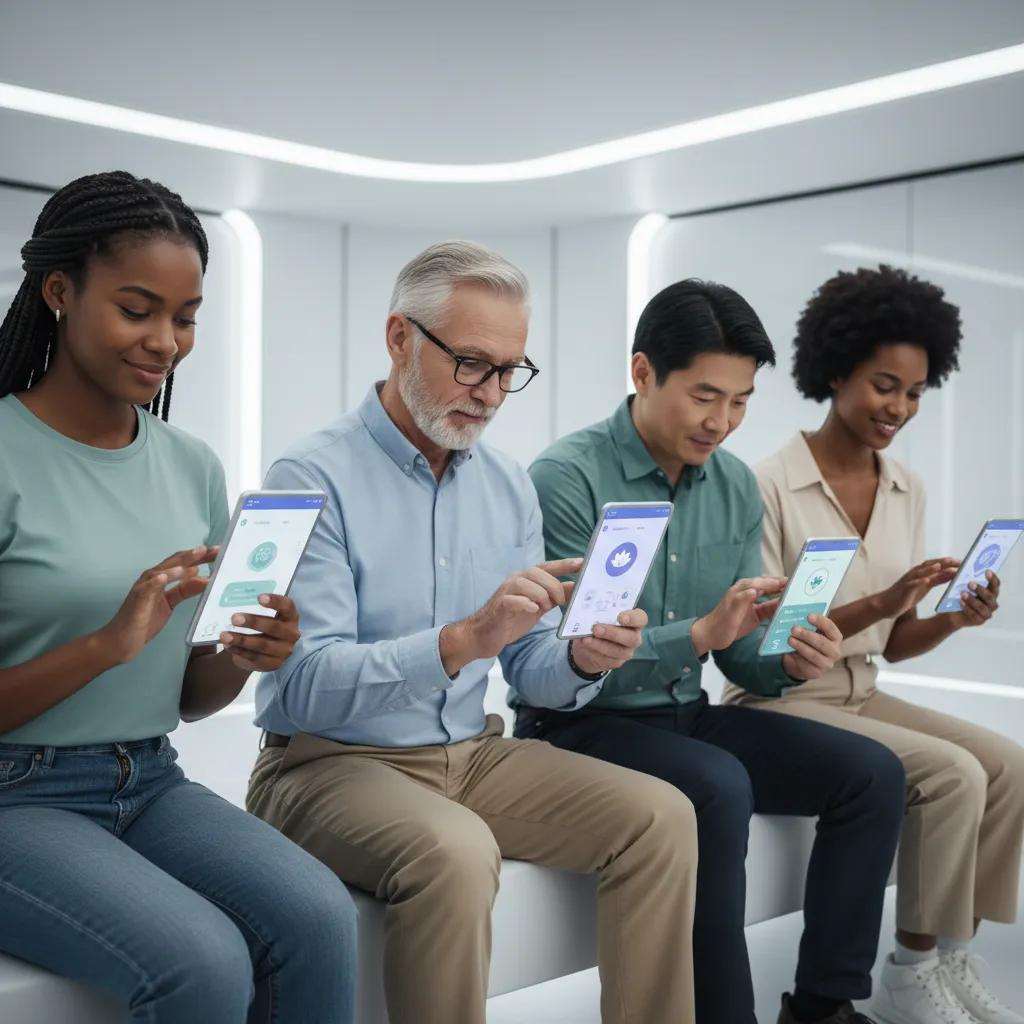
The Pillars of AI-Driven Mental Well-being Technology
AI’s role in mental health isn’t monolithic. It’s a rich ecosystem of different tools and platforms, each designed to address specific aspects of our well-being. Let’s break down the core pillars of this revolution.
Personalized Mental Health at Your Fingertips
The most visible application of AI in this space is the explosion of AI wellness apps. These apps go far beyond simple meditation timers. They are comprehensive AI self-care tools that act as a personal mental health coach in your pocket.
- AI Guided Meditation: Imagine a meditation session that adapts in real-time. By integrating with wearables like smartwatches, these apps can monitor your heart rate variability (HRV). If it senses you’re distracted or stressed, the AI can gently adjust the guidance—changing the music, the speaker’s tone, or the visualization—to help you regain focus and calm.
- Intelligent Mood Tracking: Instead of just asking “How are you?” AI-powered journals can analyze the sentiment and keywords in your text entries. Over time, it can identify triggers, connect your mood to activities or events, and offer proactive insights. For example, it might notice, “You tend to report higher stress on days you have back-to-back meetings. Here’s a 5-minute breathing exercise you can try between calls.”
- Bio-adaptive Soundscapes: Some apps generate personalized soundscapes for focus or sleep that adapt to your brainwaves (via EEG headbands) or other biometric data, creating a truly immersive and effective experience. Related: Wearable Tech is Revolutionizing Health and Fitness.
Accessible and On-Demand AI Therapy Tools
One of the biggest breakthroughs in AI mental health is the development of conversational AI for therapeutic support. These are not replacements for human therapists but serve as powerful first-line-of-support tools.
- AI Cognitive Behavioral Therapy (CBT): CBT is a clinically-proven method for managing mental health conditions. AI chatbots are now expertly trained to guide users through CBT exercises. They can help you identify negative thought patterns, challenge them, and reframe them in a healthier way. This makes proven therapeutic techniques for AI for anxiety and AI for depression management available to anyone with a smartphone.
- 24/7 Emotional Support: A mental health crisis doesn’t operate on a 9-to-5 schedule. AI chatbots provide a non-judgmental, always-available space for users to talk through their feelings. This constant availability can be a lifeline for those experiencing acute distress or who simply need to vent at an odd hour.
- Virtual Mental Health Platforms: These comprehensive AI mental health platforms combine AI tools with access to human therapists, creating a hybrid model of care. The AI can handle daily check-ins and exercises, while the human therapist can focus on deeper, more complex issues during scheduled sessions. This approach makes professional care more efficient and accessible mental health a reality for more people.
Fostering Emotional Intelligence and Self-Awareness
Beyond managing symptoms, AI is becoming a powerful tool for proactive AI personal growth. It helps us understand ourselves better and build crucial life skills.

- AI for Emotional Intelligence (EQ): New tools can analyze vocal tone, facial expressions (with consent in video calls), and language patterns to provide real-time feedback on your emotional expression. This can be invaluable for practicing social skills, preparing for job interviews, or simply becoming more aware of how you communicate.
- Developing AI Coping Mechanisms: By identifying your personal stress triggers, AI tools can help you build a personalized “coping toolkit.” When it detects a potential stressor, it can proactively suggest a specific technique that has worked for you in the past, whether it’s a breathing exercise, a short walk, or journaling. This establishes a strong mind-body AI connection.
- Uncovering Subconscious Patterns: The true power of mental fitness AI lies in its ability to see patterns we can’t. By analyzing months of data, it can reveal subtle correlations between your sleep, exercise, diet, social interaction, and mood, empowering you with a holistic understanding of your well-being. Related: AI Revolutionizes Early Disease Detection in Healthcare.
Beyond the App: Holistic AI Wellness and the Future of Self-Care
The future of digital wellness extends far beyond your phone screen. AI is being woven into the fabric of our environment to create ecosystems that passively support our mental peace.
Smart Mental Health Solutions for Daily Life
Your environment has a profound impact on your mental state. Holistic AI wellness recognizes this by integrating mental health support into your surroundings.
- Adaptive Environments: Imagine your smart home detecting signs of stress in your voice or a high heart rate from your wearable. It could automatically dim the lights, switch to calming ambient music, and suggest a wind-down routine.
- Wearable AI and Biofeedback: The next generation of wearables will do more than just count steps. They will act as continuous mental state monitors, providing subtle haptic feedback to alert you when your stress levels are rising, prompting you to take a mindful moment before it escalates. Related: Wearable AI is Set to Augment Human Capabilities.
AI-Powered Digital Detox and Focus Tools
To achieve digital mindfulness, we sometimes need help disconnecting. Digital detox AI offers a smarter way to manage our relationship with technology.

- Intelligent Notification Management: Instead of a simple “Do Not Disturb,” an AI agent could learn which notifications are truly urgent and which can wait. It could batch-process non-essential alerts and deliver them as a single “digest” once or twice a day, preserving your deep focus.
- Proactive Break Reminders: AI can monitor your usage patterns and screen time. Instead of just showing you a scary graph at the end of the week, it can intervene in the moment: “You’ve been focused on this task for 90 minutes. Taking a 10-minute walk now could boost your creativity for the rest of the afternoon.” These are key digital well-being strategies.
The Future of Mental Health: Predictive and Proactive AI
This is perhaps the most transformative aspect of tech for mental peace. By analyzing long-term behavioral data (always with user consent and strict privacy controls), AI may be able to identify the subtle warning signs of declining mental health weeks or even months in advance. This could allow for early intervention, connecting individuals with support before a crisis occurs, completely changing the paradigm from reactive to proactive mental healthcare.
The Human Element: Navigating Ethics and Limitations
For all its incredible potential, the rise of AI mental health platforms comes with critical ethical considerations that must be addressed. A balanced perspective is essential.
- Data Privacy: Your mental health data is some of the most sensitive information you have. It’s crucial to choose services with transparent, robust privacy policies and end-to-end encryption.
- Algorithmic Bias: AI models are trained on data. If that data is not diverse and inclusive, the AI’s recommendations may not be effective or could even be harmful for certain populations.
- The Empathy Gap: AI can simulate empathy, but it cannot feel it. It’s a tool, not a replacement for human connection. The goal of this technology should be to augment, not replace, human therapists. It is best used for support, skill-building, and data gathering, complementing the irreplaceable value of human-to-human therapy.
- Over-reliance: There is a risk of becoming too reliant on an app for emotional regulation. The best AI self-care tools are those that teach you skills you can eventually use on your own, without the device.
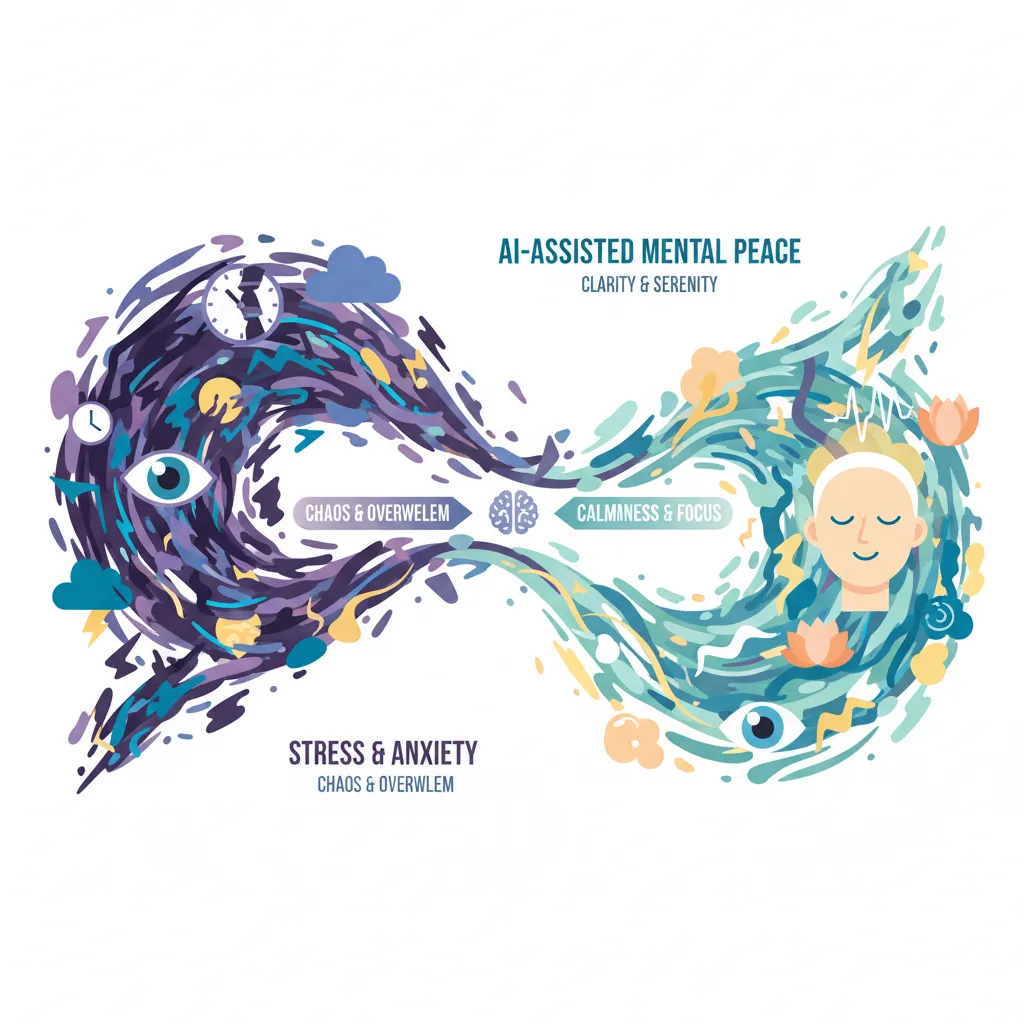
Conclusion: Your Partner in Digital Well-being
We are at the dawn of a new era in mental health. The narrative is no longer about “technology versus well-being.” Instead, we are learning to wield technology as a precision instrument for self-awareness and mental peace.
AI digital mindfulness is not about finding a magic app to solve all our problems. It’s about using these intelligent tools to build sustainable habits, gain deeper insights into our own minds, and navigate the complexities of the digital world with greater intention and calm. From AI stress reduction exercises that adapt to your biometrics to AI cognitive behavioral therapy that fits in your pocket, the future of well-being is personal, accessible, and powered by intelligent technology.
The invitation is to approach these tools with curiosity and mindfulness. Use them not as a crutch, but as a compass. Let them guide you, teach you, and empower you on your journey to a healthier, more balanced relationship with technology and, ultimately, with yourself.
Frequently Asked Questions (FAQs)
Q1. What is AI in mental health?
AI in mental health refers to the use of artificial intelligence technology to develop tools and platforms that support mental well-being. This includes AI-powered apps for meditation and mood tracking, chatbots that provide therapeutic exercises like CBT, and systems that analyze data to offer personalized mental health insights and support.
Q2. Are AI therapy apps effective?
Many AI therapy apps have shown significant effectiveness, particularly for managing mild to moderate anxiety and depression. Apps based on established principles like Cognitive Behavioral Therapy (CBT) can effectively teach users coping skills and help them reframe negative thoughts. However, they are generally considered a support tool, not a replacement for human therapy in severe cases.
Q3. Can AI replace a human therapist?
No, AI is not intended to replace human therapists. While AI therapy tools can provide incredible 24/7 support, teach coping mechanisms, and make therapy more accessible, they lack the genuine empathy, nuanced understanding, and life experience of a human professional. The ideal future is a hybrid model where AI handles daily support and data tracking, allowing human therapists to focus on deeper, more complex emotional work.
Q4. What is digital mindfulness?
Digital mindfulness is the practice of being present, aware, and intentional during your interactions with digital technology. It means consciously choosing how and when you engage with your devices, rather than being in a constant state of reactive distraction. The goal is to control your technology, not let it control you, thereby reducing stress and improving focus.
Q5. How does AI help with anxiety?
AI helps with anxiety in several ways. CBT-based chatbots can guide users through exercises to challenge anxious thoughts. AI guided meditation apps can offer calming exercises that adapt to your stress levels via biofeedback. Furthermore, mood tracking and journaling AI can help identify personal anxiety triggers, empowering users to manage them proactively.
Q6. Is my data safe with AI mental health apps?
Data privacy is a critical concern. Reputable AI mental health companies use end-to-end encryption and have strict data privacy policies. It is essential for users to read the privacy policy of any app before using it, understand how their data is stored and used, and choose apps that prioritize user confidentiality.
Q7. What is the future of AI in mental wellness?
The future of mental health with AI is proactive and integrated. We can expect more sophisticated wearable AI that provides real-time feedback on our mental state. AI will likely become more integrated into our daily lives, creating environments that passively support our well-being. The ultimate goal is for AI to help predict potential mental health challenges and offer early, preventative support. Related: What is GPT-4o? OpenAI’s new Omni-model Features and Free Access.