AI for Digital Harmony: Reclaiming Focus in a Distracted World
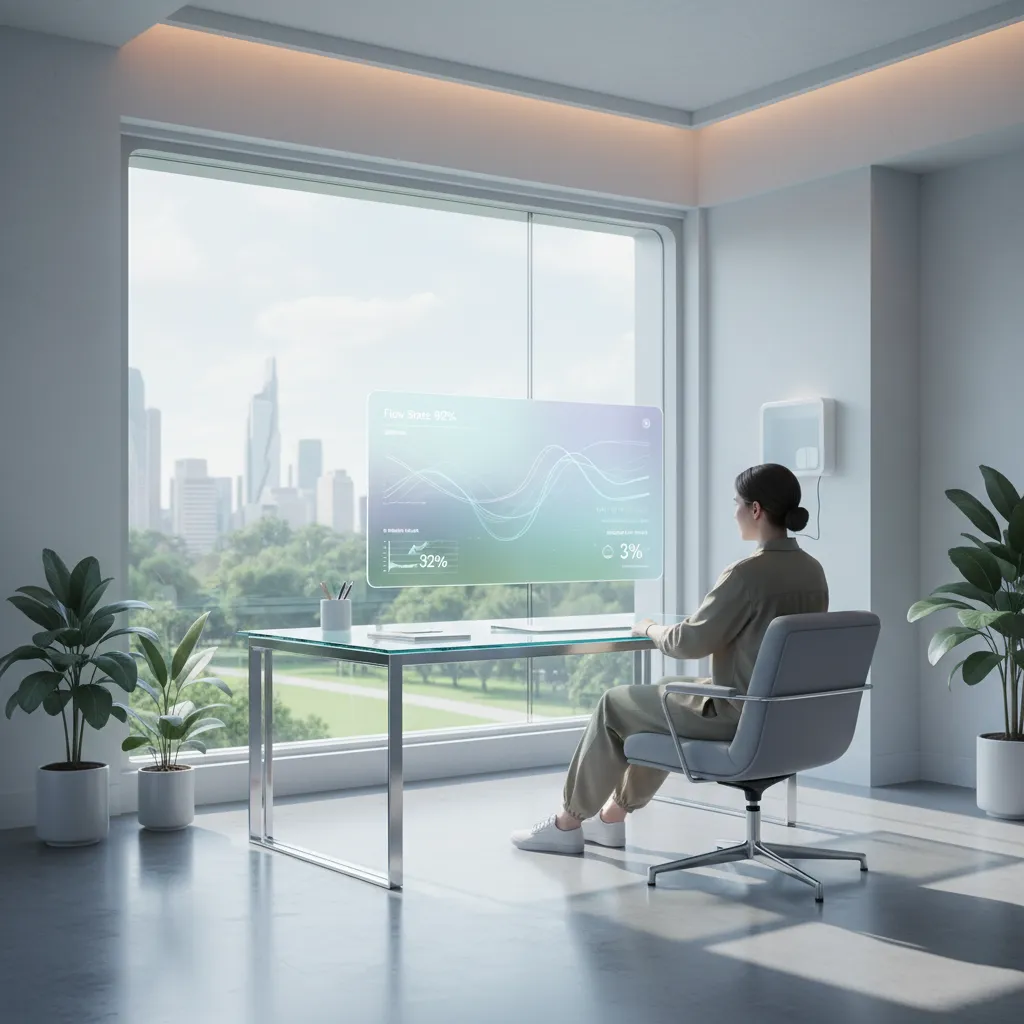
Introduction: The Tsunami of Digital Noise
It’s 9:03 AM. You’ve just sat down with your coffee, ready to tackle that critical project. A notification pings—a new email. You open it. It contains a link. You click it. Twenty minutes later, you find yourself watching a video about deep-sea creatures, with ten browser tabs open and no memory of how you got there. Your project lies untouched, and a wave of low-grade anxiety washes over you.
This scenario isn’t a personal failure; it’s the design of the modern digital world. We live in an “attention economy” where our focus is the currency, and tech companies are masterful at mining it. The constant barrage of notifications, algorithm-driven feeds, and the siren song of infinite content are chipping away at our ability to concentrate, leading to burnout, stress, and a feeling of being perpetually overwhelmed.
But what if the very technology that creates this chaos could be harnessed to restore order? Enter the paradigm shift of AI for digital harmony. This isn’t about a draconian digital detox or abandoning technology altogether. It’s about using artificial intelligence well-being tools to build a smarter, more intentional, and personalized digital experience. It’s about transforming your devices from agents of distraction into allies for focus.
This guide will explore how you can leverage digital harmony AI to move beyond reactive screen time management and proactively cultivate an environment that protects your most valuable asset: your attention. We’ll dive into the strategies, the tools, and the mindset needed to reclaim focus with AI, reduce digital overload, and achieve true mental clarity in an increasingly noisy world.
The Digital Paradox: When Our Tools Became Our Tormentors
Our brains are not built for the digital world we’ve created. Evolutionarily, we’re wired to react to novel stimuli—a rustle in the grass could mean danger or opportunity. Today, that “rustle” is a notification badge, a breaking news alert, or a “like” on social media. Each one triggers a small dopamine hit, creating a powerful, often addictive, feedback loop.
This constant “context switching”—flitting from a complex work task to a quick email, then to a social media feed, and back again—carries a heavy cognitive cost. Neurological studies show that it can take over 20 minutes to regain deep concentration after even a minor interruption. Multiply that by the dozens of digital pokes we receive daily, and it’s clear we’re operating at a fraction of our potential cognitive performance.
The result is a state of chronic “digital overload,” characterized by:
- Decision Fatigue: The mental exhaustion from making countless trivial choices, like which email to open first or which notification to ignore.
- Reduced Attention Span: The more we switch tasks, the more our brain adapts to a state of shallow focus, making AI-assisted deep work feel nearly impossible.
- Increased Stress and Anxiety: The feeling of being “always on” blurs the lines between work and life, hindering our ability to rest and recharge, directly impacting AI and work-life balance.
This is the paradox: the tools designed to connect and empower us are often the very things that fragment our attention and diminish our well-being. Manually managing this—fiddling with notification settings, using website blockers—is a constant, uphill battle. We need a more intelligent, adaptive solution.
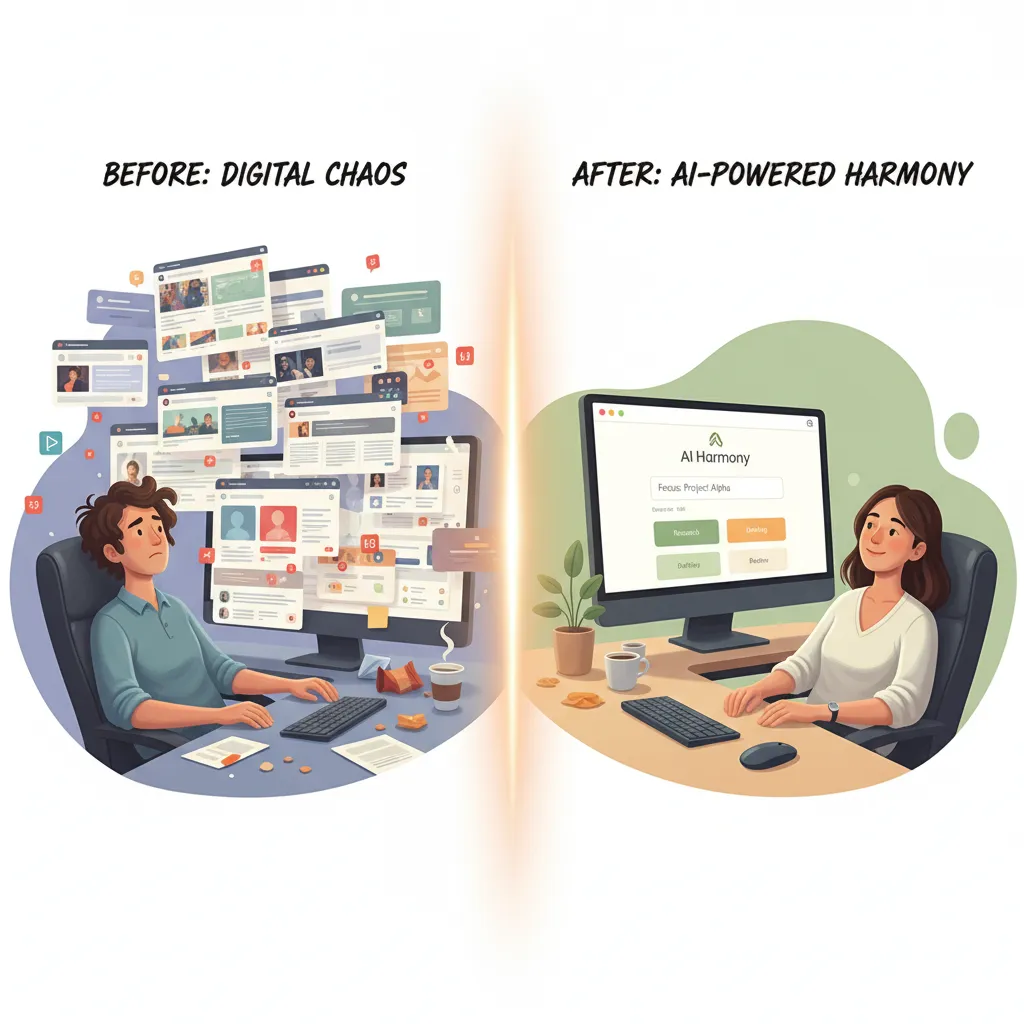
What is AI-Powered Digital Harmony?
AI-powered digital harmony is a philosophy and a set of practices that use artificial intelligence to curate a healthier, more focused digital life. It’s a move from a one-size-fits-all approach to a deeply personalized digital experience.
Think of it like this:
- Manual Approach (Digital Detox): You’re on a raft in a stormy sea, frantically paddling to avoid waves (distractions). It’s exhausting and often unsustainable. You might have to abandon the sea (technology) entirely for a while to recover.
- AI Harmony Approach: You’re the captain of a smart ship. Your AI first mate analyzes the weather patterns (your digital habits), navigates around storms (blocks non-urgent distractions), and charts the most efficient course to your destination (your goals), all while you stay focused at the helm.
This approach doesn’t just block things; it intelligently filters, prioritizes, and personalizes your digital world based on your context, goals, and even your biological rhythms. It’s the core of improving digital habits through smart automation, turning the firehose of information into a calm, manageable stream.
The Core Pillars of AI-Assisted Focus
Achieving digital harmony with AI isn’t about a single magic app. It’s about implementing a strategy across several key areas of your digital life. These are the pillars where AI can make the most significant impact.
1. Intelligent Notification and Distraction Management
The most immediate threat to focus is the notification. Standard “Do Not Disturb” modes are blunt instruments—they block everything. AI offers a scalpel.
How AI Supercharges Notification Management:
- Context-Aware Filtering: An AI system can learn the difference between an urgent Slack message from your boss about a project deadline and a group chat notification about lunch plans. It can understand that during “deep work” hours, only the former should get through.
- Intelligent Batching: Instead of a constant trickle of alerts, AI tools can bundle non-urgent notifications and deliver them to you at pre-set times, like once every two hours. This preserves your flow state while ensuring you don’t miss anything important.
- Proactive Silencing: Advanced AI can even predict when you’re entering a state of focus based on your calendar, location, and app usage, then automatically activate a personalized “focus mode.”
These AI-powered focus apps are crucial for managing digital distractions and are a foundational step towards a calmer digital existence.
Related: Apple Intelligence: All the New AI Features Coming to iOS 18
2. AI for Deep Work and Concentration
Deep work—the ability to focus without distraction on a cognitively demanding task—is a superpower in the 21st century. It’s also incredibly fragile. AI can act as a powerful guardian for these crucial sessions.
Fostering Deep Work with AI:
- Dynamic Website & App Blocking: Beyond a simple blacklist, AI can recognize when you’re veering off-task (e.g., repeatedly opening social media while a code editor is open) and gently nudge you back or temporarily block the distracting site.
- AI-Generated Focus Environments: Tools now use AI to create personalized soundscapes—from binaural beats to adaptive ambient music—that are scientifically designed to enhance concentration and drown out distracting background noise. These are a form of smart tech for calm.
- Automated Task Prioritization: AI productivity platforms like Motion or Reclaim can analyze your to-do list, calendar, and priorities to automatically schedule deep work blocks for your most important tasks, defending that time against incoming meeting requests. This is AI productivity focus in action.
By offloading the mental energy of planning and defending your focus time, AI frees up your cognitive resources for the actual work, drastically improving your ability to achieve and sustain deep concentration.
3. Curating a Mindful Digital Environment
Our digital consumption habits—the news we read, the feeds we scroll—directly impact our mental state. AI can help us shift from passive, reactive consumption to active, mindful engagement.
How AI Enables Mindful Consumption:
- Intelligent Content Summarization: Tools like Kagi or Perplexity.ai can summarize long articles, emails, and even videos, allowing you to grasp the key points in a fraction of the time, reducing digital overload.
- Personalized News Feeds (Done Right): Instead of optimizing for outrage and clicks, AI-driven aggregators can be trained to filter for high-quality, relevant, and positive or neutral information aligned with your professional and personal interests.
- Email Management Automation: Services like SaneBox use AI to analyze your incoming emails, filtering out newsletters and low-priority messages into separate folders, leaving your primary inbox reserved for what truly matters. This single change can be a massive source of tech for mental clarity.
This is a core component of AI for digital mindfulness, turning your information streams from sources of stress into sources of knowledge and inspiration.
Related: AI Video Generation: The Future of Content is Here
4. Personalized Well-being and Screen Time Management
Traditional screen time apps tell you how much time you’ve spent. AI can help you understand the quality and impact of that time. This is where personalized digital wellness truly shines.
AI’s Role in Healthier Tech Habits:
- Behavioral Pattern Analysis: An AI can identify patterns you might miss. For example, it could correlate late-night social media use with reports of poor sleep quality from your health tracker, then suggest a “wind down” routine that locks those apps after 10 PM.
- Proactive Break Reminders: AI can monitor your activity and, based on principles of cognitive science like the Pomodoro Technique, prompt you to take breaks before you experience fatigue, preventing burnout.
- Gamified Habit Formation: Many mindfulness AI apps use AI to create personalized challenges and rewards for improving digital habits, such as maintaining a streak of distraction-free mornings or reducing social media use by 10%.
This is the evolution of AI screen time management—from a simple clock to an insightful, personalized wellness coach dedicated to your digital mental health.
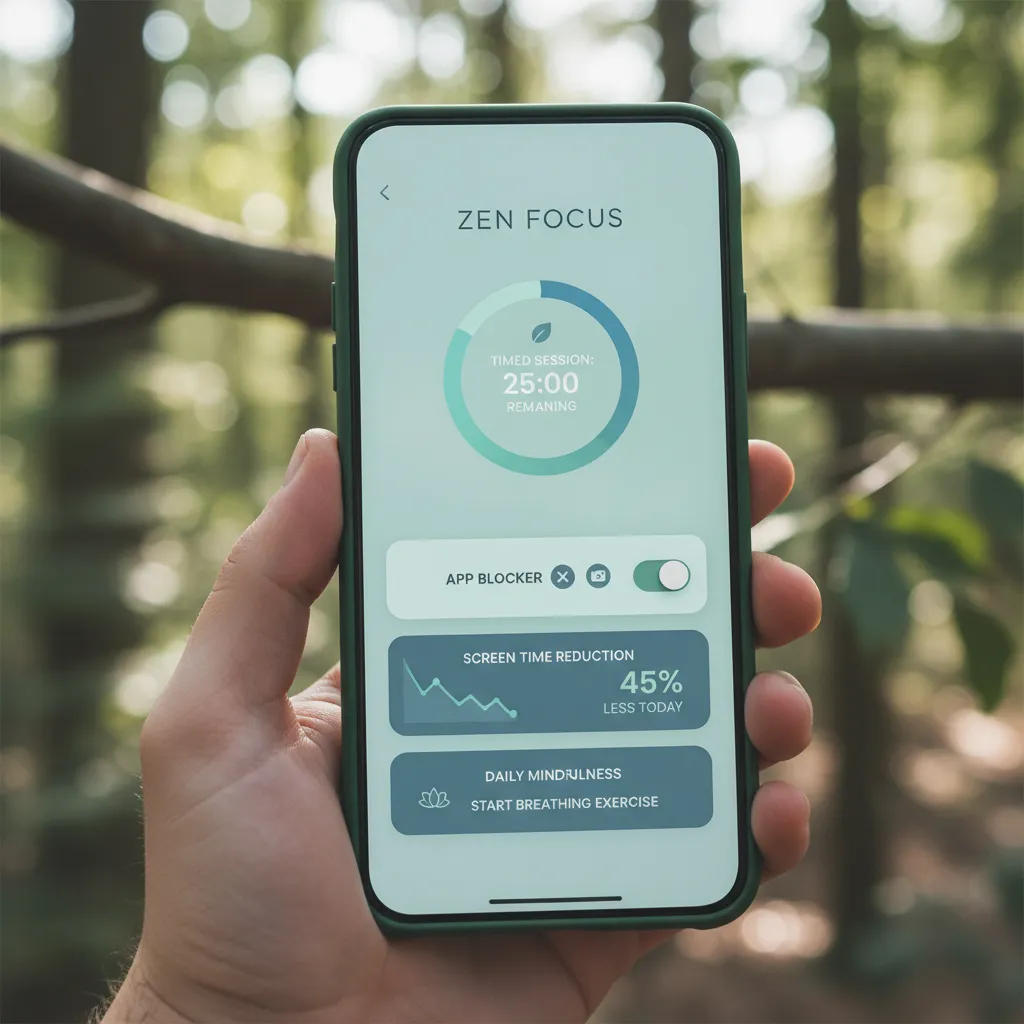
Practical AI Tools to Reclaim Your Focus in 2025
Theory is great, but practical application is what creates change. The market for AI tools for concentration is exploding. Here are a few categories and examples of tools that are leading the charge in creating digital harmony.
AI-Powered Focus Suites & Task Managers
These platforms go beyond simple to-do lists by using AI to intelligently schedule your entire day.
- Motion: Uses AI to build your perfect daily schedule, automatically prioritizing tasks and defending your calendar from conflicting appointments. It’s a prime example of AI-assisted deep work.
- Sunsama: Billed as a daily planner for calm work, it helps you timebox your day and provides insights into how you’re spending your time, promoting a healthier AI and work-life balance.
- Reclaim.ai: An AI scheduler that finds the best time for your tasks, habits, and meetings in your Google Calendar, ensuring your priorities get the time they deserve.
Intelligent Email and Communication Filters
Your inbox is a primary source of distraction. These tools use AI to tame it.
- SaneBox: As mentioned, this AI “secretary” learns your email habits and sorts non-urgent mail into designated folders, keeping your main inbox clean and focused.
- Superhuman: Known for its speed, it also uses AI to triage emails, remind you of follow-ups, and surface important messages, effectively reducing digital overload from email.
Smart Browsing and Reading Assistants
The internet is infinite. These tools help you navigate it mindfully.
- Sidekick Browser: A browser built for productivity that uses AI to manage tabs, workspaces, and block distracting apps and websites from your view.
- Reader by Readwise: An AI-powered “read-it-later” app that not only saves articles but can also summarize them, generate audio versions with text-to-speech, and integrate with your note-taking apps.
Mindfulness and Mental Clarity Apps
These apps leverage AI to provide personalized mental wellness support.
- Headspace: Uses AI to recommend specific meditations and mindfulness exercises based on your mood, time of day, and stated goals, from reducing stress to improving focus.
- Calm: Similarly employs AI to personalize its vast library of sleep stories, meditations, and music, making it a powerful tool for AI for stress reduction.
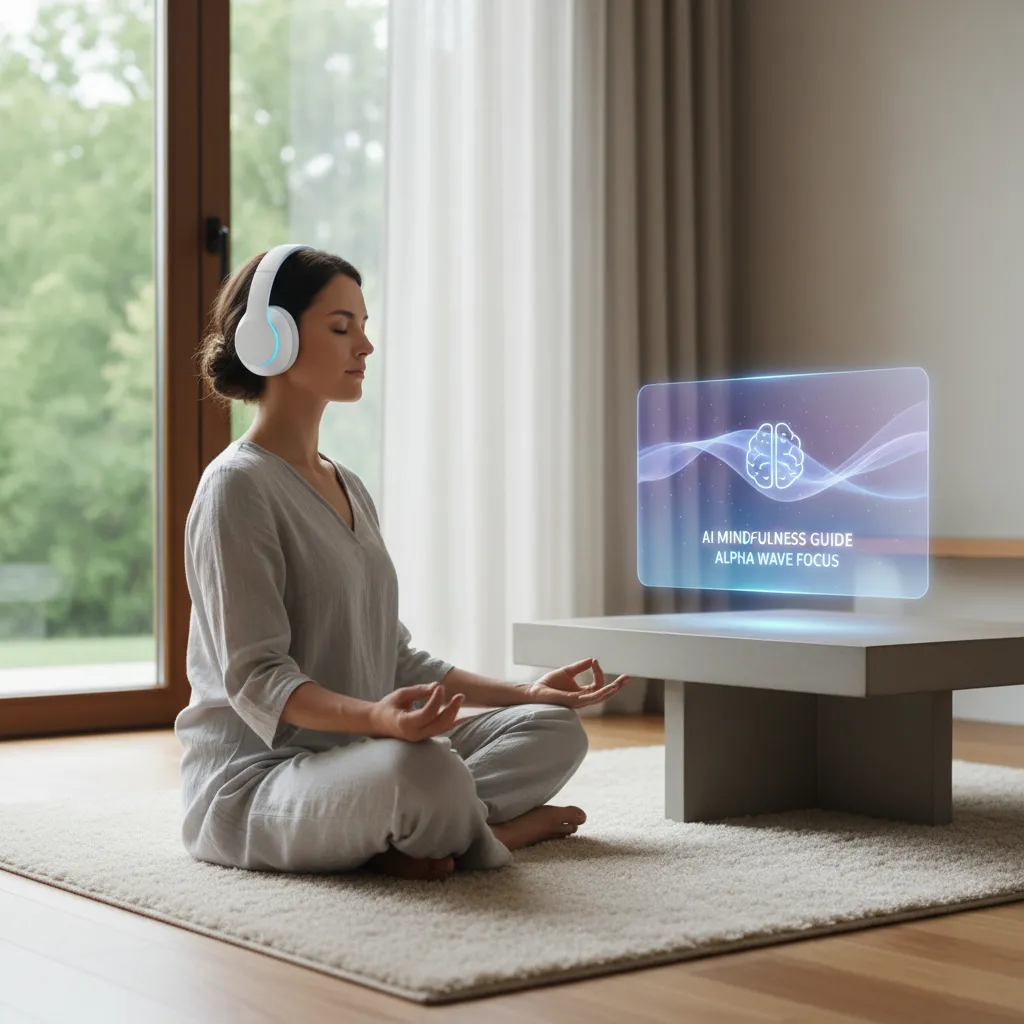
The Future: Towards a Symbiotic Relationship with AI
We are only at the beginning of this revolution. The future of AI digital well-being points towards an even more seamless and proactive integration into our lives. Imagine a future where:
- Ambient AI Agents: Your personal AI, running across all your devices, understands your goals for the day. It might brief you on your three most critical emails, queue up a podcast relevant to your upcoming project, and automatically silence all notifications from group chats because it knows you need to focus.
- Biometric Integration: Your AI could connect to your smartwatch or other wearables. If it detects rising stress levels (via heart rate variability), it might suggest a 5-minute breathing exercise or automatically dim your screens and play calming music.
- Ethical AI by Design: The most crucial evolution will be a shift in the business model of technology itself—from an attention economy to a well-being economy. Future AI will be designed and judged not on how much engagement it can extract, but on how much focus, creativity, and well-being it can foster.
Of course, this future carries ethical considerations. Data privacy, algorithmic bias, and the risk of becoming overly dependent on AI for self-regulation are real challenges we must navigate. The goal is not to cede control to an algorithm but to use AI as a tool to enhance our own human agency and intentionality.
Related: AI’s Green Revolution: Powering Solutions for Climate Change
Conclusion: Becoming the Architect of Your Attention
The digital world will only get louder. The fight for our focus will only intensify. Passively hoping for more willpower is a losing strategy. The key to thriving in the decades to come is to move from being a consumer of technology to becoming the architect of your own digital experience.
AI offers us an unprecedented toolkit to do just that. By thoughtfully integrating AI tools for focus, automating distraction management, and curating a mindful digital environment, we can transform our relationship with technology from one of conflict to one of harmony. It allows us to offload the repetitive, low-value work of managing digital noise so we can conserve our finite mental energy for what truly matters: deep thinking, creativity, and meaningful connection.
The journey to digital harmony starts with a single, intentional step. Don’t try to overhaul your entire digital life overnight. This week, choose one area—your email, your notifications, your work schedule—and explore how one of the AI tools or strategies mentioned can help. Reclaiming your focus is not a one-time fix; it’s an ongoing practice of aligning your technology with your intentions.
Frequently Asked Questions (FAQs)
Q1. How exactly can AI help with managing digital distractions?
AI helps by moving beyond simple on/off controls. It uses machine learning to understand context and priority. For example, an AI can learn which notifications are truly urgent and filter out the rest, batch non-critical alerts to be delivered at a specific time, and even proactively silence your devices when it detects you’ve entered a “flow state” of deep work, thus managing digital distractions in a smart, adaptive way.
Q2. What are AI-powered focus apps?
AI-powered focus apps are applications that use artificial intelligence to actively help you concentrate. They often include features like intelligent scheduling (automatically booking deep work time in your calendar), dynamic website and app blocking based on your task, personalized focus music generation, and insightful analytics on your work patterns to help you understand and improve your focus over time.
Q3. Can AI really improve my work-life balance?
Yes, by automating and optimizing tasks that often blur the lines between work and personal time. For instance, an AI email client can ensure your inbox is clear by the end of the day, an AI scheduler can protect your personal time from work meetings, and AI-driven insights can show you how much “work creep” is happening on evenings and weekends, promoting a healthier AI and work-life balance.
Q4. Is it safe to give AI access to my data for digital well-being?
This is a critical concern. Reputable AI digital well-being tools prioritize user privacy. It’s essential to choose services with clear privacy policies that preferably process data locally on your device whenever possible. Always review the permissions an app requests and opt for companies that are transparent about how they use your data to power their features, ensuring your personal information remains secure.
Q5. What is the difference between a digital detox and AI digital harmony?
A digital detox is typically an act of temporary abstinence—completely unplugging from technology for a period to reset. AI digital harmony, on the other hand, is a long-term strategy of actively using technology to manage technology. It’s not about escaping the digital world but about curating it to align with your goals, making mindful tech usage a sustainable, integrated part of your daily life.
Q6. Can AI tools help manage focus for people with ADHD?
While AI tools are not a substitute for medical treatment, many individuals with ADHD find them incredibly beneficial for executive function support. AI schedulers can help with time blindness by automating planning. AI-powered focus tools can act as an external system for maintaining concentration, and AI assistants can help manage tasks and reminders, reducing cognitive load for those who struggle with attention regulation.