Beyond Reality: AI’s Breakthrough in Hyper-Realistic Visual Content
Introduction
We stand at a remarkable intersection of technology and creativity, a point where the line between a photograph captured in the real world and an image conjured from a line of text is becoming impossibly thin. This is the era of hyper-realistic AI art, a revolutionary leap in generative AI realism that is reshaping entire industries and challenging our very definition of visual truth. From flawlessly detailed portraits of people who don’t exist to breathtaking landscapes of worlds unseen, AI realistic image generation has evolved from a niche experiment into a powerful, accessible force for creation.
For artists, designers, filmmakers, and marketers, this isn’t just another tool; it’s a new canvas. The ability to translate a simple thought into a photorealistic image—a process known as text to hyper-realistic image generation—is democratizing visual content creation on an unprecedented scale. But what’s the magic behind this curtain? How do algorithms learn to replicate the subtle interplay of light, texture, and emotion that defines reality?
This comprehensive guide delves into the world of photorealistic AI generation. We’ll explore the sophisticated AI rendering technology that powers these models, compare the best AI for realistic images, and provide practical techniques for creating realistic AI images with stunning clarity. More than just a technical overview, we’ll journey through the diverse applications transforming fields like architecture, product design, and visual effects, and gaze into the future of AI visuals. Get ready to discover how AI-powered visual creation is moving beyond reality.
The Unseen Engine: How AI Achieves Photorealism
The ability of AI to generate images that rival professional photography isn’t magic—it’s the result of decades of research and exponential growth in computing power. At the heart of this revolution are sophisticated neural network architectures that have been trained on unfathomably large datasets of visual information.
From GANs to Diffusion: The Evolution of Realism
The journey to photorealism has been marked by a few key technological milestones.
1. Generative Adversarial Networks (GANs): For years, GANs were the dominant force in AI image generation. A GAN consists of two competing neural networks: a “Generator” that creates images and a “Discriminator” that tries to determine if the images are real or AI-generated. They engage in a constant cat-and-mouse game, with the Generator getting progressively better at fooling the Discriminator. While groundbreaking, GANs often struggled with producing high diversity and could be unstable to train, sometimes leading to bizarre or distorted results.
2. Diffusion Models: The current state-of-the-art in advanced AI image generation belongs to diffusion models. This technique works in a fascinatingly counter-intuitive way. The model is first trained to destroy an image by gradually adding “noise” (random pixels) until nothing but static remains. Then, it learns how to reverse this process—starting with pure noise and meticulously denoising it, step-by-step, to form a coherent, high-fidelity image based on a text prompt.
This reverse process allows for far greater control, detail, and adherence to the user’s prompt. It’s the core technology behind the latest AI visual models like Midjourney, Stable Diffusion, and OpenAI’s DALL-E 3, which are celebrated for their ability to produce high-fidelity AI visuals.
The Crucial Role of Data and Training
These models are not inherently creative; they are incredibly sophisticated pattern-recognition systems. Their ability to generate a “photograph of an astronaut riding a horse” comes from being trained on billions of image-text pairs from the internet. They’ve “seen” countless pictures of astronauts, horses, and various artistic styles, allowing them to deconstruct these concepts and recombine them in novel ways. The quality and diversity of this training data are paramount for achieving true generative AI realism.
The Artist’s New Toolkit: Best AI for Realistic Images
With a booming ecosystem of AI visual content tools, choosing the right one can be daunting. Each platform has unique strengths tailored to different workflows and creative goals. Here’s a breakdown of the top contenders in the race for photorealism.
Midjourney: The King of Artistic Photorealism
Often hailed as the leader in aesthetic quality, Midjourney excels at creating images that are not just realistic but also artistically composed. It has a distinctive, slightly opinionated style that often produces visually stunning results with relatively simple prompts.
- Strengths: Unmatched artistic quality, excellent understanding of light and composition, high coherence, and a very active community. Its latest versions have made significant strides in rendering realistic hands and complex details.
- Best For: Digital artists, concept designers, and anyone seeking beautiful, high-impact imagery without deep technical tweaking. It’s a premier tool for AI for digital art.
- Workflow: Primarily operates through the Discord chat app, which can be a unique but powerful way to organize and iterate on generations.
Stable Diffusion: The Open-Source Powerhouse for Control
Stable Diffusion is the platform of choice for users who crave ultimate control and customization. As an open-source model, it can be run locally on a powerful PC, and a massive community has built an entire ecosystem of extensions, plugins, and custom-trained models (known as “checkpoints” or “LoRAs”).
- Strengths: Unparalleled flexibility, no content filters (on local installs), and the ability to train the model on your own images or art styles. Advanced techniques like ControlNet allow users to guide image generation with sketches, poses, or depth maps.
- Best For: Technical artists, developers, and creators who want to fine-tune every aspect of the output, from character consistency to specific stylistic replication. It’s the ultimate AI photorealism software for tinkerers.
- Workflow: Requires a more technical setup (using interfaces like AUTOMATIC1111 or ComfyUI), but the payoff is granular control that no other platform can match.
DALL-E 3 (via ChatGPT & Microsoft Copilot): The Champion of Prompt Adherence
Developed by OpenAI, DALL-E 3’s greatest strength is its native integration with a Large Language Model (ChatGPT). It excels at understanding natural language and complex, detailed prompts. If you describe a scene with multiple subjects interacting in specific ways, DALL-E 3 is the most likely to get it right on the first try.
- Strengths: Superior prompt understanding, excellent for creating scenes with specific text or complex narratives, seamlessly integrated into the ChatGPT ecosystem.
- Best For: Content creators, marketers, and anyone who values prompt accuracy and conversational image generation over minute stylistic control. Ideal for quick, precise text to hyper-realistic image tasks. Related: GPT-4o: The Ultimate AI for Content Creators
Mastering the Craft: Techniques for Creating Realistic AI Images
Simply typing “a realistic photo” won’t unlock the full potential of these tools. The key to jaw-dropping realism lies in mastering the art and science of prompting and post-processing.
The Art of the Prompt: Speaking the Language of Photography
To get photorealistic results, you need to think like a photographer. Instead of just describing the subject, describe how it was captured. Include details about:
- Camera and Lens:
85mm f/1.4 lens,shot on a Leica M11,telephoto lens - Film Stock/Style:
Kodak Portra 400 film grain,cinematic film still,Vogue editorial photography - Lighting:
golden hour,soft volumetric lighting,dramatic studio lighting,rim lighting - Composition:
full body shot,macro photography,wide-angle aerial view - Detail and Texture:
hyper-detailed skin texture,intricate filigree,weathered leather
Example Prompt:
Before:
A photo of a woman.After:
Photorealistic portrait of a woman with freckles, soft natural morning light coming through a window, shot on a Sony a7 IV with an 85mm f/1.2 lens, sharp focus on the eyes, cinematic film grain, subtle color grading.
Leveraging Negative Prompts for Refinement
Equally important is telling the AI what not to include. Use negative prompts to eliminate common AI artifacts and steer the generation away from unwanted styles.
Common Negative Prompts: cartoon, 3d, render, painting, drawing, ugly, deformed hands, extra limbs, disfigured, blurry, low quality, worst quality.
The Power of Post-Processing and AI Image Enhancement
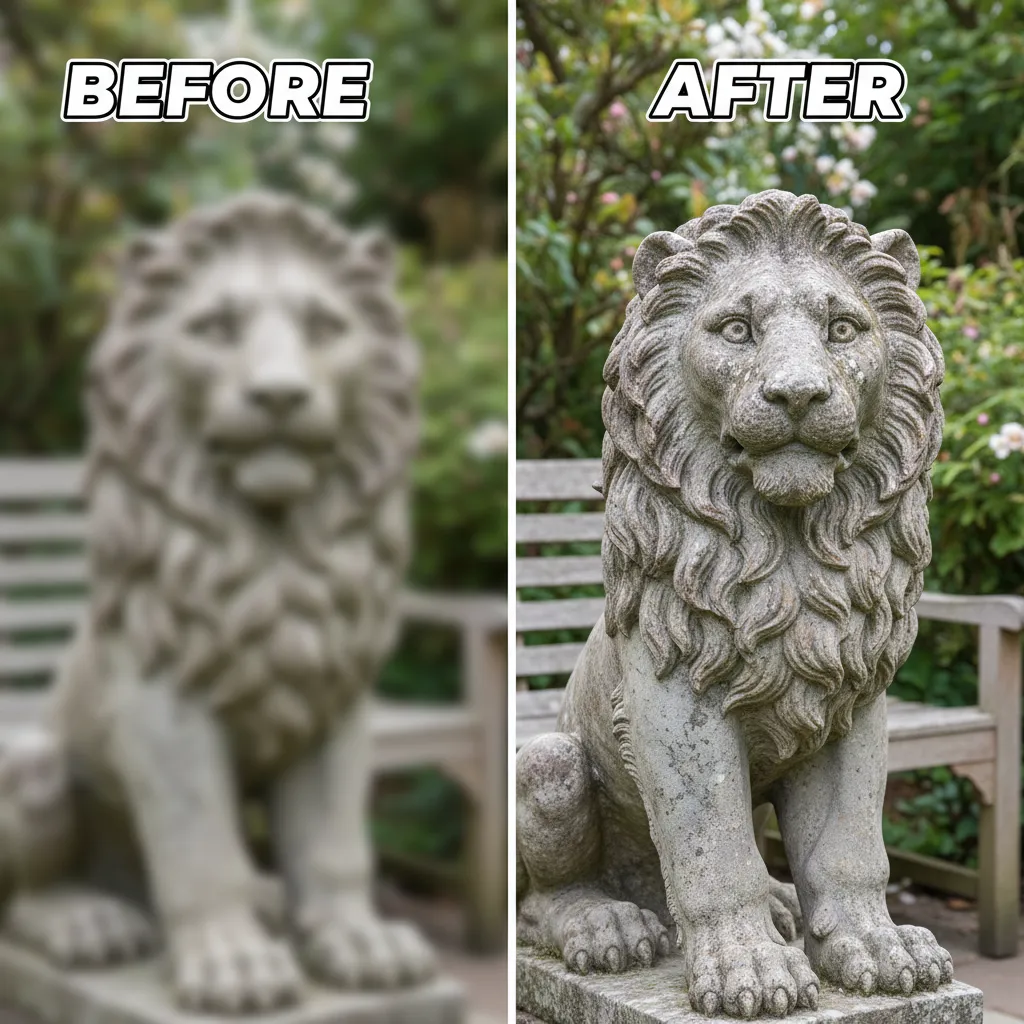
The creative process doesn’t end with the initial generation. Many of the most stunning AI images undergo a final stage of refinement using specialized AI image quality improvement tools.
- AI Upscalers: Tools like Gigapixel AI or free alternatives can increase the resolution of your images, adding crispness and detail that makes them suitable for printing.
- Inpainting and Outpainting: These features, available in platforms like Stable Diffusion and Photoshop (with its Generative Fill), allow you to selectively regenerate parts of an image (like fixing a weird-looking hand) or expand its borders seamlessly.
A New Reality: Real-World Applications Across Industries
The impact of AI-powered visual creation extends far beyond the realm of digital art. This technology is becoming a cornerstone of efficiency and innovation across numerous AI in creative industries.
Redefining Creativity: AI for Graphic Design and Digital Art
For graphic designers and artists, these AI tools for artists are acting as powerful assistants. They can be used to:
- Brainstorm concepts and generate mood boards in minutes.
- Create unique textures, backgrounds, and assets for larger projects.
- Explore countless stylistic variations of a single idea, accelerating the creative process.
- Produce final portfolio pieces that blend human creativity with AI-generated elements.
Related: AI Content Creation: Master Generative AI for Digital Marketing
Architecture and Product Design: Visualizing the Future
In fields like AI for architectural visualization and AI in product design, the speed of iteration is a game-changer.
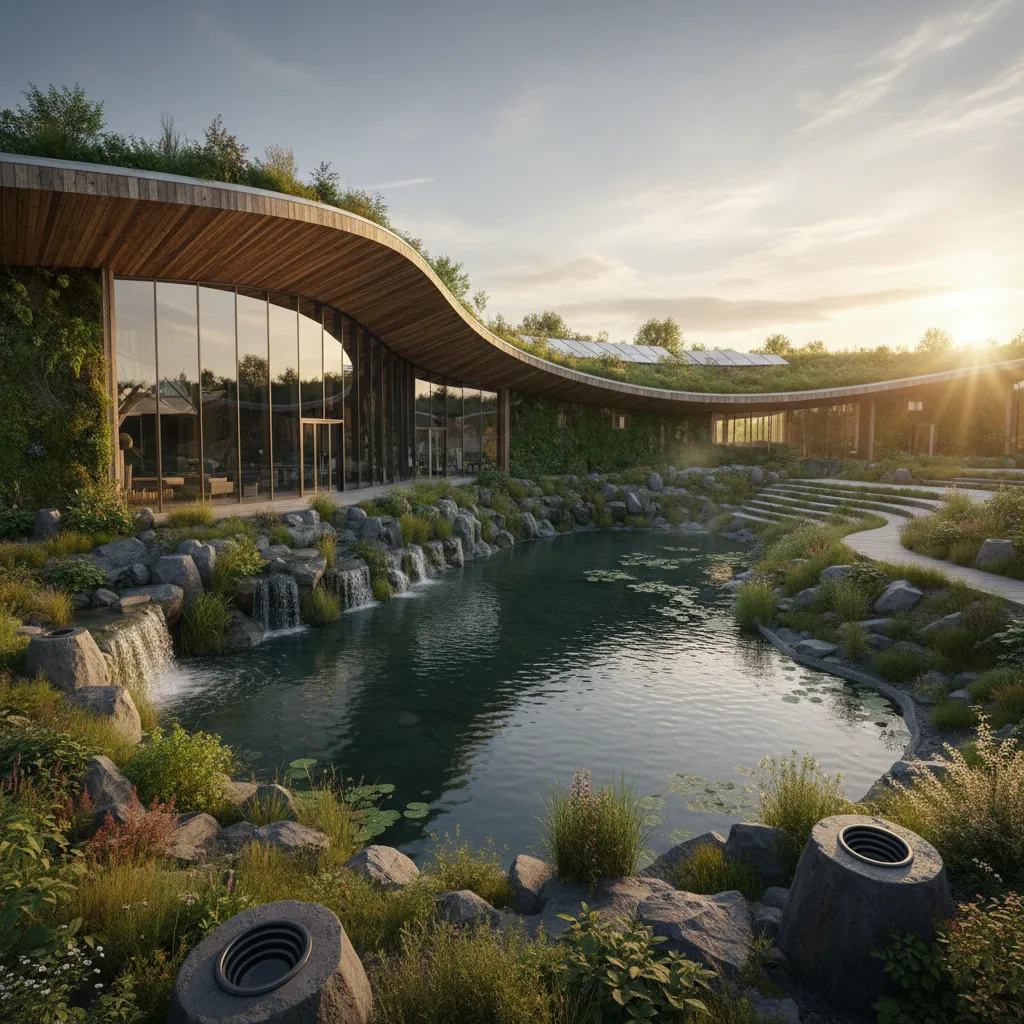
- Architects can generate lifelike renderings of buildings in different environments and lighting conditions instantly, providing clients with immersive previews. Related: AI’s Green Blueprint: Revolutionizing Sustainable Urban Planning
- Product designers can create photorealistic mockups of new products, testing different materials, colors, and shapes without the need for expensive physical prototypes.
Revolutionizing Cinema and Gaming: AI in Visual Effects (VFX)
The entertainment industry is on the cusp of a major transformation. AI in visual effects is no longer science fiction.
- AI tools for filmmakers can generate vast, detailed digital backlots and environments at a fraction of the traditional cost.
- Concept artists for video games can create endless variations of characters, creatures, and props.
- AI can assist with tedious tasks like rotoscoping, matte painting, and even generating placeholder special effects, freeing up human artists to focus on more creative challenges.
The Rise of Synthetic Media and Realistic AI Avatars
We are seeing the rapid growth of AI synthetic media. This includes everything from realistic AI avatars for corporate training videos and virtual customer service agents to AI-generated models for fashion campaigns. This reduces the need for costly photoshoots and allows for endless customization.
The Horizon Beckons: The Future of AI Visuals
As remarkable as the current technology is, we are only scratching the surface. The pace of innovation is staggering, and the future of AI visuals promises even more integration and realism.
From Still Images to Hyper-Realistic Video
The next frontier is AI video realism. Models like OpenAI’s Sora, Google’s Veo, and Kling have demonstrated the ability to generate short, coherent, high-definition video clips from text prompts. While still in early stages, this technology has the potential to revolutionize everything from filmmaking and advertising to education and personal communication. Imagine generating custom B-roll for a documentary or creating a short film entirely from your imagination.
Real-Time Generation and Immersive Experiences
The ultimate goal is real-time, interactive generation. Imagine populating a VR or AR environment with AI-generated assets on the fly, creating dynamic, responsive worlds that are unique to every user. This will be a critical component of the next generation of gaming and the metaverse.
The Ethical Tightrope: Navigating Deepfakes and Authenticity
With great power comes great responsibility. The rise of hyper-realistic AI art brings significant ethical challenges, primarily concerning deepfakes, misinformation, and intellectual property. As this technology becomes more accessible, the need for robust detection tools, clear watermarking standards, and strong ethical guidelines becomes paramount. It’s a conversation that creators, policymakers, and the public must have together to ensure this powerful technology is used for good. Related: Safeguarding Your Sanctuary: Smart Home Security and Privacy in the AI Era
Conclusion
We have moved beyond the point of asking if AI can create compelling visual content. The question now is, what are the limits? From the intricate dance of diffusion models to the artful craft of a well-formed prompt, AI realistic image generation has established itself as one of the most transformative technologies of our time. It’s a force multiplier for creativity, an engine of efficiency for industries, and a new medium for human expression.
The tools—Midjourney, Stable Diffusion, DALL-E 3—are more than just software; they are gateways to new visual languages. By understanding the technology, mastering the techniques, and exploring its vast applications, we can all become pioneers in this new creative landscape. The barrier between imagination and a tangible, photorealistic AI generation has all but vanished.
The future is visual, and it’s being rendered in real-time by artificial intelligence. So, dive in. Experiment, create, and push the boundaries of what’s possible. What new reality will you bring to life?
FAQs
Q1. What AI generator is best for realistic images?
The “best” AI depends on your needs. Midjourney is often considered the top choice for artistic, high-quality photorealism with less effort. Stable Diffusion offers unparalleled control and customization for technical users. DALL-E 3 is excellent for its ability to understand and execute complex, descriptive prompts with high accuracy.
Q2. How do I make AI images look more photorealistic?
To increase photorealism, use highly descriptive prompts that include photographic terms. Specify details like camera lens type (e.g., “85mm f/1.4”), film stock (“Kodak Portra 400”), lighting conditions (“golden hour,” “soft studio lighting”), and intricate textures. Using negative prompts to exclude words like “cartoon” or “render” is also crucial.
Q3. What is generative AI realism?
Generative AI realism refers to the capability of artificial intelligence models, particularly diffusion models and GANs, to create visual content (images, and increasingly, videos) that is indistinguishable from reality or professional photography. It focuses on accurately simulating details like light, shadow, texture, and complex physics.
Q4. Can AI generate realistic videos from text?
Yes, this technology is rapidly emerging. Models like OpenAI’s Sora, Google’s Veo, and others have shown they can generate short, high-definition, and coherent video clips from simple text prompts. While not yet widely available to the public, this represents the next major frontier in AI video realism.
Q5. What are the ethical concerns of hyper-realistic AI?
The primary ethical concerns involve the potential for misuse in creating convincing deepfakes for misinformation or malicious purposes. There are also ongoing debates about copyright, as AI models are trained on vast amounts of internet data, and questions of data privacy and the potential for job displacement in creative industries.
Q6. What is the difference between GANs and diffusion models for image generation?
Generative Adversarial Networks (GANs) use a two-part system (a generator and a discriminator) that compete to create realistic images. Diffusion models work differently by learning to reverse a process of adding noise to an image. They start with random static and “denoise” it step-by-step according to a prompt, which generally results in higher-fidelity, more diverse, and more controllable outputs.
Q7. Are there AI tools specifically for improving image quality?
Yes, there are many AI image quality improvement tools. AI upscalers like Topaz Gigapixel AI and Magnific AI can dramatically increase the resolution and detail of an image. Additionally, features like “inpainting” and “outpainting” in tools like Photoshop and Stable Diffusion allow you to surgically correct errors or expand the canvas of your AI-generated art.