AI’s Blueprint for a Healthier Future: Predictive Prevention & Genetic Insights

For centuries, medicine has operated on a reactive model: you get sick, you see a doctor, you get treated. It’s a system built on responding to problems after they arise. But what if we could shift from reacting to predicting? What if we could identify and mitigate disease risk before the first symptom ever appears? This isn’t science fiction; it’s the new reality being built by the powerful partnership of artificial intelligence and genomics.
The convergence of AI and genomics is creating a paradigm shift towards predictive prevention. By analyzing vast datasets—from our genetic code to real-time lifestyle data—AI is providing unprecedented insights into our individual health. This revolution promises a future where healthcare is not just personalized, but profoundly proactive. In this article, we’ll explore AI’s blueprint for a healthier future, diving deep into how predictive healthcare AI is enabling early disease detection, offering personalized genetic insights, and paving the way for a new era of human longevity.
The Shift from Reaction to Prediction: A New Era in Healthcare
The traditional healthcare model, for all its life-saving advancements, is fundamentally a “break-fix” system. It excels at treating acute illnesses and injuries but struggles with the slow, creeping onset of chronic diseases like heart disease, diabetes, and many cancers. These conditions often develop silently over years, and by the time symptoms are obvious, significant damage may have already occurred.
This is where AI-powered health forecasting changes the game. Instead of waiting for the check engine light to come on, AI acts as a sophisticated diagnostic system, constantly monitoring for the earliest signs of trouble. It leverages AI medical predictive analytics to sift through immense and complex datasets that are impossible for humans to process, identifying subtle patterns and correlations that signal future health risks. This allows for interventions at a much earlier, more effective stage, moving the focus from treatment to genuine smart disease prevention.
How AI Achieves Unprecedented Early Disease Detection
One of the most immediate impacts of AI in healthcare is its superhuman ability to detect diseases earlier and more accurately than ever before. This capability stems from machine learning models trained on millions of data points, allowing them to recognize tell-tale signs of illness that might be invisible to the human eye.
AI in Medical Imaging: Seeing the Unseen
Medical imaging, such as MRIs, CT scans, and X-rays, generates a massive amount of visual data. For a human radiologist, reviewing these scans is a demanding and time-consuming task where fatigue can play a role. AI algorithms, however, can analyze these images in seconds with remarkable precision.
- Oncology: AI models have demonstrated the ability to detect lung cancer on CT scans and breast cancer in mammograms with accuracy matching or even exceeding that of experienced radiologists. They can spot tiny, nascent tumors that might otherwise be missed.
- Neurology: In brain scans, AI can help identify early signs of Alzheimer’s disease or the subtle changes that predict a stroke, enabling preventative measures.
- Cardiology: AI can analyze echocardiograms to predict a patient’s risk of a future heart attack.
These advanced AI diagnostics don’t replace doctors; they augment them, acting as a powerful second pair of eyes that helps prioritize cases and catch disease in its most treatable stages.

Predictive Models and Electronic Health Records (EHRs)
Beyond images, AI can mine the rich text and data within Electronic Health Records (EHRs). By analyzing a patient’s history, lab results, doctor’s notes, and demographic information, predictive models can forecast the likelihood of developing specific conditions. For example, Google’s AI has shown it can predict acute kidney injury up to 48 hours before it occurs, giving clinicians a critical window to intervene. This proactive approach, driven by AI health insights, is a cornerstone of innovative disease prevention.
Related: Quantum Computing: Unlocking the Future of Tech and AI
The Genome Decoded: AI’s Role in Genetic Insights
If early detection is about finding the fire, genetic analysis is about reading the building’s blueprint to see where it’s most likely to start. The human genome contains over 3 billion base pairs—an astronomical amount of information. Unlocking the secrets hidden within our DNA is the key to truly personalized preventative care, and AI is the only tool powerful enough for the job.

AI Genetic Risk Assessment: Your Personal Health Blueprint
Genomic AI healthcare involves using machine learning to analyze your unique genetic makeup and identify specific markers (called SNPs, or single-nucleotide polymorphisms) associated with various diseases. An AI genetic risk assessment can provide a personalized disease risk profile, highlighting your predispositions for conditions such as:
- Hereditary Cancers (e.g., BRCA1/BRCA2 for breast and ovarian cancer)
- Cardiovascular Diseases
- Neurodegenerative Disorders like Alzheimer’s and Parkinson’s
- Metabolic Conditions like Type 2 Diabetes
This isn’t about fortune-telling; it’s about understanding your inherent statistical risks. It’s the ultimate form of AI proactive healthcare, giving you knowledge that can directly inform your health decisions. Related: What is GPT-4o? OpenAI’s New Free AI Model Explained
From Risk to Action: AI-Powered Personalized Prevention
Knowing you have a 40% higher genetic risk for heart disease is powerful, but what do you do with that information? This is where AI personalized prevention shines. The same AI systems that assess risk can also recommend tailored interventions.
Instead of generic advice like “eat healthier,” an AI might suggest a specific diet rich in omega-3 fatty acids because your genetic profile indicates you metabolize fats differently. It might recommend more frequent cholesterol screenings starting at an earlier age or suggest specific types of exercise that are most beneficial for your body. This is the essence of preventative AI healthcare solutions—turning complex genetic data into simple, actionable steps for a healthier life.
The Ecosystem of AI Preventative Health Solutions
The revolution in AI health technology isn’t confined to hospitals and research labs. It’s becoming part of our daily lives through an ecosystem of connected devices and platforms designed to monitor our health continuously.

Wearable Technology and Continuous Monitoring
Smartwatches, fitness trackers, and continuous glucose monitors are no longer just for counting steps. They are powerful data collection tools. These devices track heart rate, sleep patterns, blood oxygen levels, and more. When this stream of data is fed into an AI engine, it creates a dynamic, real-time picture of your health.
This digital health prevention allows AI to spot deviations from your personal baseline. For example, a subtle change in your nightly heart rate variability could be an early indicator of stress or an impending illness, prompting the AI to suggest a day of rest or a mindfulness session long before you feel sick.
AI-Driven Health Platforms and Apps
A new generation of health apps is using AI to act as personal health coaches. By integrating data from your wearables, genetic reports, and manual inputs (like diet logs), these platforms provide holistic and personalized guidance. They can help you optimize your nutrition, design a fitness plan, and manage stress—all based on a deep, data-driven understanding of your unique biology.
Related: The Future of Travel: How AI Crafts Your Perfect, Personalized Journey
AI and Genomics: The Engine of Precision Medicine
The ultimate goal of combining AI and genomics is to enable true AI precision medicine prevention. This goes beyond personalized advice and into the realm of medical treatments designed for one.
Pharmacogenomics is a perfect example. It’s the study of how genes affect a person’s response to drugs. Right now, many medications are prescribed on a trial-and-error basis. But with AI, doctors can analyze a patient’s genetic profile to predict which medication will be most effective and have the fewest side effects. This prevents adverse drug reactions and ensures patients get the right treatment faster, a critical component of the AI future of medicine prevention.
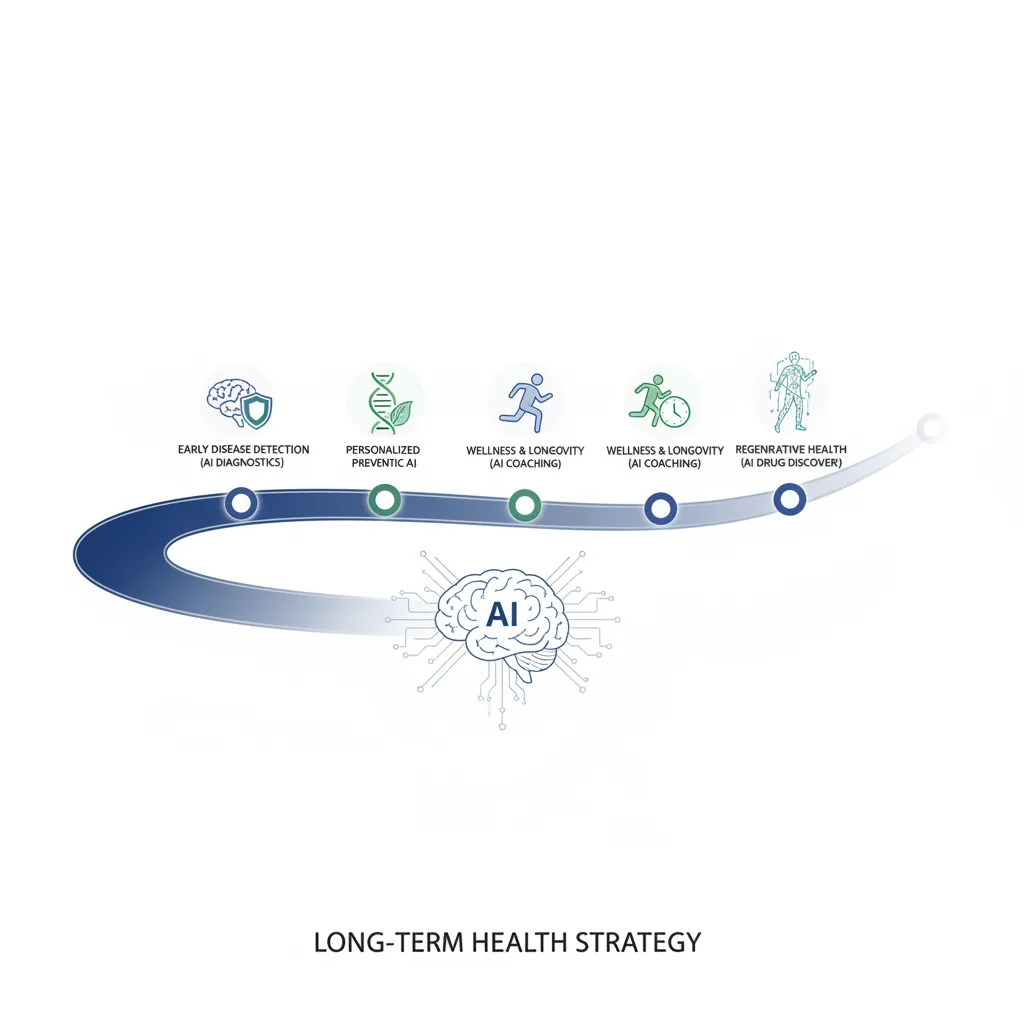
Charting the Course: The Future of Disease Prevention and Longevity
The journey is just beginning. The integration of AI into healthcare is accelerating, painting a compelling picture of the future.
The Quest for Healthy Longevity
The focus is shifting from simply extending lifespan to extending healthspan. AI for healthy longevity aims to use predictive analytics to not just prevent deadly diseases but to mitigate the chronic conditions associated with aging. By understanding the genetic and lifestyle factors that contribute to healthy aging, AI can create a roadmap for individuals to maintain vitality and cognitive function well into their later years.
Navigating the Challenges: Ethics, Bias, and Data Privacy
This powerful technology is not without its challenges. The use of sensitive personal health and genetic data raises critical questions about privacy and security. How do we ensure this data is protected and used responsibly?
Furthermore, AI models are only as good as the data they are trained on. If training datasets lack diversity, they can perpetuate and even amplify existing health disparities, leading to biased recommendations. Ensuring equity and transparency in AI health innovation is paramount to building a system that benefits everyone.
Conclusion: A Proactive Future for Human Health
We are standing at the threshold of a monumental transformation in healthcare. The reactive model of the past is slowly giving way to a proactive, predictive, and personalized future, architected by artificial intelligence. By decoding our genetic blueprints and continuously monitoring our health, AI gives us the power to move from being passengers in our health journey to being active pilots.
The path forward requires careful navigation of ethical considerations, but the promise is immense: a future where we can predict and prevent disease, tailor treatments to our unique biology, and unlock the potential for longer, healthier lives. This isn’t just about advanced technology; it’s about a fundamental shift in our relationship with our own health, empowered by the incredible potential of AI driven health insights.
Frequently Asked Questions (FAQs)
Q1. What is predictive prevention in healthcare?
Predictive prevention is a modern healthcare approach that uses data analysis and artificial intelligence to identify an individual’s risk of developing specific diseases before symptoms appear. This allows for early, personalized interventions, such as lifestyle changes or increased screenings, to prevent the disease or lessen its impact.
Q2. How does AI predict disease risk?
AI predicts disease risk by analyzing vast and complex datasets, including a person’s genetic information, electronic health records, medical images, and real-time data from wearable devices. Machine learning algorithms identify subtle patterns and correlations within this data that are linked to future health outcomes, generating a personalized risk score.
Q3. Can AI analyze my DNA for health risks?
Yes. Genetic health AI platforms can perform a personal genome analysis to identify genetic markers associated with an increased risk for a wide range of conditions, including certain cancers, heart disease, and neurodegenerative disorders. This AI genetic risk assessment provides insights that can guide personalized preventative health strategies.
Q4. What are the benefits of AI in early disease detection?
The primary benefits are speed and accuracy. AI algorithms can analyze medical scans (like MRIs and CTs) and patient data much faster than humans, identifying early signs of diseases like cancer or heart conditions that might be missed by the human eye. This leads to earlier diagnosis, more effective treatment, and better patient outcomes.
Q5. Is using AI in healthcare safe and private?
Safety and privacy are paramount concerns. Reputable preventative AI healthcare solutions operate under strict data protection regulations like HIPAA. Data is typically anonymized and encrypted to protect patient privacy. However, it’s crucial for the industry to remain vigilant in addressing potential algorithmic bias and strengthening cybersecurity measures.
Q6. What is the difference between AI precision medicine and personalized medicine?
While often used interchangeably, there’s a subtle difference. Personalized medicine tailors treatment to the individual, which can be based on various factors. Precision medicine, a subset of this, is more focused, using a person’s specific genetic or molecular profile to select the optimal therapy, making it a core goal of AI precision medicine prevention.
Q7. What is the future of disease prevention with AI?
The future of disease prevention with AI points towards hyper-personalization and continuous, real-time health management. We can expect AI to integrate data from even more sources (e.g., gut microbiome) to create a truly holistic health picture. The ultimate goal is to move from a disease-care system to a genuine healthcare system focused on AI for healthy longevity.