AI Agents Unleashed: Automate Your Smart Home & Elevate Daily Life
Introduction
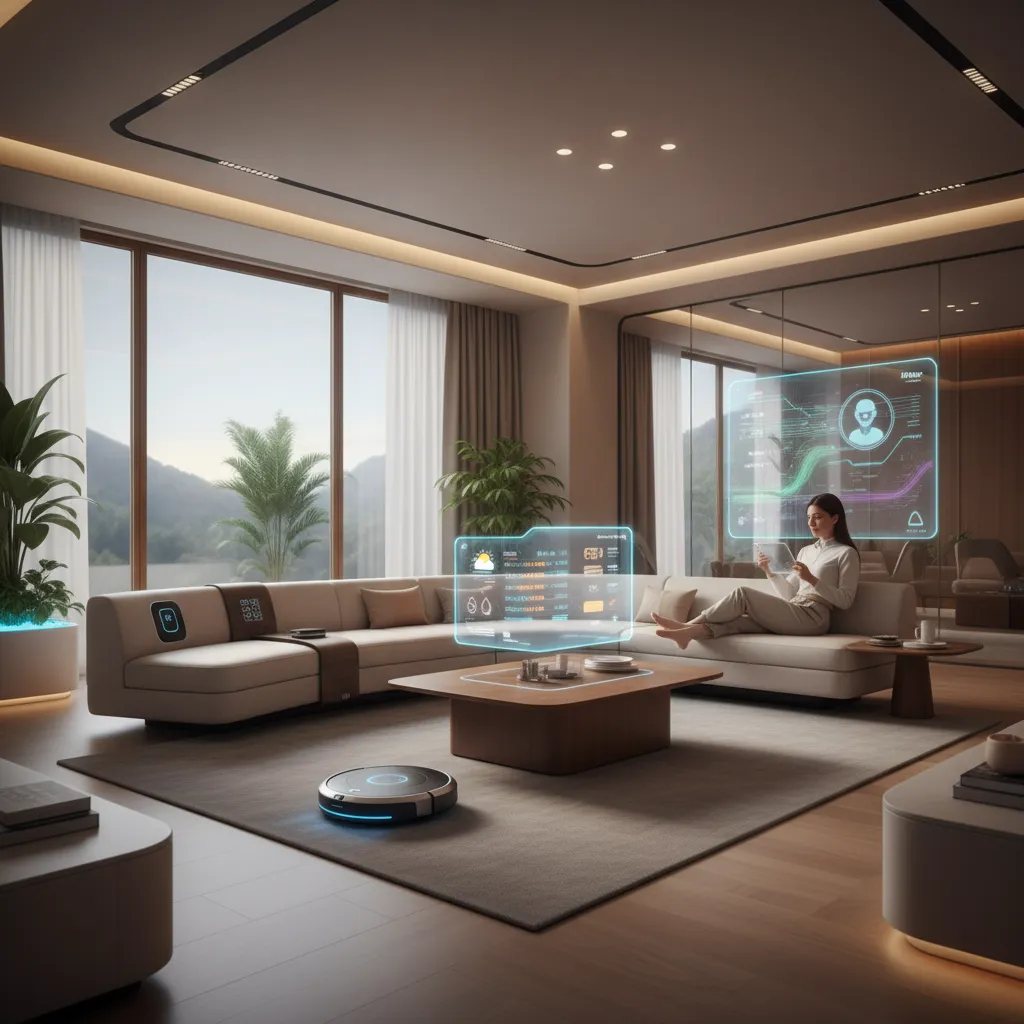
Imagine this: You wake up not to a blaring alarm, but to the gentle glow of your bedroom lights mimicking a sunrise. The aroma of freshly brewed coffee wafts from the kitchen, your thermostat has already warmed the house to your perfect temperature, and a soothing voice quietly briefs you on your schedule, the weather, and morning headlines. This isn’t a scene from a sci-fi movie; it’s the near-future promise of a home powered by true AI agents.
For years, we’ve flirted with the concept of the “smart home.” We’ve asked voice assistants to play music, set timers, and turn off lights. But this is merely the first chapter. The real revolution in AI home automation isn’t about issuing commands; it’s about creating an intelligent, predictive, and autonomous environment that anticipates your needs and manages your life behind the scenes.
This article dives deep into the world of AI agents for smart homes. We’ll explore how these advanced systems are moving beyond simple tasks to become central conductors of our domestic lives, orchestrating everything from security and energy consumption to wellness and entertainment. Get ready to discover how to automate daily tasks with AI and unlock a new era of smart living AI that truly elevates your everyday existence.
The Dawn of the Truly Intelligent Home: Beyond Simple Commands
The smart home journey has been one of gradual evolution. We started with programmable thermostats, moved to app-controlled lightbulbs, and then embraced the convenience of voice commands through devices like Amazon Echo and Google Home. While these are remarkable feats of technology, they are fundamentally reactive. They wait for a command or a pre-set rule (“If this, then that”).
The leap forward lies in creating intelligent home systems that are proactive. This is where AI agents come in. They are the brain, the central nervous system of your home, capable of learning, reasoning, and acting autonomously.
What Sets AI Agents Apart from Voice Assistants?
It’s easy to confuse an advanced voice assistant AI home with a true AI agent, but their capabilities are worlds apart. A voice assistant is a reactive tool; an AI agent is a proactive partner. Think of it as the difference between having a simple calculator and having a personal financial advisor.
| Feature | Standard Voice Assistant (e.g., Alexa, Siri) | True AI Agent |
|---|---|---|
| Initiative | Reactive: Waits for a specific command. | Proactive: Anticipates needs and acts autonomously. |
| Context | Limited Context: Understands single commands in isolation. | Deep Context: Understands patterns, preferences, and situations. |
| Learning | Basic Learning: Learns your music taste or common questions. | Adaptive Learning: Continuously learns from your behavior and environment. |
| Integration | Siloed: Controls individual devices or simple routines. | Holistic: Orchestrates multiple devices and systems seamlessly. |
| Goal | Task Completion: “Turn on the lights.” | Goal Achievement: “Make the home comfortable for movie night.” |
A true AI agent understands the intent behind your actions. It knows that “movie night” means dimming the lights, closing the blinds, adjusting the thermostat, and maybe even suggesting a film based on your recent viewing history—all without you having to ask for each individual step. Related: Google’s Project Astra: The Future of AI is a Universal Agent.
The Core Engine: Predictive AI Home Management
The magic behind this proactive capability is predictive AI home management. Using machine learning algorithms, AI agents analyze vast streams of data from your AI powered smart devices, your digital calendars, and even external sources like weather forecasts and traffic reports.
Over time, this connected home AI learns the intricate rhythms of your life:
- When you typically leave for work and return.
- How your temperature preferences change with the seasons.
- Which lights you prefer on at different times of day.
- Your family’s morning and evening routines.
Armed with this knowledge, the agent can make intelligent decisions. It might pre-cool your house on a hot day before you arrive home, start a security sweep after it detects everyone has left, or gently remind your child to practice their piano lesson based on their schedule. This is the essence of an AI driven household: a home that works for you, not just with you.
Your Life, Automated: Practical Applications of AI in the Modern Household
The theoretical power of AI agents is impressive, but their real value shines in their practical applications across every corner of your home. They transform mundane chores and complex management tasks into a seamless, automated background process.

Mastering Comfort & Energy Efficiency with AI
One of the most immediate benefits of an AI agents smart home is the dual optimization of comfort and efficiency. Traditional smart thermostats save money, but an AI-driven climate system takes it to another level.
By integrating with motion sensors, door/window sensors, and local weather forecasts, the AI can:
- Create Micro-Climates: Heat or cool only the rooms that are occupied, saving significant energy.
- Predictive Adjustments: Pre-heat the home before you wake up on a cold morning or pre-cool it before a heatwave hits, ensuring you’re always comfortable while using energy at the most cost-effective times.
- Smart Shade Control: Automatically adjust smart blinds based on the sun’s position to provide natural light without unwanted heat gain.
This intelligent management leads to a noticeable reduction in utility bills and a significant boost in AI enhancing home comfort. It’s the perfect example of how to optimize home with AI for both your wallet and your well-being.
The AI Smart Kitchen: Your Personal Sous-Chef
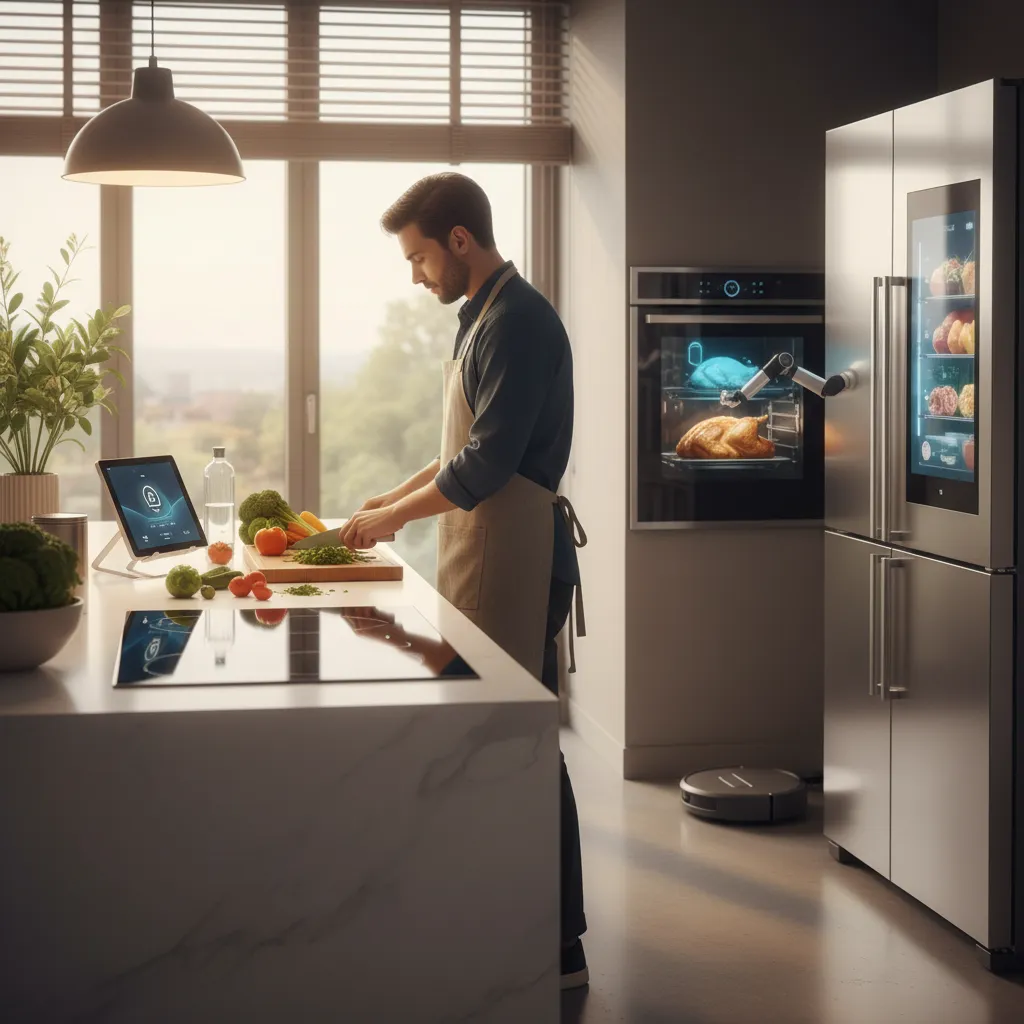
The kitchen is often the busiest room in the house, and AI is poised to make it the smartest. An AI smart kitchen goes far beyond a smart fridge that tells you the weather.
Imagine an ecosystem where:
- Smart Refrigerators track inventory, generate shopping lists automatically, and suggest recipes based on the ingredients you have on hand, minimizing food waste.
- AI-Powered Ovens identify the food you’ve placed inside, suggest the optimal cooking settings, and monitor its progress, notifying you when it’s perfectly cooked.
- Integrated Meal Planning systems connect to your health apps, suggesting recipes that align with your dietary goals and fitness activities.
This level of automation streamlines meal prep, reduces mental load, and empowers even novice cooks to create delicious, healthy meals.
Fortifying Your Fortress: The New Age of AI for Home Security
Home security is a paramount concern for everyone, and AI for home security offers a revolutionary level of protection. Instead of just reacting to a triggered sensor, AI systems proactively identify and deter threats.
- Anomaly Detection: AI algorithms learn the normal patterns of sound and movement around your property. They can distinguish between a delivery driver, a stray cat, and a potential intruder trying to force a window, drastically reducing false alarms.
- Predictive Deterrence: If suspicious activity is detected, the system can autonomously activate deterrents like floodlights, audible warnings, or even mimic the sound of a barking dog.
- Intelligent Alerts: Instead of a generic “motion detected” alert, you get a rich notification on your phone: “Unfamiliar person detected at the side gate.” This allows for a much faster and more informed response.
This proactive stance turns your security system from a simple alarm into a vigilant, intelligent guardian.
The AI-Driven Smart Garden & Sustainable Home
The influence of AI extends beyond the four walls of your house. For those with a green thumb, an AI smart garden can automate the complexities of plant care. Sensors in the soil monitor moisture, pH, and nutrient levels, feeding data to an AI that controls the irrigation system. It waters precisely when needed, using hyperlocal weather data to avoid watering before a rainstorm, conserving water and ensuring healthier plants.
This focus on resource management is a key part of the AI sustainable home. AI agents can optimize a home’s entire resource footprint, from managing solar panel energy storage and electric vehicle charging to smart water heaters that only run during off-peak hours, contributing to a greener lifestyle. Related: AI-Powered Urban Farming: Grow Smarter, Live Greener.
The Personal Touch: How AI Agents Elevate Daily Routines & Well-being
Beyond managing the physical aspects of the home, personal AI assistants are evolving to enhance our personal lives, focusing on wellness, productivity, and specialized care. These AI living solutions are about creating an environment that actively contributes to your health and happiness.

Your Personal Wellness Guru
The future of AI personal wellness home integration is incredibly exciting. Your bedroom can transform into a personalized sleep sanctuary.
- An AI agent can track your sleep cycles via a smart mattress or wearable device.
- It then orchestrates the environment for optimal rest: gradually lowering the temperature, activating a white noise machine, and dimming the lights.
- In the morning, it initiates a gentle wake-up sequence with simulated sunlight and soft music, timed perfectly to your lightest sleep phase to avoid grogginess.
This extends to mental well-being, too. The agent could detect signs of stress in your voice or calendar and suggest a 10-minute meditation session, adjusting the home’s lighting and soundscape to create a calming atmosphere.
Seamless AI Integration for Entertainment and Productivity
Whether you’re relaxing or working, seamless AI integration home systems can create the perfect ambiance.
- For AI home entertainment, an agent can curate personalized playlists that match the mood, time of day, or even the guests you’re having over. It can manage a central media library, allowing you to start a movie in the living room and seamlessly finish it in the bedroom.
- For remote work, the AI can create a “focus mode” by minimizing distractions, adjusting your desk lighting to reduce eye strain, and managing notifications across your devices.
AI for Specialized Care: Supporting the Elderly and Vulnerable
Perhaps one of the most profound applications is AI for elderly care home support. For seniors who wish to age in place, AI agents can be a lifeline.
- Passive monitoring can detect changes in routine that may indicate a health issue.
- Fall detection sensors can automatically alert emergency services and family members.
- The system can provide voice-activated medication reminders and facilitate easy video calls with loved ones, combating loneliness and ensuring safety.
This technology provides peace of mind for both the individual and their family, offering independence without sacrificing security.
Navigating the Future: Challenges and Considerations of the Connected Home AI
As we stand on the cusp of this new era of future smart homes, it’s crucial to address the challenges that come with such powerful technology. The dream of a fully automated, AI driven household must be balanced with practical and ethical considerations.

The Privacy & Security Paradox
To be effective, an AI agent needs access to an immense amount of personal data. This creates a significant privacy concern. Who owns this data? How is it being used? The risk of data breaches in such a deeply integrated system is a major hurdle.
Consumers must demand transparency and robust security from manufacturers. End-to-end encryption, on-device processing (where possible), and clear data policies are non-negotiable. Building a secure connected home AI is as important as building a smart one.
Interoperability: The Quest for a Truly Unified System
One of the biggest frustrations in the current smart home market is the lack of a universal standard. Your lights might not talk to your thermostat, and your security system might not integrate with your smart locks. This fragmentation prevents the kind of seamless AI integration home we envision.
Initiatives like the Matter protocol are a step in the right direction, aiming to create a common language for all smart devices. The ultimate goal is a truly interoperable ecosystem where your AI agent can orchestrate every device, regardless of the brand.
The Horizon of Home Automation: What’s Next?
The future of home automation is dynamic and filled with potential. Current smart home technology trends point towards even deeper integration and personalization. We can expect AI agents to take on more complex roles, such as:
- AI Personal Finance Home Management: Agents could analyze household spending, pay bills automatically, find better deals on utilities, and even provide insights for micro-investing. Related: AI Micro-Investing: How Gen Z Can Build Wealth with Smart Algorithms.
- Hyper-Personalization: Your home will not just know your preferences; it will adapt to your emotional state, creating environments that can energize, relax, or inspire you.
- Robotics Integration: The AI agent will become the brain for household robots, dispatching them to clean floors, do laundry, or even bring you a snack.
The home will transform from a static structure into a dynamic, intelligent partner dedicated to improving your quality of life.
Conclusion
We are moving decisively beyond the era of remote controls and simple voice commands. The rise of sophisticated AI agents is ushering in the age of the truly intelligent home—a predictive, autonomous, and deeply personalized environment. This is more than just convenience; it’s a fundamental shift in how we interact with our living spaces.
From optimizing energy efficiency AI home systems and bolstering security to managing our wellness and automating mundane chores, these intelligent systems promise a future where our homes actively work to support and enhance our lives. The journey toward a fully AI driven household has its challenges, particularly regarding privacy and interoperability, but the potential to unlock unprecedented levels of comfort, efficiency, and well-being is undeniable.
The future isn’t just knocking; it’s already reconfiguring the welcome mat. The question is no longer if our homes will become intelligent partners, but how we will choose to unleash their full potential.
FAQs
Q1. How is AI used in smart homes?
AI is used in smart homes to move beyond simple commands and create proactive, intelligent systems. It analyzes data from sensors and your habits to learn your routines, anticipate your needs, and automate tasks autonomously. This includes optimizing energy use, enhancing security with anomaly detection, personalizing lighting and climate for comfort, and even managing kitchen inventories.
Q2. What is an example of an AI agent?
A true, fully-realized home AI agent is still an emerging concept, but platforms like Google’s Project Astra or Amazon’s vision for an ambient Alexa are examples of the direction they are heading. In practice, it’s a central AI brain that connects to all your smart devices (thermostat, lights, security cameras, appliances) and orchestrates them to achieve goals, like preparing the house for your arrival from work without any specific command.
Q3. Can AI automate my house?
Yes, absolutely. AI is the core technology that enables deep and meaningful home automation. While basic automation relies on pre-set rules (e.g., “turn lights on at sunset”), AI home automation is dynamic. It learns your unique patterns and makes intelligent decisions, like adjusting your thermostat based on weather forecasts or locking the doors when it detects everyone has left.
Q4. What is the difference between AI and smart home?
A “smart home” is a home equipped with devices that can be controlled remotely or on a schedule (e.g., smart bulbs, plugs, thermostats). “AI” (Artificial Intelligence) is the technology that gives these devices true intelligence. A smart home becomes an AI-driven intelligent home when an AI agent is added to analyze data, learn, predict, and control those devices proactively.
Q5. How does AI improve home security?
AI dramatically improves home security by being proactive instead of reactive. It learns the normal sights and sounds around your home and can identify unusual activities (anomalies). Instead of just reacting to a broken window, AI for home security can detect someone lurking, intelligently distinguish between a pet and a person, and trigger deterrents like lights or alarms before a break-in occurs.
Q6. What are the privacy concerns with AI in smart homes?
The main privacy concern is the vast amount of personal data (your routines, conversations, location) that AI agents need to function effectively. This data could be vulnerable to cyberattacks or misused by companies. It is crucial to choose products from reputable brands with strong encryption, clear privacy policies, and options for on-device data processing.
Q7. What is the future of home automation?
The future of home automation is predictive, hyper-personalized, and seamlessly integrated. We can expect AI agents to manage nearly every aspect of the household, from finances and meal planning to wellness routines and robotic maintenance. The goal is to create a living space that not only responds to you but actively anticipates your needs to enhance your overall quality of life.